

Religious Art & Worldviews
Every tradition answers the same question with its walls, its books, and its objects: may the sacred be shown, and if so, how? This section reads the world's religions through the art they make, the art they refuse, and the art they argue about — thirteen tradition profiles, the objects and practices that carry their positions, and the themes that cross between them.
The Traditions
 Tradition
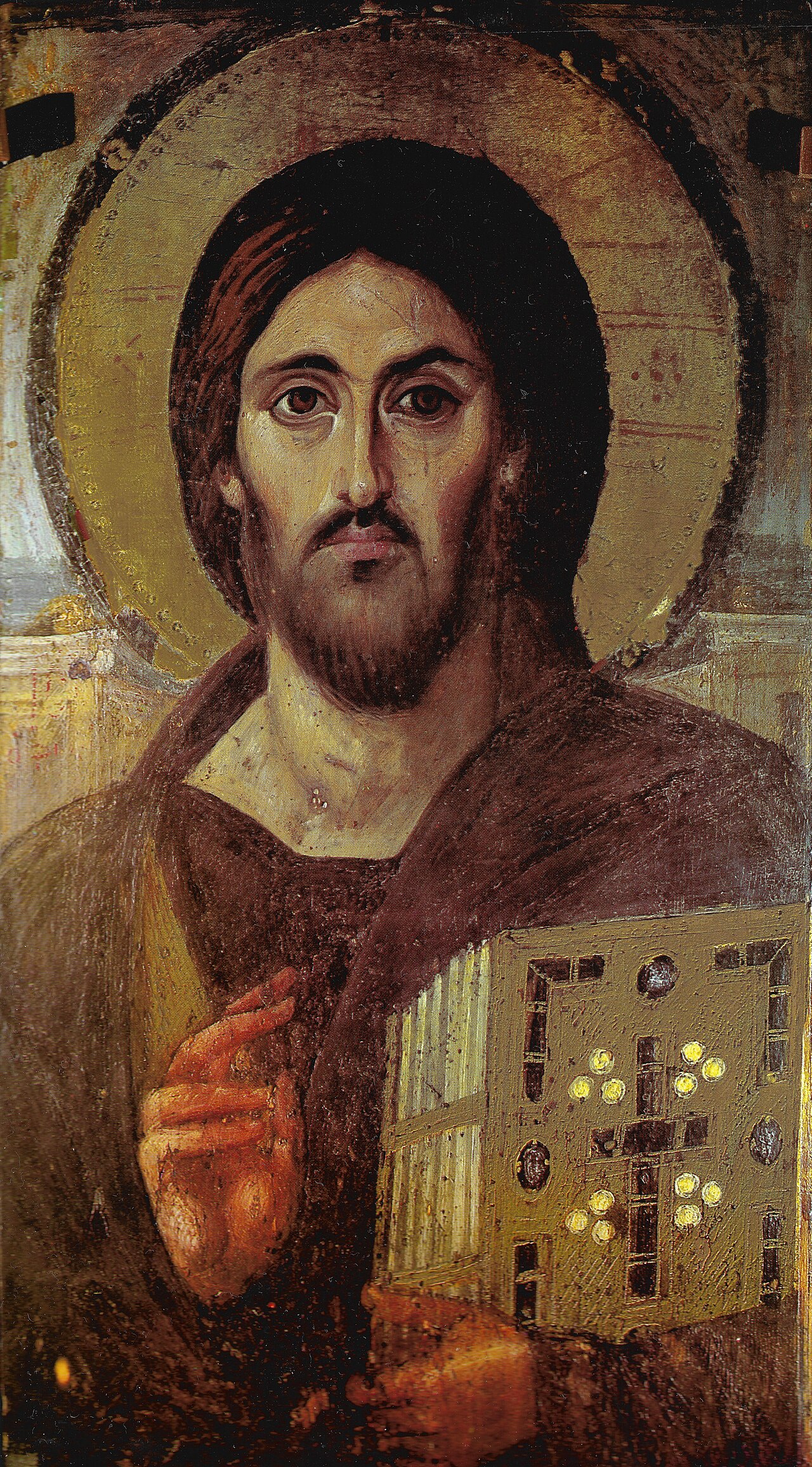
Christianity
Icons, altarpieces, cathedrals, and the argument over whether the visible Christ justifies visible art.
 Tradition
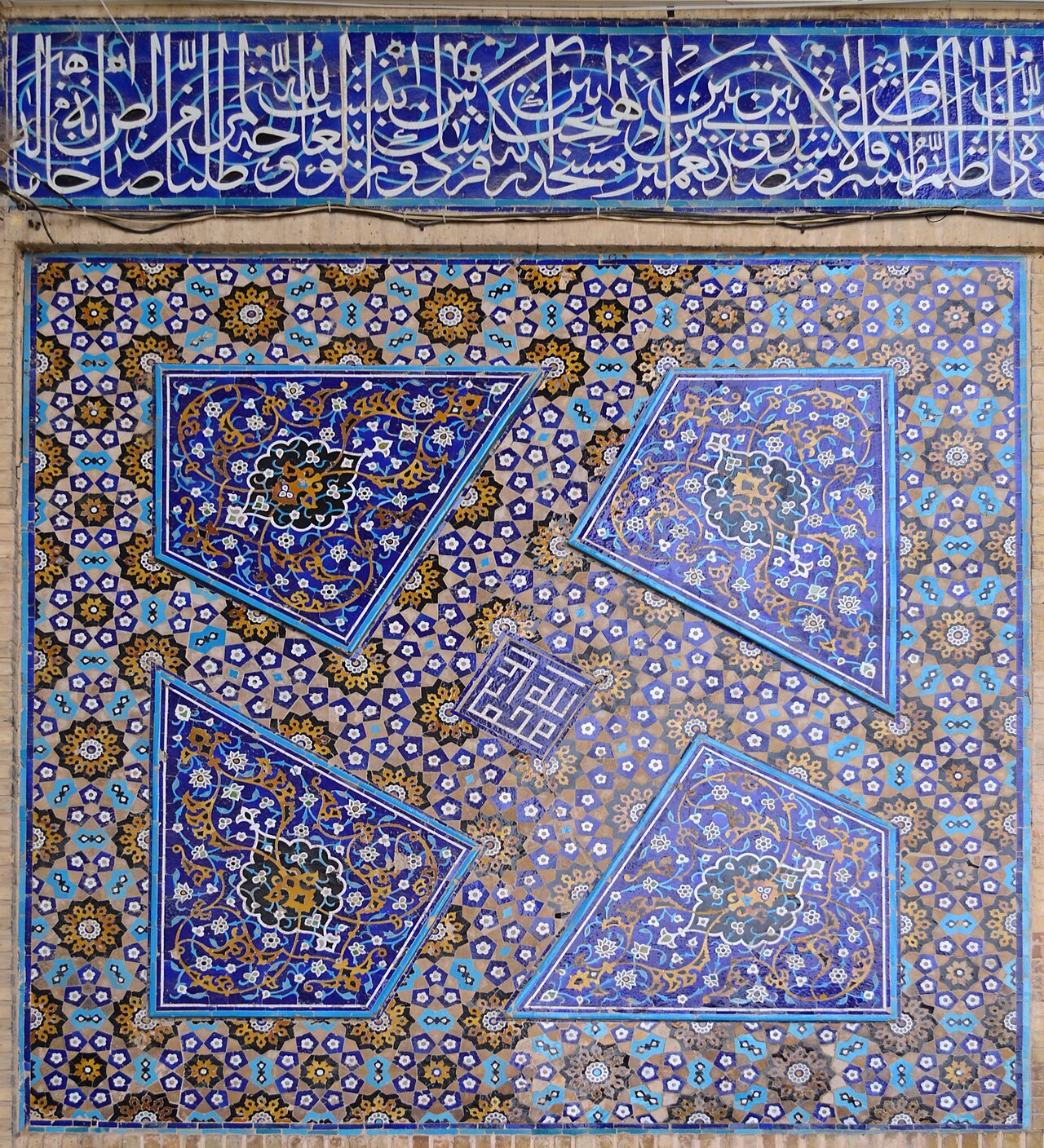
Islam
Calligraphy, geometry, and architecture under the norm of aniconism, with a figural courtly tradition beside it.
 Tradition
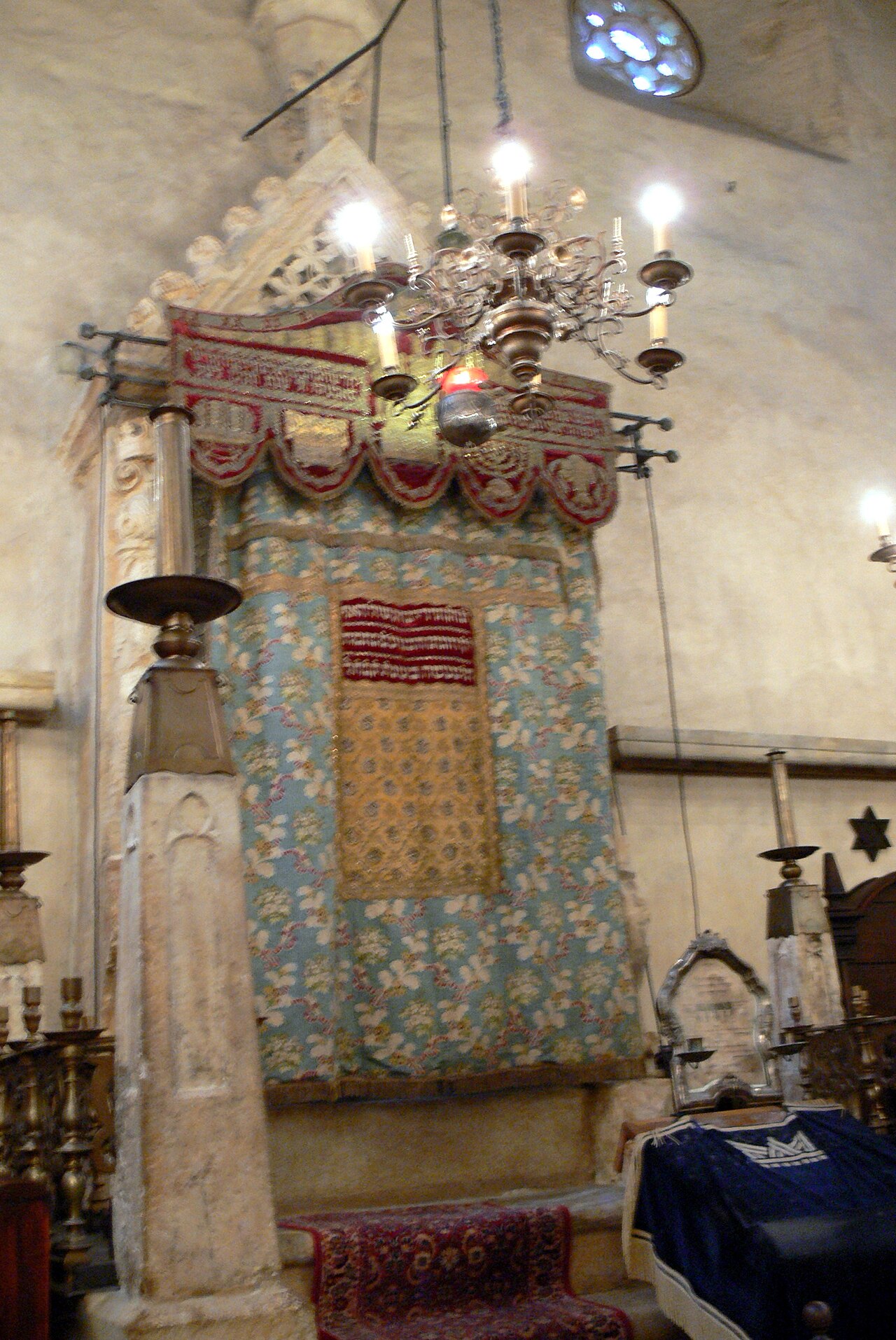
Judaism
Principled restraint on cult images, with synagogue art, ceremonial objects, and illuminated manuscripts flourishing inside it.
 Tradition
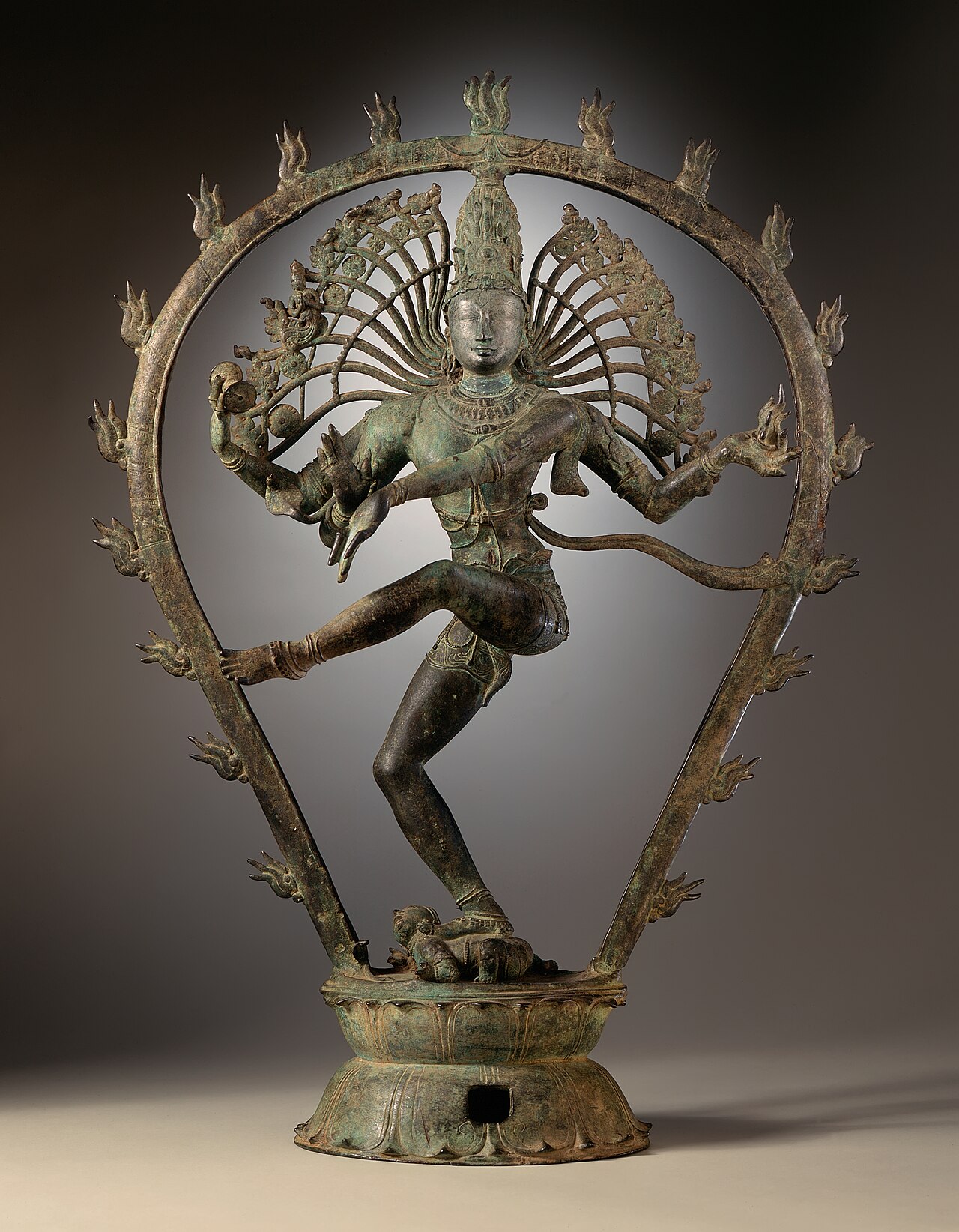
Hinduism
The murti as a support for divine presence, in iconic and aniconic forms alike.
 Tradition
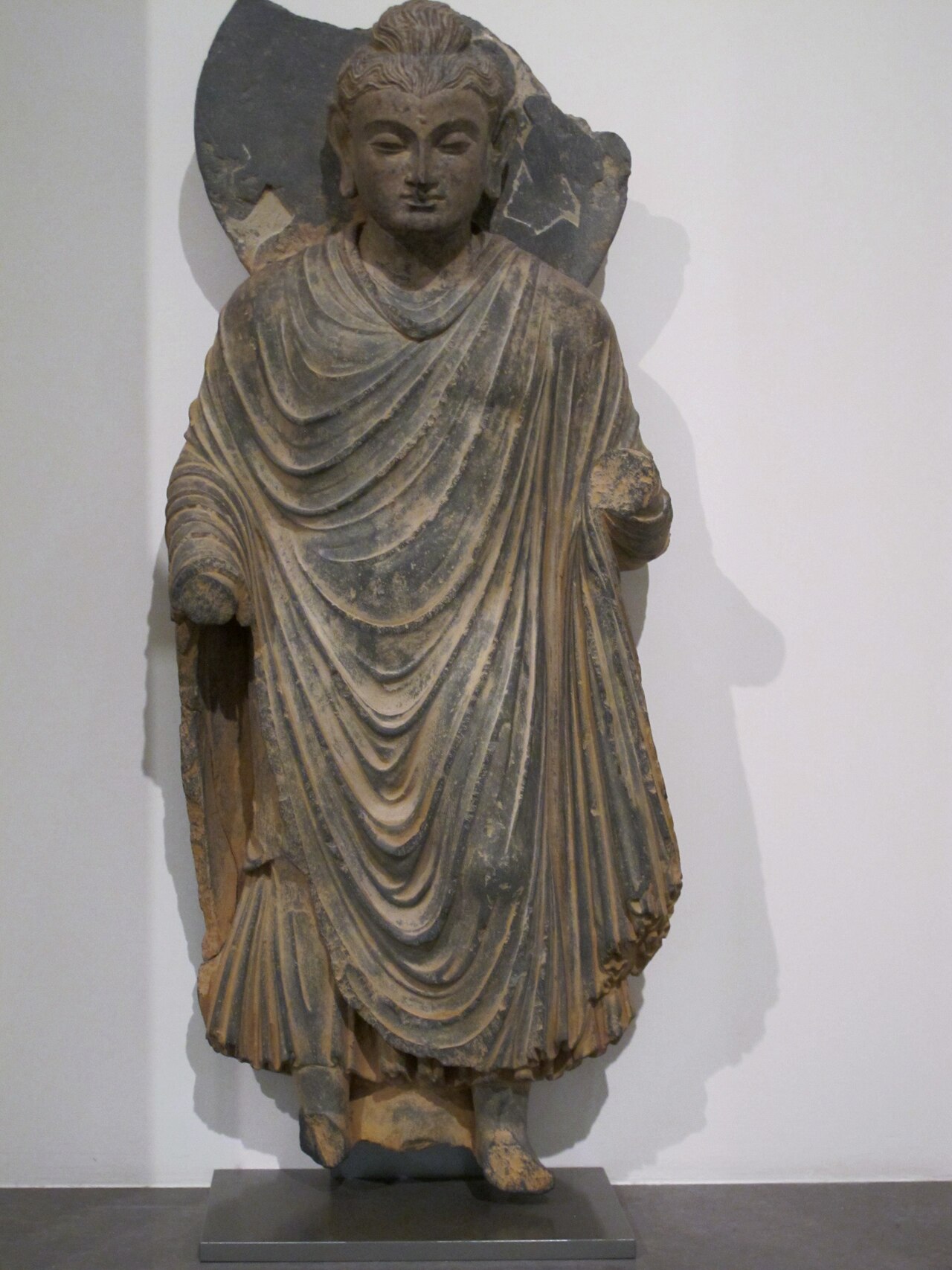
Buddhism
Symbols before images, the Buddha image after Gandhara and Mathura, and a scholarly debate that is not settled.
 Tradition
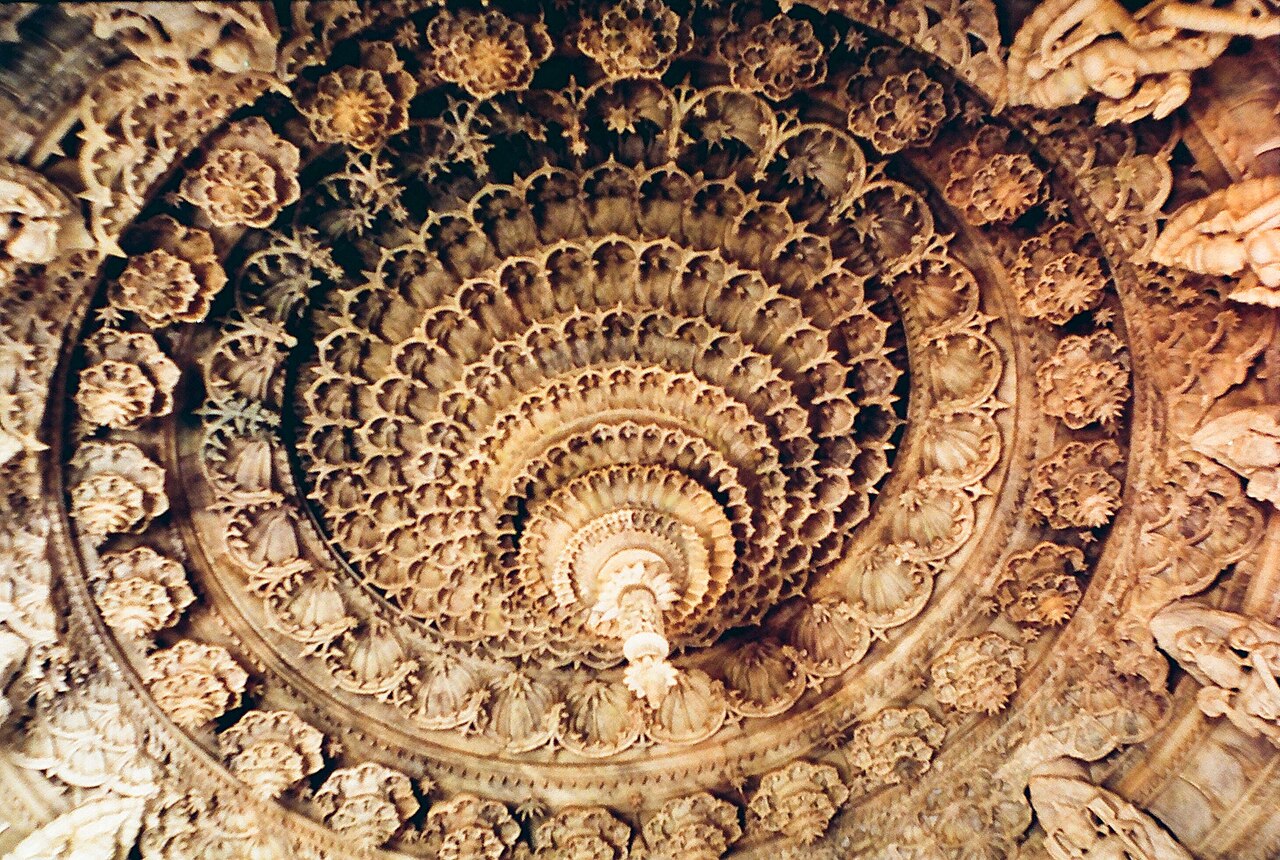
Jainism
Iconic but restrained: Tirthankara images, illustrated manuscripts, and marble temple architecture.
 Tradition
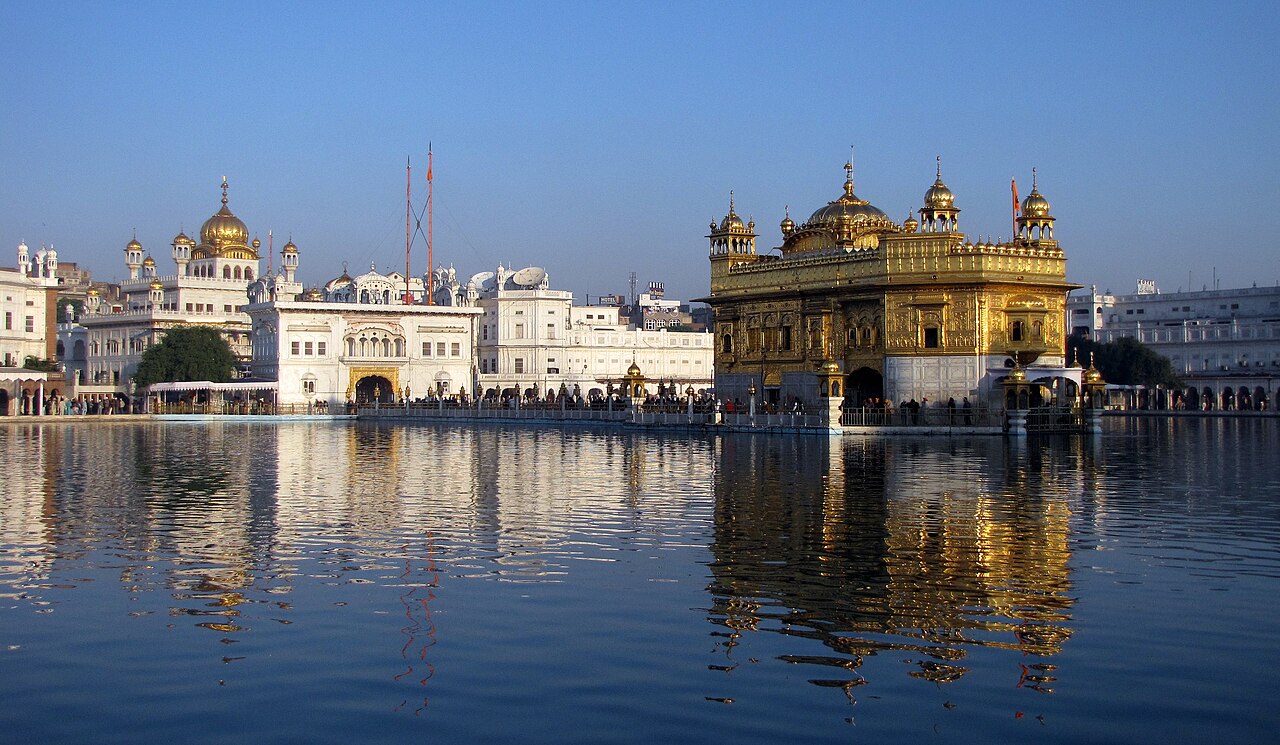
Sikhism
An aniconic theology centered on the Guru Granth Sahib, with a contested tradition of Guru portraits.
 Tradition
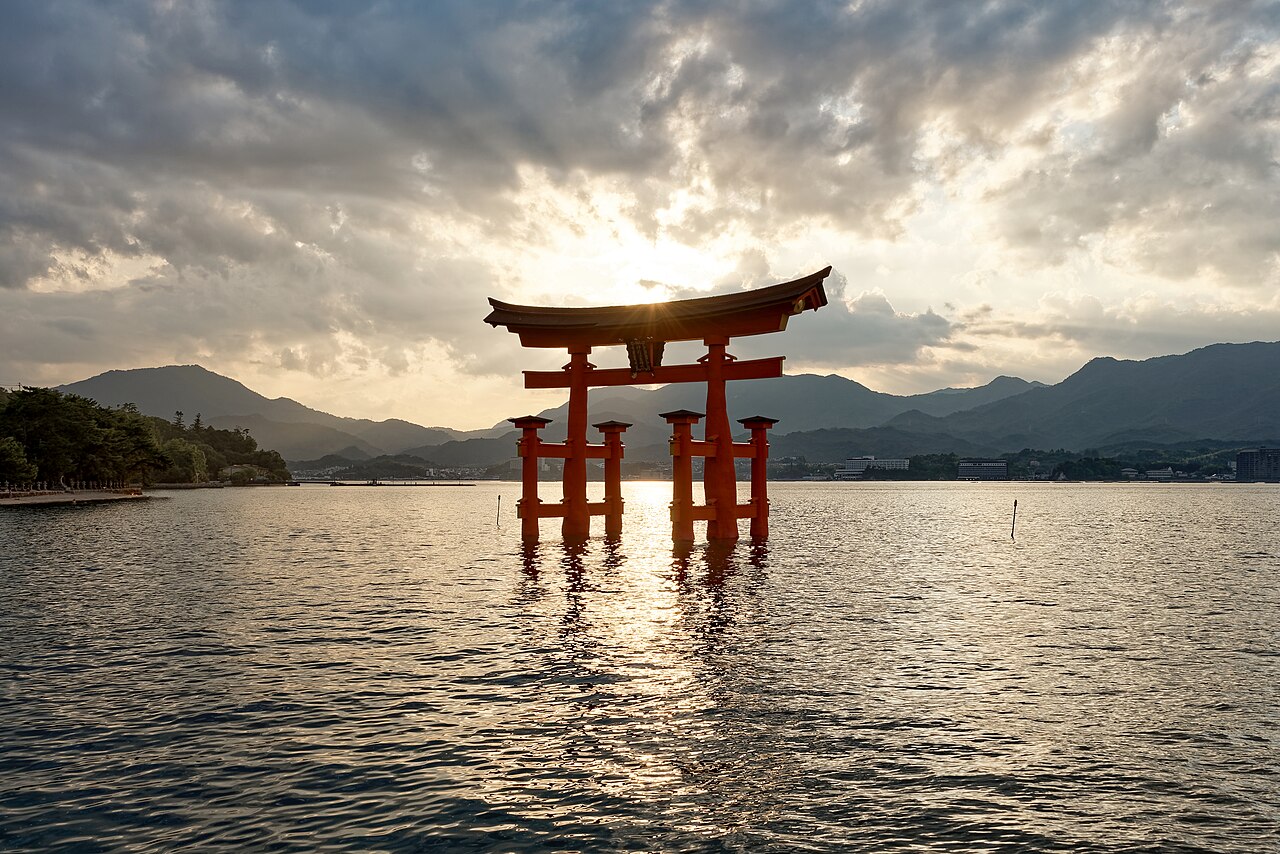
Shinto
The torii, the shintai, and sacred landscape: aniconic in emphasis rather than in principle.
 Tradition
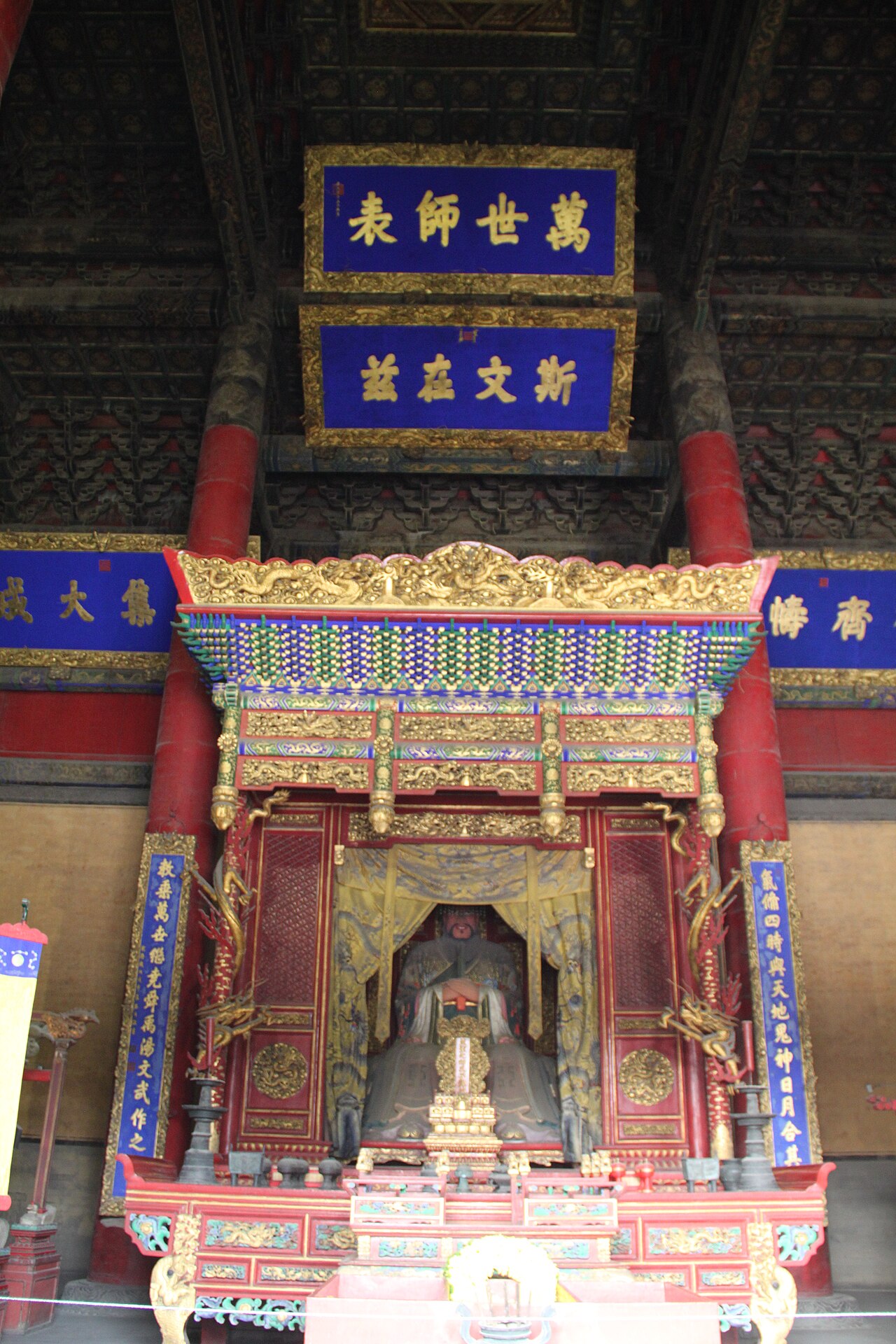
Daoism and Confucianism
Temple imagery, ritual painting, ancestor tablets, and the syncretism of the three teachings.
 Tradition
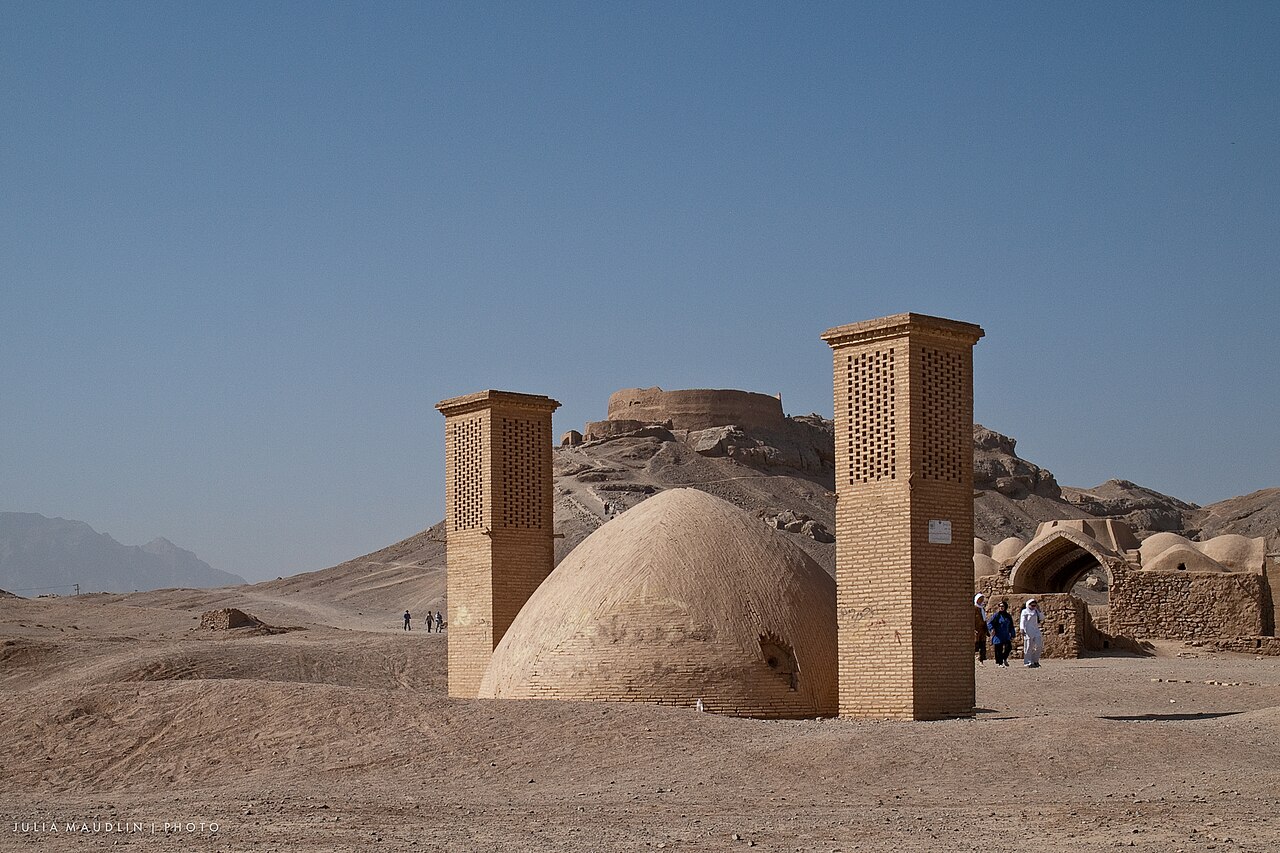
Zoroastrianism
Aniconic fire: Ahura Mazda represented through creation, the fire altar, and the fravahar.
 Tradition
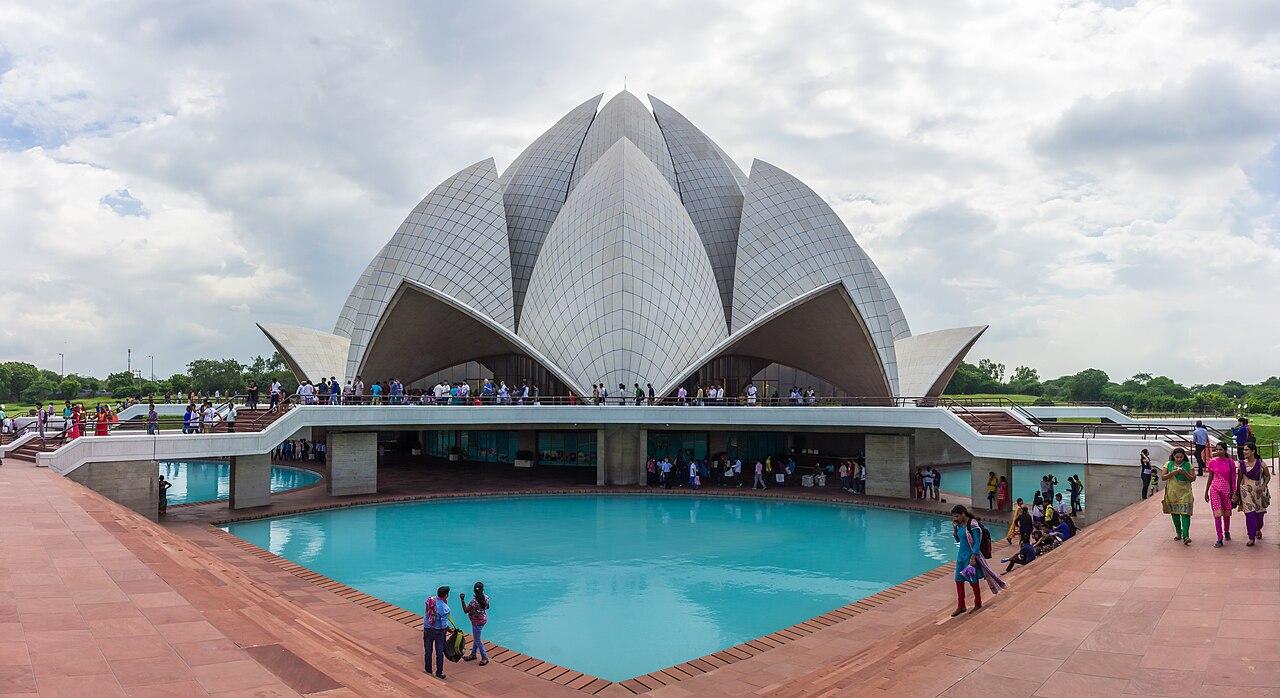
Bahá'í
No depiction of the Manifestations; calligraphy, architecture, and music carry the art.
 Tradition
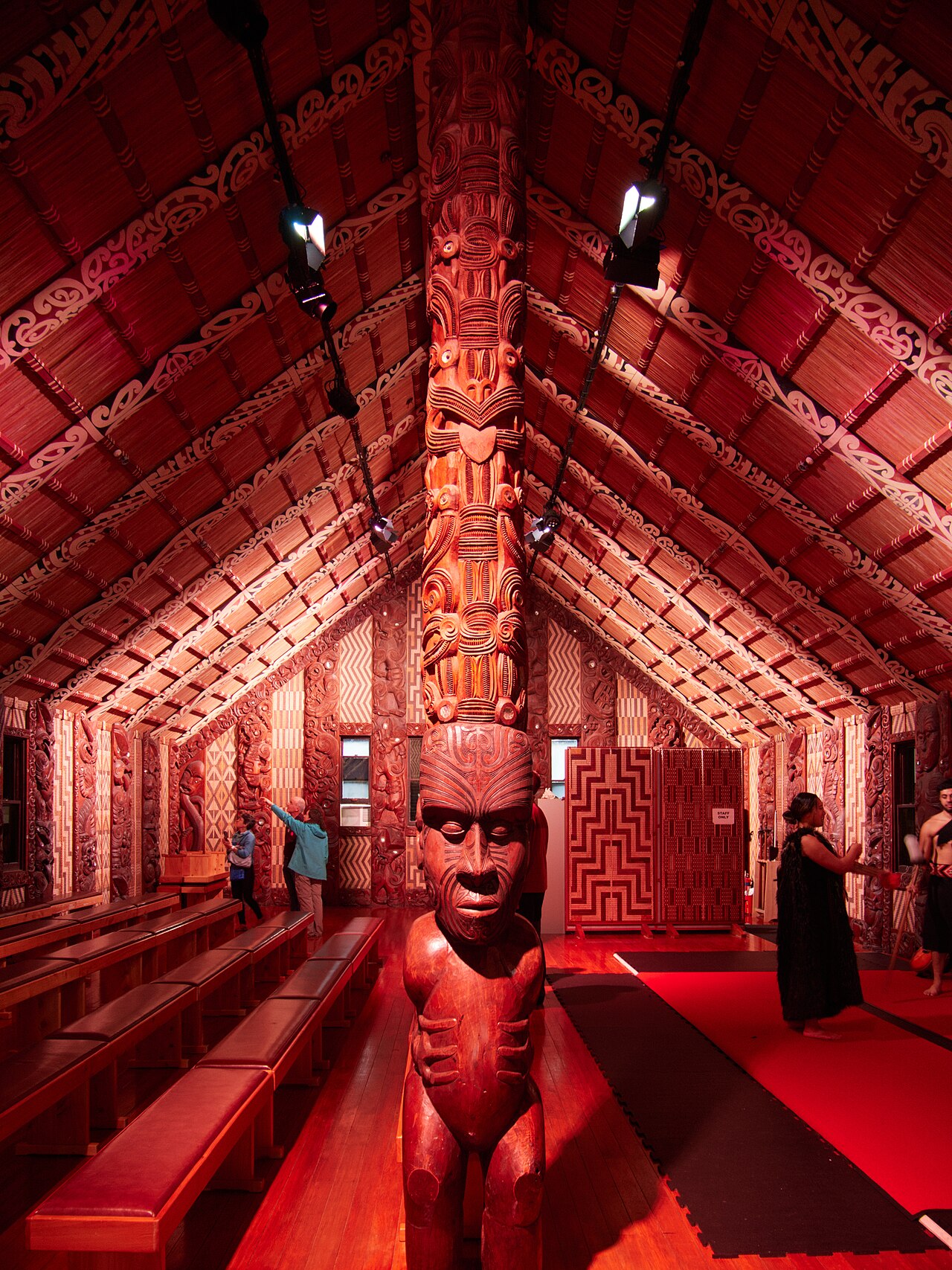
Indigenous and Traditional
Sacred objects under community protocol: sacred and secret are distinguished, and repatriation is a live question.
 Tradition
Non-Theistic and Secular
Art without transcendence: humanist meaning-making, museums as secular temples, and protest art.
May the divine be depicted? The traditions answer side by side on the comparison page.
Entries
34 objects, buildings, books, and practices. Filter them by the site's one taxonomy — the same terms that classify everything else here.
34 of 34 entries shown
 Jewish
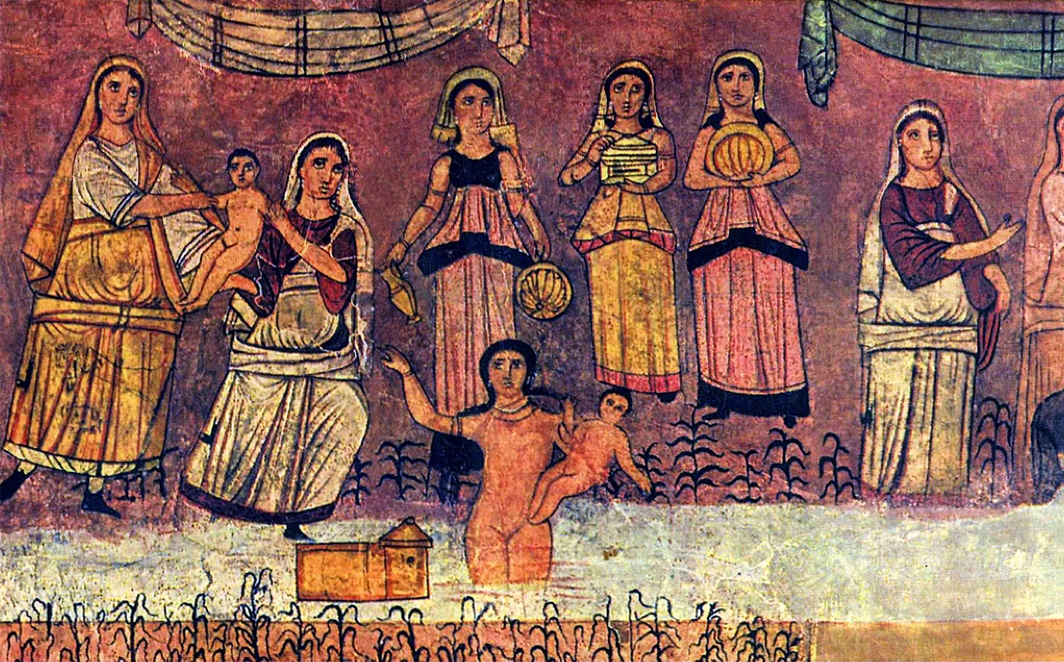
The Dura-Europos Synagogue Frescoes
The walls of a synagogue on Rome's Euphrates frontier, painted around 244 CE with the whole biblical story in human figures — the standing disproof that ancient Judaism made no religious pictures.
 Catholic, Christian
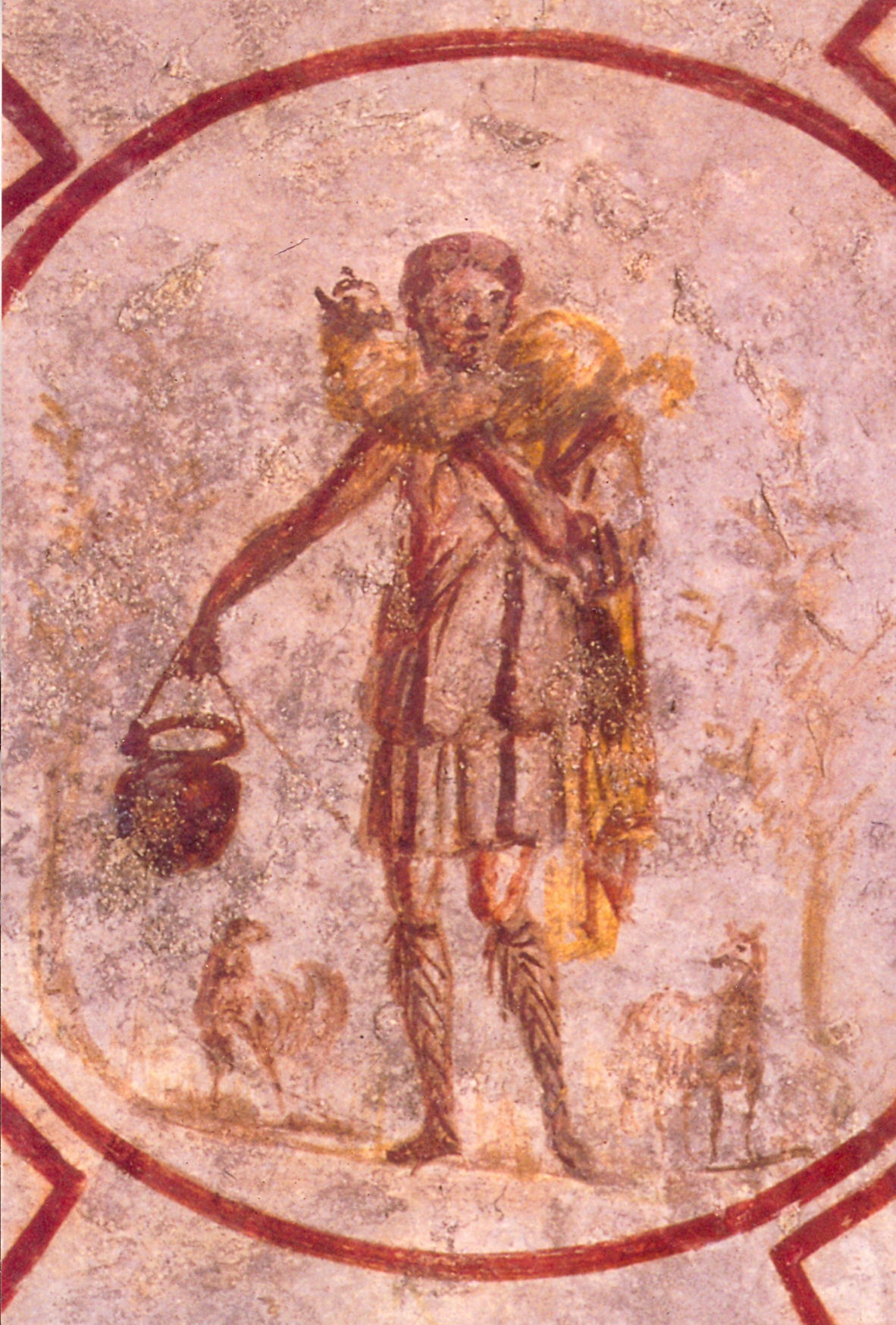
The Good Shepherd of the Catacombs
A young shepherd carrying a lamb across his shoulders, painted and carved across the Roman catacombs: the earliest Christian image of Christ, chosen as a symbol before it was a portrait.
 Catholic, Eastern Orthodox
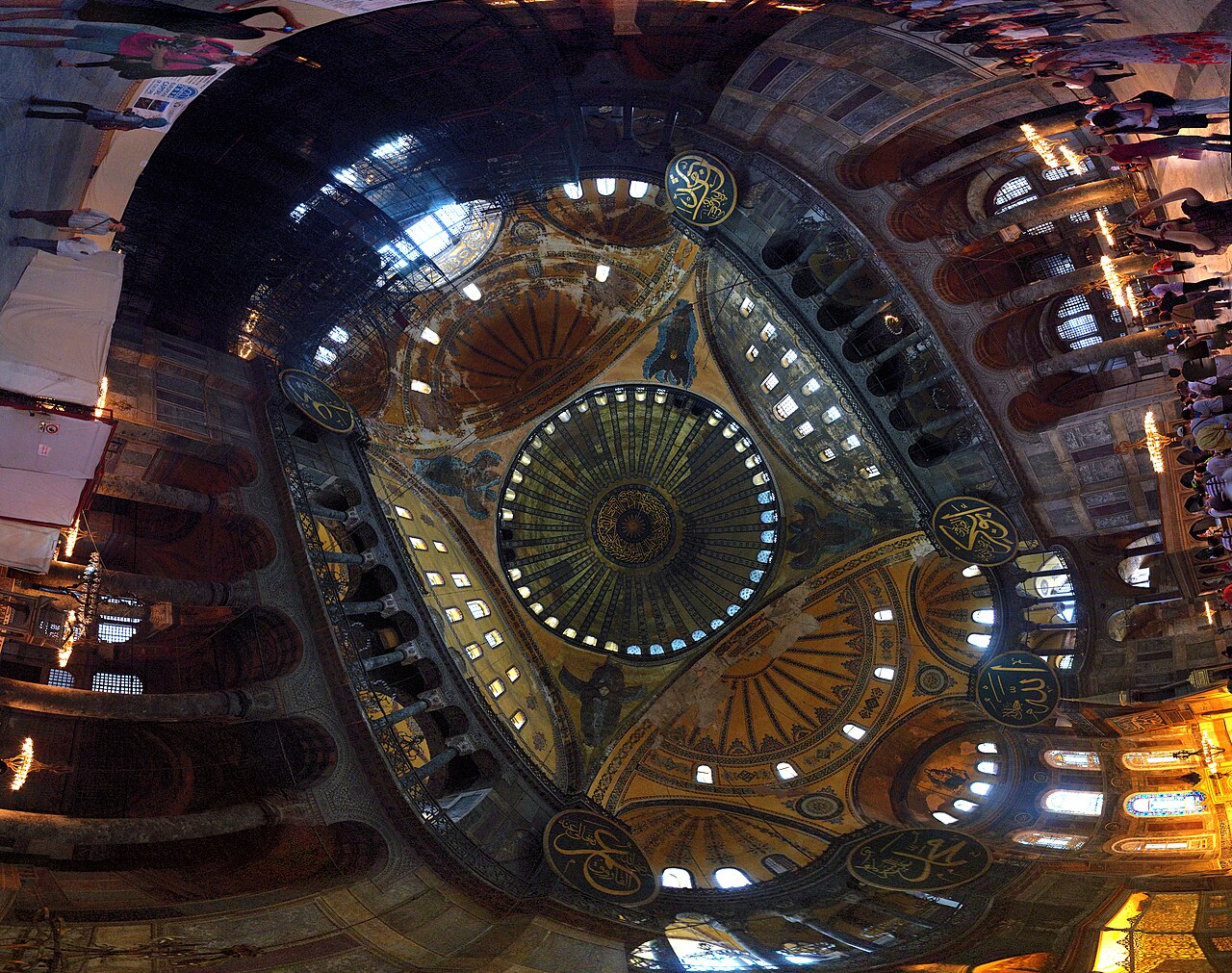
Hagia Sophia
Justinian's great church in Constantinople (532–537), whose dome seemed to contemporaries to hang from heaven — and whose mosaics record, in one building, icon, iconoclasm, conquest, museum, and mosque.
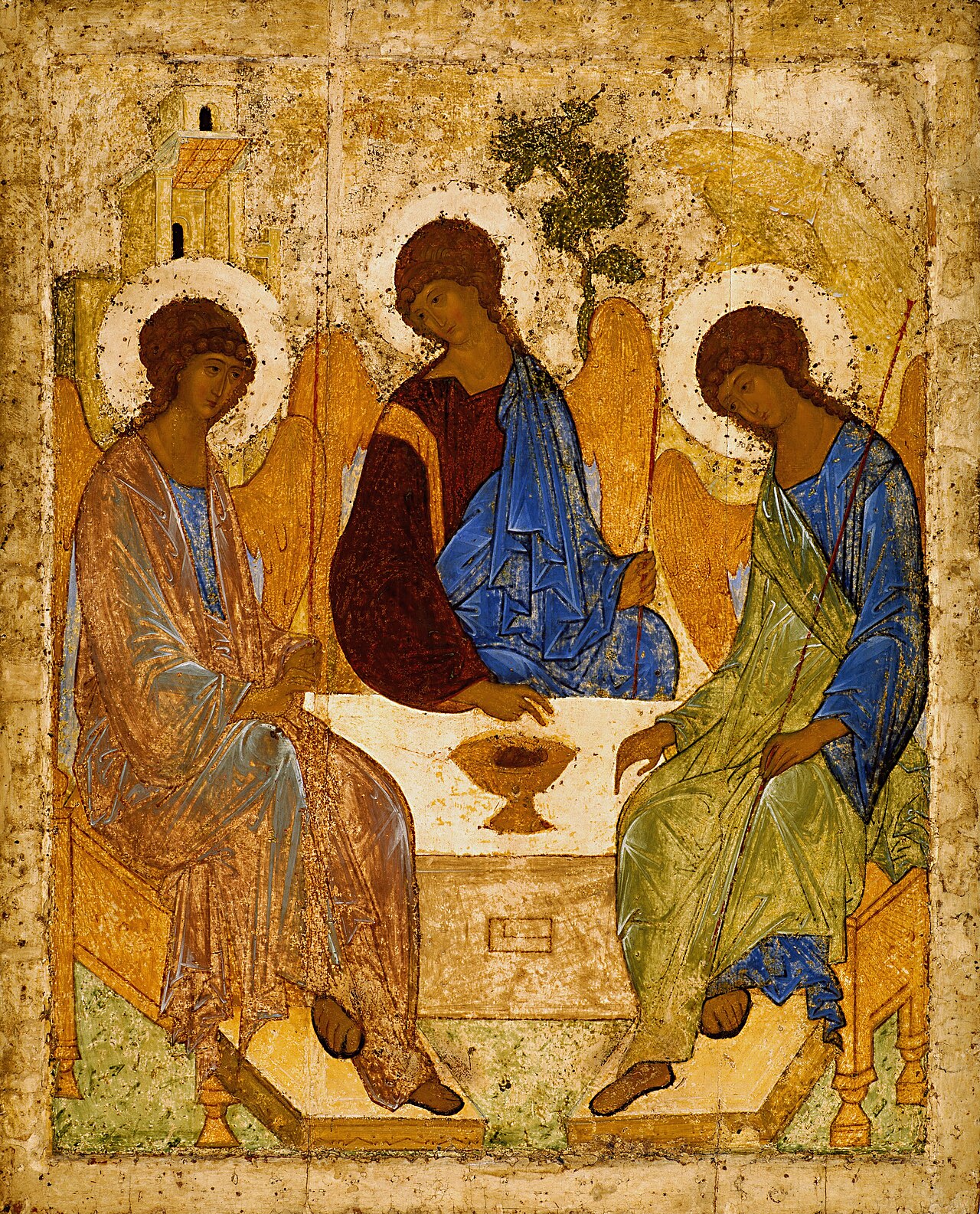 Eastern Orthodox
Rublev's Trinity
Andrei Rublev's icon of the three angels at Abraham's table (c. 1411), painted for the Trinity Lavra of St. Sergius — the supreme achievement of Orthodox icon painting and its theology made visible.
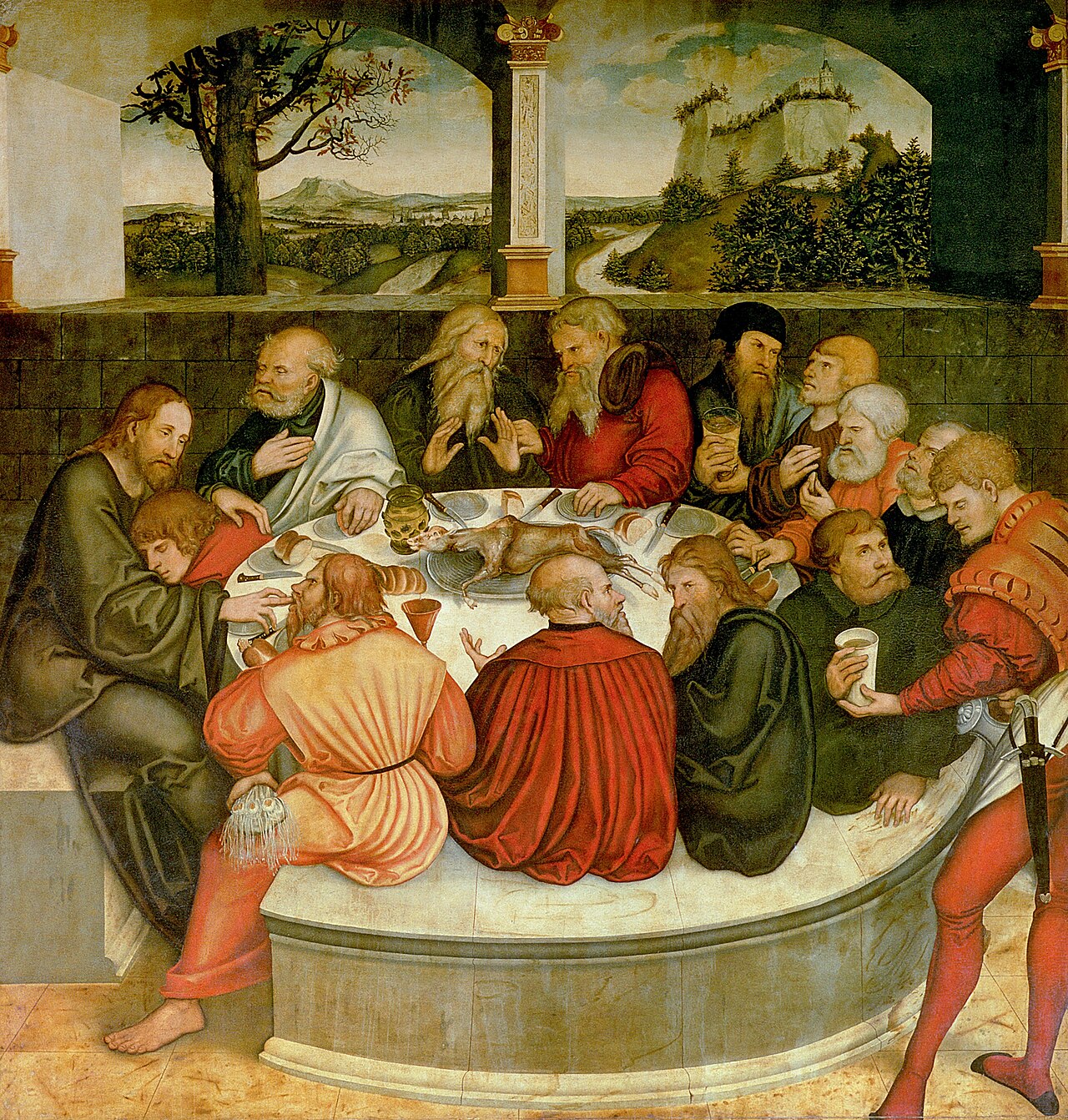 Lutheran
The Wittenberg Altarpiece
Lucas Cranach the Elder's altarpiece for Wittenberg's town church (1547): the Last Supper with Luther among the apostles — proof that the Reformation's quarrel with images was a family quarrel, not a unanimous verdict.
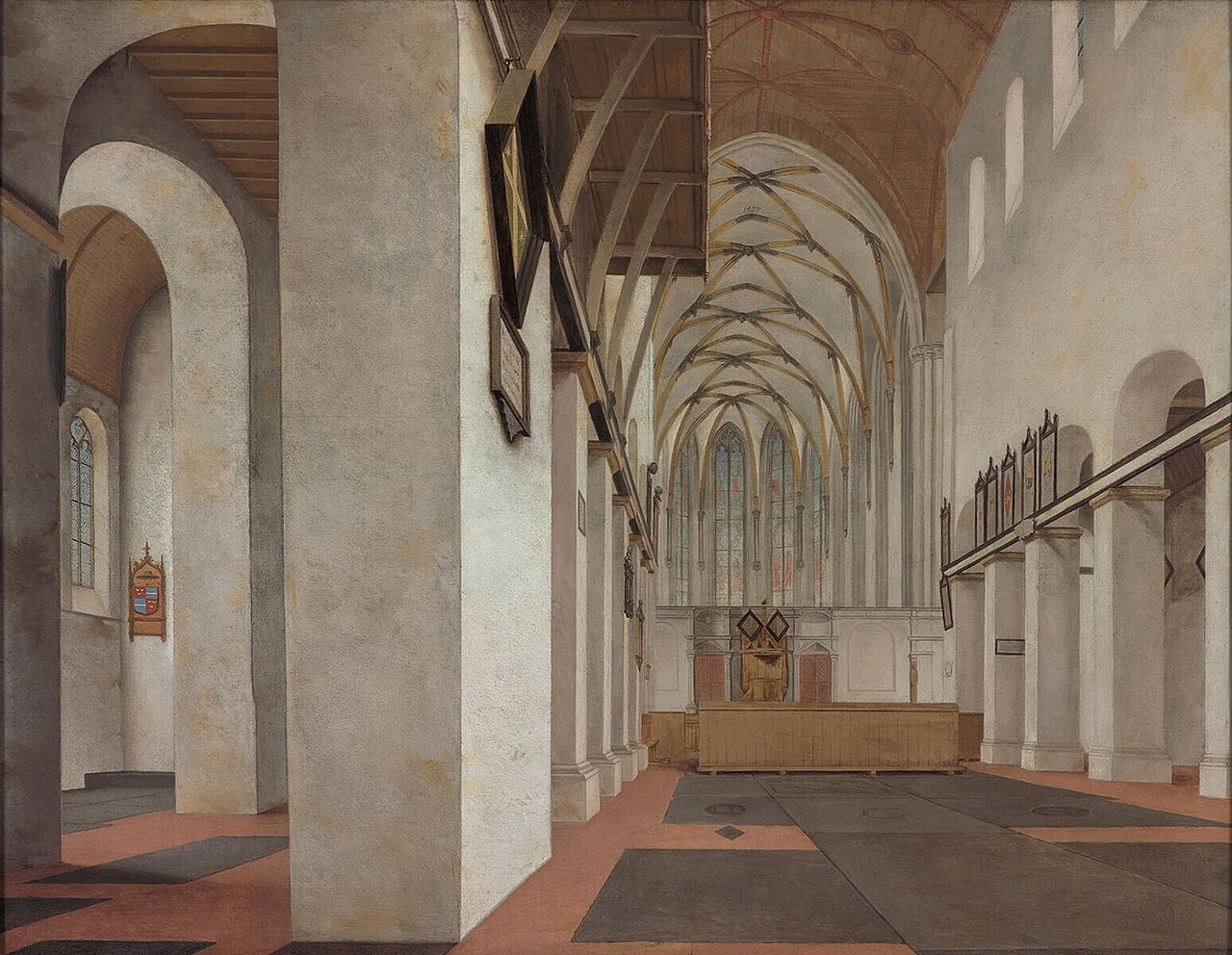 Reformed and Presbyterian
The Beeldenstorm and Reformed Iconoclasm
In the summer of 1566 a wave of image-breaking swept the churches of the Low Countries, and the Reformed territories of Europe methodically emptied their churches: the most sustained Christian iconoclasm since Byzantium.
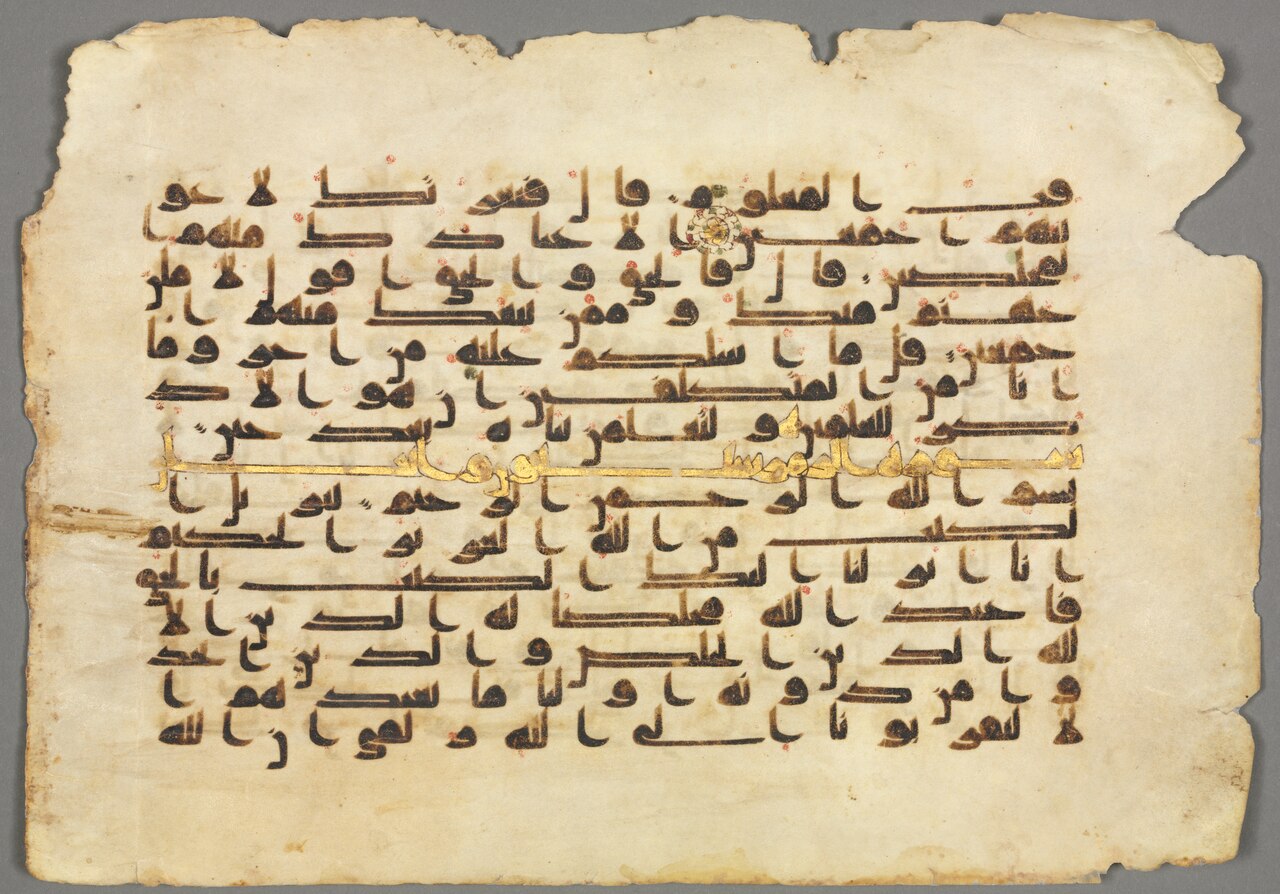 Muslim
A Kufic Qur'an Folio
A parchment leaf of an Abbasid Qur'an in angular Kufic script, its verse endings touched with gold: the page as the supreme religious image of an aniconic faith.
 Muslim
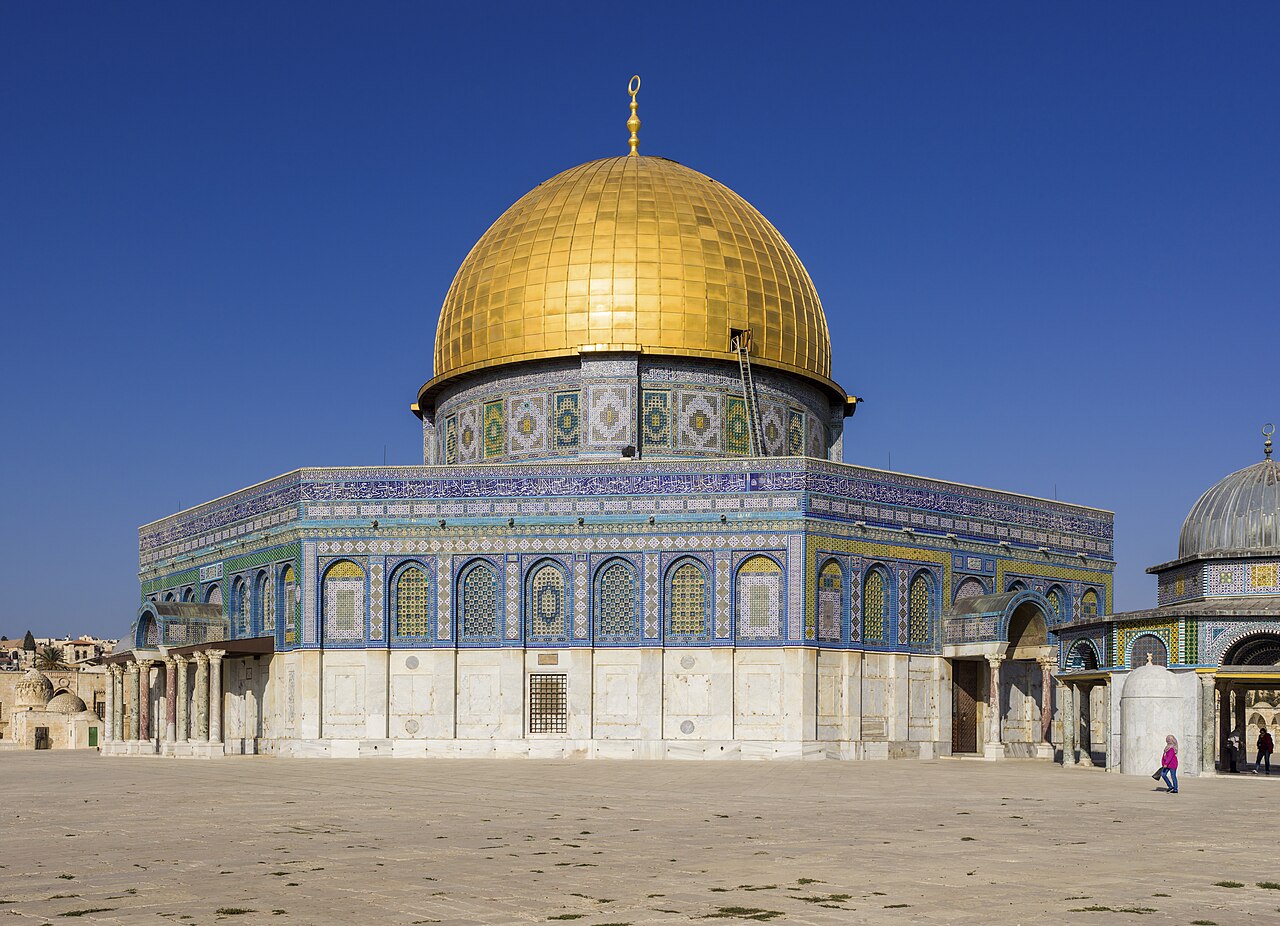
The Dome of the Rock
The oldest surviving monument of Islamic architecture (Jerusalem, 691–692): a shrine of mosaic, marble, and inscription, whose entire decorative program argues aniconism's positive case.
 Muslim
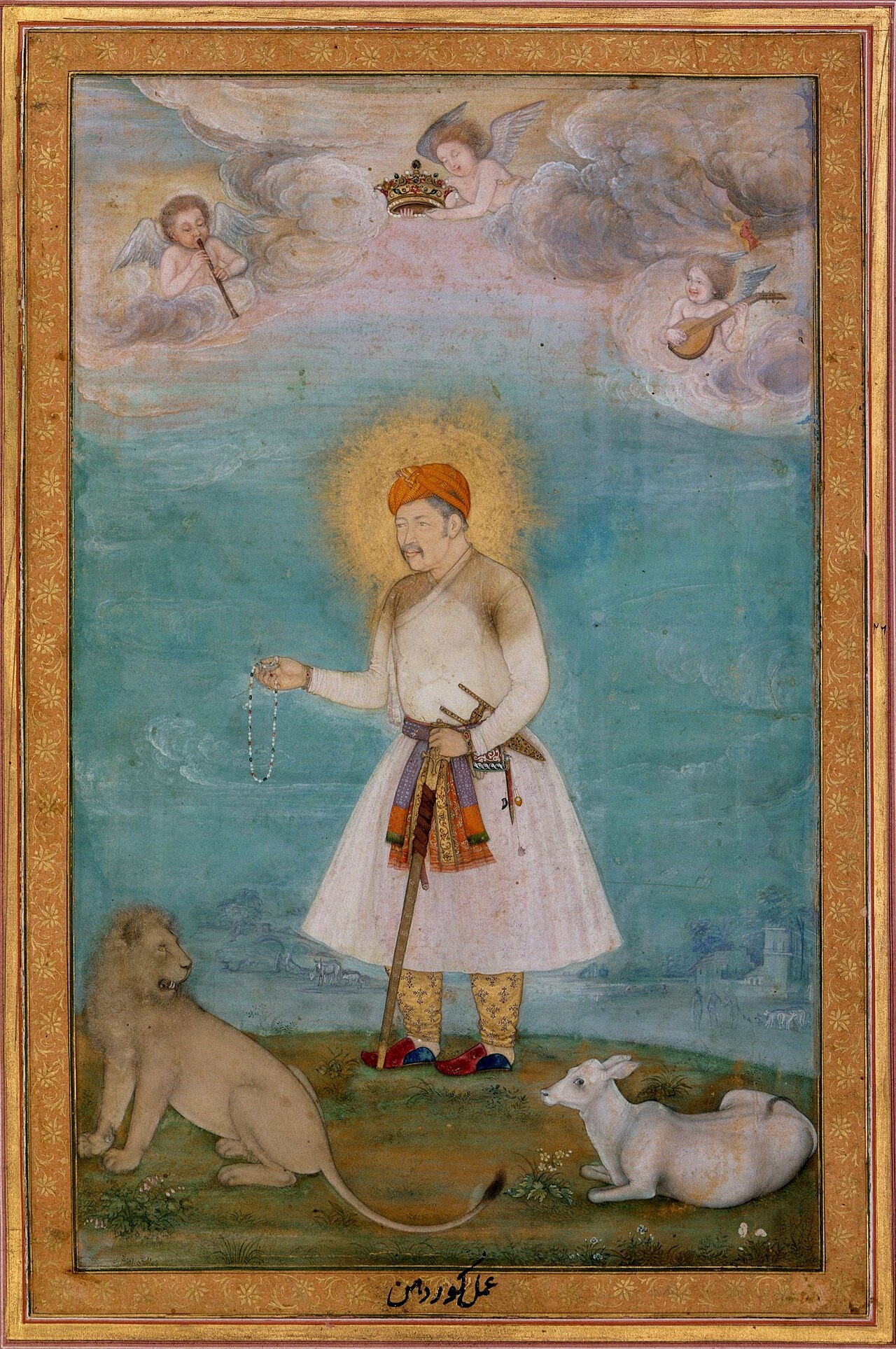
The Mughal Court Miniature
The figural painting of the Mughal emperors' atelier — hunts, audiences, lovers, and saints in jewel-like detail — standing as the descriptive practice beside Islam's normative aniconism.
 Jewish
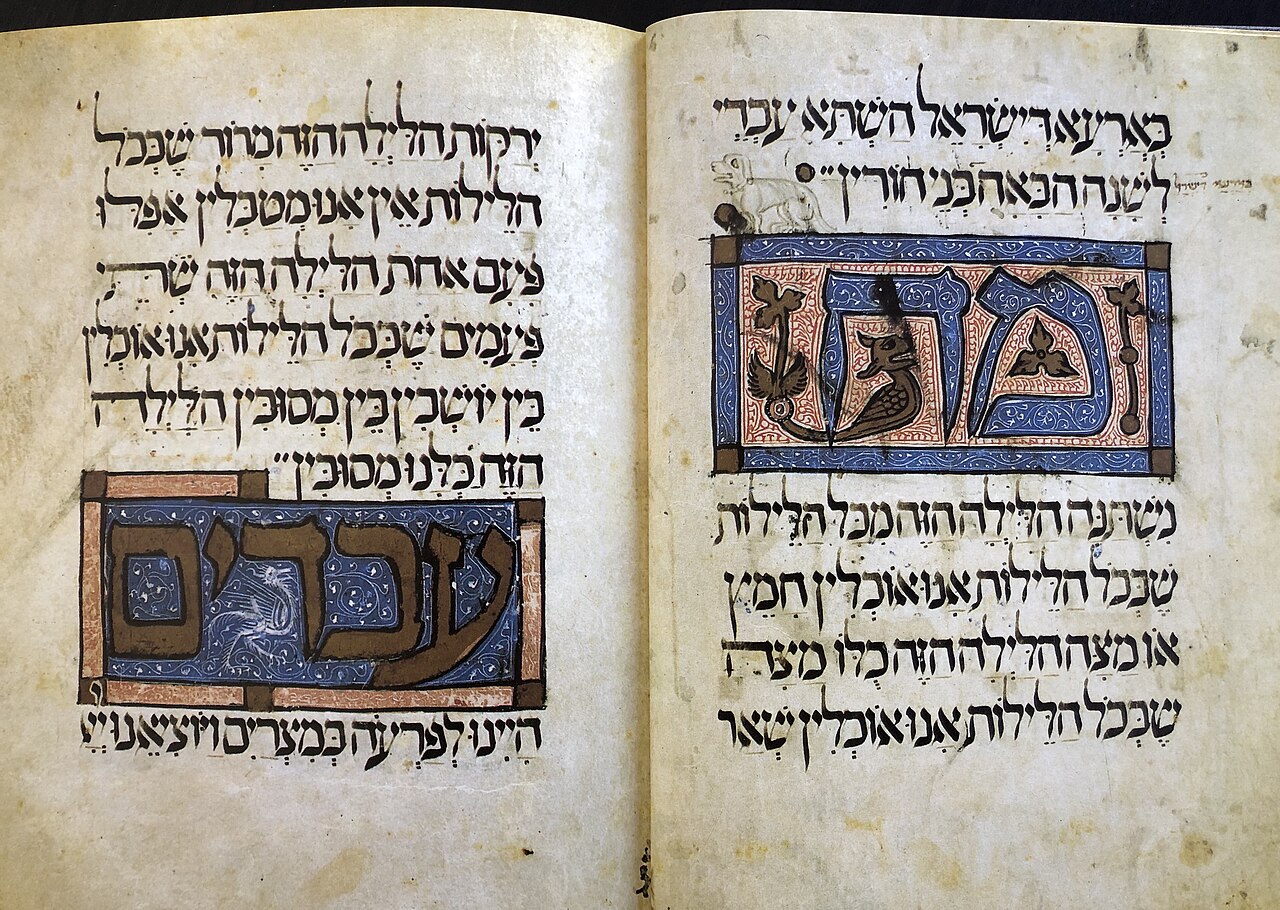
The Sarajevo Haggadah
A Passover Haggadah illuminated in Barcelona around 1350 — thirty-four miniatures of the biblical story in a Jewish book — treasured, hidden from Nazis and from war, and kept in Sarajevo as the city's emblem of itself.
 Jewish
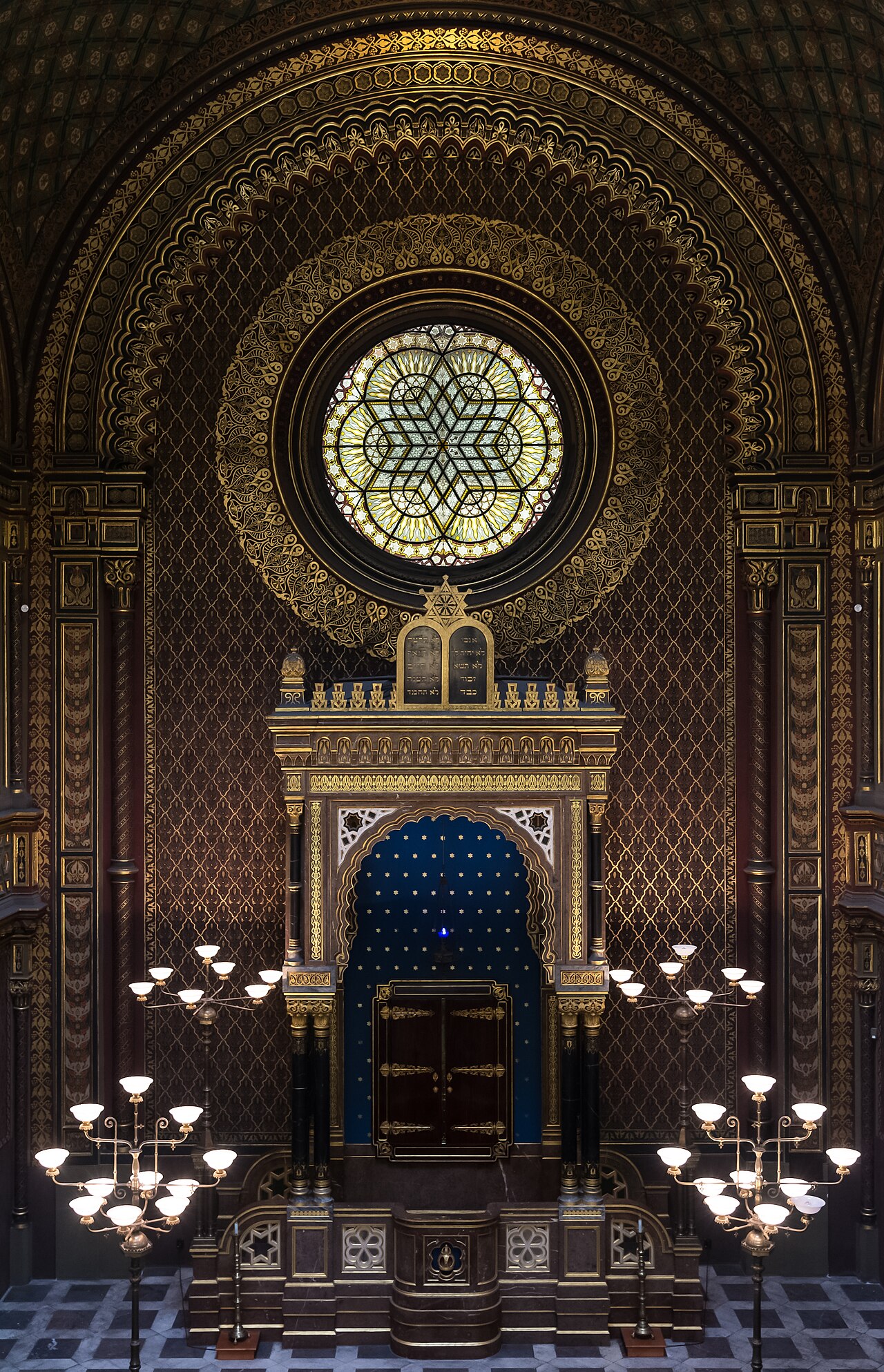
The Torah Ark and Its Ornaments
The ark that houses the scroll, and the silver that dresses it — crown, shield, pointer, and finials: ceremonial art at the center of synagogue worship, governed by the principle of beautifying the commandment.
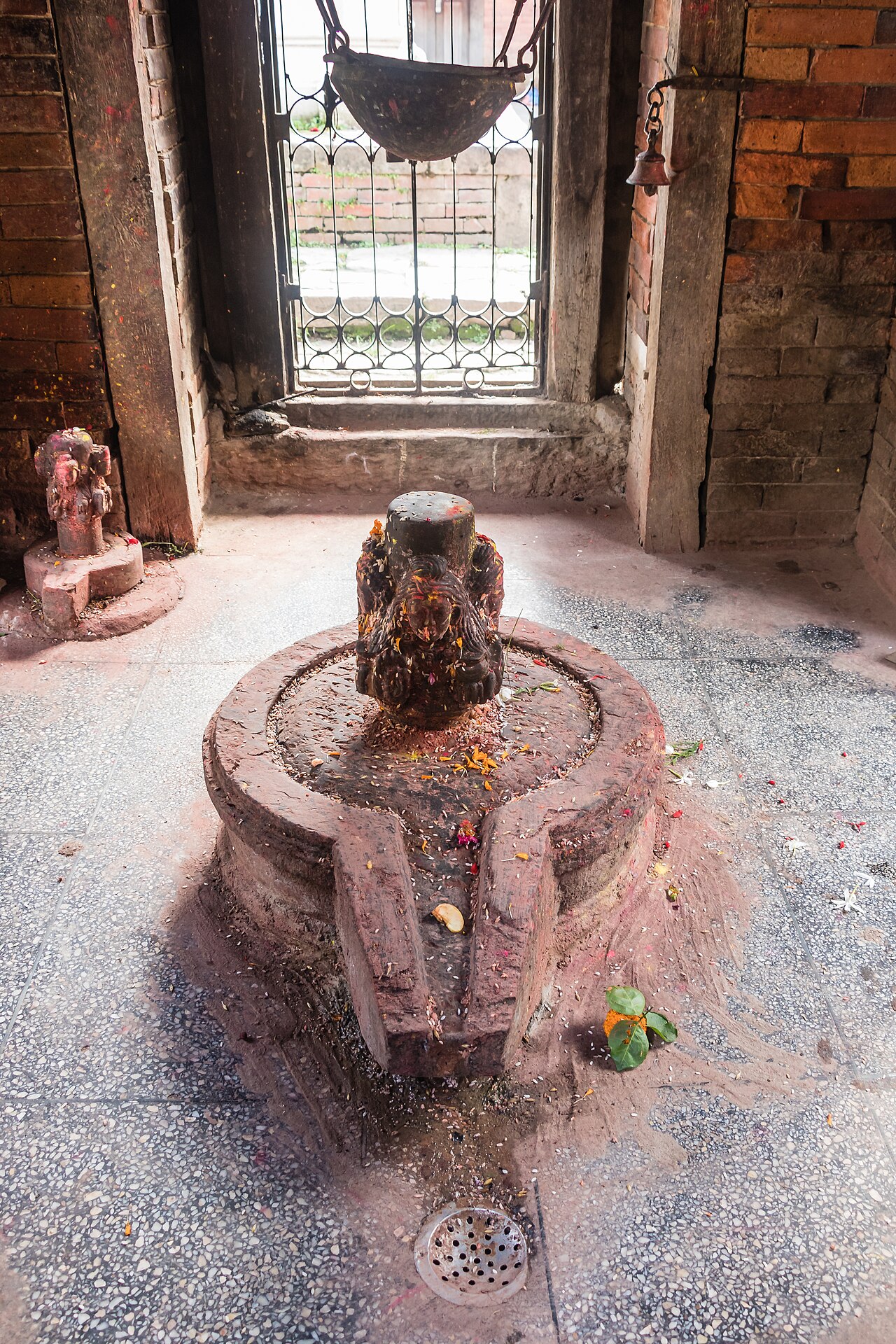 Hindu, Shaivism
The Shiva Linga
A polished stone shaft rising from its base, bathed daily in water, milk, and flowers: the aniconic murti of Shiva, worshipped not as a symbol of an absent god but as the god's own form.
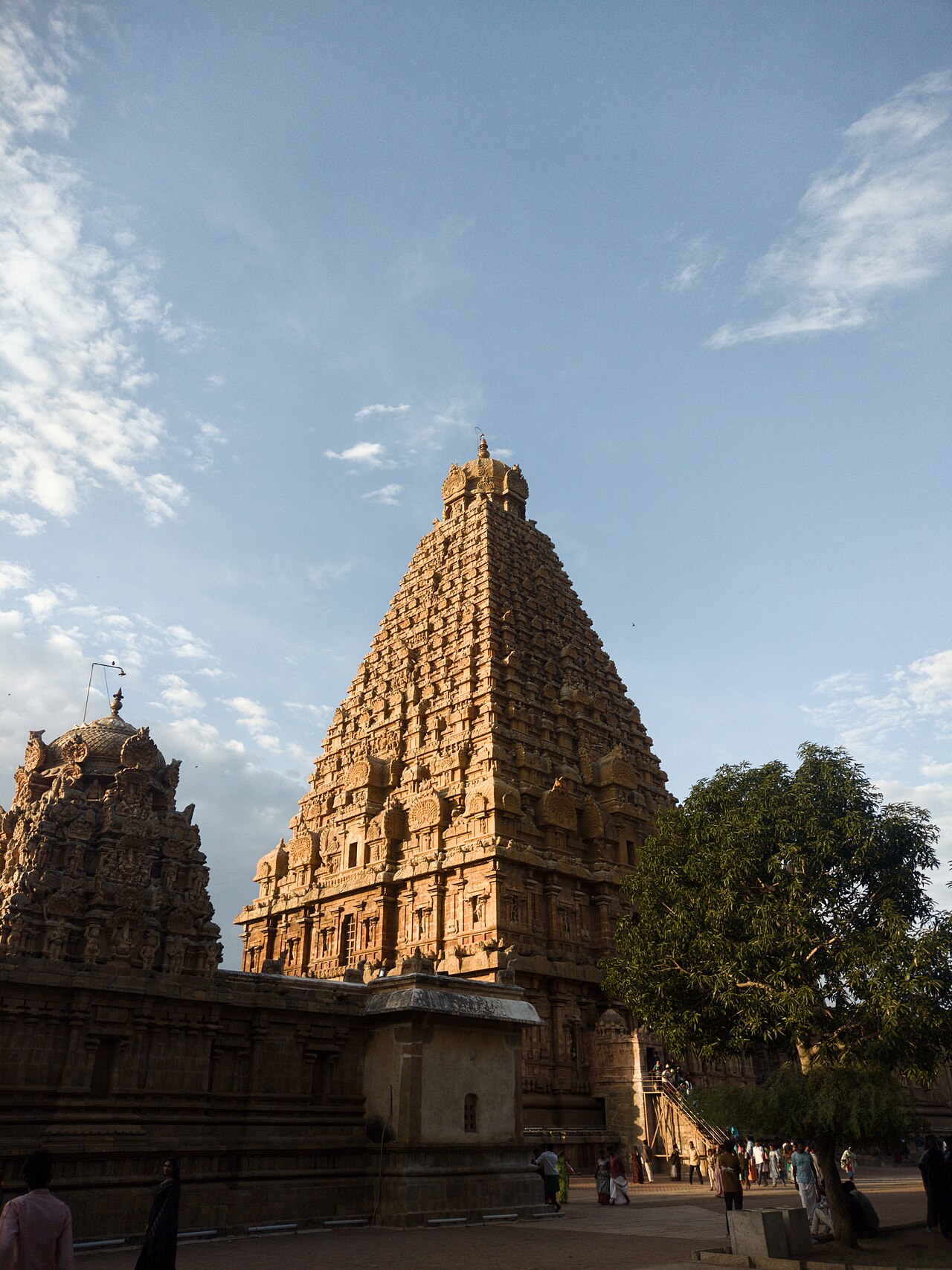 Hindu, Shaivism
Brihadeeswara Temple
Rajaraja Chola's temple at Thanjavur (completed 1010): a granite mountain of sculpture raised over one of India's great lingas, and the Chola bronze tradition's home ground.
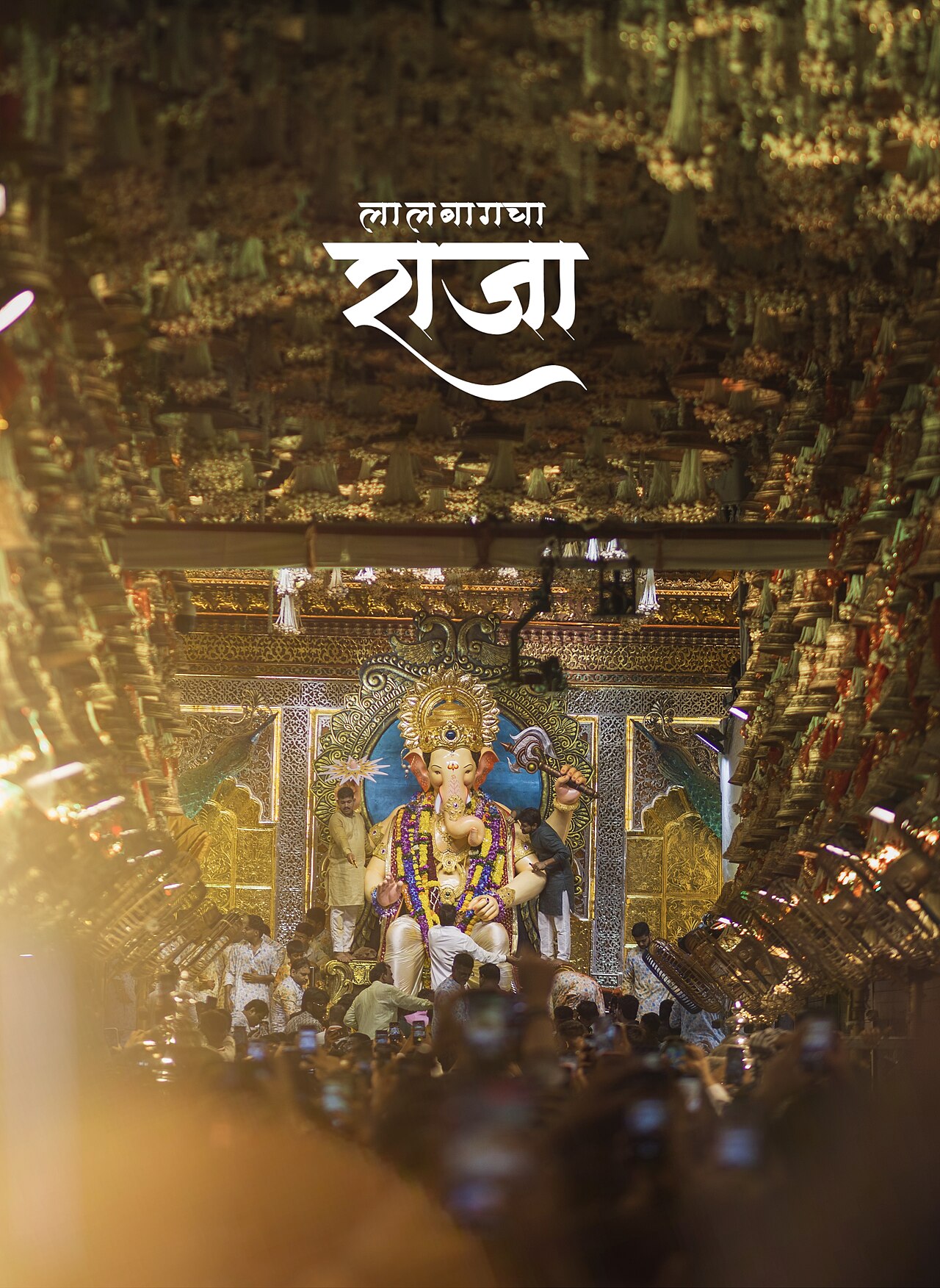 Hindu
The Ganesh Chaturthi Murti
A clay Ganesh, modeled and painted by neighborhood artisans, worshipped in streets and homes for up to eleven days, then carried in procession and immersed: the murti as a guest who is honored and bid farewell.
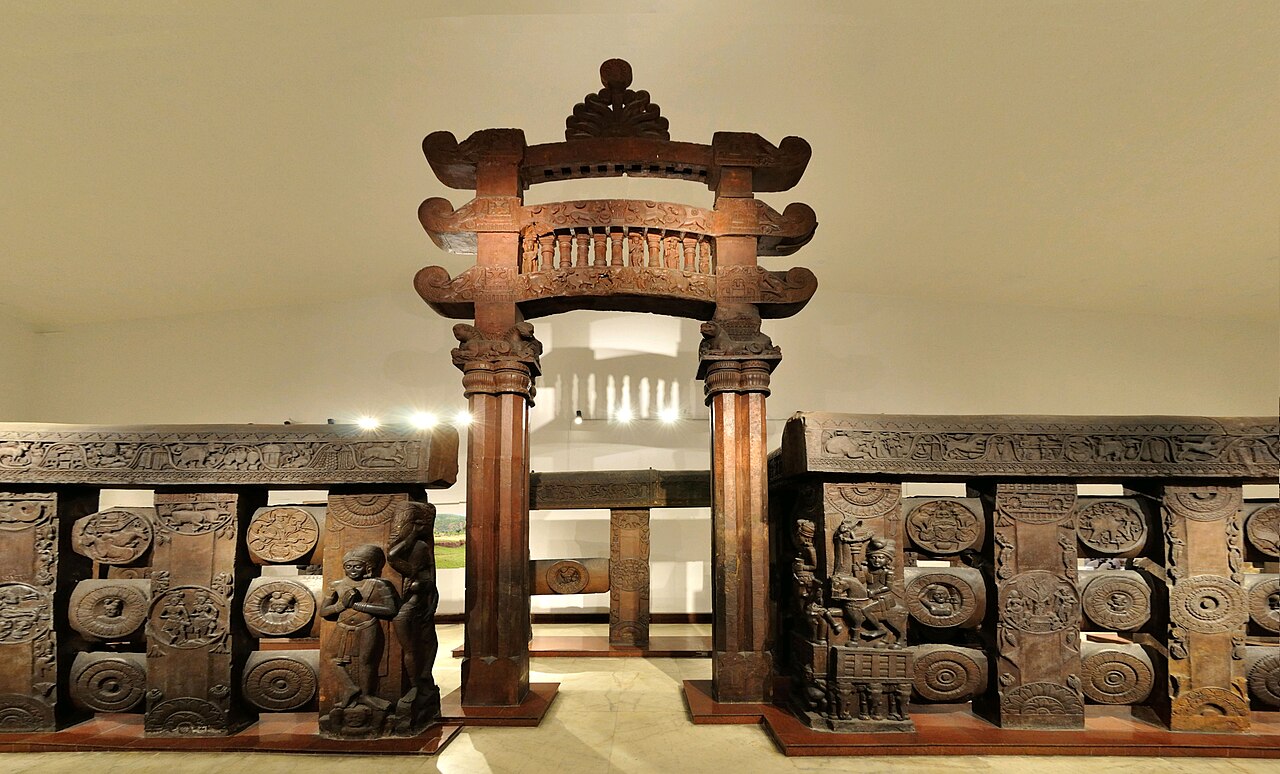 Buddhist
The Bharhut Railing
The carved sandstone railing of the Bharhut stupa (c. 150–100 BCE), its medallions crowded with jataka tales and labeled in Brahmi — and the Buddha, in scene after scene, present only by symbol.
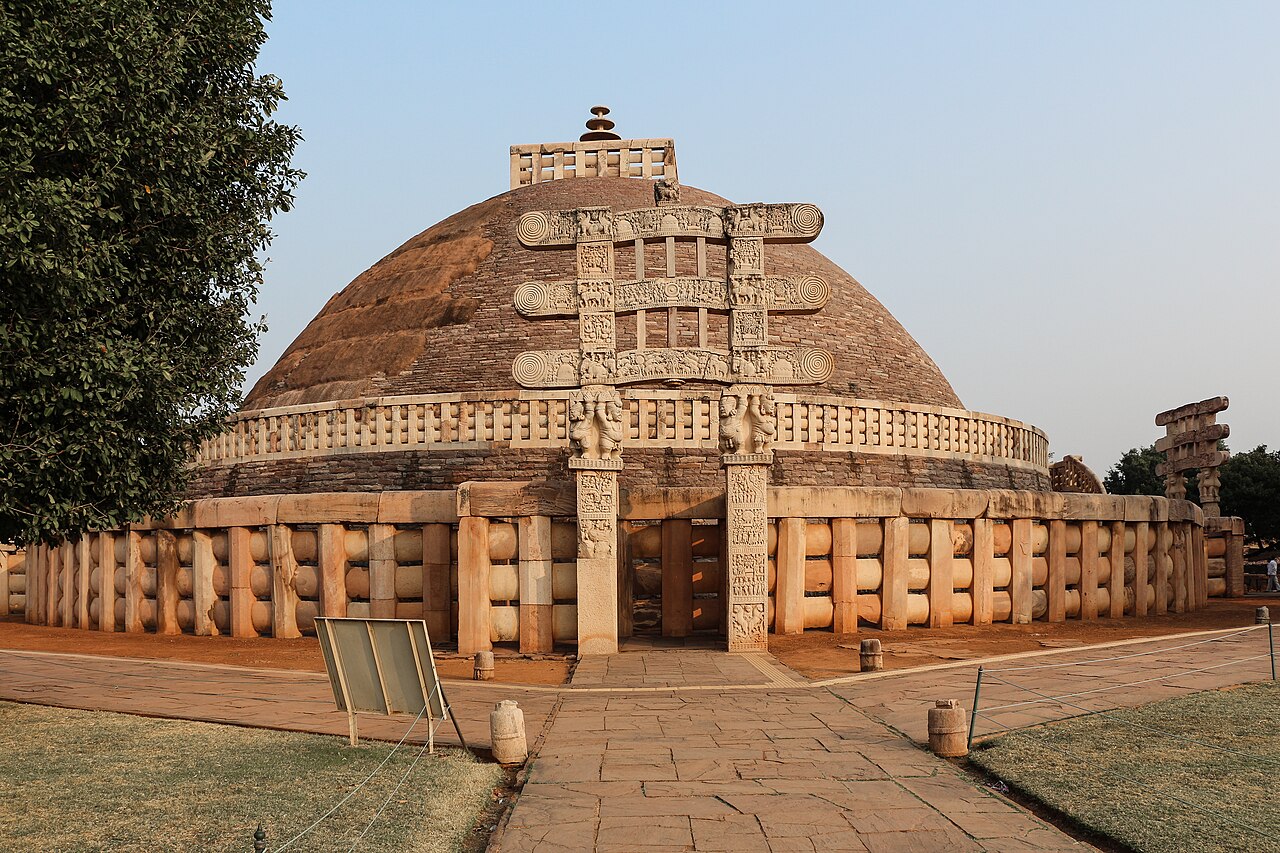 Buddhist
The Great Stupa at Sanchi
The oldest stone stupa in India, begun under Ashoka and crowned with four carved gateways: the reliquary mound as Buddhism's first monumental art, and its first aniconic center.
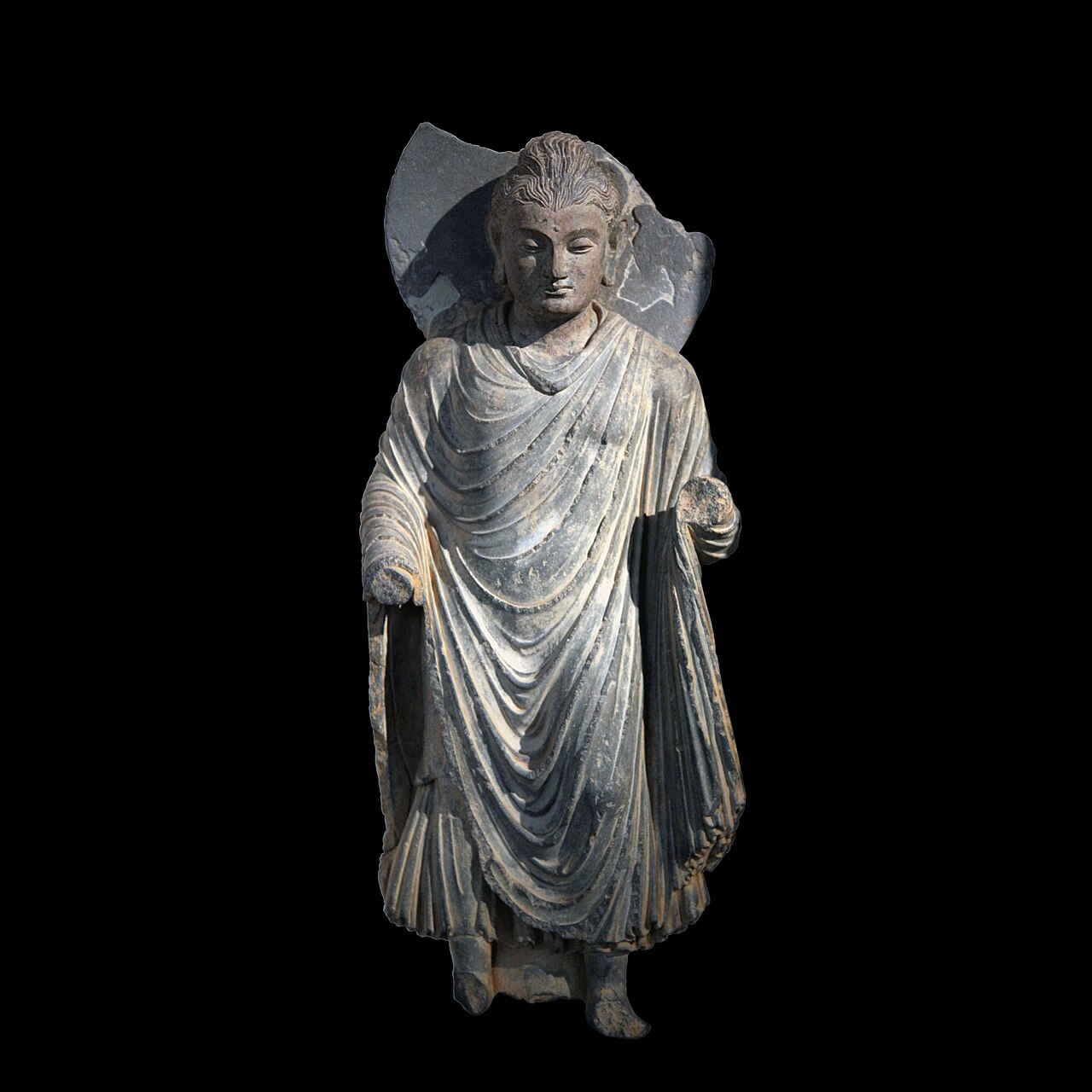 Buddhist
A Gandhara Buddha
The Buddha in human form from the workshops of Gandhara (1st–3rd century CE): Apollo's face, a Roman toga's folds, and the lakshanas of the Buddha — the image that changed Buddhist art forever.
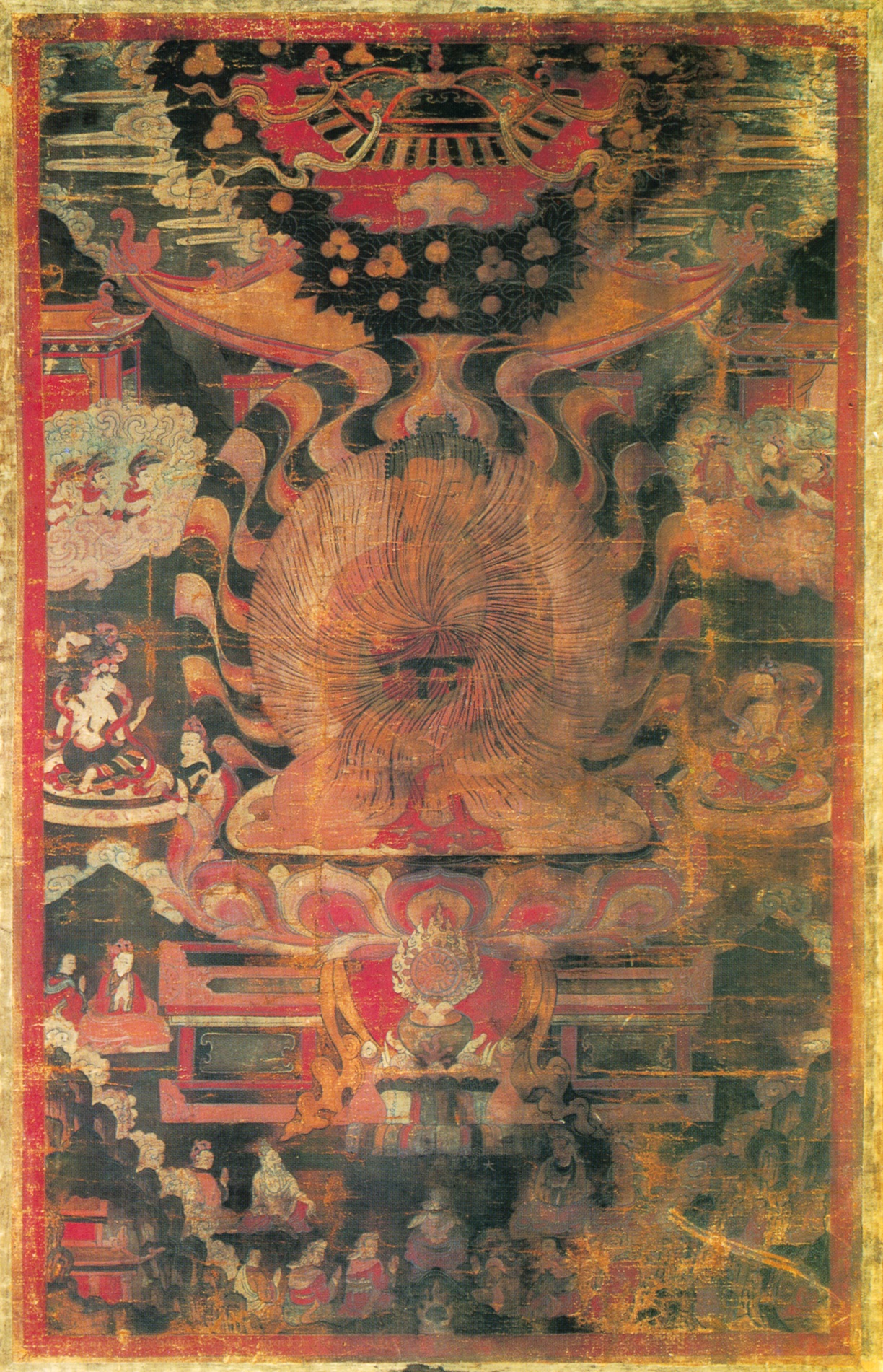 Buddhist, Tibetan Buddhism
The Tibetan Thangka
A portable scroll painting of a Buddha or deity in exact iconometric proportion — a meditation support, a teaching diagram, and a presence, rolled for the road and unrolled for the rite.
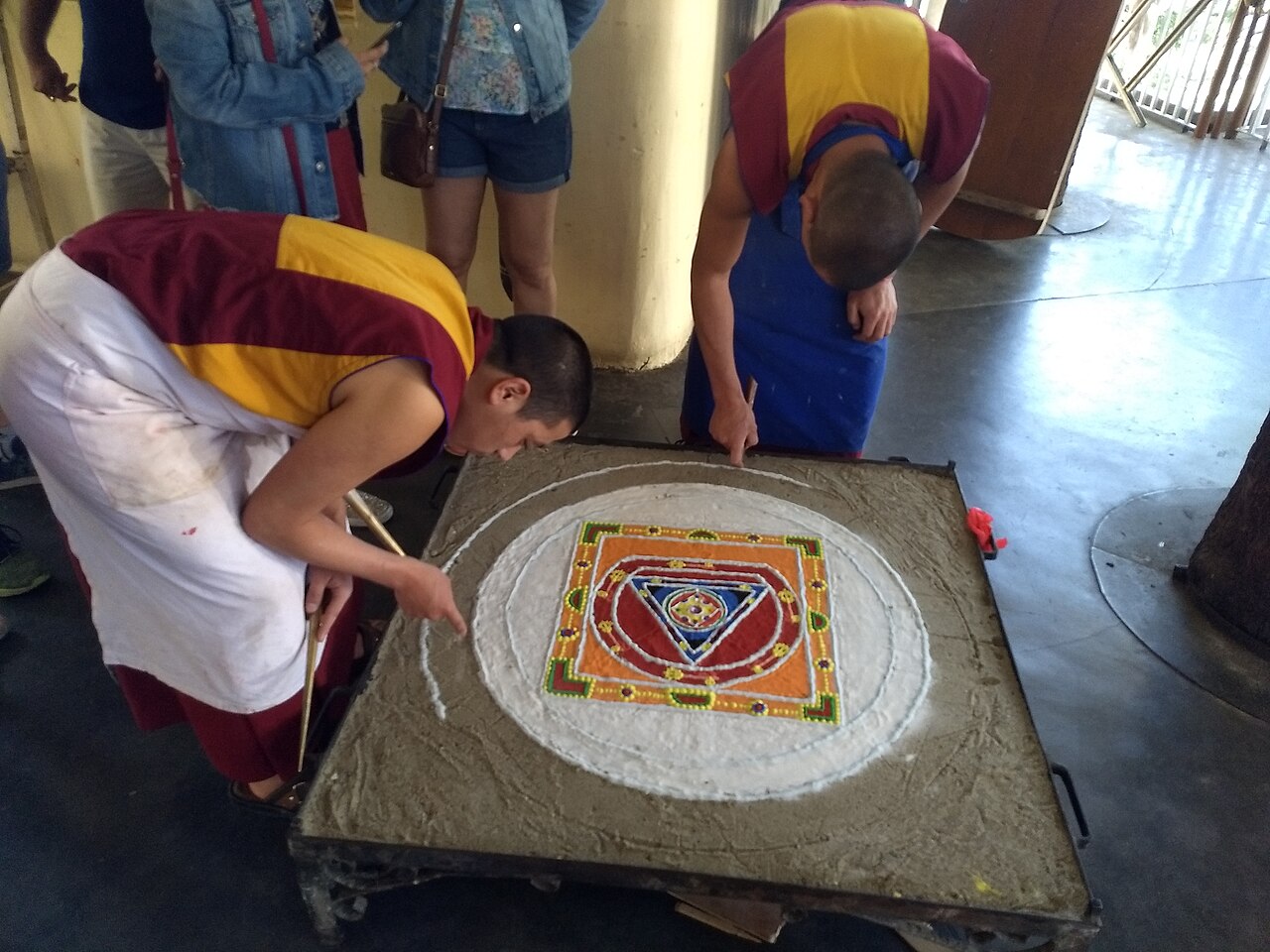 Buddhist, Tibetan Buddhism
The Sand Mandala
Monks lay down a palace of the deities grain by grain in colored sand, contemplate it for days — and then sweep it away and pour it into running water.
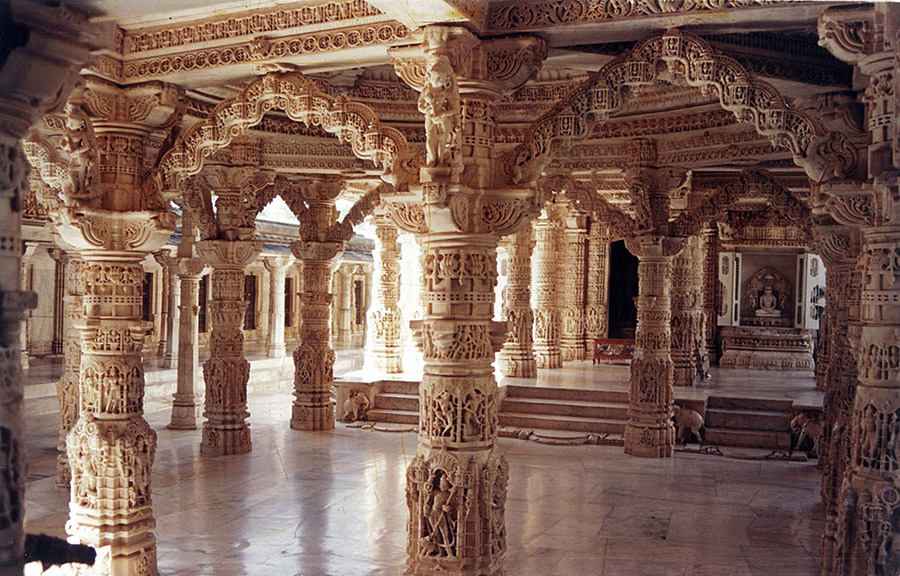 Jain, Shvetambara
The Dilwara Temples
Five Jain temples on Mount Abu whose plain exteriors open into marble interiors carved to the thinness of lace — the summit of Jain temple art.
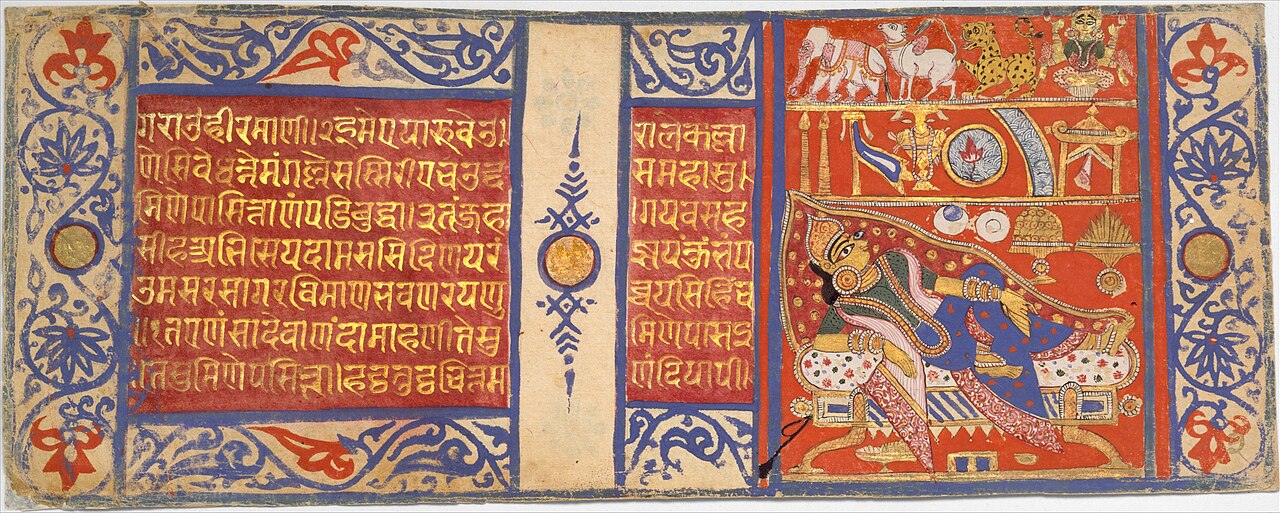 Jain, Shvetambara
A Kalpasutra Folio
One painted page from the most copied book in Jainism: the lives of the Tirthankaras in gold and ultramarine, read aloud and shown to the congregation during Paryushana.
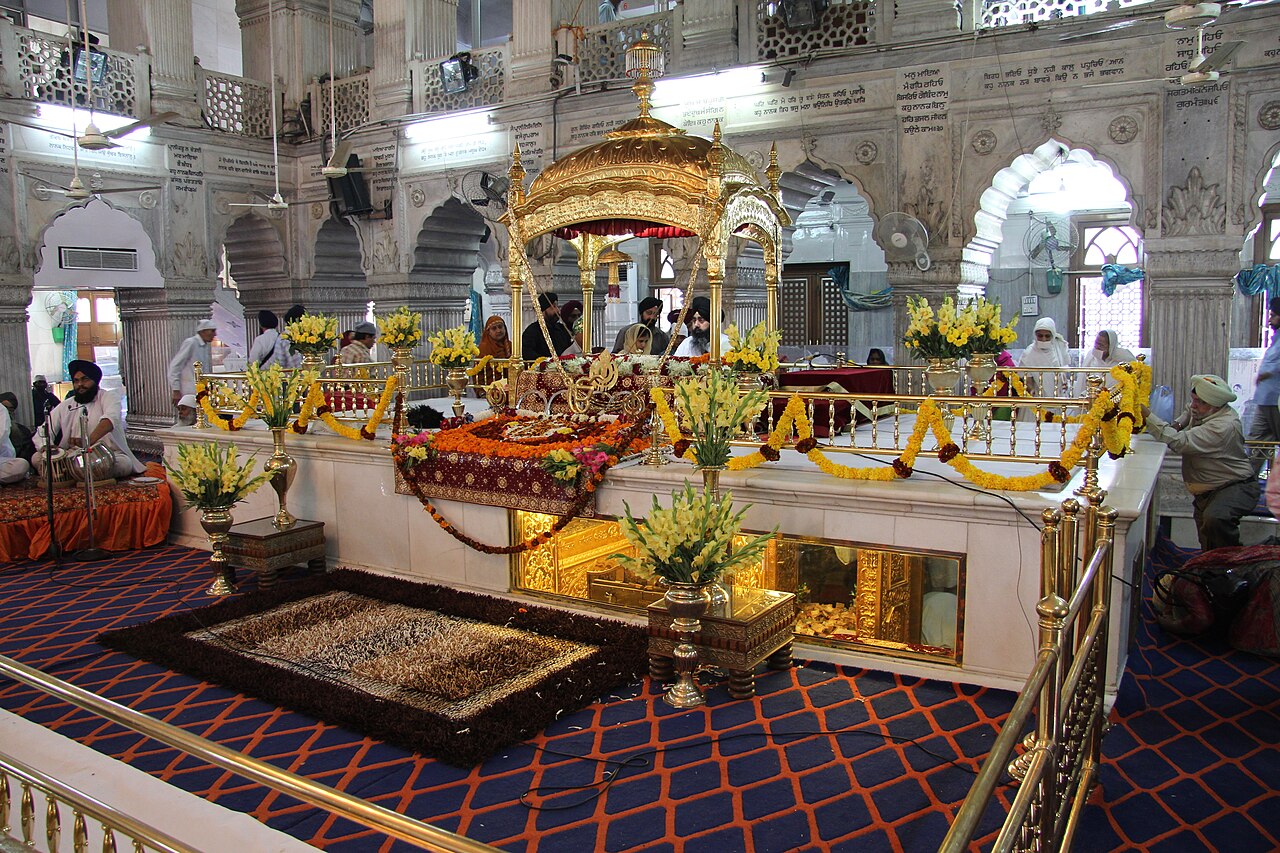 Sikh, The Khalsa Panth
The Guru Granth Sahib, Enthroned
The Sikh scripture is not shelved but enthroned — installed under a canopy on a raised seat, fanned with the chaur, woken each morning and put to rest each night, because it is the Guru.
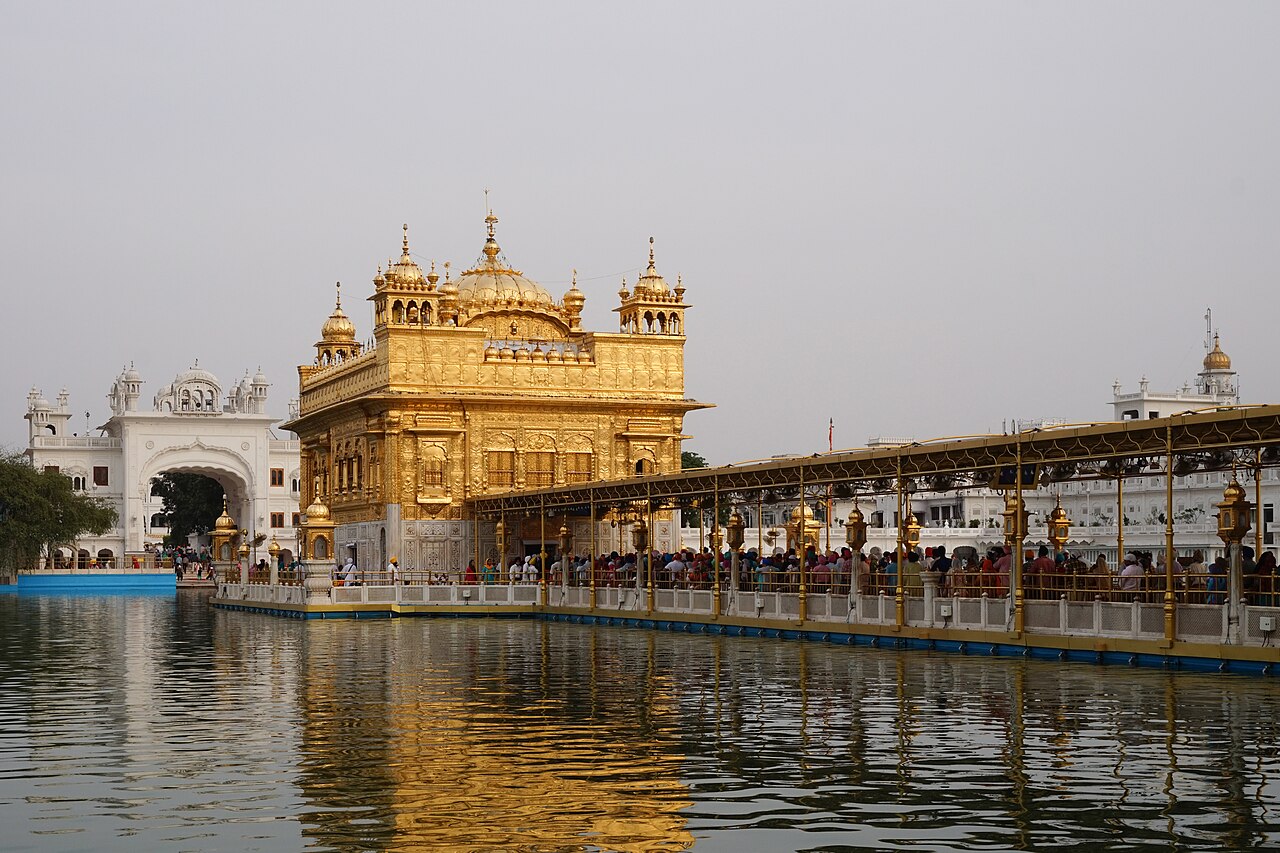 Sikh
The Golden Temple
A gilded sanctum standing in the middle of a sacred pool, reached by one causeway and entered by doors on all four sides — open to every direction and every caste.
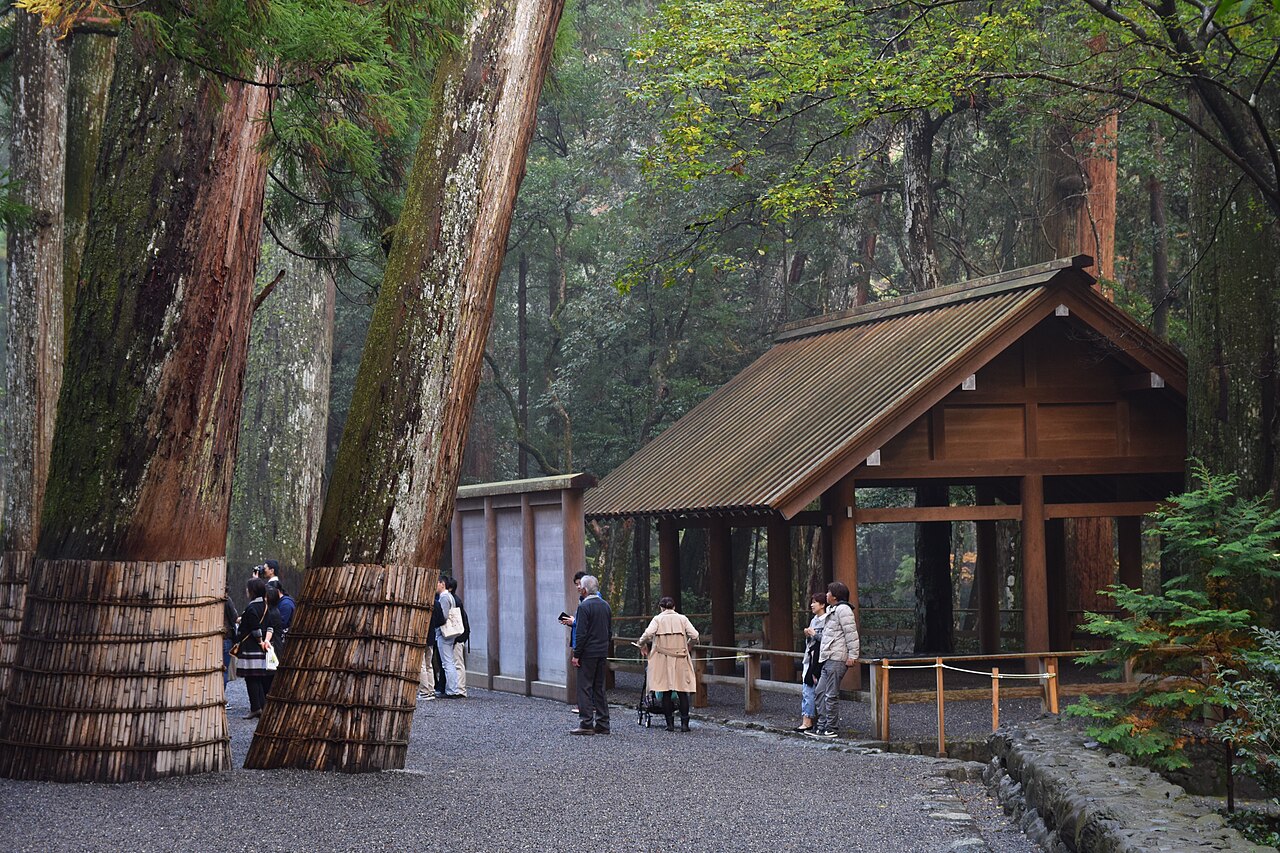 Jinja Shinto, Shinto
The Ise Grand Shrine
The most sacred shrine in Shinto is a plain cypress building that is torn down and rebuilt, identically, every twenty years — and has been for some thirteen centuries.
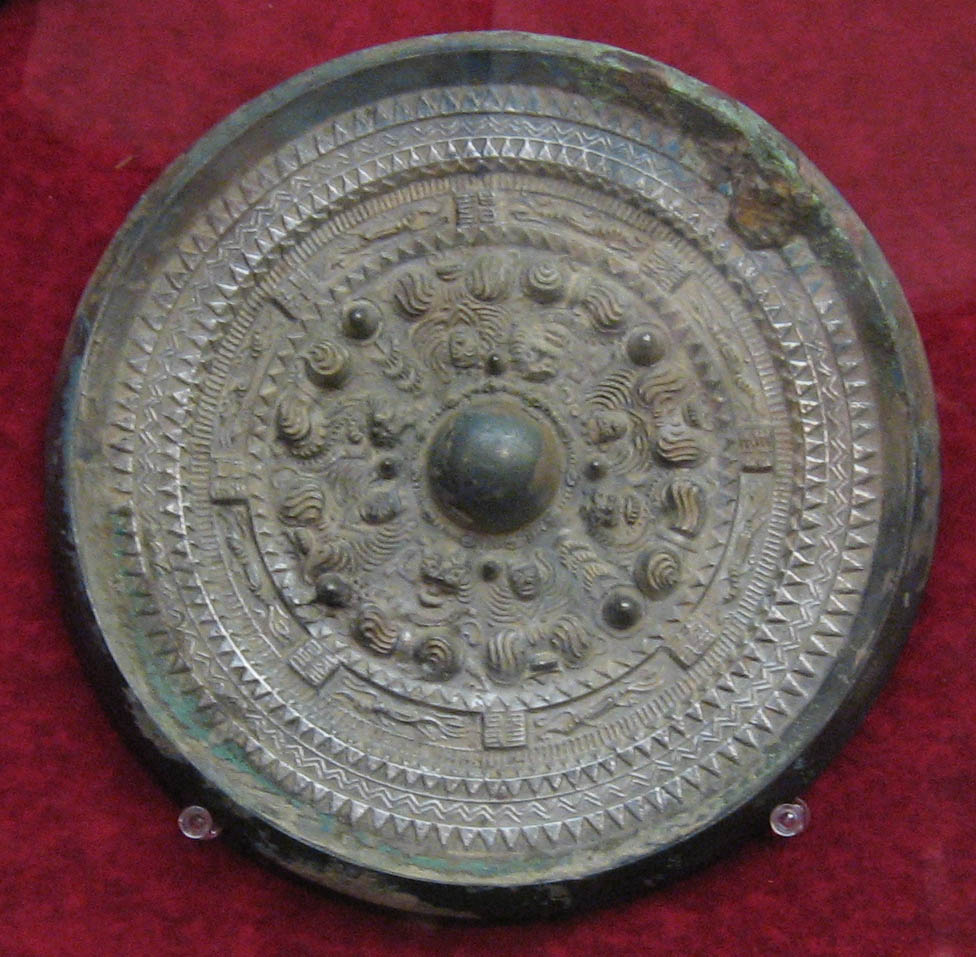 Shinto
The Shintai Mirror
Behind the doors of a Shinto shrine sits an object no one looks at — a mirror, sword, or stone that is the seat of the kami. The pictured mirror is of the kind enshrined; the enshrined mirror itself has never been photographed.
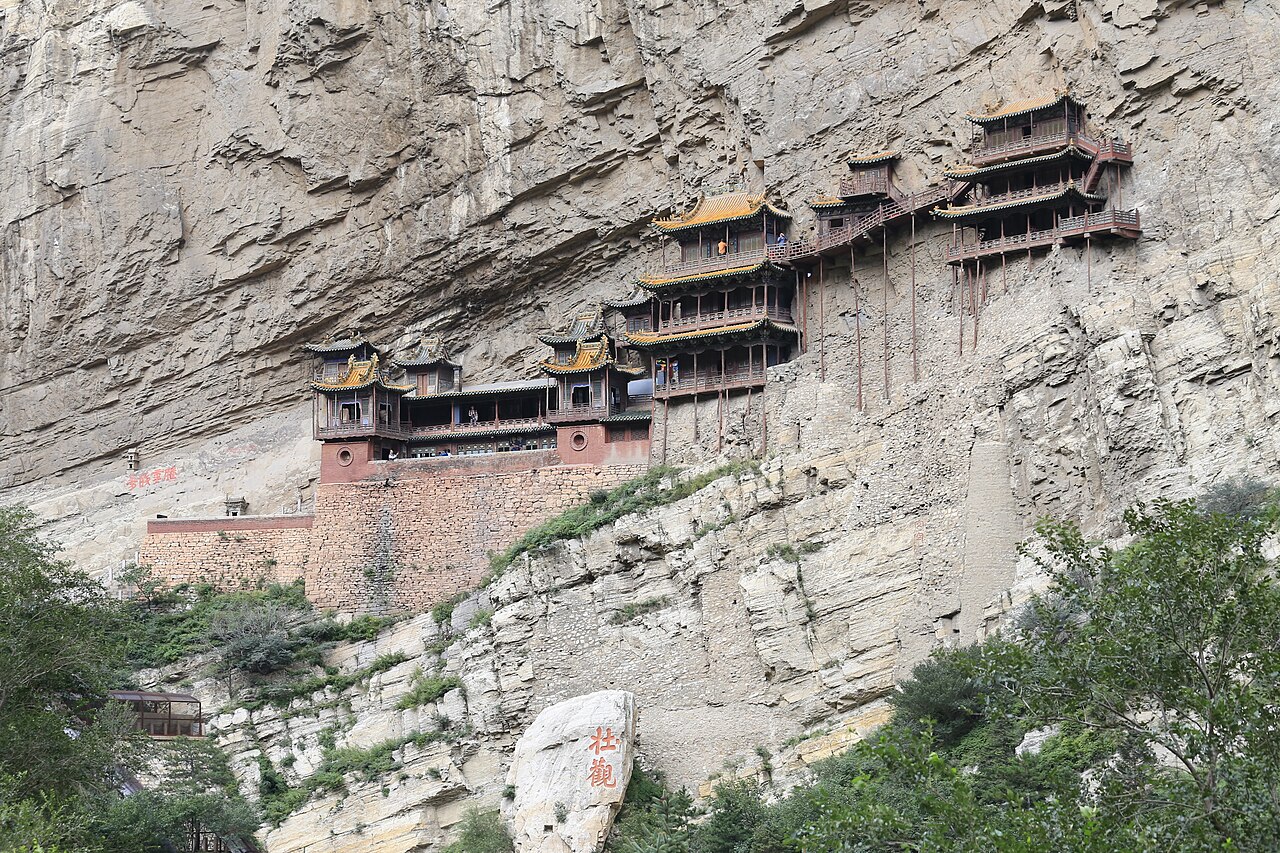 Buddhist, Confucianism
The Hanging Temple
A monastery of forty halls pinned to a cliff face on Mount Heng, holding altars to Confucius, Laozi, and the Buddha under one roof — the Three Teachings in a single building.
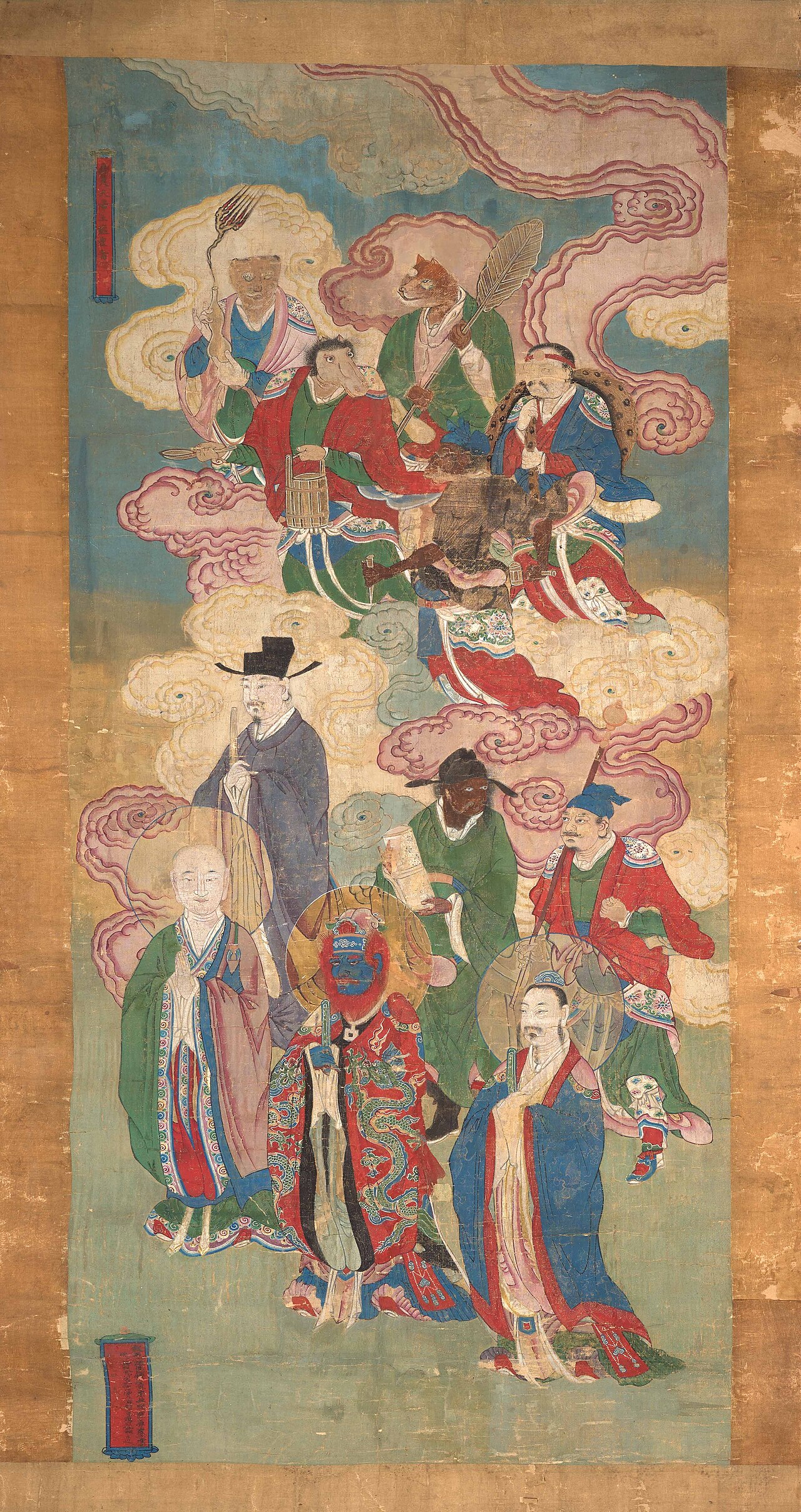 Daoism
The Shuilu (Water-Land) Paintings
Sets of hanging scrolls that assemble the whole cosmos — Buddhas, Daoist gods, ancestors, and the hungry dead — for the Water-Land rite, Chinese religion's most inclusive ceremony of deliverance.
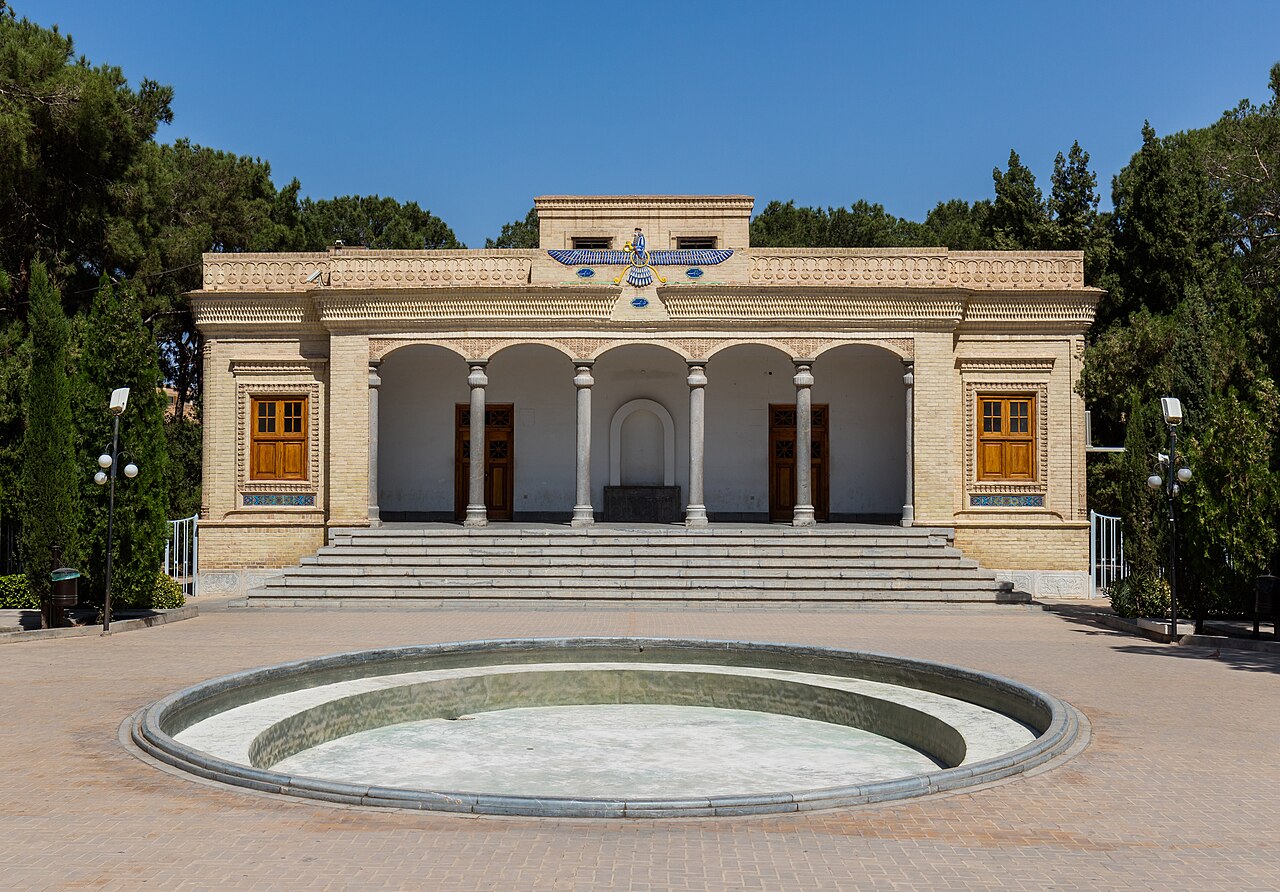 Zoroastrianism
The Yazd Fire Temple
A temple in Yazd whose sacred fire has been kept burning, by the tradition's account, since about 470 CE — carried from shrine to shrine across fifteen centuries and tended daily behind glass.
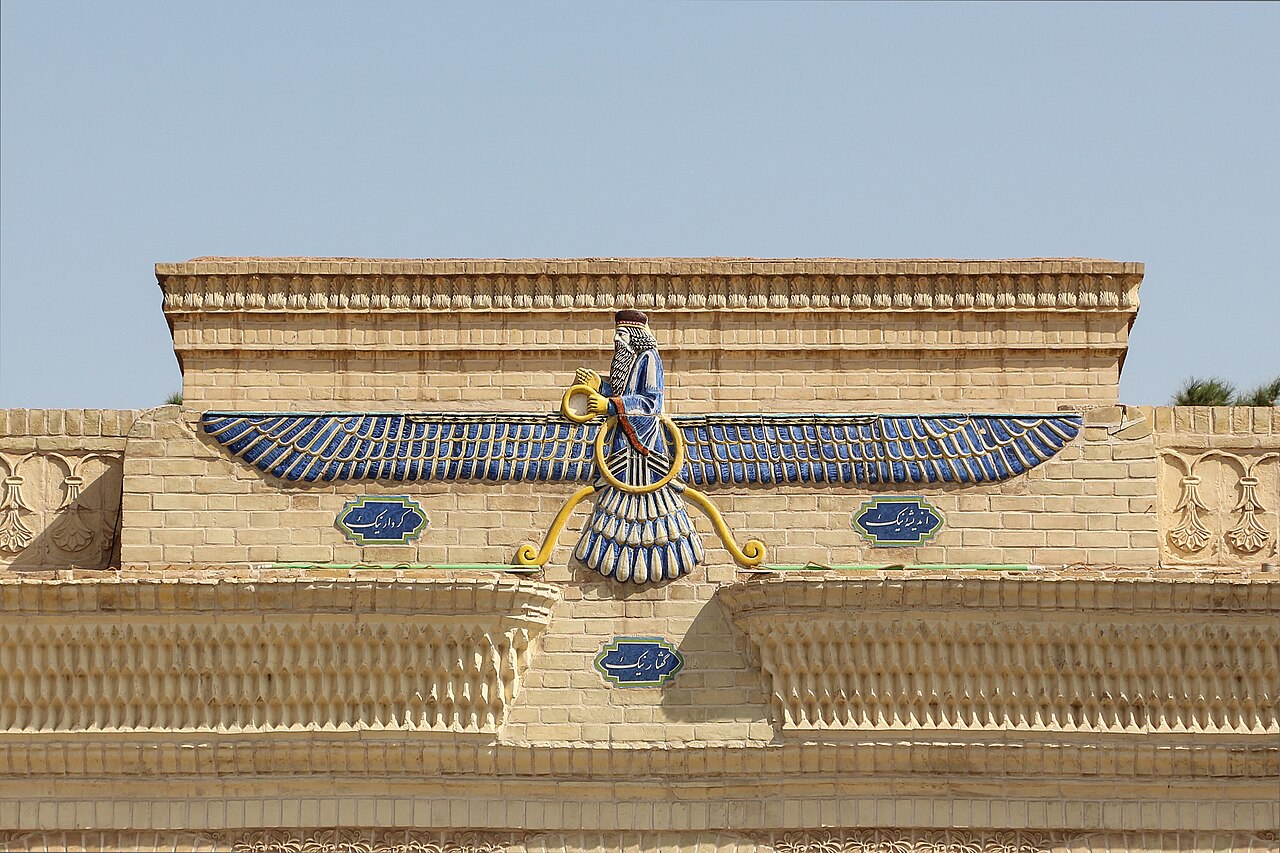 Zoroastrianism
The Fravahar
A bearded figure in a winged disc, carved over temple doors and printed on calendars from Mumbai to Toronto — the Zoroastrian emblem whose original meaning scholars still argue about.
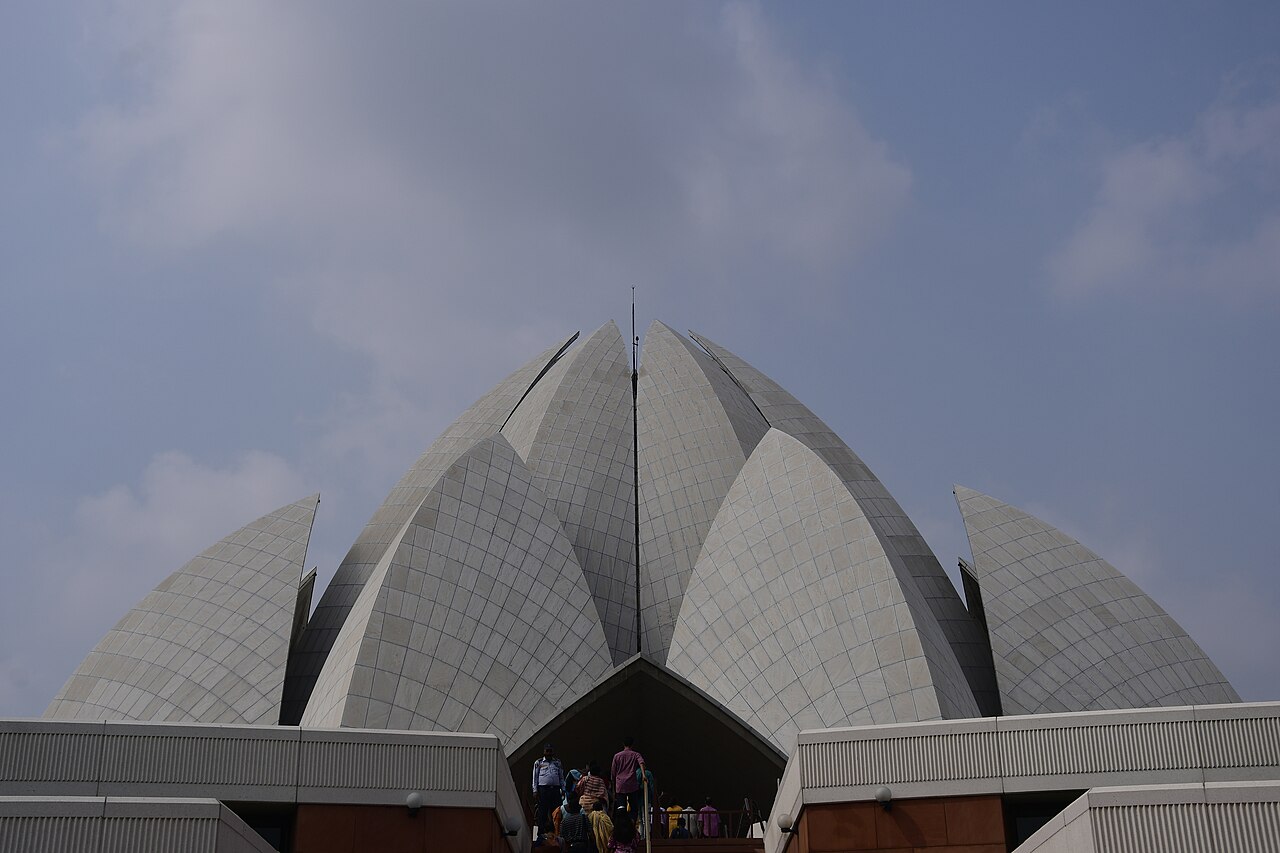 Bahá'í
The Lotus Temple
A white marble lotus of twenty-seven petals, open to all, in which no sermon is preached and no image hangs — only the scriptures of the world's religions are read and sung.
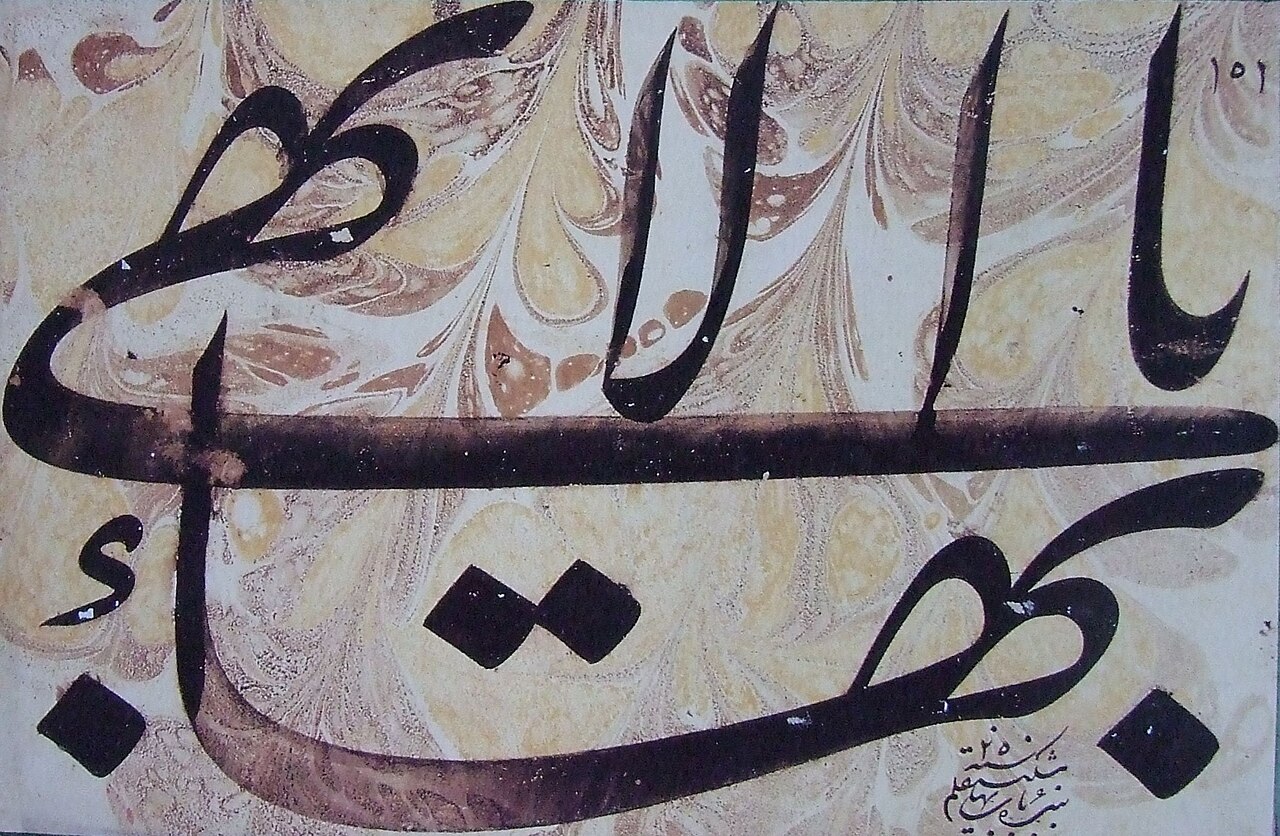 Bahá'í
The Greatest Name in Calligraphy
The Bahá'í invocation rendered as calligraphy by Mishkin-Qalam, the tradition's master penman — the sacred name made visible as pattern, in a faith that declines to depict its Manifestations.
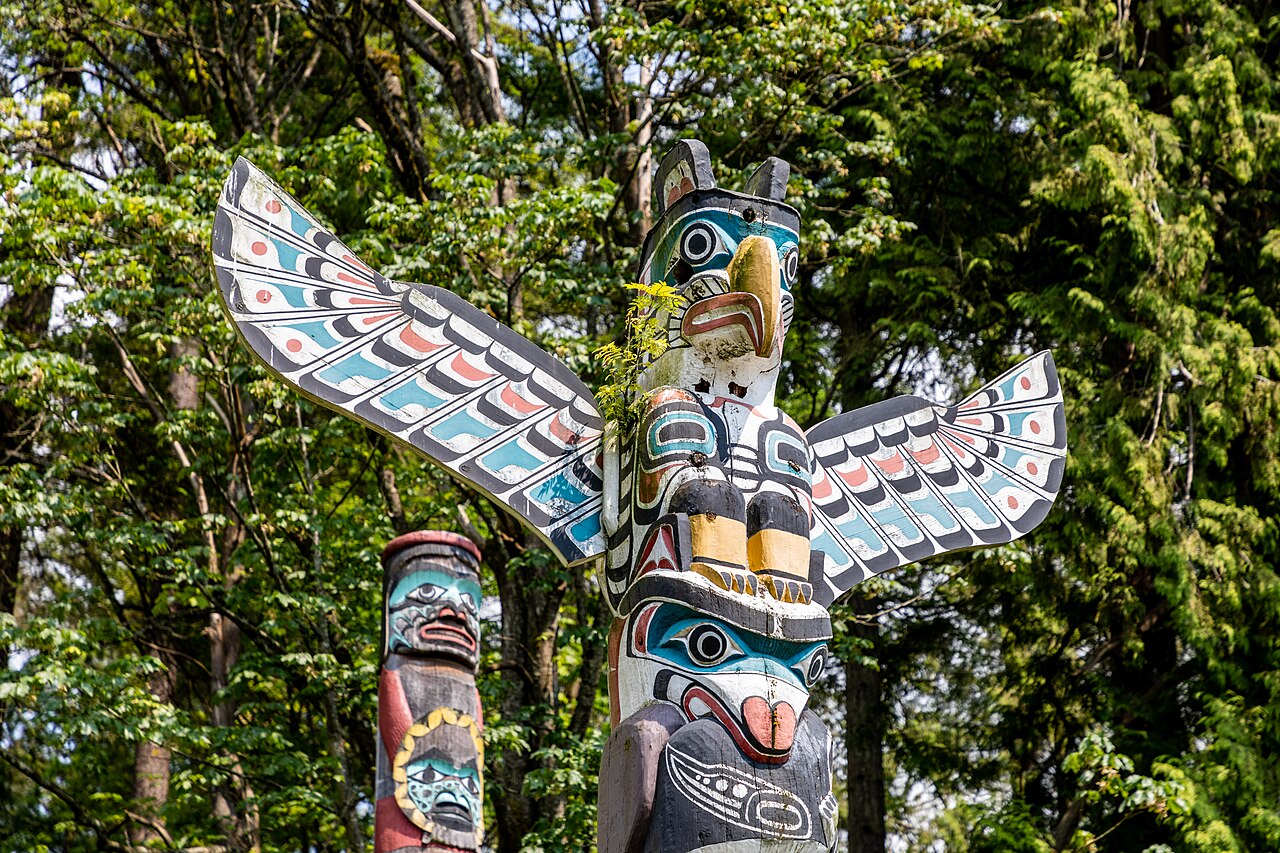 Indigenous and Traditional, Native American Religions
Northwest Coast Formline and the Crest Pole
A visual grammar of ovoids and U-forms that writes family crests in cedar — the pole at Brockton Point, carved by Ellen Neel, stands in public where its predecessors have stood since the 1880s.
Image not shown, by request of the community
Indigenous and Traditional, Native American Religions
Potlatch Masks — Image Withheld
Masks danced at the potlatch open and transform as the ancestor arrives. This page shows no image: the masks are community-governed regalia, and their photographs are published here only with the owning community's consent, which has not been sought for specific pieces.
No image — the entry explains why
Christian, Secular and Non-Theistic
AI-Generated Religious Art
Image generators now produce Christs, Buddhas, and temple scenes on demand. The traditions are answering — some with welcome, some with prohibitions that reach the new medium directly. This page shows no generated image, because any single example would misrepresent the argument.
Themes
Theme
Iconoclasm: The Theology of Breaking Images
Image destruction recurs across traditions — Byzantine, Reformed, Islamic, Sikh, and secular-revolutionary — and it is never mere vandalism. It is a theology acted out.
Theme
The Image and the Incarnation
The distinctively Christian argument for visible art: the invisible God became visible flesh, so depiction is confession, not idolatry.
Theme
The Image and Tawhid
The Islamic argument from divine unity: because God is one and incomparable, representation risks shirk — and the word, not the figure, becomes the image.
Theme
Aniconism and the Symbol
The cross, the linga, the torii, the fire altar, the wheel, the written word: what traditions put in the figure's place is never an absence.
Theme
Art as Pedagogy
The Biblia pauperum, the thangka, the mandala, the Kalpasutra page: images as the teaching instrument of traditions whose books many could not read.
Theme
Art as Devotion
Icons kissed, murtis bathed and fed, a scripture fanned like a king: devotion is the embodied practice that makes art a presence rather than a picture.
Theme
Art as Power
Temple economies, imperial patronage, and image destruction as political theology: art is how communities spend, rule, and remember — which is why conquerors reach for it.
Theme
Museums and Secularization
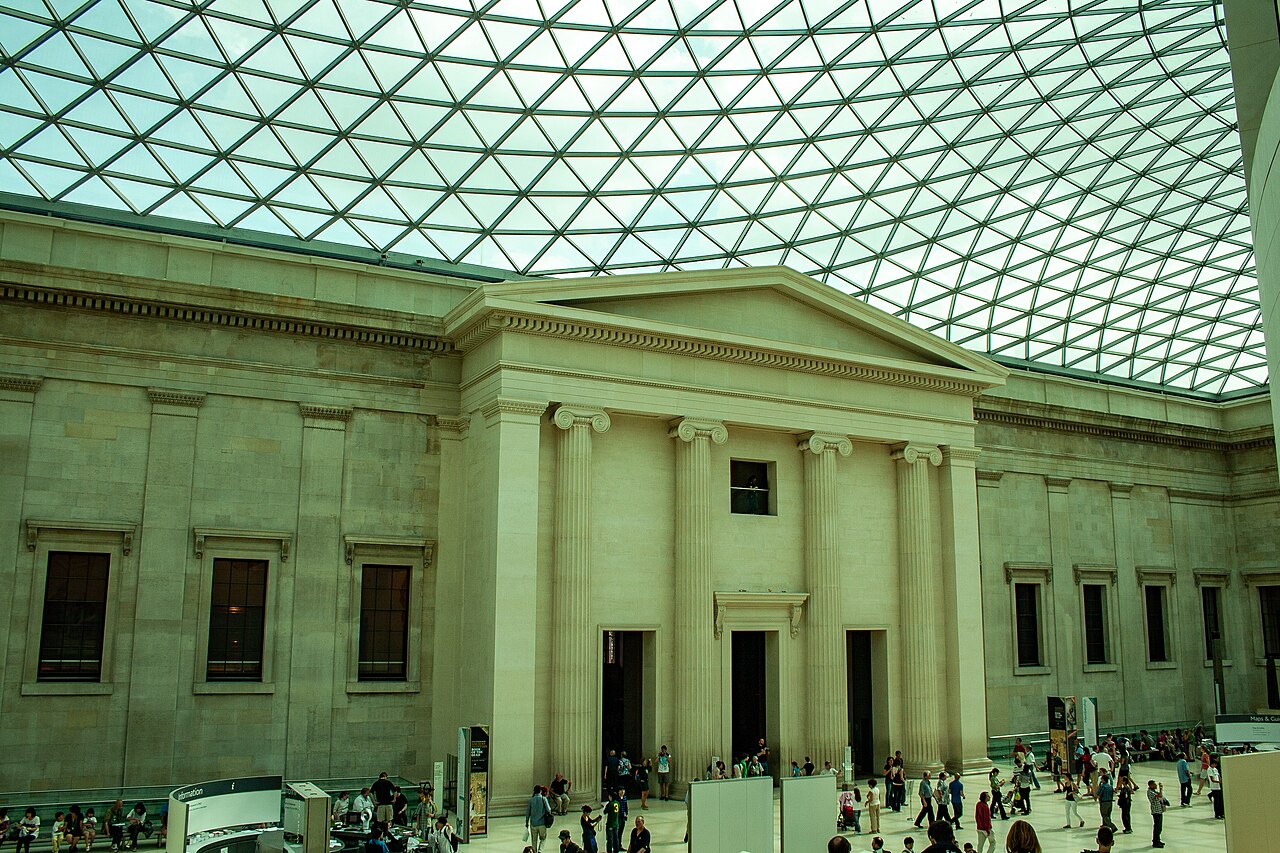
What happens to a sacred object when it moves from the temple to the gallery: decontextualization, aestheticization, and the museum's own unadmitted liturgy.
No image — the essay explains whyTheme
Repatriation and Restitution
NAGPRA, the Benin bronzes, the Potlatch masks at the Vatican: the return of sacred objects is the point where art history becomes a present-tense obligation.
No image — the essay explains whyTheme
AI-Generated Religious Art
A machine can now produce a plausible icon in seconds. The traditions' answers — prohibition, suspicion, cautious use — map exactly onto their older theologies of the image.
Theme
Materiality and Embodiment
Touch, incense, lamplight, procession, and dissolution: religious art is made of matter because its worshippers are, and the senses are its medium as much as sight.
The Artists
The makers have a directory of their own: named artists and anonymous workshops, each with the works this site records to their hand. Open the artists directory.