

What happens to a sacred object when it moves from the temple to the gallery: decontextualization, aestheticization, and the museum's own unadmitted liturgy.
Tagged: Museum Museums Secularization
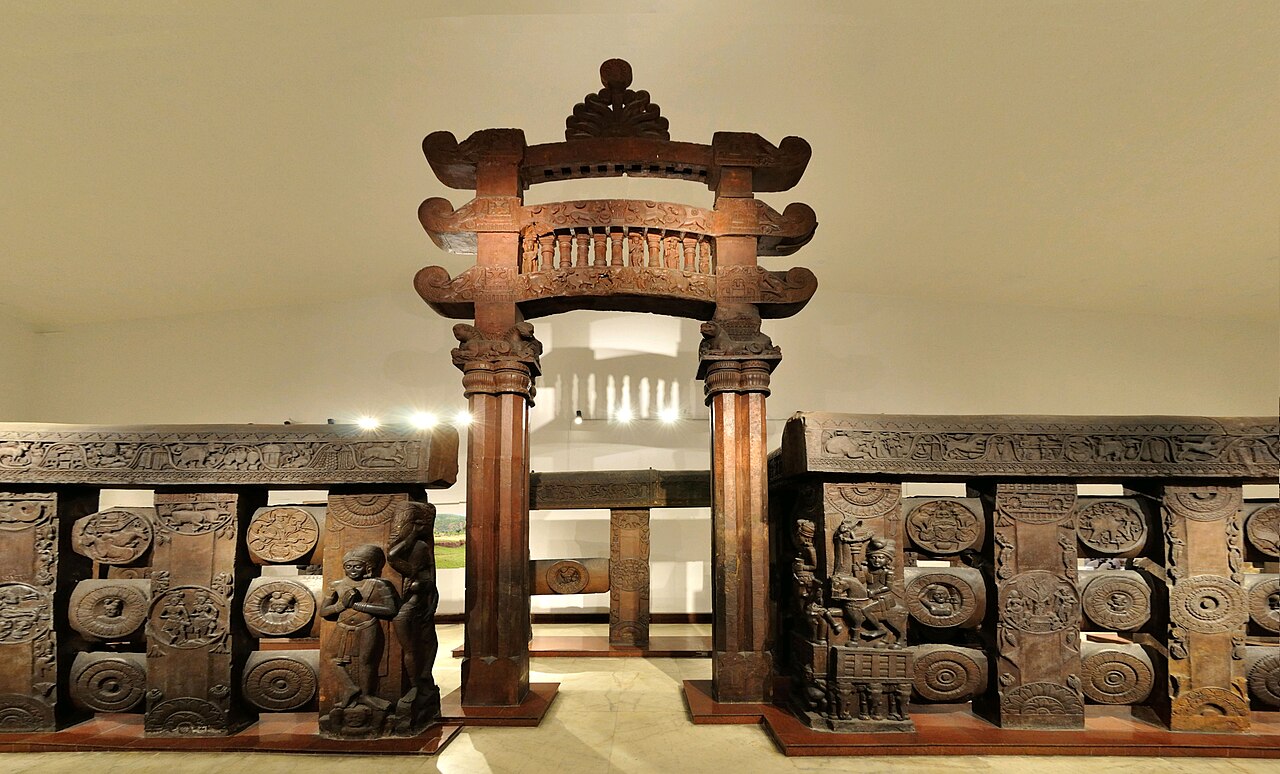
Most of the objects in this section can now be visited only in museums, and the move changed them. The icon that was kissed is lit and labeled. The murti that was bathed and fed stands in a climate-controlled case on another continent. The museum calls this preservation, and it is; it is also a translation — from presence to specimen, from an actor in a rite to evidence for a culture. Whether the translation betrays the object or rescues it is the standing argument of this theme.
The museum is not a neutral container, and its own rituals give it away: the threshold, the hush, the procession of galleries, the relic behind glass with its caption for a reliquary label. Visitors report experiences in art museums that they themselves describe as spiritual, and secular visitors are among them. Post-secular curatorship begins from that admission and asks what duties follow: to display a sacred object as its community understands it, to record restrictions and honor them, to lend and to return.
This section's own practice is the local application: every entry states where the object is, how it may be shown, and what its community asks — and where the community asks that it not be shown, the entry carries the redacted state instead of an image.
References
Related Across the Site
- A Gandhara Buddha Art Entry — The Buddha in human form from the workshops of Gandhara (1st–3rd century CE): Apollo's face, a Roman toga's folds, and the lakshanas of the Buddha — the image that changed Buddhist art forever.
- A Kufic Qur'an Folio Art Entry — A parchment leaf of an Abbasid Qur'an in angular Kufic script, its verse endings touched with gold: the page as the supreme religious image of an aniconic faith.
- Hagia Sophia Art Entry — Justinian's great church in Constantinople (532–537), whose dome seemed to contemporaries to hang from heaven — and whose mosaics record, in one building, icon, iconoclasm, conquest, museum, and mosque.
- Rublev's Trinity Art Entry — Andrei Rublev's icon of the three angels at Abraham's table (c. 1411), painted for the Trinity Lavra of St. Sergius — the supreme achievement of Orthodox icon painting and its theology made visible.
- The Bharhut Railing Art Entry — The carved sandstone railing of the Bharhut stupa (c. 150–100 BCE), its medallions crowded with jataka tales and labeled in Brahmi — and the Buddha, in scene after scene, present only by symbol.
- The Mughal Court Miniature Art Entry — The figural painting of the Mughal emperors' atelier — hunts, audiences, lovers, and saints in jewel-like detail — standing as the descriptive practice beside Islam's normative aniconism.
- The Sarajevo Haggadah Art Entry — A Passover Haggadah illuminated in Barcelona around 1350 — thirty-four miniatures of the biblical story in a Jewish book — treasured, hidden from Nazis and from war, and kept in Sarajevo as the city's emblem of itself.
- Non-Theistic and Secular Art Tradition — Art without transcendence: humanist meaning-making, museums as secular temples, and protest art.