

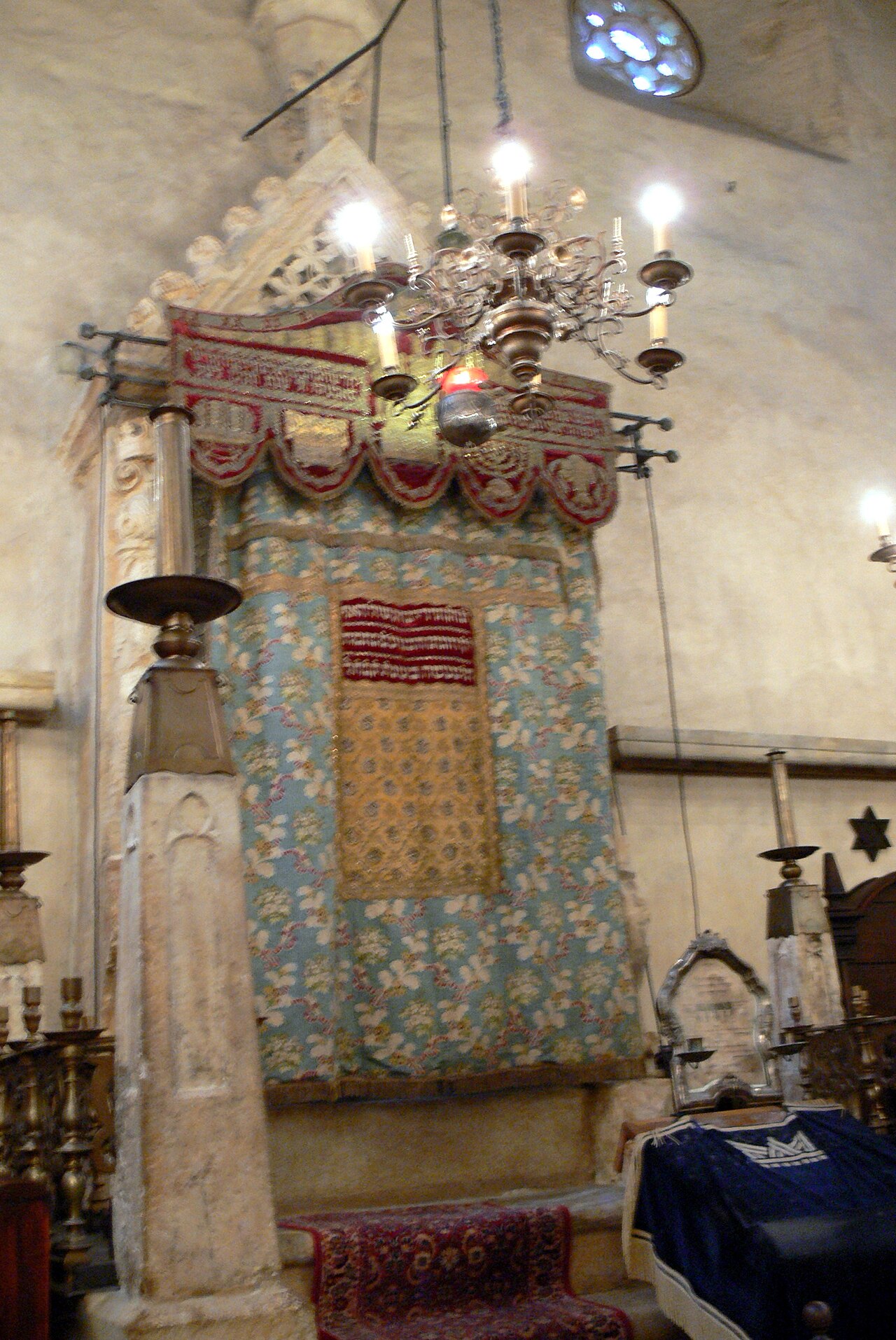
Principled restraint on cult images, with synagogue art, ceremonial objects, and illuminated manuscripts flourishing inside it.
Tagged: Manuscript Illumination Ceremonial Objects Second Commandment Jewish
May the divine be depicted?
Cult images are prohibited; art is not. Architecture, ceremonial objects, and illuminated manuscripts flourish within a principled restraint on the worship of images.
What the Commandment Prohibits
The Second Commandment has never entailed a blanket ban on visual art in Judaism. What it prohibits is the cult image — the figure made to be worshipped — and the worship of images generally. Architecture, funerary monuments, embroidery, ceremonial silver, and the illumination of manuscripts all stand outside that prohibition, and Jewish material culture has flourished inside the restraint for two thousand years.
Dura-Europos: The Paradigm Case
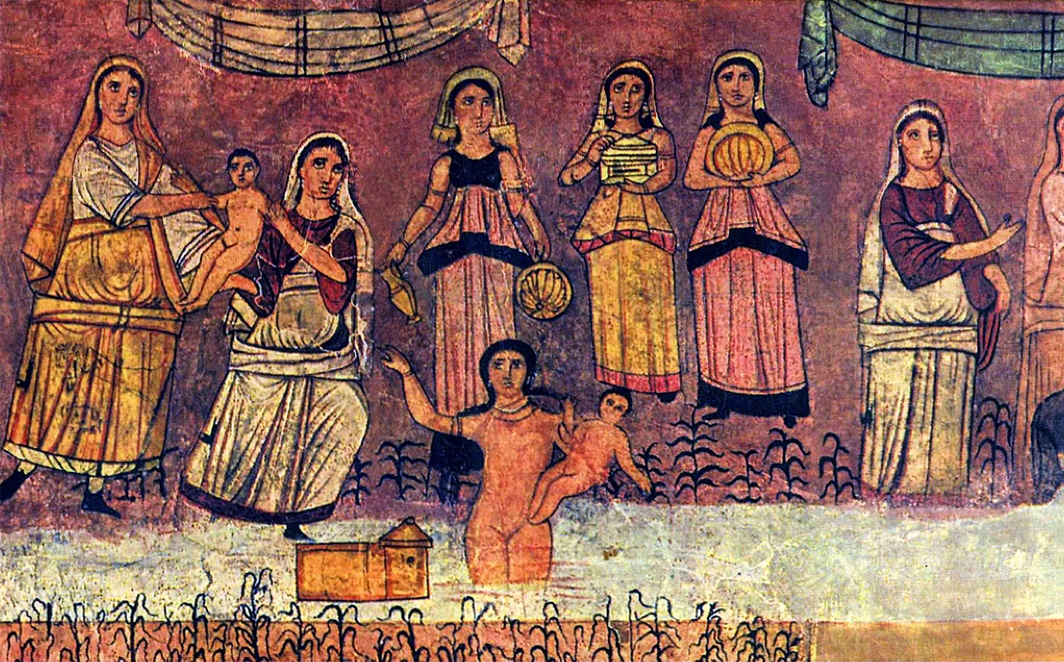
The synagogue at Dura-Europos, painted around 244 CE and preserved by the siege works that buried it, is covered with figural frescoes of biblical scenes — Moses, the Exodus, the Temple, the prophets. It is the standing disproof of the idea that ancient Judaism made no religious pictures. A community that read the Second Commandment every week painted its walls with the human figure, because the commandment governed worship, not depiction.
The Illuminated Book
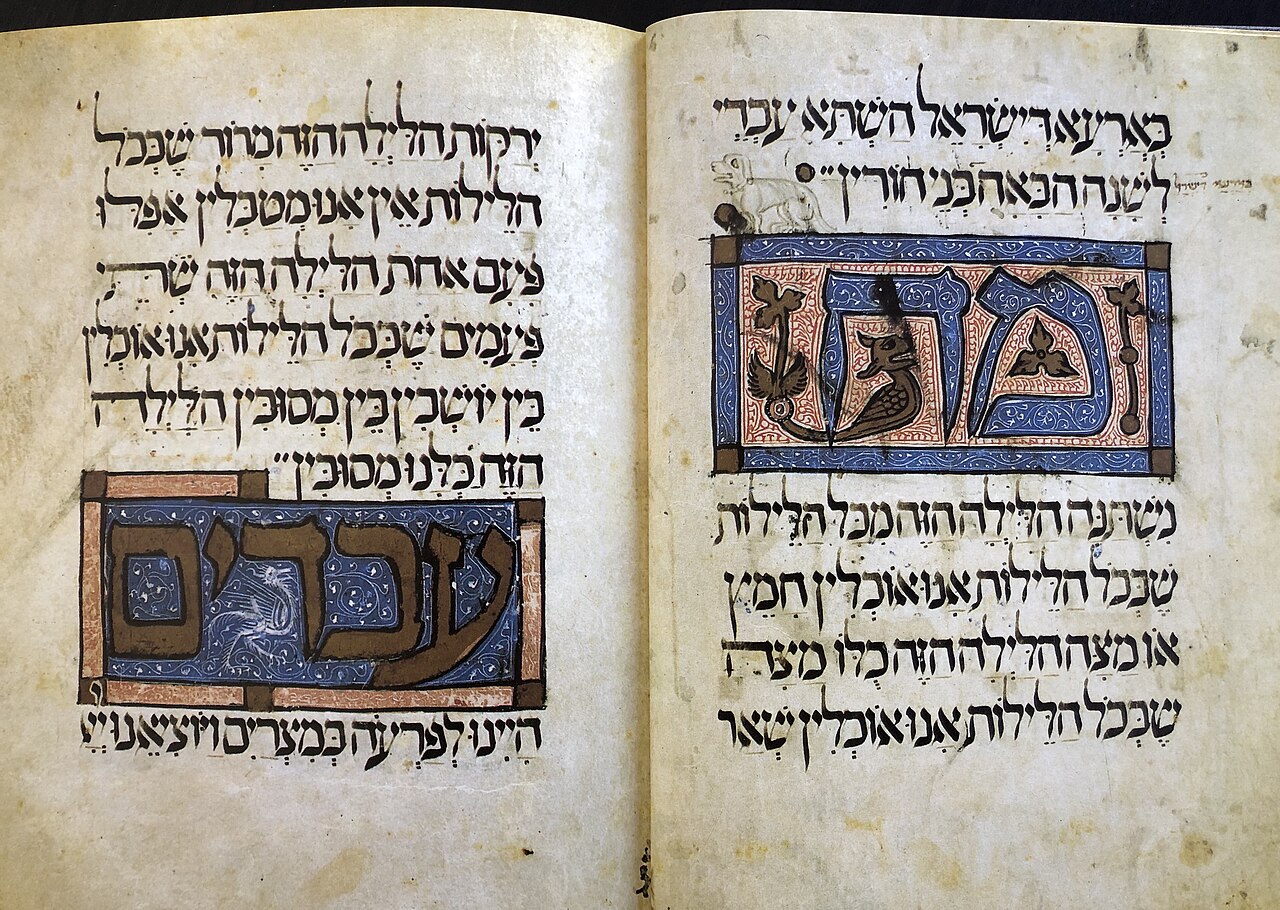
Medieval Hebrew manuscripts carry the tradition's visual genius. Haggadot, mahzorim, and Bibles display carpet pages, micrography — whole images drawn from microscopic script — and, in books such as the Sarajevo Haggadah, full figural illumination of the biblical narrative. Human figures are rarer than in Christian books of the same centuries, a mark of the stricter reading of the commandment, but they are present, and the books were made for the seder table and the synagogue, not despite the law but within it.
Ceremonial Objects
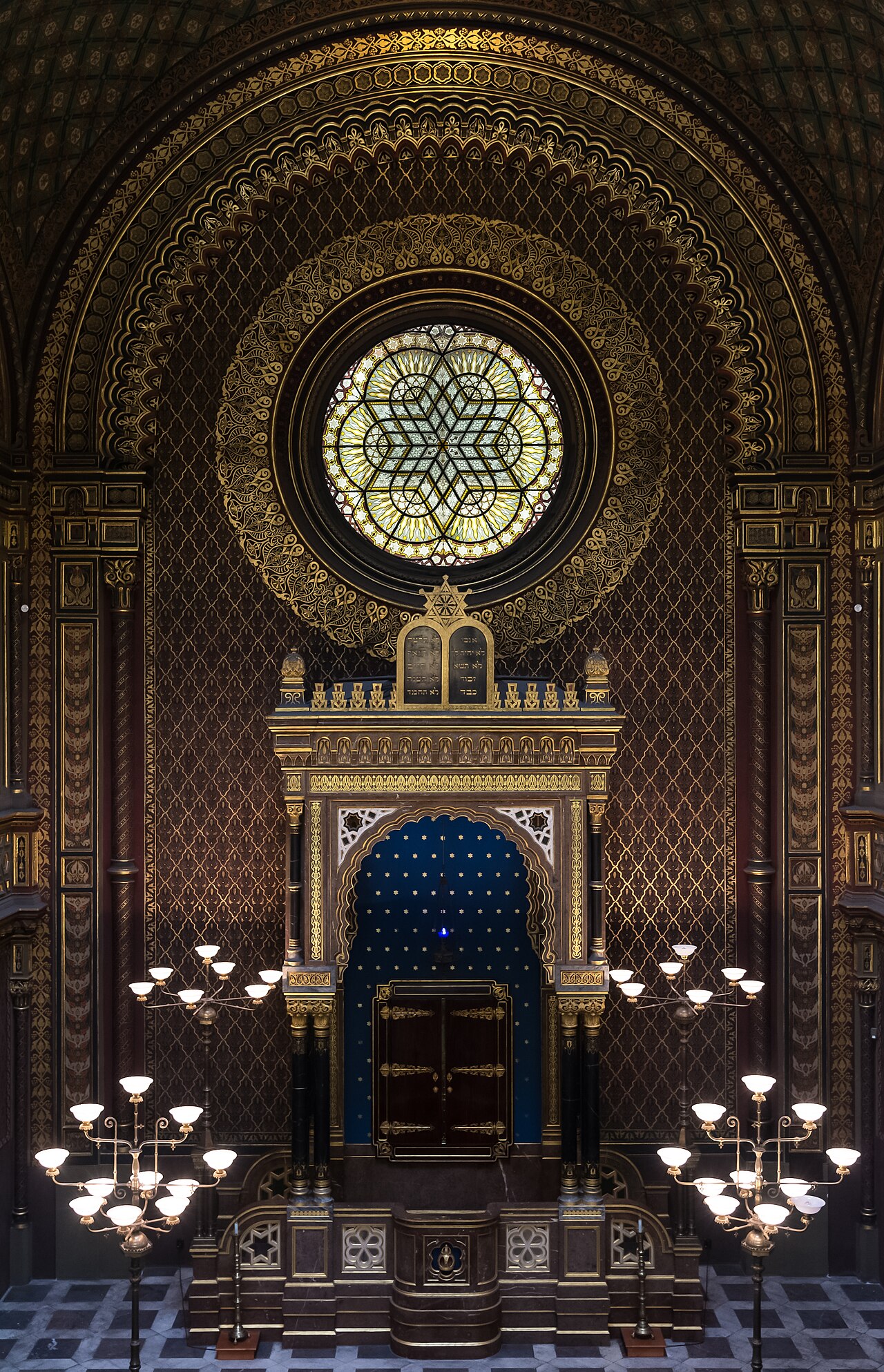
The menorah, the Torah ark and its ornaments, the seder plate, the spice box, and the mezuzah are religious art in the applied sense: silver and wood and parchment worked to the highest standard because the commandments they serve deserve beautiful instruments. The principle has a name — hiddur mitzvah, the beautifying of the commandment — and it turns restraint from a negation into a discipline of craft.
The Position in One Sentence
Judaism is neither aniconic nor iconodulic. It is a tradition with a principled restraint on cult images and a rich material culture that has flourished, deliberately, within that restraint.
Entries in This Tradition
 Entry
The Dura-Europos Synagogue Frescoes
The walls of a synagogue on Rome's Euphrates frontier, painted around 244 CE with the whole biblical story in human figures — the standing disproof that ancient Judaism made no religious pictures.
 Entry
The Sarajevo Haggadah
A Passover Haggadah illuminated in Barcelona around 1350 — thirty-four miniatures of the biblical story in a Jewish book — treasured, hidden from Nazis and from war, and kept in Sarajevo as the city's emblem of itself.
 Entry
The Torah Ark and Its Ornaments
The ark that houses the scroll, and the silver that dresses it — crown, shield, pointer, and finials: ceremonial art at the center of synagogue worship, governed by the principle of beautifying the commandment.
References
- Yale University Art Gallery: The Dura-Europos Synagogue
- The Sarajevo Haggadah, National Museum of Bosnia and Herzegovina
Related Across the Site
- The Dura-Europos Synagogue Frescoes Art Entry — The walls of a synagogue on Rome's Euphrates frontier, painted around 244 CE with the whole biblical story in human figures — the standing disproof that ancient Judaism made no religious pictures.
- The Sarajevo Haggadah Art Entry — A Passover Haggadah illuminated in Barcelona around 1350 — thirty-four miniatures of the biblical story in a Jewish book — treasured, hidden from Nazis and from war, and kept in Sarajevo as the city's emblem of itself.
- The Torah Ark and Its Ornaments Art Entry — The ark that houses the scroll, and the silver that dresses it — crown, shield, pointer, and finials: ceremonial art at the center of synagogue worship, governed by the principle of beautifying the commandment.
- St Andrews Encyclopaedia of Theology Library — An open-access, multi-author theological reference with advanced articles on Christianity, Judaism, Islam, Hinduism, and Buddhism.
- Amidah Prayer or Creed — The standing prayer at the center of every Jewish prayer service, recited silently while standing.
- Kaddish Prayer or Creed — An Aramaic prayer sanctifying God's name, best known in its form recited by mourners.
- Shema Prayer or Creed — Judaism's central affirmation of the one God, drawn from Deuteronomy 6:4 and recited morning and evening.
- Judaism World View — Judaism is the covenant faith of the people of Israel: one God chose them, gave them his Torah, and calls them to holiness and justice in this world.
All of Religious Art & Worldviews · The comparison: May the divine be depicted?