

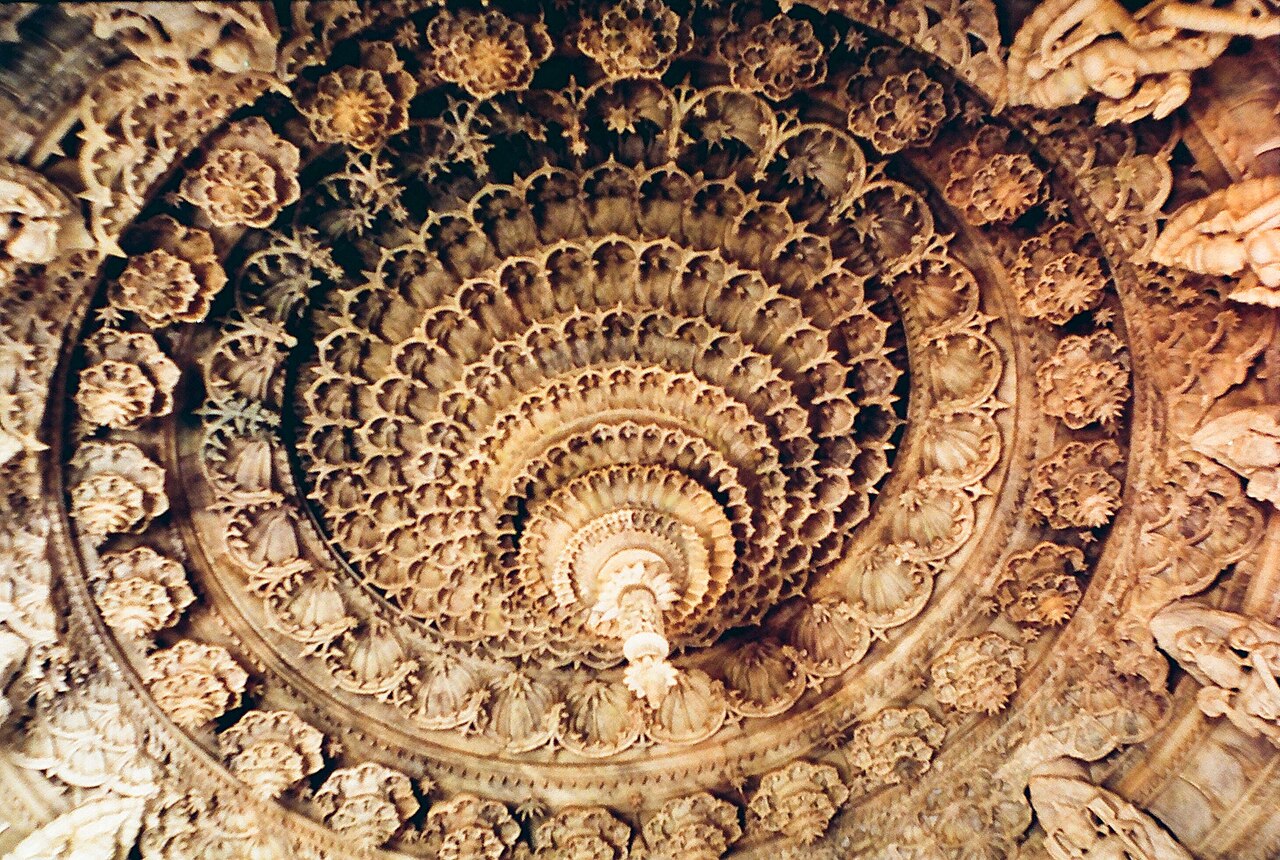
Iconic but restrained: Tirthankara images, illustrated manuscripts, and marble temple architecture.
Tagged: Illustrated Manuscripts Tirthankara Images Jain
May the divine be depicted?
Images of the Tirthankaras are made, anointed, and worshipped, but the aesthetic is serene detachment: no attachment, no violence, in white marble and precious stone.
The Tirthankara Image
Jain art is iconic but restrained. Its central figure is the Tirthankara, the ford-maker who has crossed the stream of rebirth and shows others the way. He is shown in two postures — kayotsarga, standing in motionless meditation, and padmasana, seated in the lotus position — and he is identified by his lanchana, the emblem carved beneath him: a bull, a conch, a serpent, a lotus. Temple images are anointed and worshipped daily, yet everything about them denies appetite: the body is smooth, symmetrical, unadorned, the face expressionless in release. The Jain emphasis on non-attachment and non-violence is not a theme the art illustrates; it is the art's whole aesthetic.
The Illustrated Manuscript
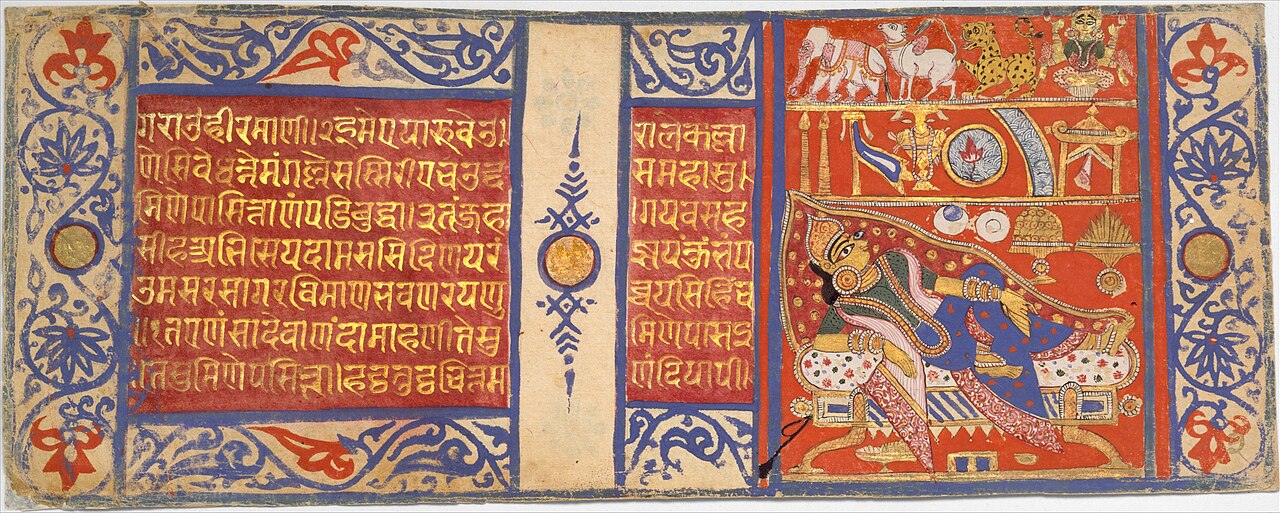
The second great Jain art is the painted book. The Kalpasutra, the book of rituals containing the lives of the Tirthankaras, and the Kalakacharya-katha were copied and illuminated for centuries, their margins filled with the Panch Kalyanaka, the five auspicious events of each ford-maker's life — conception, birth, renunciation, enlightenment, and liberation. These manuscripts were treasures: commissioned by merchants, stored in temple libraries, and brought out for the Paryushana festival.
Marble Architecture
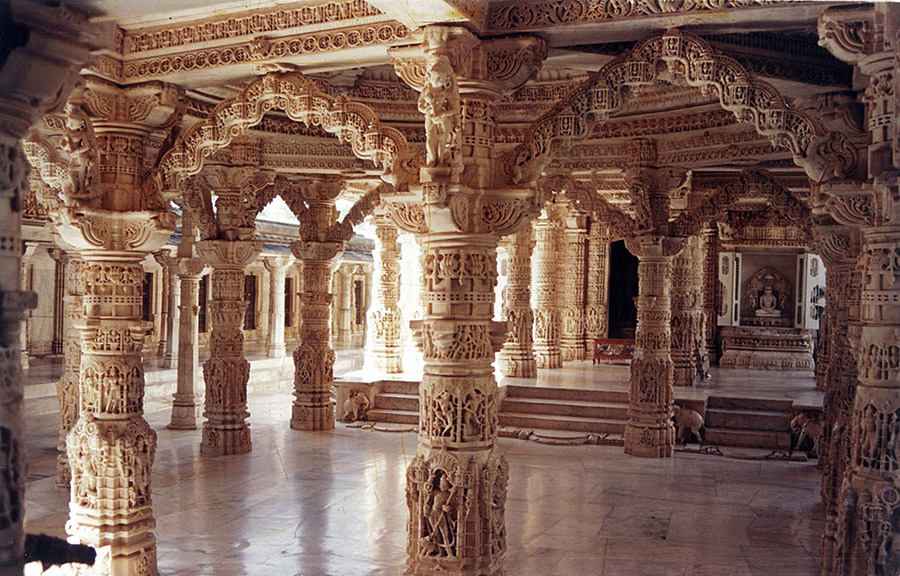
At Dilwara on Mount Abu and at Ranakpur, Jain temple architecture reaches an ornamental intensity unmatched in India: ceilings carved into concentric rings of figures, pillars that are lace in white marble. The splendor is deliberate and it is financed by lay wealth offered in devotion, even as the doctrine the temples serve renounces possession. That paradox — renunciation preached in marble — is the Jain tradition's own, and the art holds it without resolving it.
Aniconic Elements
Beside the figures stand aniconic forms: the siddhachakra, the diagram of the liberated and the path; the Navkar Mantra, the sacred formula venerated as a text-object; and the great cosmic diagrams that map the Jain universe with its continents and its mountain at the center. Word and diagram carry the same weight here that figure carries elsewhere.
Entries in This Tradition
 Entry
The Dilwara Temples
Five Jain temples on Mount Abu whose plain exteriors open into marble interiors carved to the thinness of lace — the summit of Jain temple art.
 Entry
A Kalpasutra Folio
One painted page from the most copied book in Jainism: the lives of the Tirthankaras in gold and ultramarine, read aloud and shown to the congregation during Paryushana.
References
- The Metropolitan Museum of Art: Jain art and the Tirthankaras
- Smarthistory: The Dilwara temples, Mount Abu
Related Across the Site
- atman Glossary Term — Self.
- dharma Glossary Term — That which is upheld; order; duty.
- karma Glossary Term — Action; deed.
- moksha Glossary Term — Release; liberation.
- samsara Glossary Term — Wandering; the flowing-on.
- Ardhamagadhi and the Prakrits Language — The language of the Jain canon and of early Indian scripture and drama, the spoken sister of Sanskrit.
- Sanskrit Language — The sacred language of Hinduism and a scriptural language of Buddhism and Jainism: Vedic first, then the classical language of Indian theology.
- Namokar Mantra Prayer or Creed — Jainism's central mantra of homage to the five supreme beings, recited at the start of prayer and meditation.
All of Religious Art & Worldviews · The comparison: May the divine be depicted?