

Pentecostalism is the movement of the Spirit's restoration, expecting baptism in the Holy Spirit, speaking in tongues, healing, and prophecy as the normal life of the church, and now the largest and fastest-growing family in world Christianity.
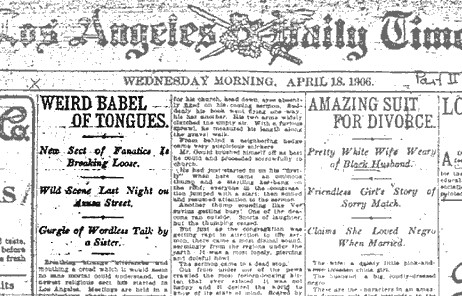
Pentecostalism erupted in the first decade of the twentieth century — at Topeka in 1901 and on Azusa Street in Los Angeles from 1906, where William Seymour, a Black Holiness preacher, led a revival whose newspapers announced that Pentecost had come again. Within a century it became the largest family of Protestant Christianity, strongest in Africa, Latin America, and Asia, and it has reshaped Catholic and mainline worship through the charismatic renewal.
Ultimate Reality
God is not only the God who acted in Bible times but the same Spirit poured out now: the 'full gospel' proclaims Jesus as Savior, Sanctifier, Spirit-baptizer, Healer, and coming King. Most Pentecostals are trinitarian; the Oneness stream baptizes in Jesus' name and teaches a modal understanding of God, a standing internal argument.
The Human Condition
Humanity is lost without Christ and bound by sin, sickness, and — in much of the movement's world — demonic powers taken with complete seriousness. The human need is therefore total: salvation of the soul, healing of the body, deliverance from evil powers, and the Spirit's power for witness, all expected from the same crucified and risen Lord.
Knowledge and Truth
Scripture is authoritative, but it is read as a book to be entered rather than only studied: the Acts of the Apostles is the pattern of normal church life. Knowledge of God is experiential and communal — testimony, prophecy tested by Scripture and the congregation, and the preached word confirmed with signs. Pentecostals distrust any theology that explains why the miraculous should not happen.
Right and Wrong
Conversion, baptism in water, and a holy life mark the believer; many bodies keep strict codes of conduct inherited from the Holiness movement. Worship is participatory — testimony, song, altar prayer, anointing with oil — and every believer is a potential minister of the Spirit's gifts. The movement's early interracial fellowship at Azusa, later largely lost to segregation, remains its own standard of judgment.
Human Destiny
Pentecostal preaching expects the imminent return of Christ, the rapture of the church in most of its bodies, a millennial reign, and final judgment. Urgency follows: the Spirit is poured out in the last days, so evangelism and mission are the church's consuming business, and healing now is a foretaste of the resurrection.
The Conversation
Pentecostalism asks cessationist Protestants where Scripture sets the expiry date on the Spirit's gifts, and it asks the older churches why a faith that began in miracle should be managed in miracle's absence. It presses itself, through its own scholars and pastors, on prosperity teaching and personality cults — and it presses the secular world on the plain demographic fact of its growth among the poor.