

Temple imagery, ritual painting, ancestor tablets, and the syncretism of the three teachings.
Tagged: Ancestor Tablets Ritual Painting Syncretism Confucianism Daoism
May the divine be depicted?
Daoist temples house a populated heaven of deities and immortals; Confucian temples honor the sage and the ancestors without a cult image at their center. The two share walls, workshops, and festivals across China.
A Populated Heaven
Daoist art is frankly iconic. Its temples house statues of the Three Pure Ones, the Queen Mother of the West, the Eight Immortals, and a celestial bureaucracy of gods ranked like the imperial court they mirror. The images receive offerings, processions, and petitions, and the priest's ritual is performed before them and among them. Nothing in the Daoist tradition apologizes for the figure; the unseen world is populous, and the art peoples the temple with it.
The Water-Land Rite
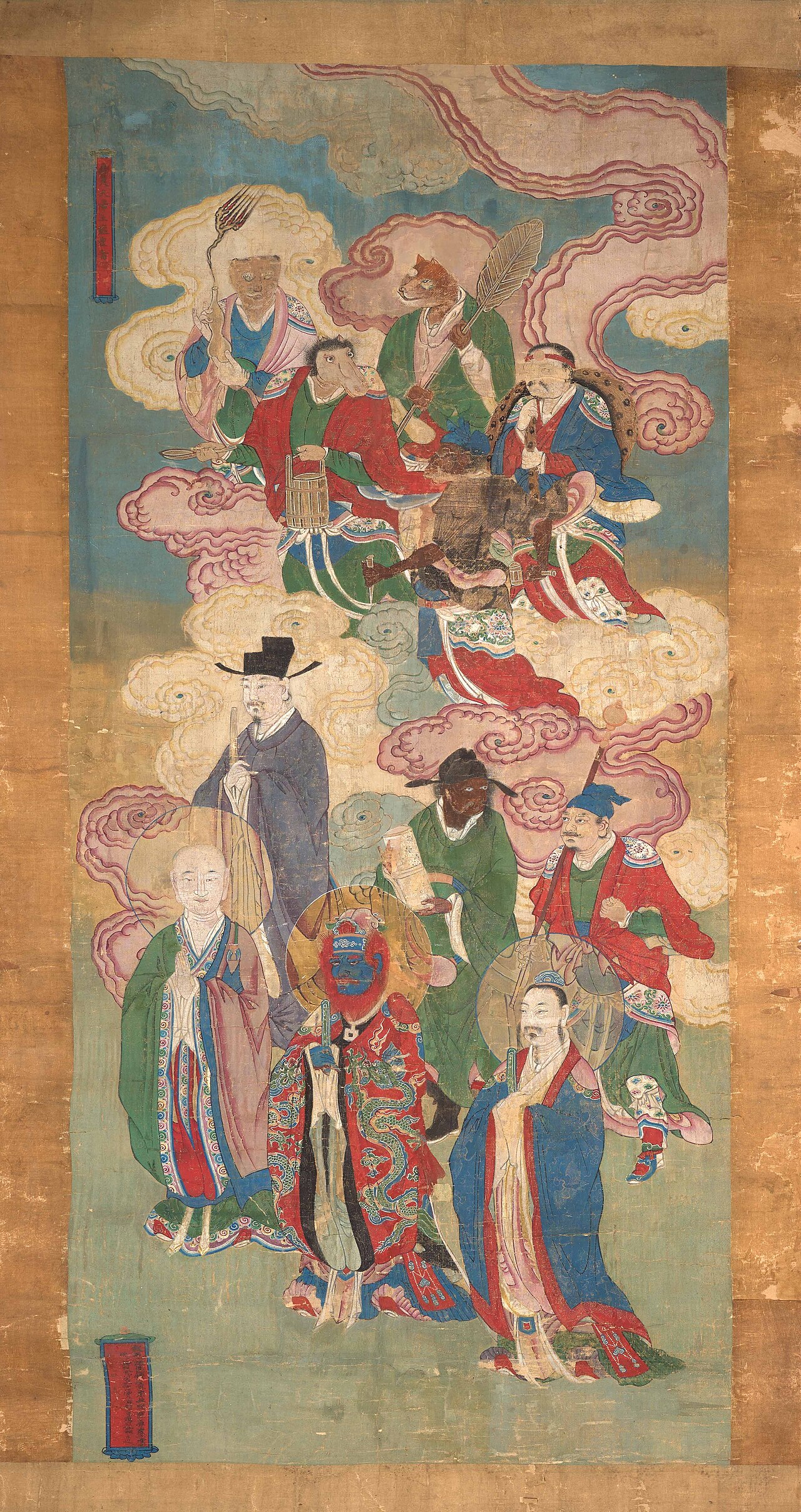
The great collective achievement of Chinese religious painting is the shuilu set: the large suites of hanging scrolls made for the Water-Land Prayer Rite, the funerary liturgy that summons and feeds all beings of land and water. Buddhist and Daoist divinities hang side by side in these sets, painted by imperial and temple workshops to a standard that made them treasure-objects in their own right. The rite is the syncretic fact of Chinese religion enacted as an exhibition.
The Confucian Difference
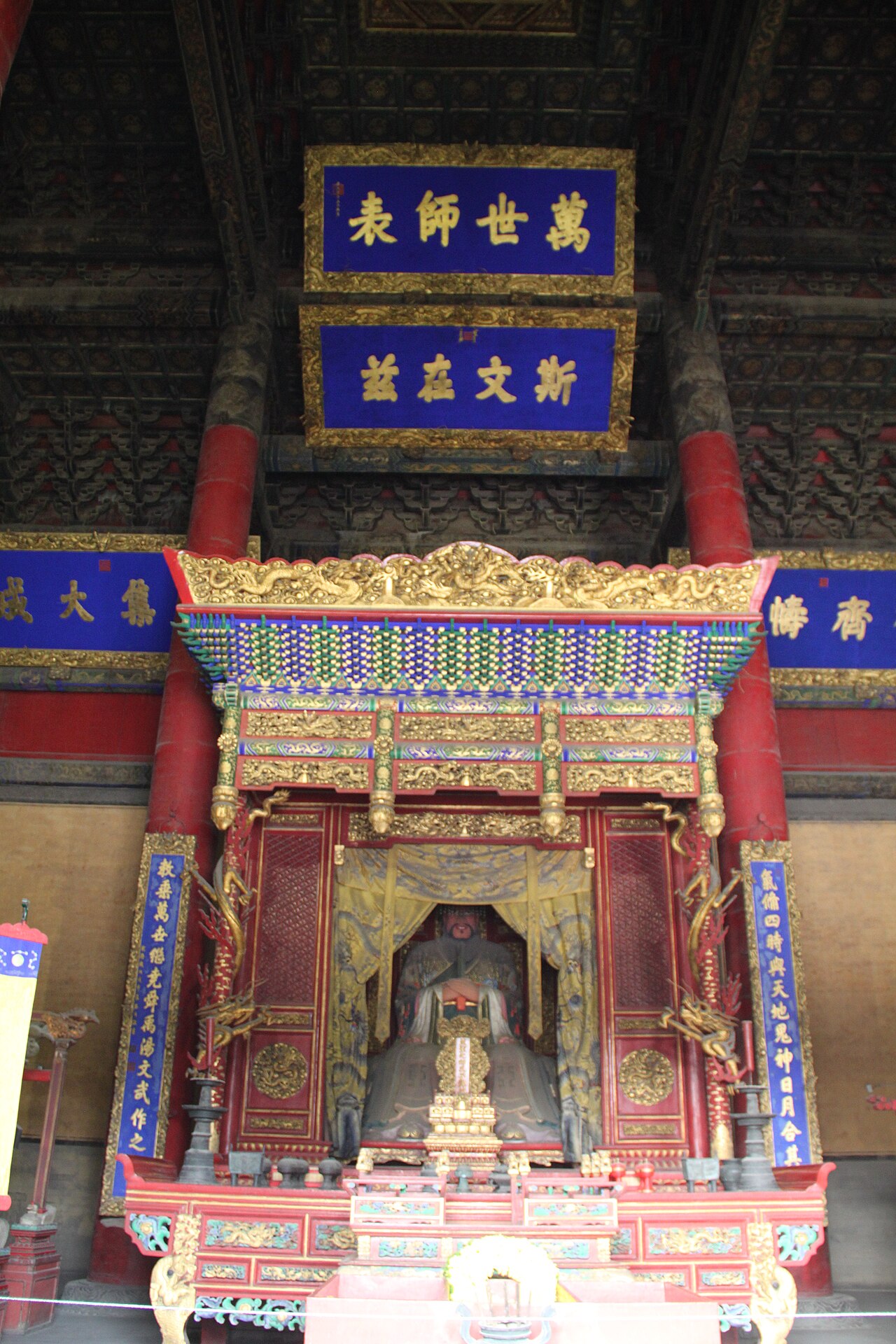
Confucian temples work otherwise. Their center is not a statue but a tablet: the spirit tablet of Confucius and the tablets of the ancestors, before which ritual is performed with vessels, music, and measured gesture inherited from the bronze age. Images of the sage exist — the famous standard portrait is itself a fixed icon — but the cultic center stays textual and ancestral, a written name receiving the honor a statue receives elsewhere. Ritual bronzes and the mausoleum tradition carry the visual weight.
Syncretism as the Ground Condition
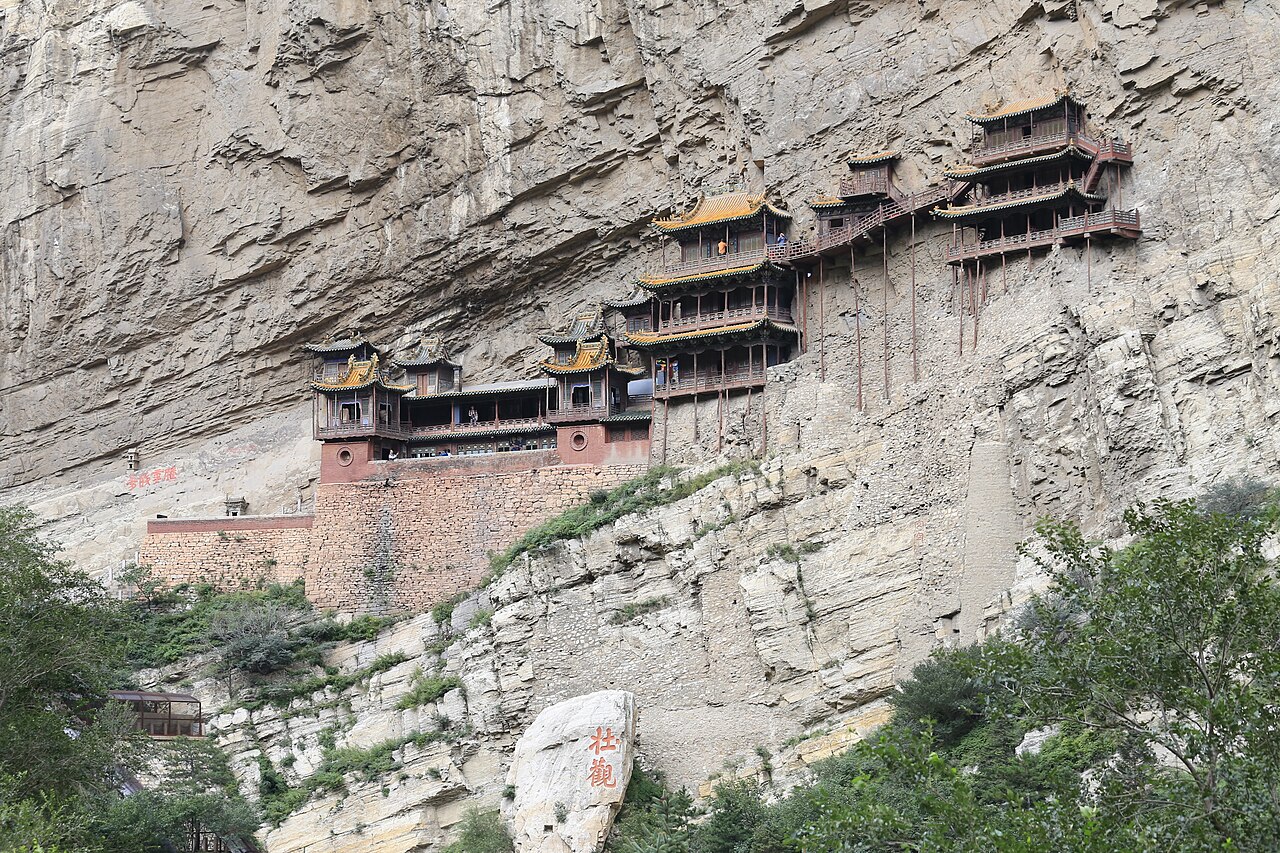
The two traditions cannot be told apart into tidy halves, because Chinese religion lived them together with Buddhism besides. The Hanging Temple near Hengshan houses Confucian, Buddhist, and Daoist statues under one cliff roof, and the legend of the Three Laughers of Tiger Ravine — a Confucian, a Buddhist, and a Daoist laughing together at their shared joke — is the tradition's own emblem of the arrangement. Ink landscape painting, the literati art of mountain and water, belongs to all three at once: a contemplative practice and a cosmology in a single scroll.
Entries in This Tradition
 Entry
The Hanging Temple
A monastery of forty halls pinned to a cliff face on Mount Heng, holding altars to Confucius, Laozi, and the Buddha under one roof — the Three Teachings in a single building.
 Entry
The Shuilu (Water-Land) Paintings
Sets of hanging scrolls that assemble the whole cosmos — Buddhas, Daoist gods, ancestors, and the hungry dead — for the Water-Land rite, Chinese religion's most inclusive ceremony of deliverance.
References
- The Metropolitan Museum of Art: Daoist art and the Water-Land rite
- Smarthistory: The Hanging Temple (Xuankong Si)
Related Across the Site
- The Hanging Temple Art Entry — A monastery of forty halls pinned to a cliff face on Mount Heng, holding altars to Confucius, Laozi, and the Buddha under one roof — the Three Teachings in a single building.
- The Shuilu (Water-Land) Paintings Art Entry — Sets of hanging scrolls that assemble the whole cosmos — Buddhas, Daoist gods, ancestors, and the hungry dead — for the Water-Land rite, Chinese religion's most inclusive ceremony of deliverance.
- Wu Daozi Artist — The Tang muralist whose temple walls made crowds gasp — the sage of painting in Chinese tradition, whose work survives in copies and in legend.
- Confucianism World View — Confucianism teaches that a humane society grows from cultivated character: virtue learned through ritual propriety, study, and devotion to family, under Heaven's moral order.
All of Religious Art & Worldviews · The comparison: May the divine be depicted?