

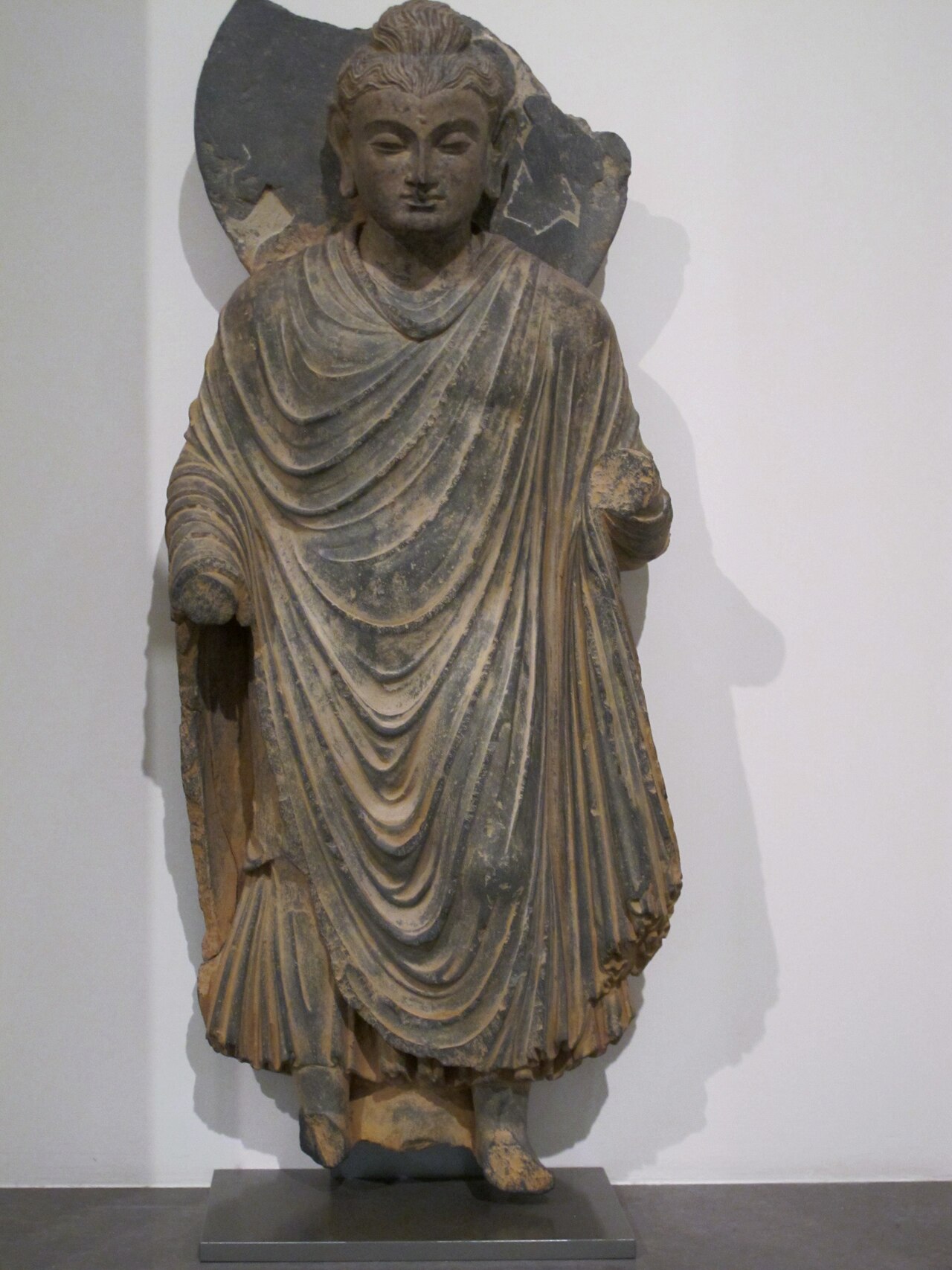
Symbols before images, the Buddha image after Gandhara and Mathura, and a scholarly debate that is not settled.
Tagged: Aniconism Buddha Image Mandala Buddhist
May the divine be depicted?
Early art represents the Buddha by symbol; the human image emerges around the first century CE and becomes universal. Whether the early phase was a deliberate aniconism is a live scholarly dispute, presented here on both sides.
The Traditional Account
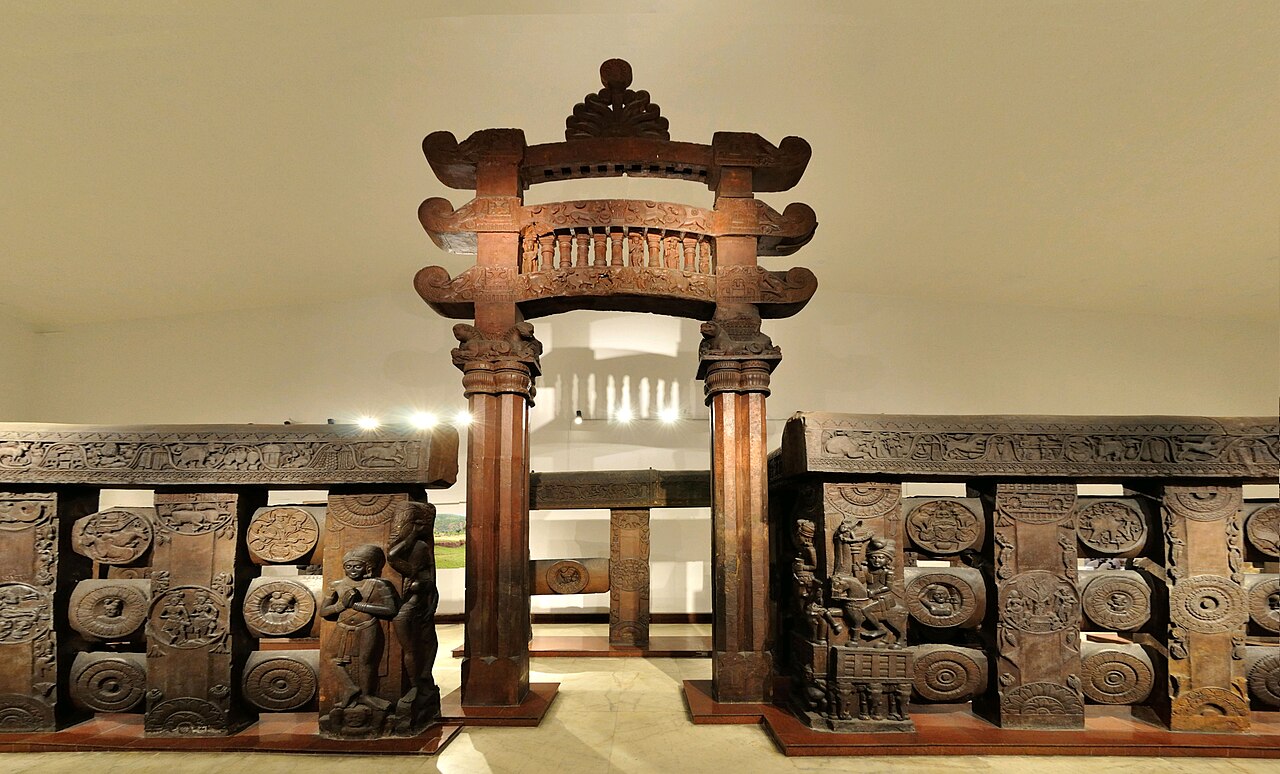
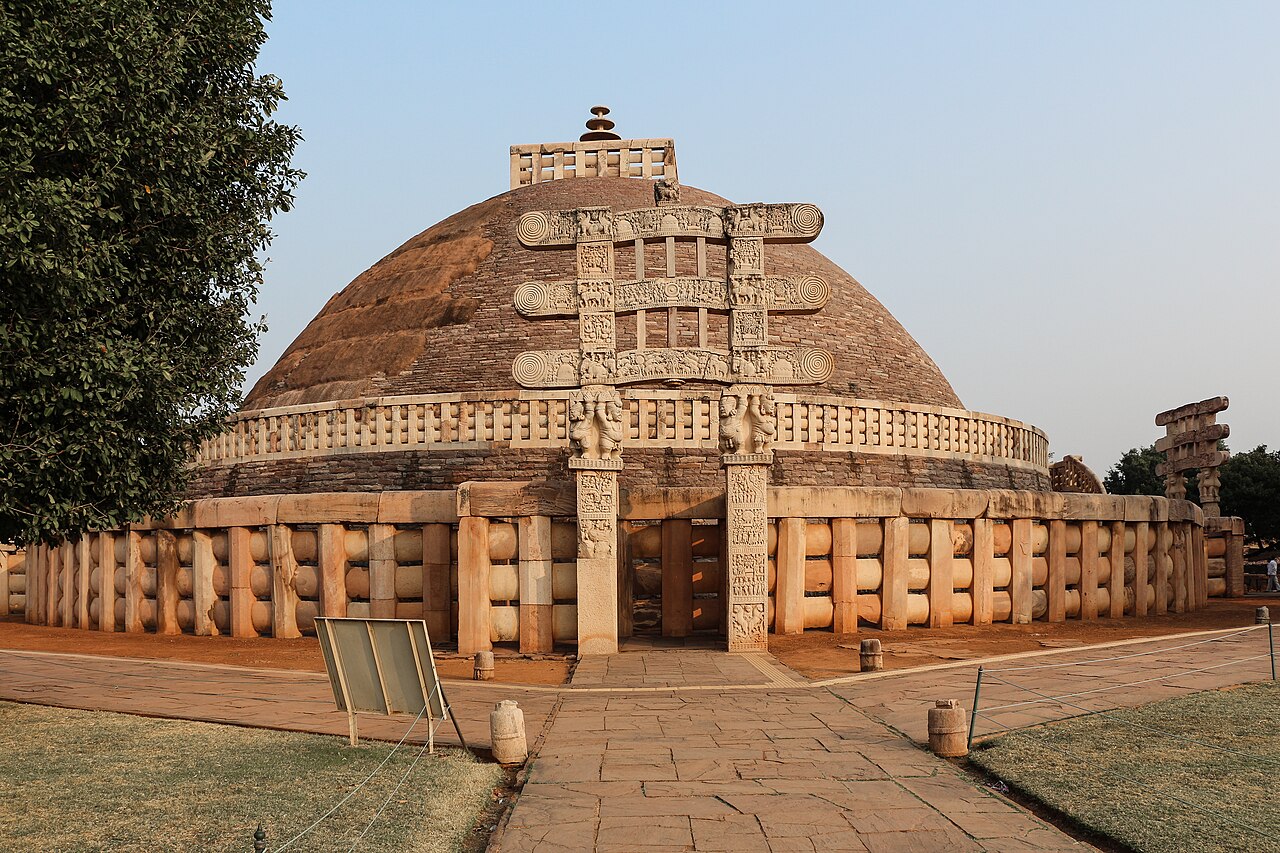
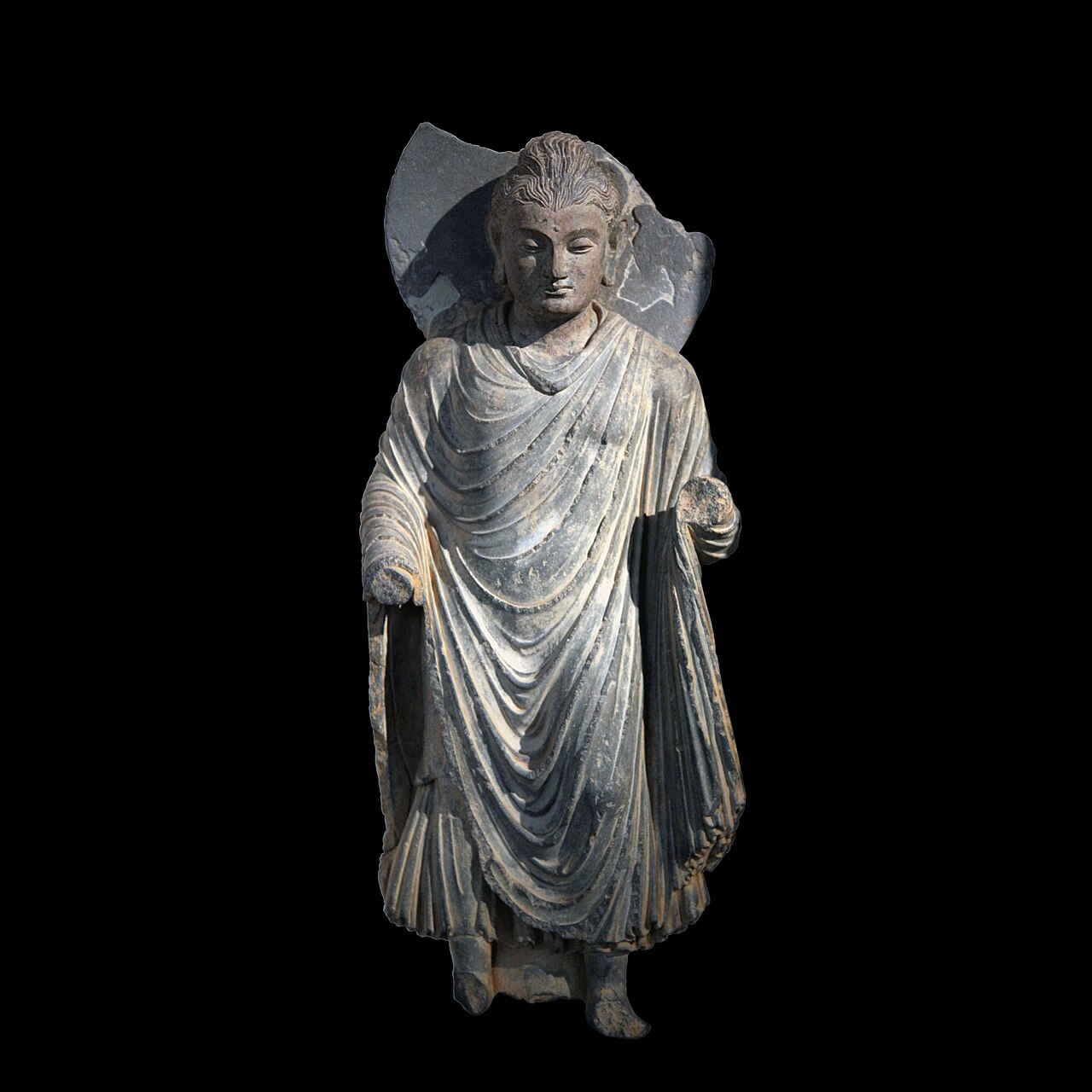
The early Buddhist monuments — the railings of Bharhut, the gateways of Sanchi, from the second and first centuries BCE — narrate the Buddha's life in carved detail while never showing the Buddha himself. In scene after scene his place is taken by a symbol: the bodhi tree for the enlightenment, the wheel for the first sermon, the footprint for his presence, the empty throne, the stupa for the parinirvana. On the traditional reading, early Buddhist art was aniconic by conviction: the Buddha, having passed beyond form, was not to be figured in human shape. The first Buddha images appear around the first century CE, in the red sandstone workshops of Mathura and the Greco-Buddhist studios of Gandhara, and from there the image becomes the center of Buddhist devotion across Asia.
The Huntington Critique
In 1990 Susan Huntington challenged that consensus directly. The so-called aniconic symbols, she argued, were not substitutes standing in for an absent Buddha. They were independent cultic objects with their own devotional logic — the tree, the wheel, and the throne were worshipped for what they were, not for whom they replaced — and the aniconism thesis is largely a modern scholarly construction projected onto the stones. John Huntington added that Buddha images may have been made much earlier than the surviving record assumes. The debate is not settled, and this site presents the traditional thesis and the critique side by side, each with its sources, rather than treating either as established.
The Image and Its Grammar
Once made, the Buddha image acquired a precise grammar. The mudras — the earth-touching gesture, the wheel-turning gesture, the meditation and teaching postures — encode specific events and doctrines in the position of the hands, so the image can be read. Regional schools diverge: Theravada art stays closer to the historical narrative; Mahayana art multiplies Buddhas and bodhisattvas; Vajrayana art is densely symbolic, built for visualization.
Mandala, Thangka, Stupa
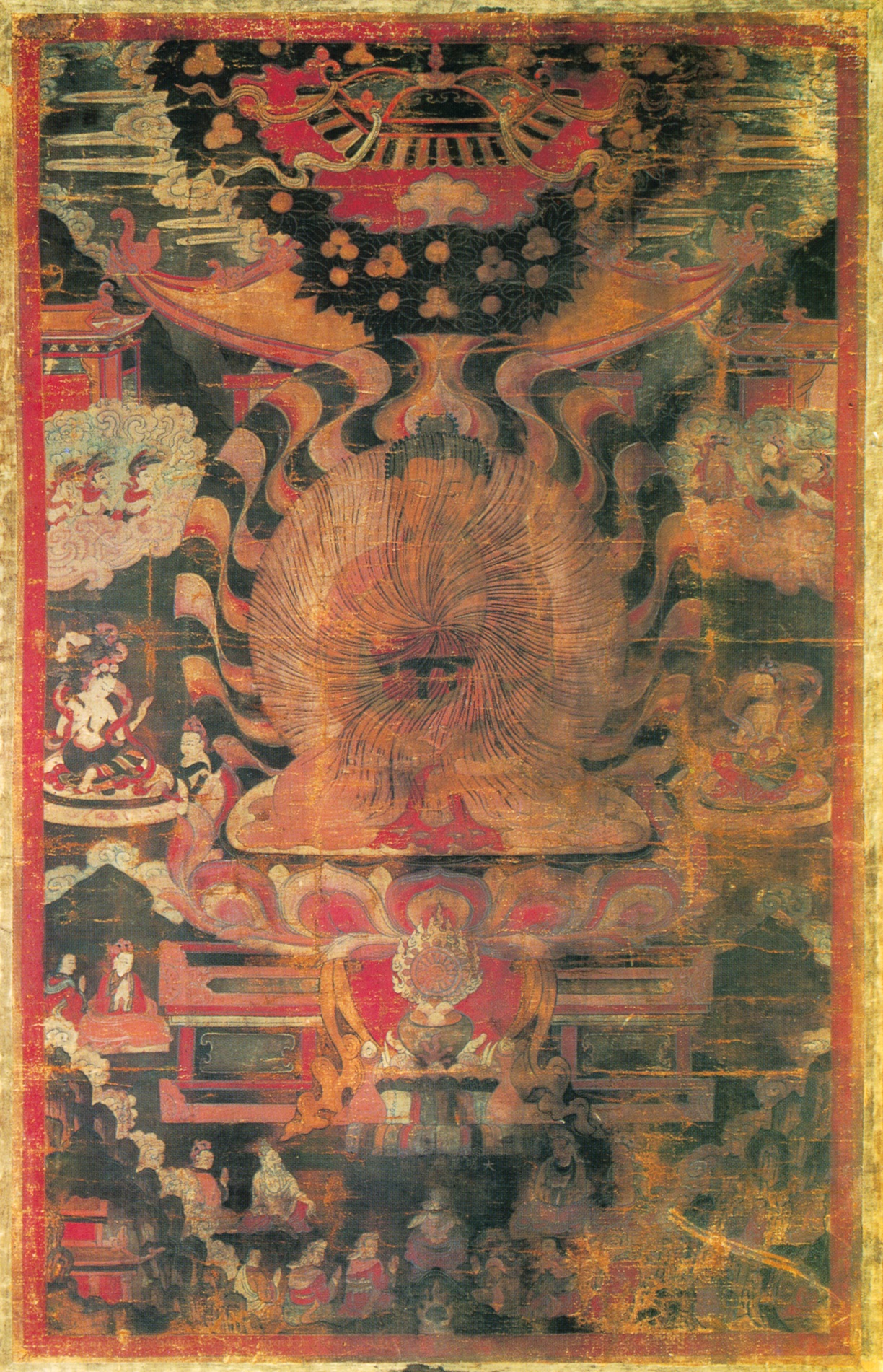
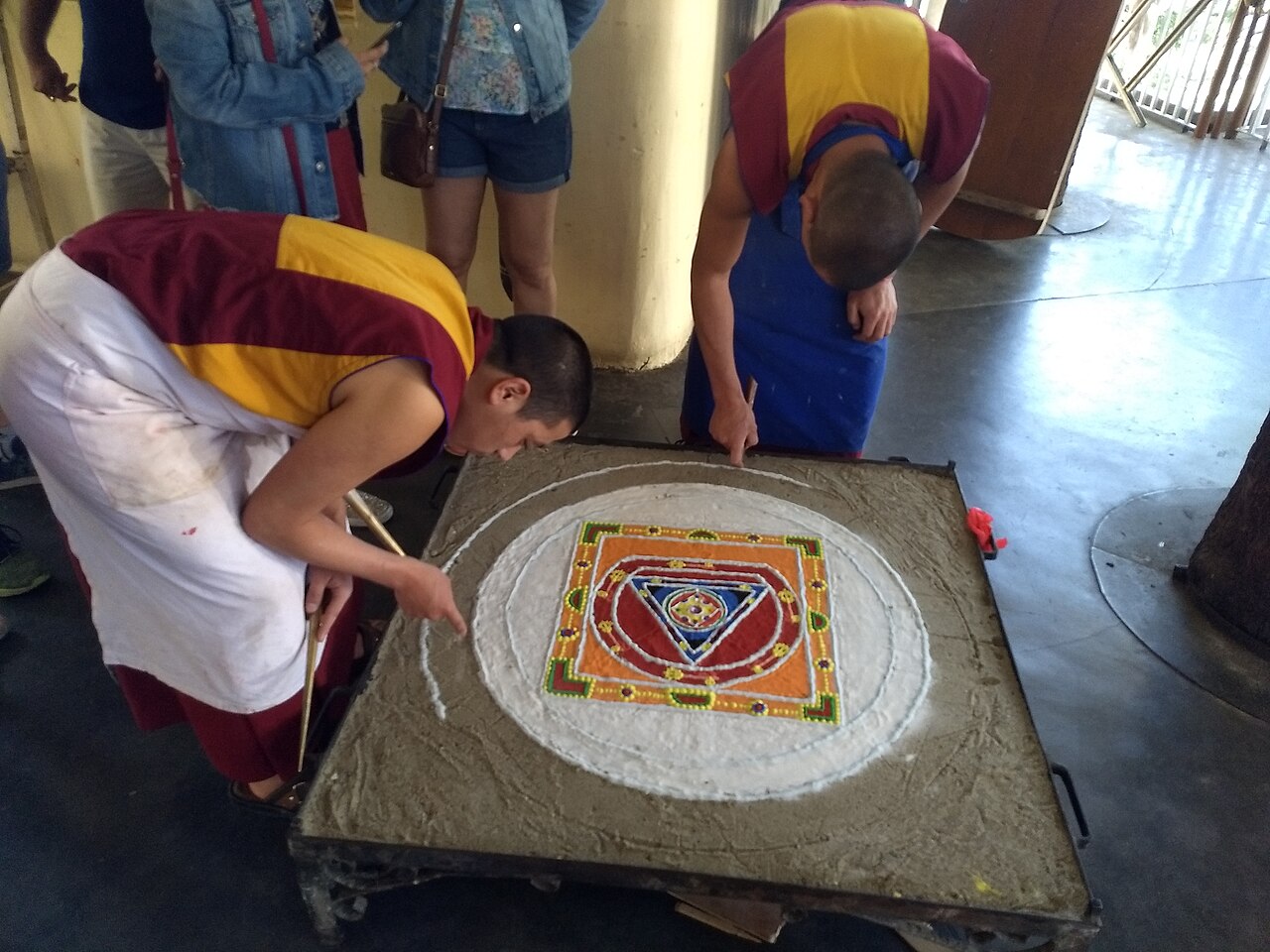
The mandala is a geometric cosmogram, a palace of the cosmos drawn for meditation and initiation, and in the sand mandala it is built grain by grain over days and dismantled at its completion, a teaching on impermanence performed rather than stated. The thangka, the painted scroll of Tibet, serves visualization and pedagogy at once. Underneath them all stands the oldest form, the stupa: the reliquary mound that was Buddhist architecture before the Buddha had a face.
Entries in This Tradition
 Entry
The Bharhut Railing
The carved sandstone railing of the Bharhut stupa (c. 150–100 BCE), its medallions crowded with jataka tales and labeled in Brahmi — and the Buddha, in scene after scene, present only by symbol.
 Entry
The Great Stupa at Sanchi
The oldest stone stupa in India, begun under Ashoka and crowned with four carved gateways: the reliquary mound as Buddhism's first monumental art, and its first aniconic center.
 Entry
A Gandhara Buddha
The Buddha in human form from the workshops of Gandhara (1st–3rd century CE): Apollo's face, a Roman toga's folds, and the lakshanas of the Buddha — the image that changed Buddhist art forever.
 Entry
The Tibetan Thangka
A portable scroll painting of a Buddha or deity in exact iconometric proportion — a meditation support, a teaching diagram, and a presence, rolled for the road and unrolled for the rite.
 Entry
The Sand Mandala
Monks lay down a palace of the deities grain by grain in colored sand, contemplate it for days — and then sweep it away and pour it into running water.
 Entry
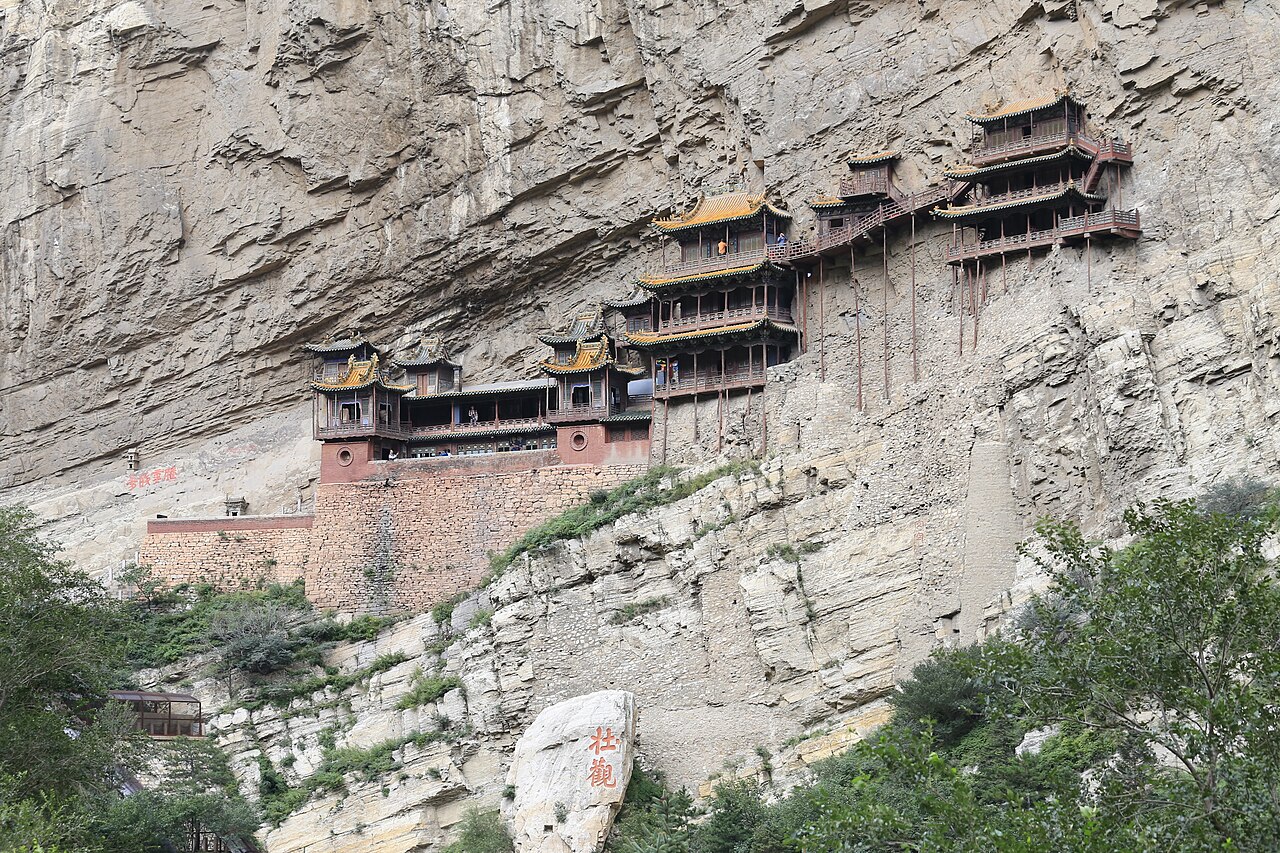
The Hanging Temple
A monastery of forty halls pinned to a cliff face on Mount Heng, holding altars to Confucius, Laozi, and the Buddha under one roof — the Three Teachings in a single building.
References
- Susan L. Huntington, 'Early Buddhist Art and the Theory of Aniconism,' Art Journal 49.4 (1990)
- Smarthistory: The Buddha in art, Gandhara and Mathura
Related Across the Site
- A Gandhara Buddha Art Entry — The Buddha in human form from the workshops of Gandhara (1st–3rd century CE): Apollo's face, a Roman toga's folds, and the lakshanas of the Buddha — the image that changed Buddhist art forever.
- The Bharhut Railing Art Entry — The carved sandstone railing of the Bharhut stupa (c. 150–100 BCE), its medallions crowded with jataka tales and labeled in Brahmi — and the Buddha, in scene after scene, present only by symbol.
- The Great Stupa at Sanchi Art Entry — The oldest stone stupa in India, begun under Ashoka and crowned with four carved gateways: the reliquary mound as Buddhism's first monumental art, and its first aniconic center.
- St Andrews Encyclopaedia of Theology Library — An open-access, multi-author theological reference with advanced articles on Christianity, Judaism, Islam, Hinduism, and Buddhism.
- Five Precepts (Pancasila) Prayer or Creed — Five voluntary training rules — against killing, stealing, sexual misconduct, false speech, and intoxicants — undertaken by lay Buddhists.
- Metta Sutta Prayer or Creed — The Buddha's discourse on loving-kindness, chanted as a blessing and a protection.
- Refuge Prayer (Tisarana) Prayer or Creed — The formula of going for refuge to the Buddha, the Dhamma, and the Sangha — the act that makes a person a Buddhist.
- Buddhism World View — Buddhism teaches that suffering comes from craving and ignorance; by following the Buddha's Eightfold Path, a person can awaken and be freed from rebirth.
All of Religious Art & Worldviews · The comparison: May the divine be depicted?