

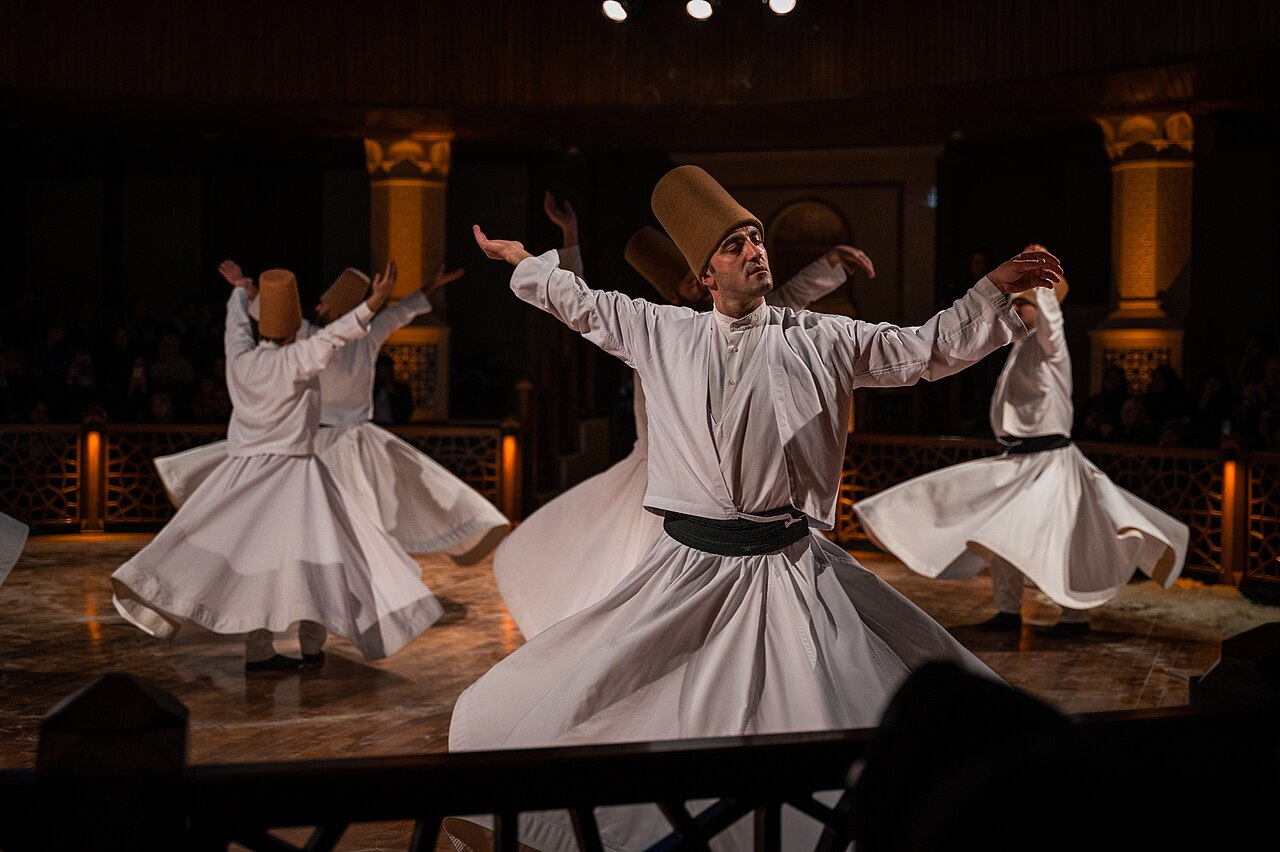
Sufism is Islam's contemplative and mystical path: the purification of the heart through remembrance of God, discipleship under a master, and love, until the self's claims give way to God's presence.
Sufism (tasawwuf) is the inward dimension of Islam, traced to the ascetics of the first Islamic centuries and flowering in orders (tariqas) — Qadiriyya, Naqshbandiyya, Mevleviyye, Shadhiliyya, Tijaniyya, and many more — guided by masters in chains of transmission reaching back to the Prophet. Its saints' tombs, its poetry (Rumi, Hafiz, Ibn Arabi's metaphysics, Bulleh Shah's songs), and its music carried Islam across Africa and Asia as much as its armies or merchants ever did.
Ultimate Reality
God is one — the Sufi hears tawhid not as arithmetic but as experience: nothing truly exists but God, and the world is his self-disclosure (tajalli). Ibn Arabi's school named this the unity of being (wahdat al-wujud); other masters guarded God's transcendence more strictly. Between the positions stands the shared conviction that God is nearer than the jugular vein, and knowable by tasting (dhawq), not only by proof.
The Human Condition
The obstacle is the nafs, the commanding self: greedy, proud, heedless, veiling the heart from God. Human beings forget (the Qur'an's word for man is tied to forgetfulness), and the dunya's glitter keeps the forgetting comfortable. The cure is a medicine of the heart administered over years: the stations of repentance, patience, gratitude, trust, and contentment.
Knowledge and Truth
Sufis distinguish the knowledge of reports from the knowledge of tasting: ma'rifa, gnosis, is given in the heart's polishing. The instruments are dhikr (the remembrance of God's names, aloud or silent, alone or in the gathered circle), meditation under a shaykh's direction, audition of music and poetry in some orders (sama, of which the Mevlevi whirling is the famous form), and service. The sharia is the path's fence and foundation in orthodox Sufism: states do not annul the law.
Right and Wrong
The path works by adab — perfect courtesy toward God, the Prophet, the master, and every creature — until courtesy becomes character. The great virtues are poverty of spirit (faqr), sincerity (ikhlas), and love: Rabi'a of Basra prayed to worship God neither from fear of hell nor desire for paradise, but for God himself. The perfected human (al-insan al-kamil) mirrors the Prophet, in whom the divine attributes are most fully reflected.
Human Destiny
The goal is fana and baqa: the passing away of the self's claims in God, and subsistence in him — variously described as union, annihilation in the Beloved, or the servant's perfect slavery become freedom. Physical death is the greater wedding night (as Rumi called his own death day) for the one already dead to self; sainthood continues its blessing at the tomb, where the friends of God are visited and their intercession sought.
The Conversation
Sufism asks the legal and literal schools of Islam whether a religion of the heart can survive on rulings alone, and it hears the same question returned as an accusation against its shrines and saints. To the other world views it poses the question of practice: what, in your tradition, corresponds to the discipline of remembrance — the daily technology by which doctrine becomes experience, and experience becomes love?