

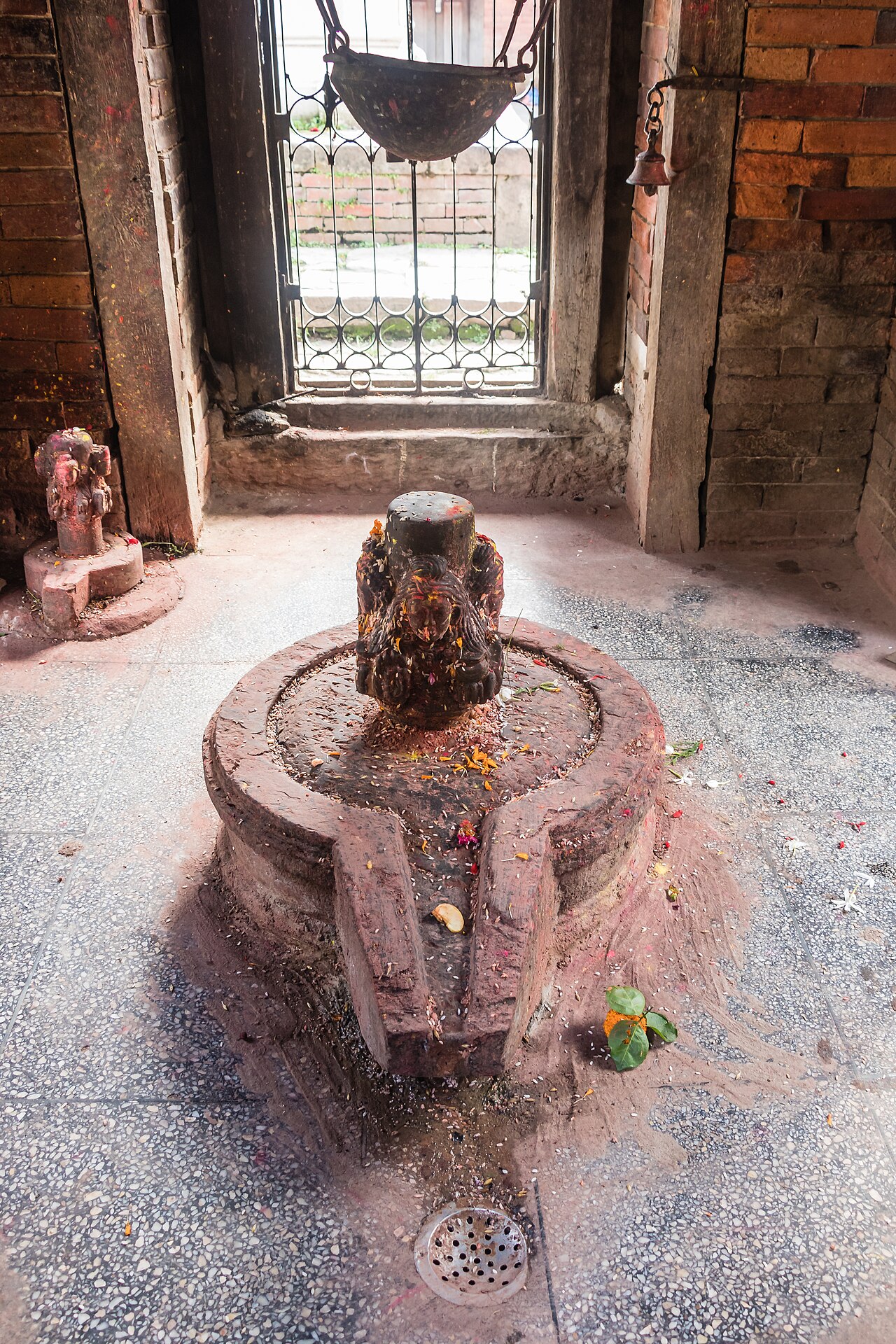
The cross, the linga, the torii, the fire altar, the wheel, the written word: what traditions put in the figure's place is never an absence.
Tagged: Aniconic (Symbolic) Aniconism Symbols
Where the figure is refused, something else stands in its place, and the substitute is never nothing. The early Buddhist carvers set the wheel, the tree, the footprint, and the empty throne where the Buddha would later stand. The Sikh tradition enthrones a book. The Zoroastrian tends a flame. The Shinto priest binds a rope around a tree and keeps a mirror no one sees. The Hindu devotee pours water over a stone that is Shiva precisely by not resembling him.
The symbol is not a lesser image awaiting promotion to a figure. In several of these traditions it is the theologically superior form: the linga confesses a God who is formless as truly as formed; the wheel preaches the dharma every time it is read; the fire is not a picture of Ahura Mazda but his appointed sign. Aniconism and the symbol is therefore the theme that disciplines all the others — it forbids the lazy equation of no-figures with no-art, and it asks of every symbol the same questions asked of every statue: who made it, what presence it carries, what honor it receives, and who argues about it.
The scholarly caution belongs here too. Susan Huntington's critique of the Buddhist case warns that symbols may never have been substitutes at all — that the wheel and the tree were worshipped for themselves, on their own logic. The symbol, in other words, may not point away from itself at all.
References
Related Across the Site
- The Bharhut Railing Art Entry — The carved sandstone railing of the Bharhut stupa (c. 150–100 BCE), its medallions crowded with jataka tales and labeled in Brahmi — and the Buddha, in scene after scene, present only by symbol.
- The Good Shepherd of the Catacombs Art Entry — A young shepherd carrying a lamb across his shoulders, painted and carved across the Roman catacombs: the earliest Christian image of Christ, chosen as a symbol before it was a portrait.
- The Great Stupa at Sanchi Art Entry — The oldest stone stupa in India, begun under Ashoka and crowned with four carved gateways: the reliquary mound as Buddhism's first monumental art, and its first aniconic center.
- The Shiva Linga Art Entry — A polished stone shaft rising from its base, bathed daily in water, milk, and flowers: the aniconic murti of Shiva, worshipped not as a symbol of an absent god but as the god's own form.
- The Torah Ark and Its Ornaments Art Entry — The ark that houses the scroll, and the silver that dresses it — crown, shield, pointer, and finials: ceremonial art at the center of synagogue worship, governed by the principle of beautifying the commandment.
- Buddhism Art Tradition — Symbols before images, the Buddha image after Gandhara and Mathura, and a scholarly debate that is not settled.
- Islam Art Tradition — Calligraphy, geometry, and architecture under the norm of aniconism, with a figural courtly tradition beside it.
- Sikhism Art Tradition — An aniconic theology centered on the Guru Granth Sahib, with a contested tradition of Guru portraits.