

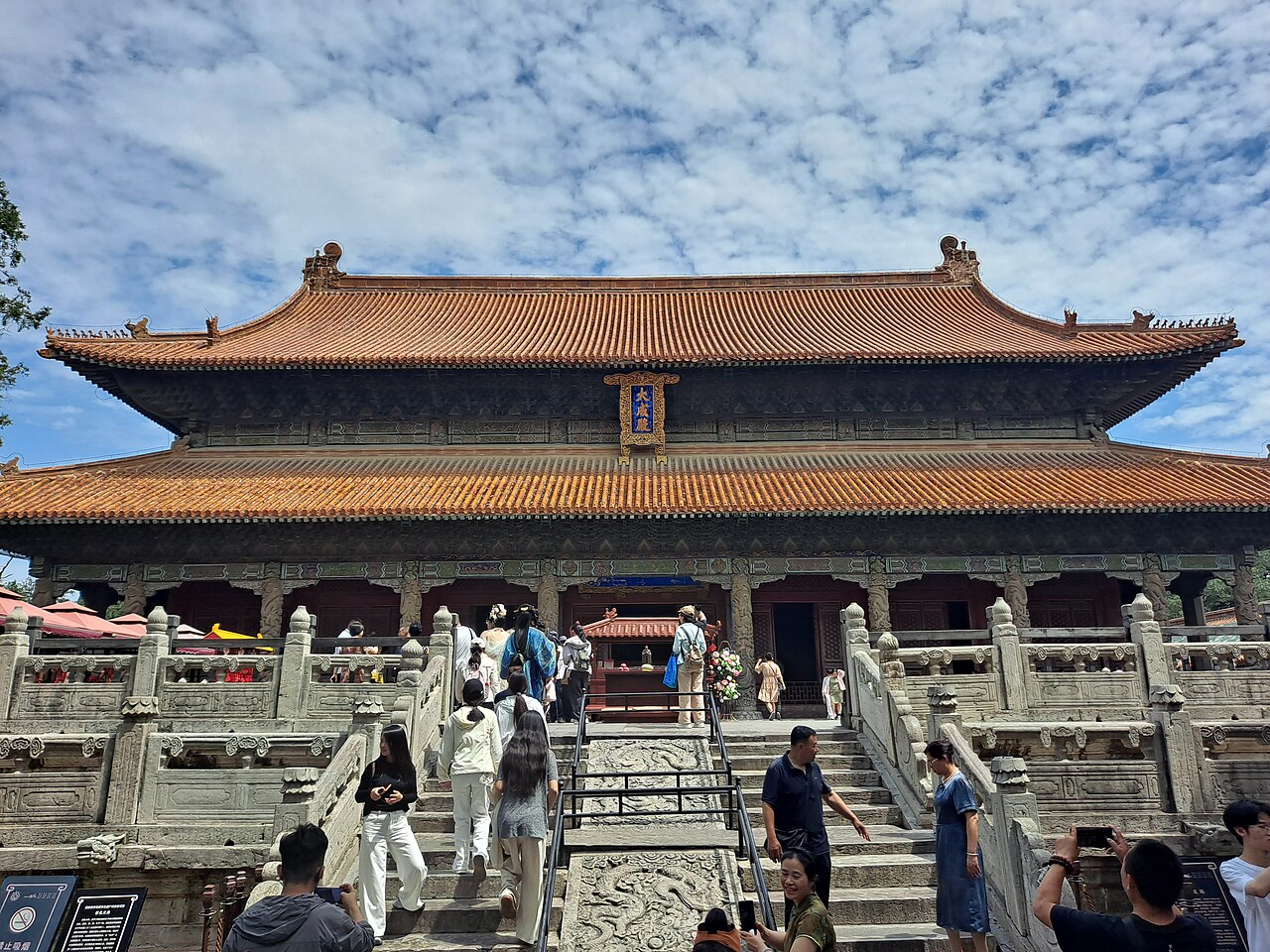
Confucianism teaches that a humane society grows from cultivated character: virtue learned through ritual propriety, study, and devotion to family, under Heaven's moral order.
Confucianism grew from the teaching of Confucius (551–479 BCE), who presented himself not as an inventor but as a transmitter of the way of China's early sages. His sayings, gathered by disciples in the Analects, and the later work of Mencius and Xunzi, formed a tradition that educated China's officials for two thousand years and shaped Korea, Japan, and Vietnam as well.
Ultimate Reality
Heaven (Tian) stands behind the moral order of the world: not a creator who intervenes at whim, but the sanctioning pattern by which rulers hold or lose the Mandate of Heaven and by which human conduct aligns, or fails to align, with the way things should go. Beneath Heaven, ancestors remain present to their descendants and receive reverence at family altars.
The Human Condition
People are not born wicked; they are born unfinished. Human nature is raw material — Mencius held it leans toward goodness like water flowing downhill — and disorder in the world begins with disorder in persons and families. Ignorance of the rites, neglect of study, and unfilial conduct are the shape the problem takes.
Knowledge and Truth
Truth is learned, not revealed in a flash: by studying the classics, reflecting on history, and practicing what one learns until it becomes character. Confucius described himself as a man who learns eagerly and teaches tirelessly; the rectification of names — calling things by their right names — keeps language, and so society, honest.
Right and Wrong
The cultivated person, the junzi, acts from ren (humaneness) expressed through li (ritual propriety): the courtesies, ceremonies, and duties that bind child to parent, subject to ruler, friend to friend. Filial devotion is the root virtue. Rulers govern rightly by moral example rather than by force or punishment.
Human Destiny
Confucian hope is mostly this-worldly: a harmonious family, an ordered state, a name honored by descendants who keep the ancestral rites. Confucius kept a respectful reserve about spirits and death — reverence for ancestors is owed whether or not the living can describe what the dead experience.
The Conversation
Confucianism asks every other world view where its ethics are practiced: in what relationships, taught by what teachers, sustained by what habits? It presses secular views on how virtue is transmitted between generations, and it asks revealed religions whether correct belief, without cultivated conduct and family duty, is enough.