

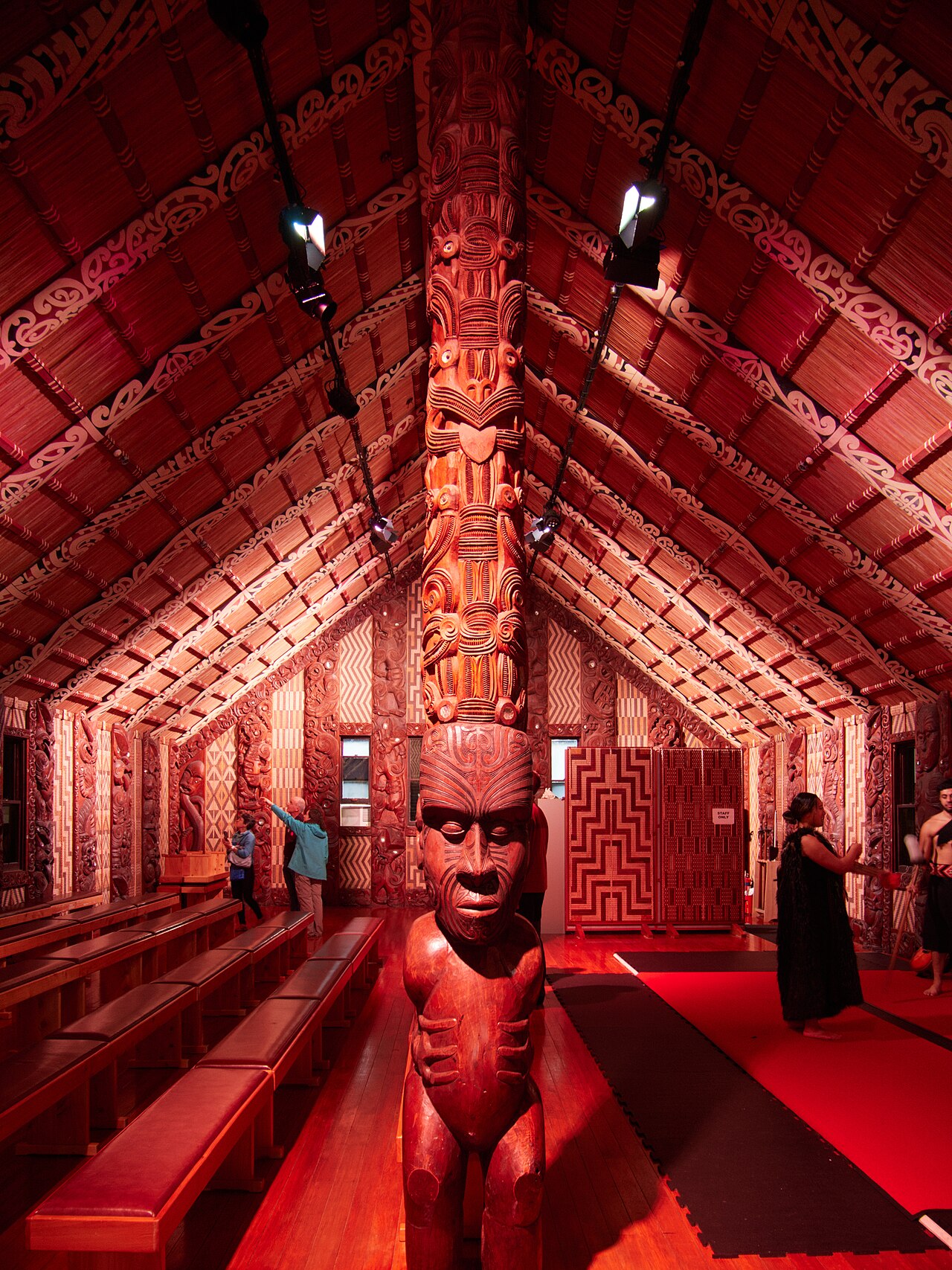
Sacred objects under community protocol: sacred and secret are distinguished, and repatriation is a live question.
Tagged: Community Protocol Repatriation Sacred Objects Indigenous and Traditional
May the divine be depicted?
There is no single Indigenous stance; there are communities and their protocols. Some objects are public and celebrated, some are sacred and restricted, and the authority over which is which belongs to the community, not to the museum or the website.
Not One Category
Indigenous religious art is not a single category, and this profile exists mainly to say what must not be done with it. Behind the label stand hundreds of living traditions — masks, regalia, pipes, rattles, totem poles, sand paintings, bark paintings, carvings, textiles, and body art — each embedded in its own ceremonial, kinship, and land-based protocols. A mask is not a sculpture that happens to be old. It is a being, a right, a responsibility, held under rules that its community sets.
Sacred and Secret
The first distinction is between the sacred and the secret. Much Indigenous art is public, celebrated, and made for the world's eyes, from monumental totem poles to contemporary painting. Some objects and images are not meant for public display at all, and publishing them can be a serious violation of community norms — a harm that does not expire with the photograph's age. A comprehensive site therefore needs what this section is built with: provenance on every entry, community-sourced material, and a redacted state in which the record can say what is withheld, and why, without showing it.
Repatriation
The second live question is return. Sacred objects and ancestral remains taken in the colonial centuries sit in the world's museums, and frameworks such as NAGPRA in the United States, and equivalent processes in Canada, Australia, and New Zealand, govern their return to the communities they belong to. The Vatican's holding of Potlatch masks and ceremonial objects in its Anima Mundi collection is the case this site follows in detail. Repatriation is not a historical footnote to the art; for the communities concerned, it is the art's present tense.
Appropriation and the Living Tradition
The third question is use: the taking of Indigenous sacred imagery by outside artists, fashion, and now AI generators continues the older extraction by digital means. Against all of it stands the fact this profile ends on: Indigenous art is not a relic. It is contemporary, political, and spiritually alive, made by artists who are also its theologians. This site presents it under their authority, in public and community-given forms only, and links out to the communities' own institutions wherever it can.
Entries in This Tradition
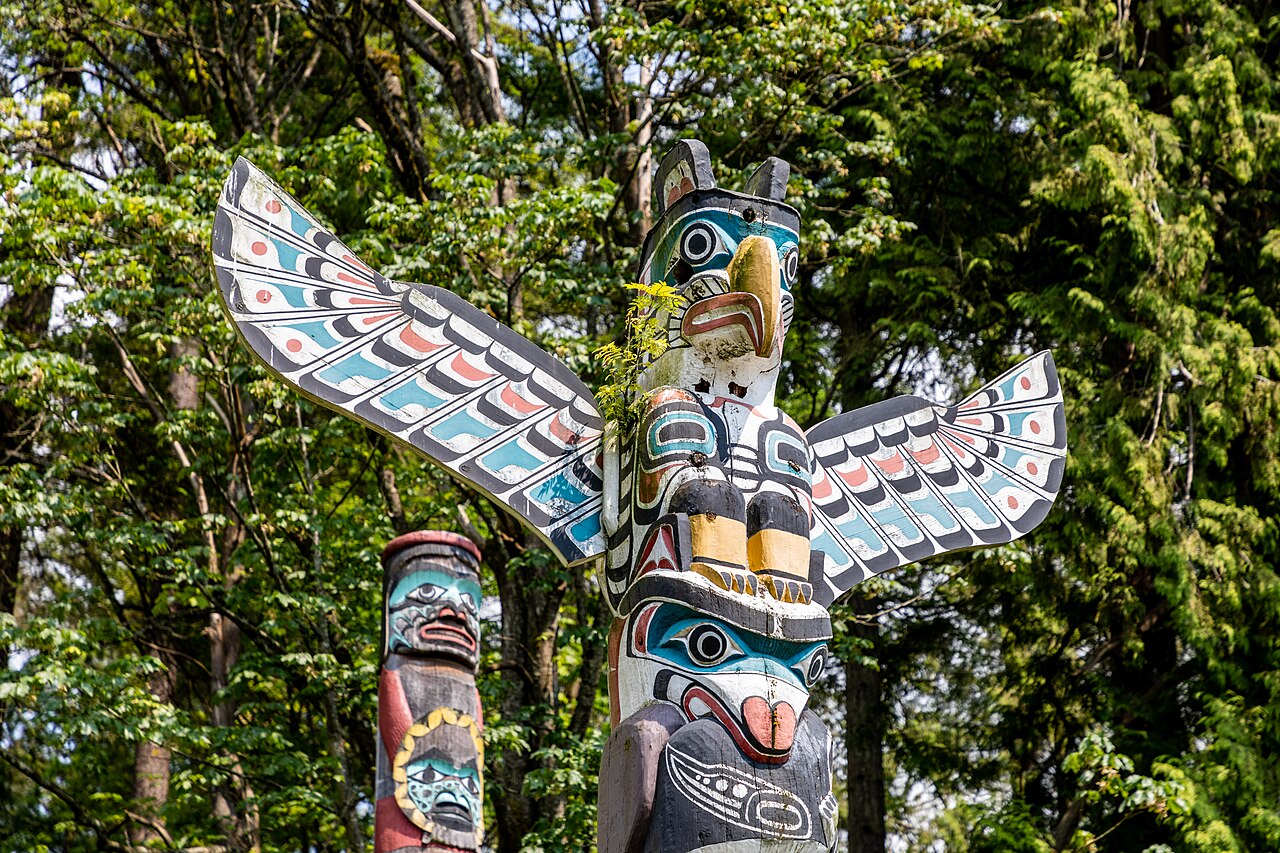 Entry
Northwest Coast Formline and the Crest Pole
A visual grammar of ovoids and U-forms that writes family crests in cedar — the pole at Brockton Point, carved by Ellen Neel, stands in public where its predecessors have stood since the 1880s.
References
- National Park Service: The Native American Graves Protection and Repatriation Act (NAGPRA)
- Vatican Museums: Anima Mundi ethnological collection
Related Across the Site
- Northwest Coast Formline and the Crest Pole Art Entry — A visual grammar of ovoids and U-forms that writes family crests in cedar — the pole at Brockton Point, carved by Ellen Neel, stands in public where its predecessors have stood since the 1880s.
- Potlatch Masks — Image Withheld Art Entry — Masks danced at the potlatch open and transform as the ancestor arrives. This page shows no image: the masks are community-governed regalia, and their photographs are published here only with the owning community's consent, which has not been sought for specific pieces.
- Repatriation and Restitution Art Theme — NAGPRA, the Benin bronzes, the Potlatch masks at the Vatican: the return of sacred objects is the point where art history becomes a present-tense obligation.
- Norval Morrisseau Artist — The Anishinaabe founder of the Woodland School, who painted the legends of his people in X-ray lines and unmixed color — against the elders' first objections, then with their blessing.
- Aboriginal and Torres Strait Islander observance days Calendar Event — Sorry Day and NAIDOC Week; land, history, reconciliation.
- Indigenous Peoples' Day (US) Calendar Event — US counter-observance to Columbus Day.
- International Day of the World's Indigenous Peoples Calendar Event — UN observance of Indigenous rights and cultures.
- Maori Matariki Calendar Event — Maori new year; rising of the Pleiades.
All of Religious Art & Worldviews · The comparison: May the divine be depicted?