

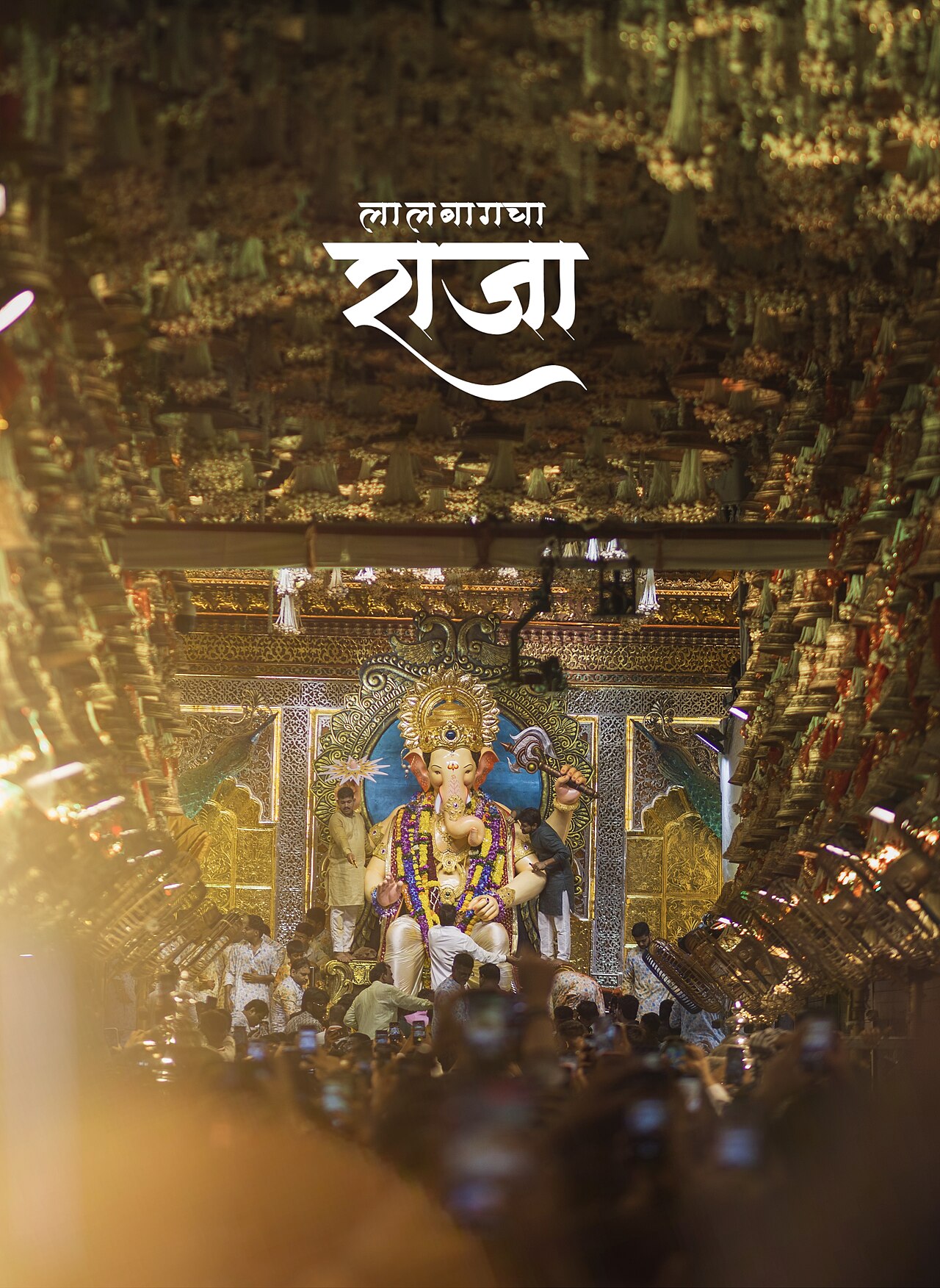
A clay Ganesh, modeled and painted by neighborhood artisans, worshipped in streets and homes for up to eleven days, then carried in procession and immersed: the murti as a guest who is honored and bid farewell.
Tagged: Sculpture Temple/Shrine Contemporary Devotional Iconic Extant Festivals Murti Hindu
Why It Stands Here
The festival image completes the murti's logic. Consecration makes the deity present in clay; visarjan, the immersion, dismisses the presence with honor when the festival ends, and the form returns to water and earth. Permanence is not the point — the temple murti a mile away is permanent. The festival murti is the same theology on a calendar: presence invited, hosted, and released.
Ganesh Chaturthi, transformed by Bal Gangadhar Tilak in 1893 into Maharashtra's great public festival, commissions images at every scale: household figures of a few inches, neighborhood pandals' giants of twenty feet. Kumartuli's modelers and their counterparts across India build them on bamboo and straw armatures in unfired clay, painted in the bright festival palette, and the god is installed with prana pratishtha, offered modak sweets and durva grass, and worshipped morning and evening for one, five, seven, nine, or eleven days.
The immersion processions — drums, dancing, chants of 'Ganpati Bappa Morya' — carry the images to rivers, lakes, and the sea. Environmental practice now argues over materials, plaster against clay, paint against pigment; the argument itself belongs to the record, as the festival's newest chapter. What does not change is the form's theological wit: the most beloved god of beginnings is the one whose image is made to be let go.
References
Related Across the Site
- A Gandhara Buddha Art Entry — The Buddha in human form from the workshops of Gandhara (1st–3rd century CE): Apollo's face, a Roman toga's folds, and the lakshanas of the Buddha — the image that changed Buddhist art forever.
- Brihadeeswara Temple Art Entry — Rajaraja Chola's temple at Thanjavur (completed 1010): a granite mountain of sculpture raised over one of India's great lingas, and the Chola bronze tradition's home ground.
- Rublev's Trinity Art Entry — Andrei Rublev's icon of the three angels at Abraham's table (c. 1411), painted for the Trinity Lavra of St. Sergius — the supreme achievement of Orthodox icon painting and its theology made visible.
- The Good Shepherd of the Catacombs Art Entry — A young shepherd carrying a lamb across his shoulders, painted and carved across the Roman catacombs: the earliest Christian image of Christ, chosen as a symbol before it was a portrait.
- The Great Stupa at Sanchi Art Entry — The oldest stone stupa in India, begun under Ashoka and crowned with four carved gateways: the reliquary mound as Buddhism's first monumental art, and its first aniconic center.
- The Sand Mandala Art Entry — Monks lay down a palace of the deities grain by grain in colored sand, contemplate it for days — and then sweep it away and pour it into running water.
- The Shiva Linga Art Entry — A polished stone shaft rising from its base, bathed daily in water, milk, and flowers: the aniconic murti of Shiva, worshipped not as a symbol of an absent god but as the god's own form.
- The Tibetan Thangka Art Entry — A portable scroll painting of a Buddha or deity in exact iconometric proportion — a meditation support, a teaching diagram, and a presence, rolled for the road and unrolled for the rite.