

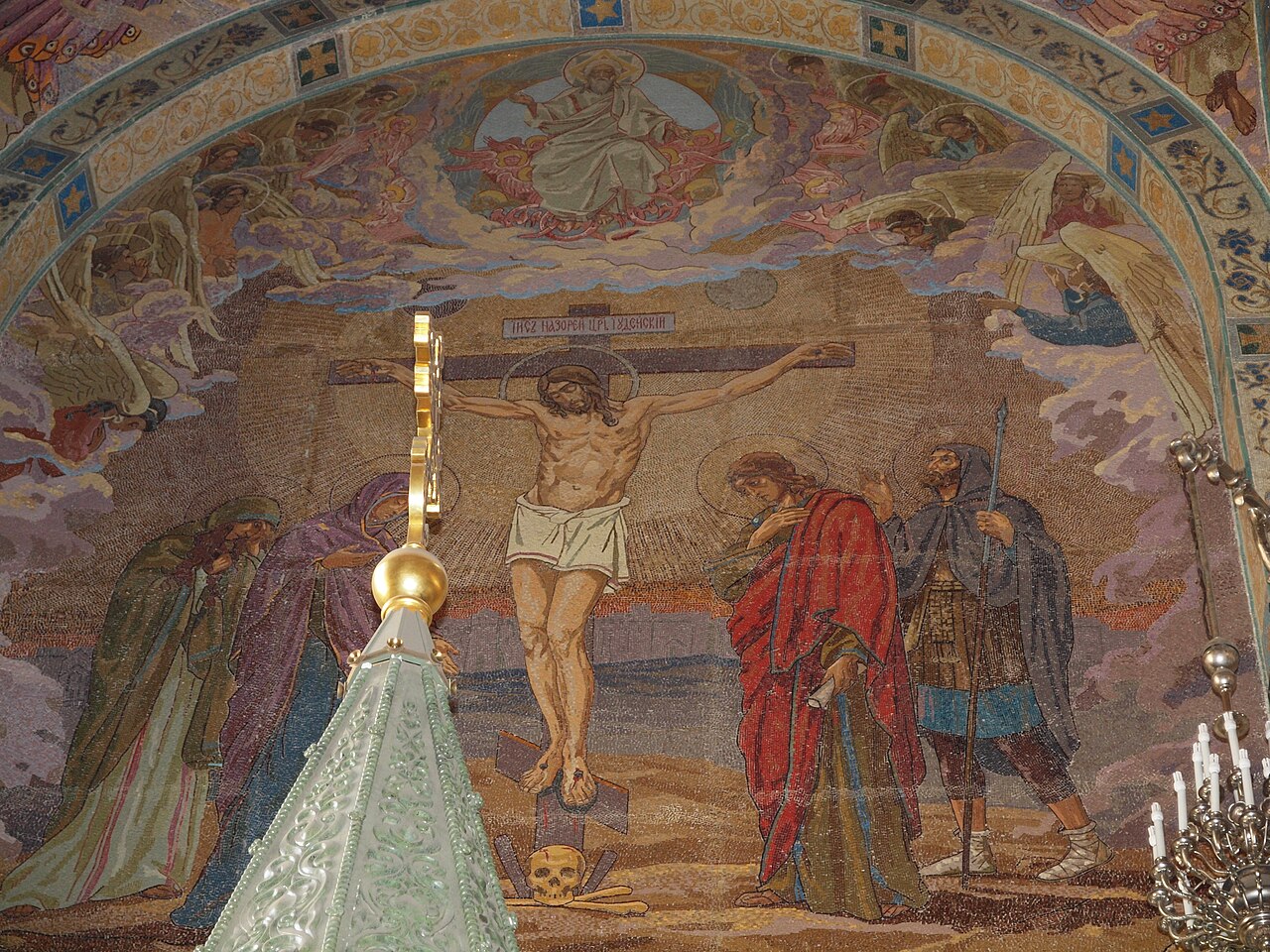
Eastern Orthodoxy is the church of the Greek-speaking East, holding the faith of the seven ecumenical councils, worshipping in the Divine Liturgy, and seeking theosis — the transformation of the human person by God's uncreated grace.
Eastern Orthodoxy gathers the ancient patriarchates of Constantinople, Alexandria, Antioch, and Jerusalem with the national churches of Greece, Russia, and the Slavic and Arab Orthodox worlds. It understands itself as the one church continuing without break from the apostles, separated from Rome since the schism of 1054 and from the Oriental Orthodox since the fifth century.
Ultimate Reality
God is one in three persons, Father, Son, and Holy Spirit, and the Spirit proceeds from the Father. Orthodoxy distinguishes God's essence, which no creature can know, from his energies, in which he truly gives himself to be known and shared. God is not a distant concept but the living fire into which prayer enters.
The Human Condition
Humanity bears the image of God, darkened but not destroyed by ancestral sin. The human wound is less a legal guilt inherited than a sickness and mortality inherited: death entered through Adam, and corruption spreads from it. People sin because they are dying, as much as they die because they sin.
Knowledge and Truth
Truth is kept by Holy Tradition — Scripture read inside the worshipping church, the seven ecumenical councils, the liturgy, the icons, and the fathers. Knowledge of God comes by participation and purification more than by definition: the theologian is the one who prays truly. Apophatic reserve guards every statement: God is beyond every name used of him.
Right and Wrong
The moral life is ascetic and sacramental: fasting, prayer, confession, almsgiving, and the Jesus Prayer train the heart toward repentance. Sin is a missing of the mark and a disease to be healed, and the priest acts as physician as much as judge. The saints, with the Mother of God first, are the healed ones whose lives set the pattern.
Human Destiny
The goal of the Christian life is theosis: by grace becoming what Christ is by nature, sharing the divine life. Death is an enemy already defeated in Christ's resurrection; the dead rest in hope of the general resurrection, and the church prays for them. Icons of the transfigured creation show the world's destiny in advance.
The Conversation
Orthodoxy asks the Western churches what was gained and lost when the faith was stated mainly in legal and scholastic terms, and it asks the Oriental Orthodox whether the words that divided them in 451 still divide their faith. It presses every world view on whether truth can be possessed without being entered — whether knowing God is a conclusion or a communion.