

Aniconic fire: Ahura Mazda represented through creation, the fire altar, and the fravahar.
Tagged: Fire Temple Fravahar Zoroastrianism
May the divine be depicted?
Ahura Mazda is not figured. He is represented by his creation and supremely by fire, tended in the fire temple; the fravahar stands as the tradition's symbol, not its God's portrait.
God Represented by His Creation
Zoroastrianism is aniconic in its conception of Ahura Mazda. The Wise Lord is not carved, painted, or figured. He is represented by his creation — by light, by order, by the good things of the world he made — and supremely by fire, which is his symbol and his presence in the temple. The art of the tradition is therefore the art of the flame's housing and tending.
The Fire Temple
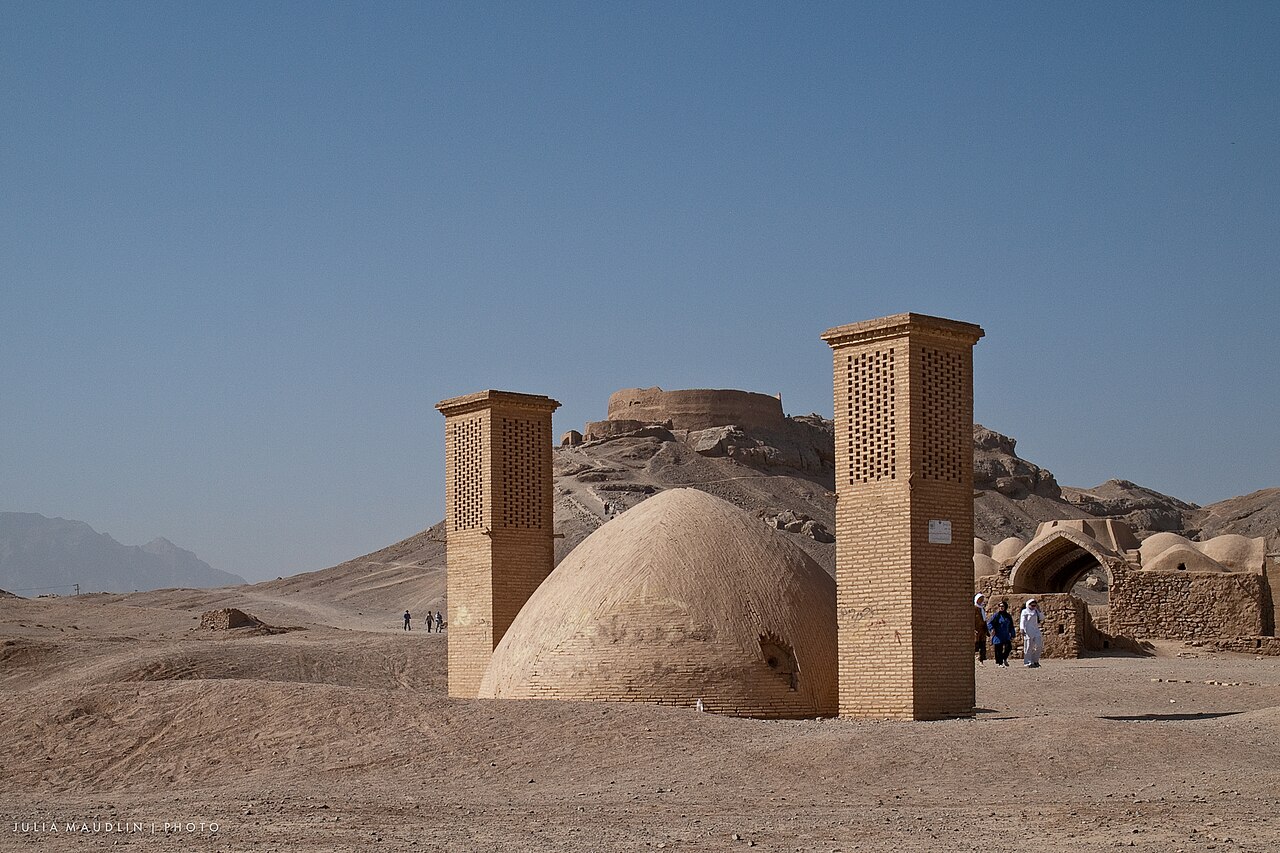
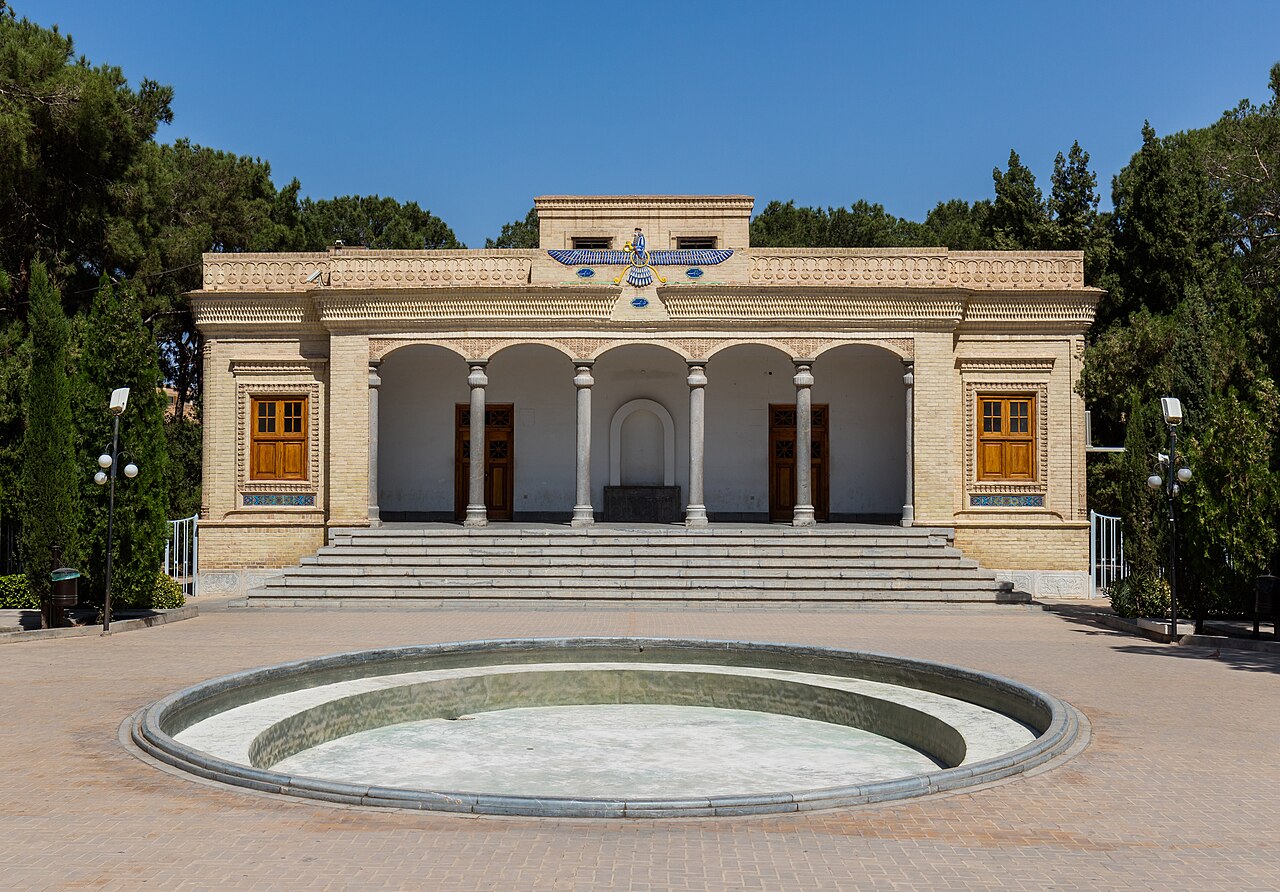
The atashgah, the fire temple, keeps a consecrated fire burning without interruption, fed by priests who veil their faces so their breath does not pollute it. The highest grade of fire, the Atash Behram, is itself assembled in a consecration that can take a year, gathering fire from sixteen sources including lightning. The building around it is deliberately plain beside the sanctum: the architecture serves the flame, and the flame is the image that is not an image.
Fire Altars and the Fravahar
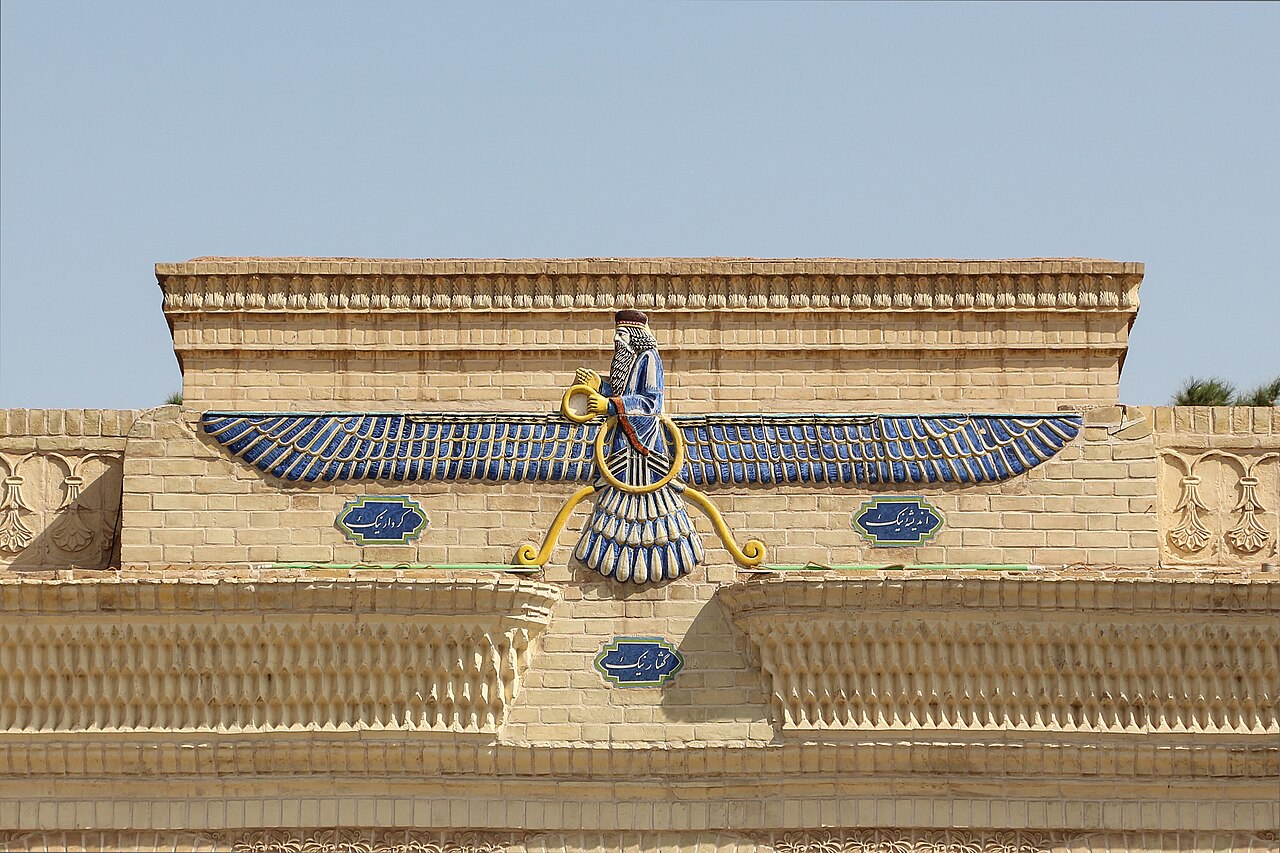
Achaemenid and Sasanian art does show sacred things — but it shows them at one remove. Royal tombs and seals depict the king before the fire altar; the divine appears symbolically, as the winged disk and the fravahar, the winged figure above a human form that has become the tradition's universal emblem. The fravahar is not a portrait of Ahura Mazda. It is most often read as the guardian spirit, the fravashi, or the human soul in its choice of the good — a symbol of the religion's ethics rather than a figure of its God.
From Image Temples to Fire Temples
The aniconism was a development, not a starting point. Earlier Iranian temples housed images of the deities, and Sasanian glyptic art preserves ritual scenes and royal investitures of great sophistication. As aniconic worship became normative, the image temples were gradually transformed into fire temples, and the tradition's visual energy settled where it remains: on the altar, the flame, and the winged sign.
Entries in This Tradition
 Entry
The Yazd Fire Temple
A temple in Yazd whose sacred fire has been kept burning, by the tradition's account, since about 470 CE — carried from shrine to shrine across fifteen centuries and tended daily behind glass.
 Entry
The Fravahar
A bearded figure in a winged disc, carved over temple doors and printed on calendars from Mumbai to Toronto — the Zoroastrian emblem whose original meaning scholars still argue about.
References
Related Across the Site
- The Fravahar Art Entry — A bearded figure in a winged disc, carved over temple doors and printed on calendars from Mumbai to Toronto — the Zoroastrian emblem whose original meaning scholars still argue about.
- The Yazd Fire Temple Art Entry — A temple in Yazd whose sacred fire has been kept burning, by the tradition's account, since about 470 CE — carried from shrine to shrine across fifteen centuries and tended daily behind glass.
- The Persepolis Carvers Artist — The imperial workshops of Darius and Xerxes — masons from across the empire whose Apadana reliefs process twenty-three nations up the stairs with their gifts.
- Gahambars (six seasonal festivals) Calendar Event — Six seasonal festivals of creation.
- Mehrigan Calendar Event — Autumn festival of Mithra.
- Nowruz (New Year) Calendar Event — Zoroastrian and Persian new year; spring equinox.
- Sadeh Calendar Event — Midwinter fire festival.
- Zoroastrianism World View — Zoroastrianism, the teaching of the prophet Zarathustra, sets one wise and good God, Ahura Mazda, against the destructive spirit, and calls every person to choose good thoughts, good words, and good deeds.
All of Religious Art & Worldviews · The comparison: May the divine be depicted?