

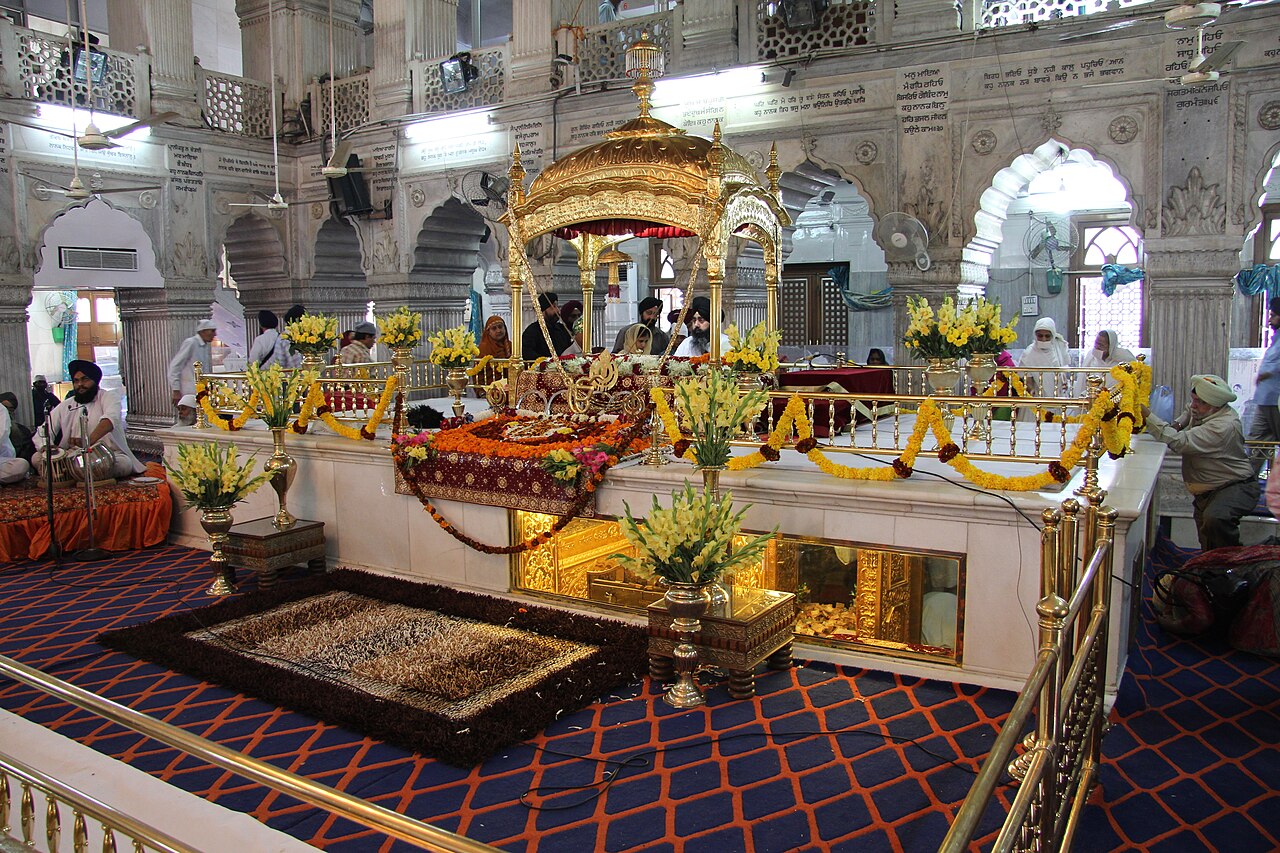
Icons kissed, murtis bathed and fed, a scripture fanned like a king: devotion is the embodied practice that makes art a presence rather than a picture.
Tagged: Devotional Devotion Veneration
Devotion is what happens to art when it is loved at close range. The Orthodox believer kisses the icon and lights the lamp before it. The Hindu priest bathes the murti, dresses it, offers it food and flowers, and puts it to rest — abhisheka, alankara, naivedya — because the form is not a portrait of the deity but the deity's residence for the day. The Sikh attendant waves the chaur over the enthroned Granth through the hours of the darbar. The Catholic rosary turns prayer into something the fingers can count.
The theology differs at every step, and the practices rhyme. Each tradition polices the same border: the honor must pass through the object to its prototype, as Nicaea put it, or rest in the object as the appointed seat of presence, as the murti's consecration claims — but it must never terminate in the material as a god of wood and stone. The traditions disagree about where presence sits. They agree that devotion mishandled becomes the thing their scriptures condemn.
This theme gathers the section's devotional entries and links them to the Devotion section of the site, where the same practices — icon veneration, murti puja, the rosary, the fanned scripture — are recorded as disciplines of prayer.
References
Related Across the Site
- A Gandhara Buddha Art Entry — The Buddha in human form from the workshops of Gandhara (1st–3rd century CE): Apollo's face, a Roman toga's folds, and the lakshanas of the Buddha — the image that changed Buddhist art forever.
- A Kufic Qur'an Folio Art Entry — A parchment leaf of an Abbasid Qur'an in angular Kufic script, its verse endings touched with gold: the page as the supreme religious image of an aniconic faith.
- Rublev's Trinity Art Entry — Andrei Rublev's icon of the three angels at Abraham's table (c. 1411), painted for the Trinity Lavra of St. Sergius — the supreme achievement of Orthodox icon painting and its theology made visible.
- The Ganesh Chaturthi Murti Art Entry — A clay Ganesh, modeled and painted by neighborhood artisans, worshipped in streets and homes for up to eleven days, then carried in procession and immersed: the murti as a guest who is honored and bid farewell.
- The Good Shepherd of the Catacombs Art Entry — A young shepherd carrying a lamb across his shoulders, painted and carved across the Roman catacombs: the earliest Christian image of Christ, chosen as a symbol before it was a portrait.
- The Sand Mandala Art Entry — Monks lay down a palace of the deities grain by grain in colored sand, contemplate it for days — and then sweep it away and pour it into running water.
- The Shiva Linga Art Entry — A polished stone shaft rising from its base, bathed daily in water, milk, and flowers: the aniconic murti of Shiva, worshipped not as a symbol of an absent god but as the god's own form.
- The Tibetan Thangka Art Entry — A portable scroll painting of a Buddha or deity in exact iconometric proportion — a meditation support, a teaching diagram, and a presence, rolled for the road and unrolled for the rite.