

No depiction of the Manifestations; calligraphy, architecture, and music carry the art.
Tagged: Greatest Name House of Worship
May the divine be depicted?
The Manifestations of God may not be depicted in any visual medium or in drama. The faith's art flourishes in calligraphy, in the architecture of its Houses of Worship, and in music, and photographs of the Central Figures are handled with reverence and restraint.
The Prohibition and Its Reason
The Bahá'í Faith continues the Abrahamic aniconic tradition at its strictest point: the Manifestations of God — Bahá'u'lláh, the Báb, and the prophets before them — may not be depicted in painting, drawing, sculpture, or drama. The ground is not a denial of art's value. It is the impossibility of the task: no image can adequately portray the Manifestation, and a false image is worse than none.
Calligraphy
What the faith makes instead begins with the word. Calligraphic renderings of the Greatest Name and of the sacred writings are encouraged and fill Bahá'í books, jewelry, and homes — the name itself, beautifully written, as the permitted portrait of the unportrayable. The ringstone symbol and the nine-pointed star give the community its visual marks without touching a figure.
Architecture
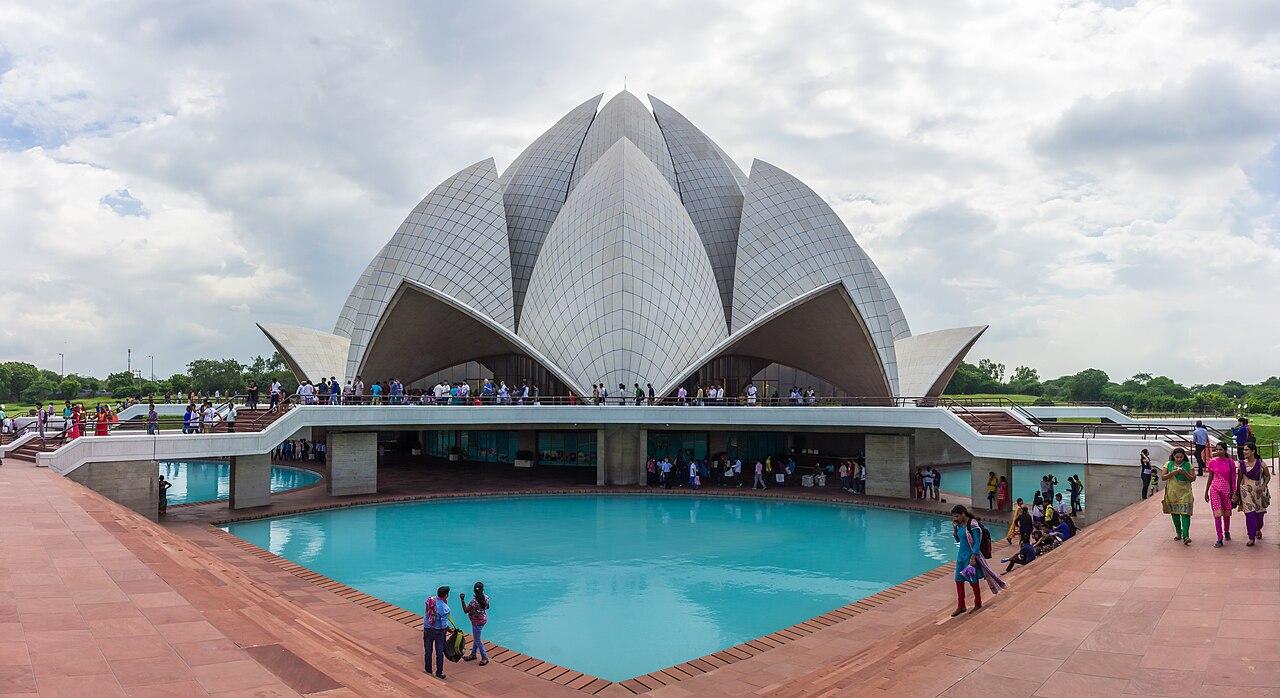
The faith's monumental art is its buildings: the Shrine of the Báb on Mount Carmel, its golden dome over terraced gardens; and the Houses of Worship on every continent, each nine-sided, each different — the Lotus Temple in Delhi rising in marble petals, the temple in Wilmette worked in white quartz ornament, the Santiago temple in translucent wings of glass and stone. A House of Worship is a sermon in structure: one God, one humanity, many entrances.
Reverence for What Exists
Photographs of the Central Figures do exist, and they are treated with a restraint that has no parallel in the image-saturated present: they are not displayed casually in public or in private homes, and reproductions are viewed only in settings of reverence. The rule completes the profile: a young world religion that has thought about images at the level of principle, and answered with calligraphy, architecture, music, and a disciplined refusal.
References
- Bahá'í World Centre: The Shrine of the Báb and the Terraces
- Smarthistory: The Lotus Temple, New Delhi
Related Across the Site
- The Greatest Name in Calligraphy Art Entry — The Bahá'í invocation rendered as calligraphy by Mishkin-Qalam, the tradition's master penman — the sacred name made visible as pattern, in a faith that declines to depict its Manifestations.
- The Lotus Temple Art Entry — A white marble lotus of twenty-seven petals, open to all, in which no sermon is preached and no image hangs — only the scriptures of the world's religions are read and sung.
All of Religious Art & Worldviews · The comparison: May the divine be depicted?