

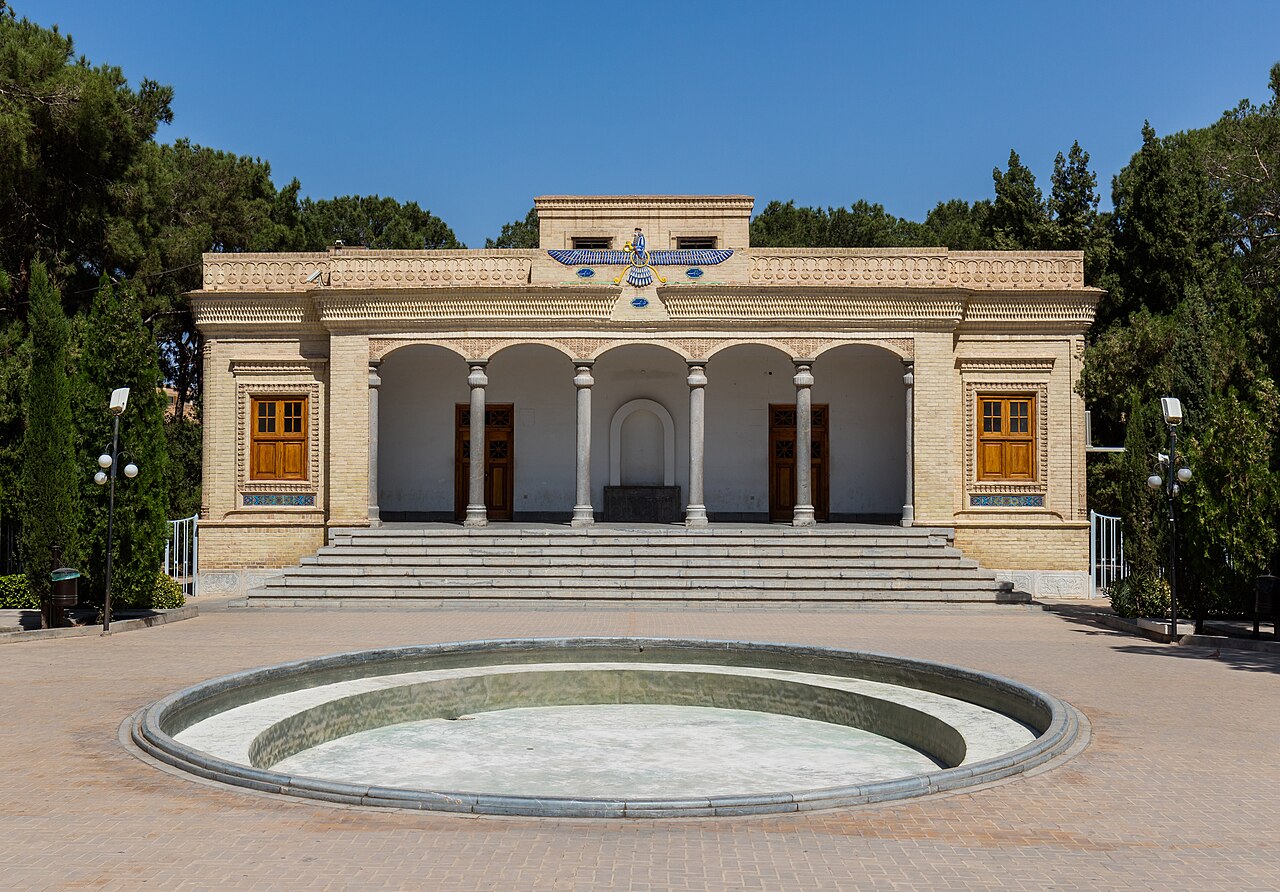
A temple in Yazd whose sacred fire has been kept burning, by the tradition's account, since about 470 CE — carried from shrine to shrine across fifteen centuries and tended daily behind glass.
Tagged: Architecture Temple/Shrine Modern Devotional Extant Atash Behram Sacred Fire Zoroastrianism
Why It Stands Here
Zoroastrianism's central art object is not an image but a flame. The fire temple's architecture serves one duty: keep the fire fed, pure, and attended. The building pictured is 20th century; the fire, by the community's account, is fifteen hundred years old.
An Atash Behram, a fire of the highest grade, is consecrated from sixteen fires, including fire from a crematory and fire kindled by lightning, in a rite lasting months. The Yazd fire is counted the oldest of Iran's nine such fires, its flame traced to about 470 CE and moved through several homes in the Fars and Yazd regions as the community moved, before its installation here in 1934.
Visitors see the fire through glass in its chamber, tended by white-clad priests who feed it sandalwood and recite the prayers of the day. Around it, the temple keeps a small museum of the community that preserved the flame through fifteen centuries of minority life.
References
Related Across the Site
- Brihadeeswara Temple Art Entry — Rajaraja Chola's temple at Thanjavur (completed 1010): a granite mountain of sculpture raised over one of India's great lingas, and the Chola bronze tradition's home ground.
- The Dilwara Temples Art Entry — Five Jain temples on Mount Abu whose plain exteriors open into marble interiors carved to the thinness of lace — the summit of Jain temple art.
- The Dome of the Rock Art Entry — The oldest surviving monument of Islamic architecture (Jerusalem, 691–692): a shrine of mosaic, marble, and inscription, whose entire decorative program argues aniconism's positive case.
- The Golden Temple Art Entry — A gilded sanctum standing in the middle of a sacred pool, reached by one causeway and entered by doors on all four sides — open to every direction and every caste.
- The Hanging Temple Art Entry — A monastery of forty halls pinned to a cliff face on Mount Heng, holding altars to Confucius, Laozi, and the Buddha under one roof — the Three Teachings in a single building.
- The Ise Grand Shrine Art Entry — The most sacred shrine in Shinto is a plain cypress building that is torn down and rebuilt, identically, every twenty years — and has been for some thirteen centuries.
- The Lotus Temple Art Entry — A white marble lotus of twenty-seven petals, open to all, in which no sermon is preached and no image hangs — only the scriptures of the world's religions are read and sung.
- The Shiva Linga Art Entry — A polished stone shaft rising from its base, bathed daily in water, milk, and flowers: the aniconic murti of Shiva, worshipped not as a symbol of an absent god but as the god's own form.