

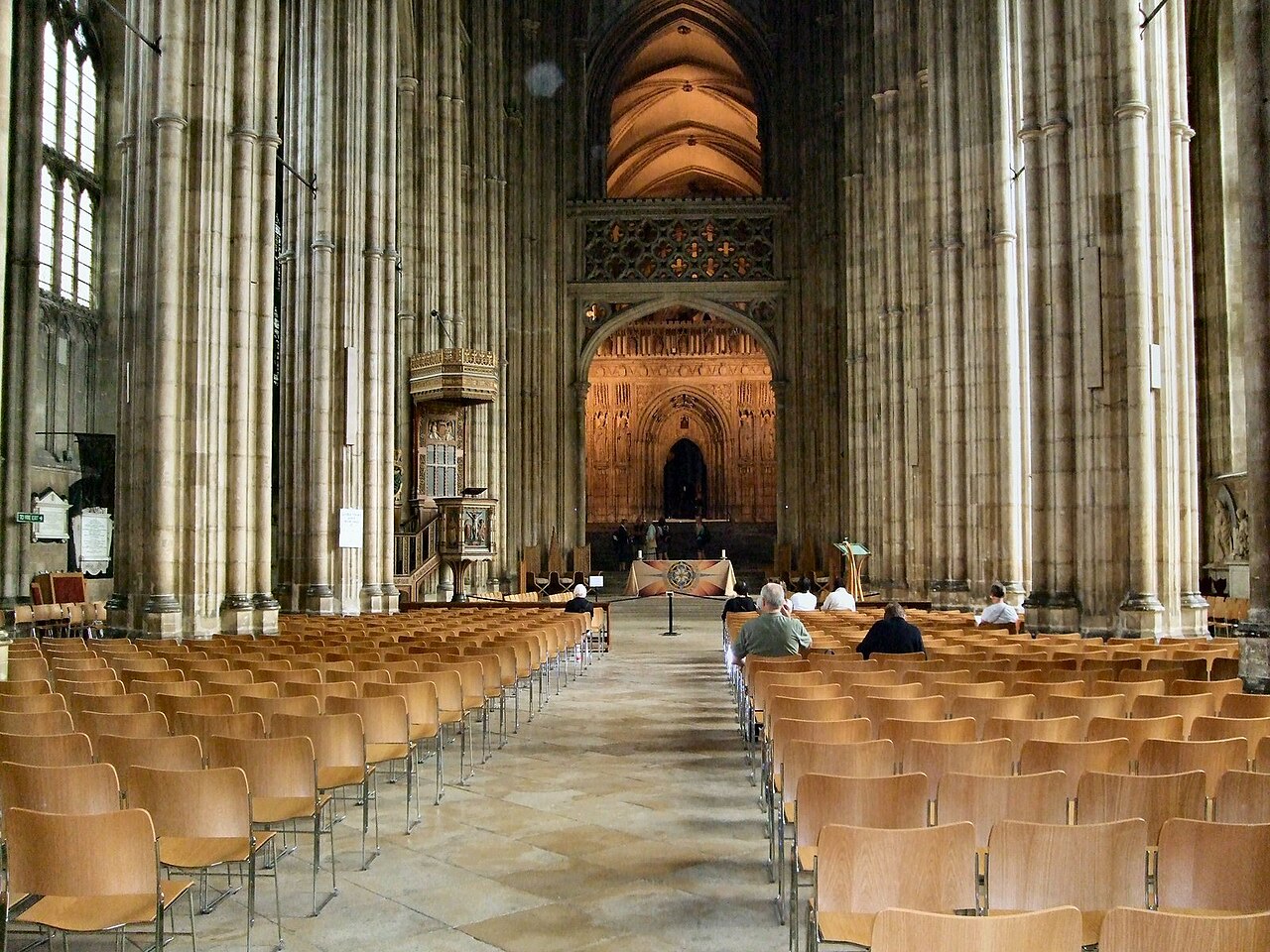
Anglicanism is the tradition of the Church of England and the worldwide Anglican Communion, holding catholic order and reformed doctrine together through the Book of Common Prayer, the episcopate, and the appeal to Scripture, tradition, and reason.
Anglicanism began with the English church's separation from Rome in the sixteenth century and its settlement under Elizabeth I: a church catholic in its orders and creeds, reformed in its Articles, and united less by a confession than by a book — the Book of Common Prayer, whose cadences have formed English-speaking Christianity for nearly five centuries. The Anglican Communion now spans the globe, strongest in Africa.
Ultimate Reality
God is the Trinity of the creeds, worshipped in the church's historic liturgy. Anglican theology has resisted system-building in favor of the prayer book's own balance: lex orandi, lex credendi — the rule of prayer shapes the rule of faith, and doctrine is learned kneeling as much as in the study.
The Human Condition
The Thirty-Nine Articles confess original sin and justification by faith in recognizably Reformation terms, while the liturgy's penitence is corporate and constant. The Anglican moral tradition expects the fall to show itself in societies as well as souls, and it has produced both establishments' complacency and prophets' resistance to it.
Knowledge and Truth
Richard Hooker's great scheme orders the sources: Scripture first, then tradition and the church's reason, as handmaids. The later shorthand — Scripture, tradition, and reason as a threefold cord — names Anglicanism's characteristic method: comprehensiveness within the bounds of the creeds and the prayer book, and a suspicion of any party that claims the whole.
Right and Wrong
Common prayer, the sacraments duly administered, and the catechism form the moral life; the episcopate in historic succession orders the church's ministry. Anglican moral theology historically prized casuistry and the examined conscience, and its modern provinces differ — sometimes publicly — over how inherited teaching meets new questions.
Human Destiny
The prayer book's burial office states the hope: sure and certain hope of the resurrection to eternal life. The Articles reject purgatory and the invocation of saints while the liturgy keeps the communion of the faithful departed inside its prayers; provinces vary in how much of the older practice they retain.
The Conversation
Anglicanism asks Rome and the East whether reunion can be built on shared prayer and creed without submission, and it asks free-church Protestants whether the episcopate and the liturgy are adiaphora or gifts. Its own hardest question it asks itself: whether comprehensiveness is a virtue of patience or a failure of nerve — the argument its provinces are having now.