

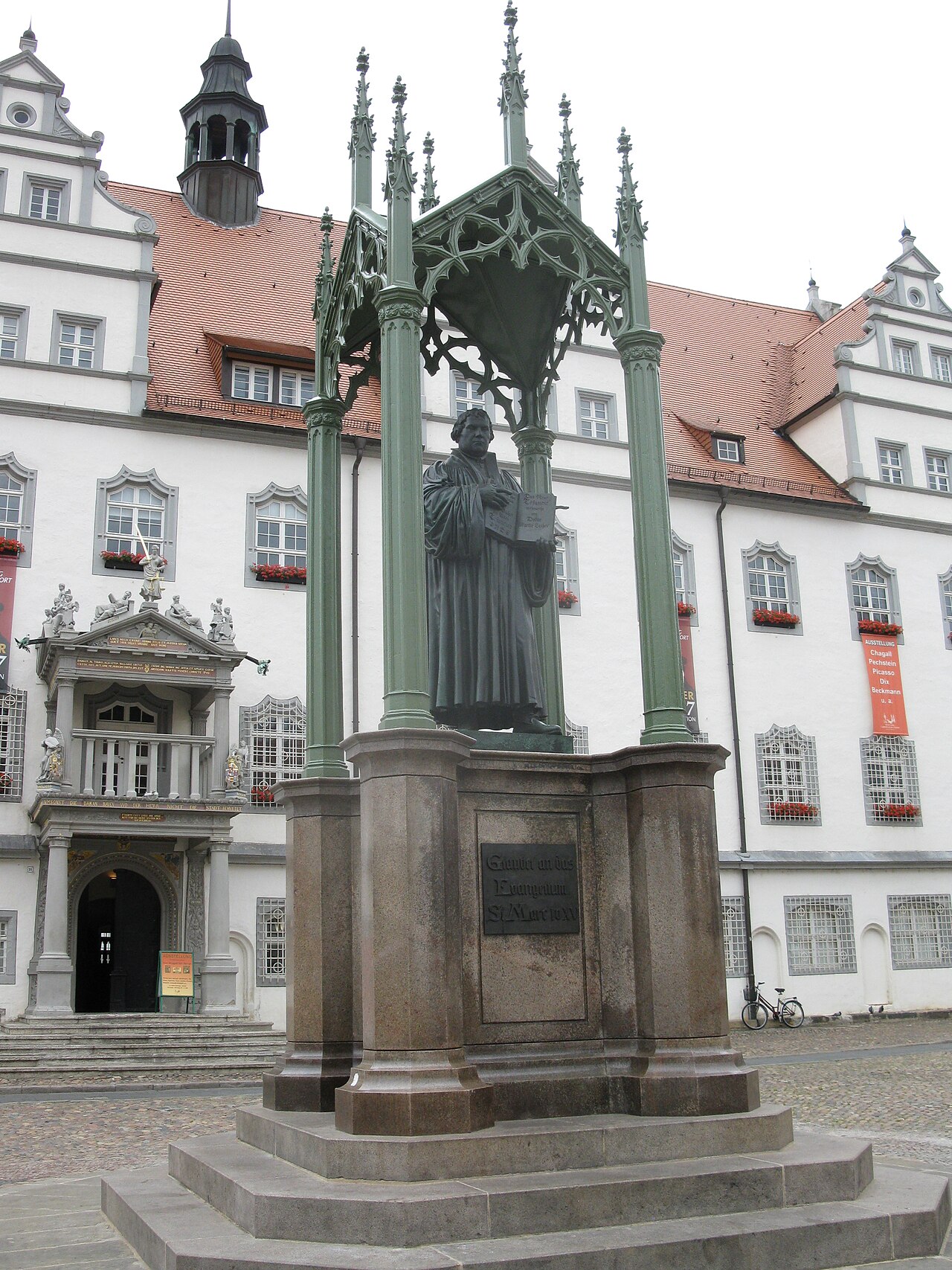
Lutheranism is the Reformation tradition of Martin Luther, centered on justification by grace through faith, the distinction of law and gospel, and Christ truly present in word and sacrament.
Lutheranism is the oldest Protestant tradition, flowing from Martin Luther's teaching and confessed in the Augsburg Confession of 1530 and the Book of Concord. Carried by the churches of Germany and Scandinavia and by emigration to every continent, it is a church of the preached word, the sung chorale, and the sacrament received in faith.
Ultimate Reality
God is known where he has promised to be found: not in speculation about his hidden majesty, but in the crucified Christ. The theology of the cross insists God hides his strength under weakness and his wisdom under folly, and that he is for us — pro nobis — before he is understood by us.
The Human Condition
The sinner is simul iustus et peccator, at once justified and sinner, and the law's true work is to expose the condition no self-improvement can cure. Original sin is not a surface fault but a curved-inward heart that trusts anything before it trusts God's promise.
Knowledge and Truth
Scripture is the norm, and its center is the distinction of law and gospel: every word of God either commands and condemns, or promises and gives. Preaching is not talk about Christ but Christ's own delivery of his gifts, and faith comes by hearing. The confessions bind the church's teaching to that delivery.
Right and Wrong
Good works are for the neighbor, not for God: justified freely, the Christian serves in vocation — parent, worker, citizen — as God's own hands for others. Baptism is a daily return, not a past event; the Lord's Supper gives Christ's true body and blood for forgiveness; confession and absolution speak the gospel to the individual conscience.
Human Destiny
Death cannot separate the baptized from Christ's promise. There is no purgatory and no second probation; the dead in Christ sleep in peace awaiting the resurrection of the flesh and the life of the world to come, confessed in the creed.
The Conversation
Lutheranism asks other Protestants whether their preaching delivers Christ or mainly demands decision, and it asks Rome whether the gospel of free justification was in fact condemned in the sixteenth century — a question the 1999 Joint Declaration largely answered. It presses all Christians on assurance: is the promise strong enough to be trusted more than the heart that receives it?