

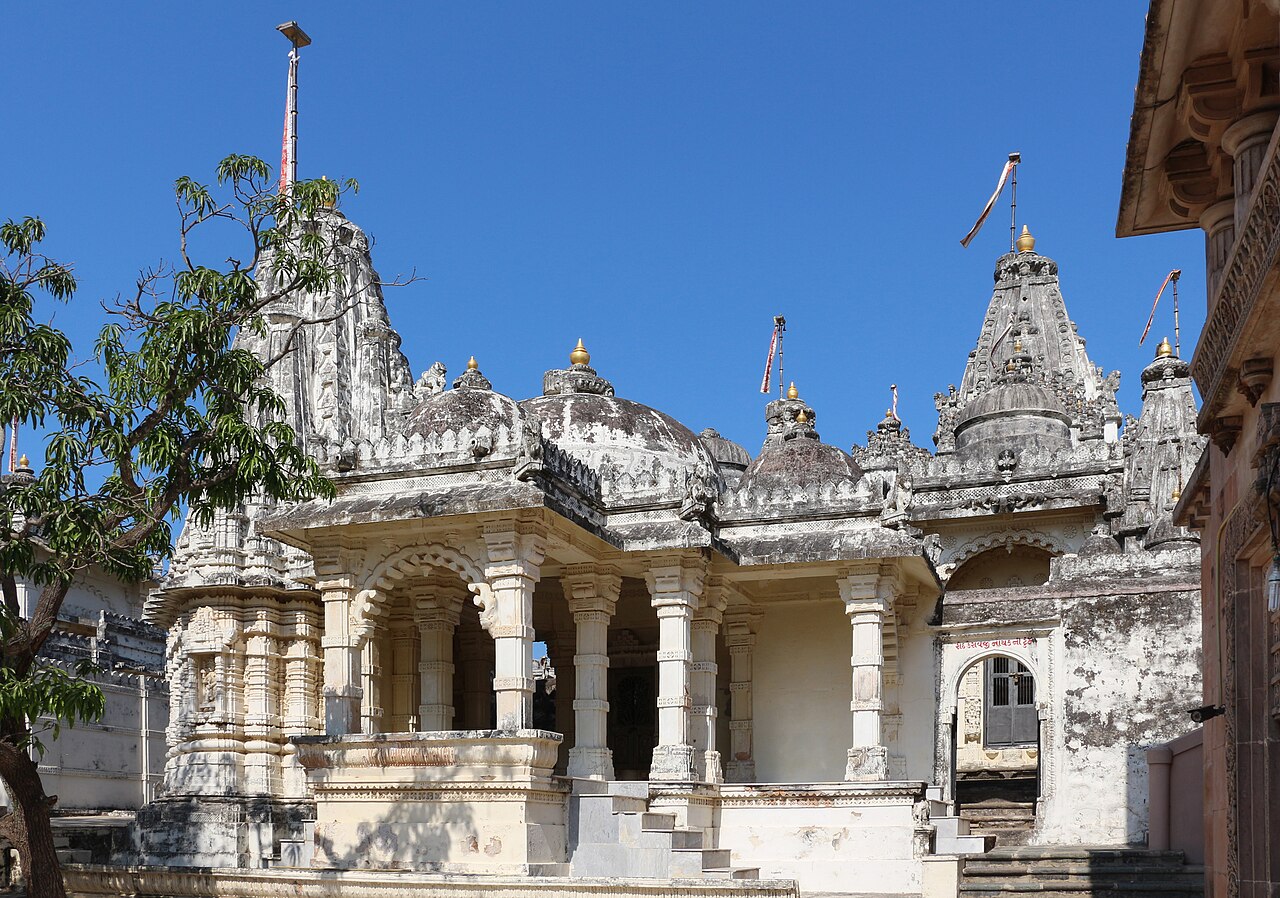
Jainism teaches that every living thing carries an eternal soul weighed down by karma, and that liberation comes by strict non-violence, truthfulness, and renunciation, without any creator god.
Jainism is one of India's oldest religions, taught in this age by Mahavira (599–527 BCE), the twenty-fourth Tirthankara — a ford-maker who shows the way across the river of rebirth. Jains honor the line of twenty-four teachers stretching back beyond history, and they keep the teaching in two great branches, Shvetambara and Digambara, which differ over scripture, practice, and the dress of monks.
Ultimate Reality
The universe is eternal and uncreated; no god made it and no god governs it. Reality is made of souls (jiva), each inherently pure, conscious, and blissful, bound up with non-soul matter (ajiva), including the fine material of karma that sticks to the soul through its actions. The liberated souls rest at the top of the universe in omniscience and peace; they do not rule, reward, or intervene.
The Human Condition
The soul's trouble is karma itself, accumulated over countless lives by violence, greed, anger, and delusion, and paid for in rebirth after rebirth through heavens, hells, human lives, and animal lives. Ignorance of the soul's true nature keeps the wheel turning.
Knowledge and Truth
Truth is many-sided (anekantavada): finite minds grasp the real from one standpoint at a time, so Jain teaching qualifies every claim — 'in some sense' it is, and in some sense it is not (syadvada). The scriptures of the Tirthankaras, who saw reality whole, carry the map; reason and careful speech keep the seeker from mistaking a part for the whole.
Right and Wrong
Ahimsa, non-violence toward every living creature, is the first and greatest vow, kept by monks and nuns in sweeping the path and filtering water, and by laypeople in vegetarian practice and honest work. With it stand truthfulness, non-stealing, chastity, and non-possession — the five vows that burn away karma and stop new karma from flowing in.
Human Destiny
The goal is moksha: liberation from rebirth altogether, when the last karma is shed and the soul rises to the summit of the universe, omniscient and blissful forever. No one can grant it; each soul wins it by its own effort along the path of right faith, right knowledge, and right conduct.
The Conversation
Jainism presses every world view on the cost of violence hidden inside ordinary life, and on whether its account of truth is humble enough for a many-sided reality. It asks theistic traditions how a creator can be good in a world of suffering if karma, not God, explains the soul's condition — and it asks secular views whether their ethics extends far enough down the scale of living things.