

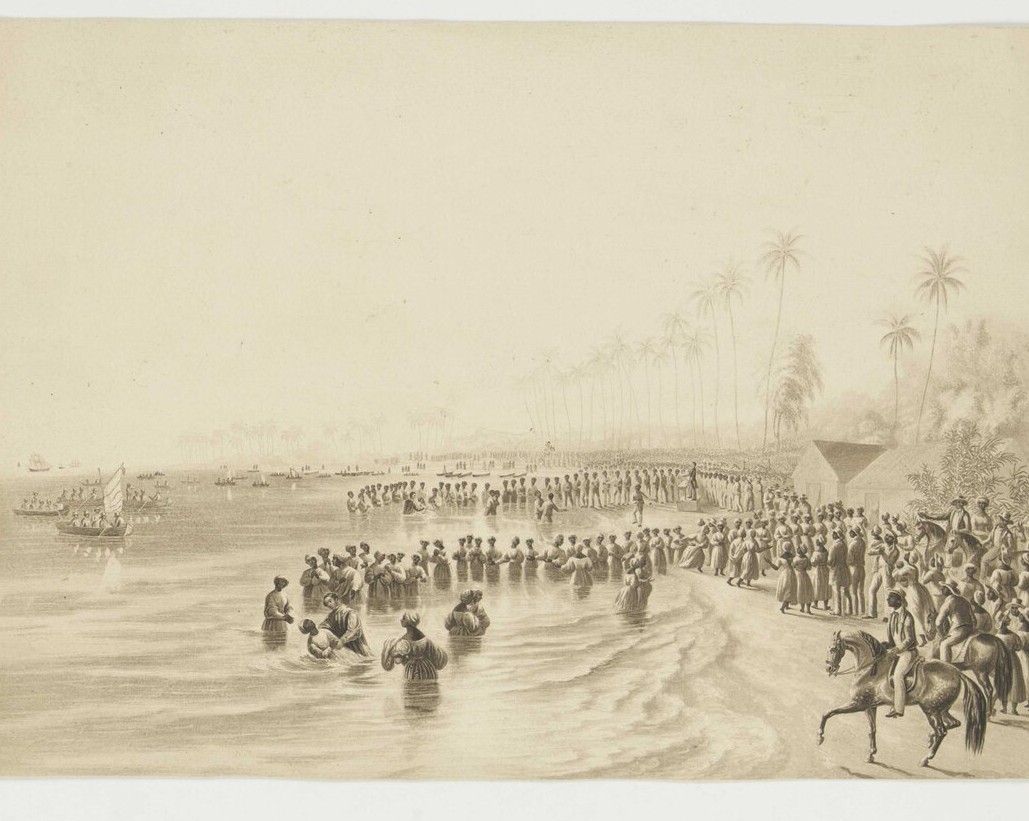
Baptists are congregational churches of believers' baptism by immersion, holding the Bible as sole rule, the local church as autonomous under Christ, and religious liberty for all as a birthright of the gospel.
Baptists appeared in the early seventeenth century among English Separatists in Amsterdam and London, joining the radical Reformation's believers' church to congregational order. Through revival, mission, and migration they became one of the world's largest Christian families — from the Southern Baptist Convention and the historic Black Baptist conventions of America to Baptist unions in nearly every country, and the house churches of persecuted lands.
Ultimate Reality
God is the triune Lord of Scripture, and Christ is head of the church directly: no bishop, synod, or state may stand between a congregation and its Lord. This lordship is the seed of Baptist distinctives — the church gathered by covenant, governed by its members under Christ, acknowledging no creed but the Bible and no mediator but him.
The Human Condition
Persons are sinners who must each respond to God personally; no one is born into the covenant by birth or christening. Soul competency — the capacity and responsibility of every person to deal with God directly — is the Baptist reading of the human situation, and infant baptism is rejected because an infant cannot repent and believe.
Knowledge and Truth
The Bible is the sole and sufficient rule of faith and practice; creeds and confessions (Baptists have written many) are guides that may be revised against it, never authorities over it. The Spirit illumines the believer reading in the congregation, and the same liberty that frees the search forbids coercing its conclusions: soul freedom.
Right and Wrong
Baptism by immersion, on profession of faith, is the door into church membership; the Lord's Supper is the church's memorial meal (some Baptists keep it close, most now open). The moral life is discipleship in a covenanted congregation, with church discipline historically strict. Religious liberty for everyone — Baptists' gift to the American founding, through Roger Williams and John Leland — is itself a moral conviction: coerced faith is no faith.
Human Destiny
Death is followed by judgment, and the saved and lost by the resurrection and Christ's return, which many Baptists expect in premillennial terms. Assurance is a common Baptist possession, grounded in the finished work of Christ and the witness of the Spirit, though Baptists differ over whether true faith can be lost.
The Conversation
Baptists ask the paedobaptist churches where Scripture commands or shows an infant baptized, and they ask themselves whether autonomy has become a doctrine that dissolves every bond between congregations. Having suffered under establishments, they press all Christians on religious liberty as a gospel principle rather than a political convenience — and they press secular states on why conscience deserves the protection Baptists claim for it.