

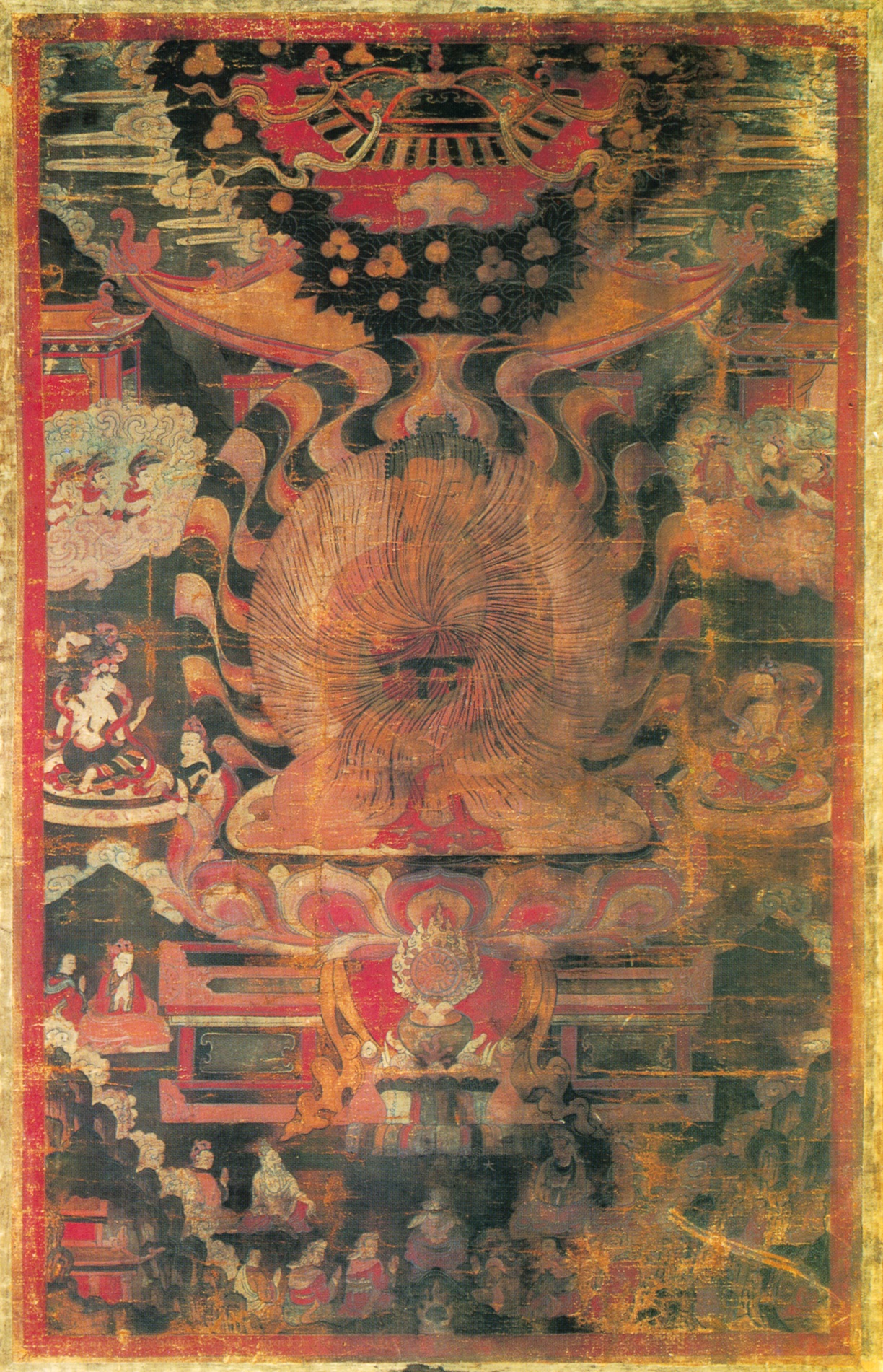
A portable scroll painting of a Buddha or deity in exact iconometric proportion — a meditation support, a teaching diagram, and a presence, rolled for the road and unrolled for the rite.
Tagged: Painting Temple/Shrine Medieval Devotional Extant Iconometry Meditation Support Buddhist Tibetan Buddhism
Why It Stands Here
A thangka is measured before it is painted: grids fix the proportions of the figure to canonical ratios, so the image is correct doctrine in visual form. It serves devotion and instruction at once, and its portability is the point — the sacred travels with the monk, the pilgrim, and the nomad.
Thangkas are painted on cotton or silk with mineral pigments and gold, mounted in brocade, and hung in temples and homes or carried in procession. The central figure sits in a landscape of lineage teachers, protectors, and the scenes of a sacred biography, each element placed by rule.
The painting is consecrated after completion — mantras and syllables inscribed on the back, the eyes opened in a final rite — and from then on it is treated not as a picture of the deity but as a support for the deity's presence, offered flowers, incense, and prostrations.
References
Related Across the Site
- Rublev's Trinity Art Entry — Andrei Rublev's icon of the three angels at Abraham's table (c. 1411), painted for the Trinity Lavra of St. Sergius — the supreme achievement of Orthodox icon painting and its theology made visible.
- The Dilwara Temples Art Entry — Five Jain temples on Mount Abu whose plain exteriors open into marble interiors carved to the thinness of lace — the summit of Jain temple art.
- The Hanging Temple Art Entry — A monastery of forty halls pinned to a cliff face on Mount Heng, holding altars to Confucius, Laozi, and the Buddha under one roof — the Three Teachings in a single building.
- The Sand Mandala Art Entry — Monks lay down a palace of the deities grain by grain in colored sand, contemplate it for days — and then sweep it away and pour it into running water.
- The Shiva Linga Art Entry — A polished stone shaft rising from its base, bathed daily in water, milk, and flowers: the aniconic murti of Shiva, worshipped not as a symbol of an absent god but as the god's own form.
- The Shuilu (Water-Land) Paintings Art Entry — Sets of hanging scrolls that assemble the whole cosmos — Buddhas, Daoist gods, ancestors, and the hungry dead — for the Water-Land rite, Chinese religion's most inclusive ceremony of deliverance.
- Liang Kai Artist — The court painter who walked away from the academy to become 'Madman Liang', inventor of the splashed-ink immortal.
- Sesshu Toyo Artist — The Zen monk-painter who studied in Ming China and returned to make ink landscape the deepest expression of Japanese Zen.