

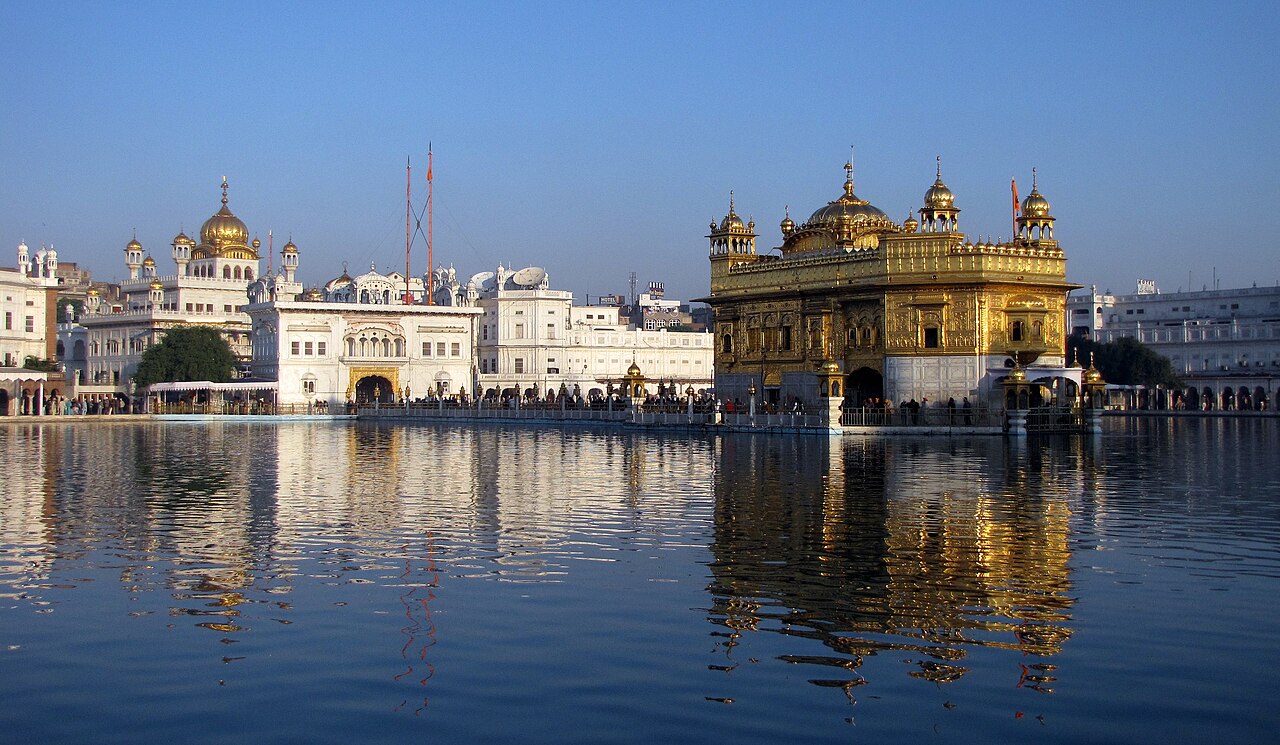
An aniconic theology centered on the Guru Granth Sahib, with a contested tradition of Guru portraits.
Tagged: Aniconism Guru Granth Sahib SGPC Sikh
May the divine be depicted?
The Divine cannot be fashioned, and the Guru Granth Sahib — the word, not an image — is the living Guru. Portraits of the Gurus persist in popular devotion and are prohibited by the SGPC; both facts are recorded.
The Divine Cannot Be Fashioned
Sikh theology is aniconic at its root. "It cannot be fashioned, it cannot be made," Guru Nanak proclaimed of the singular Divine — thapia na jae, kita na hoe. No image can be a Sikh object of worship, because the object of worship is beyond making. What stands at the center of Sikh devotion instead is a book treated as a person.
The Guru Granth Sahib
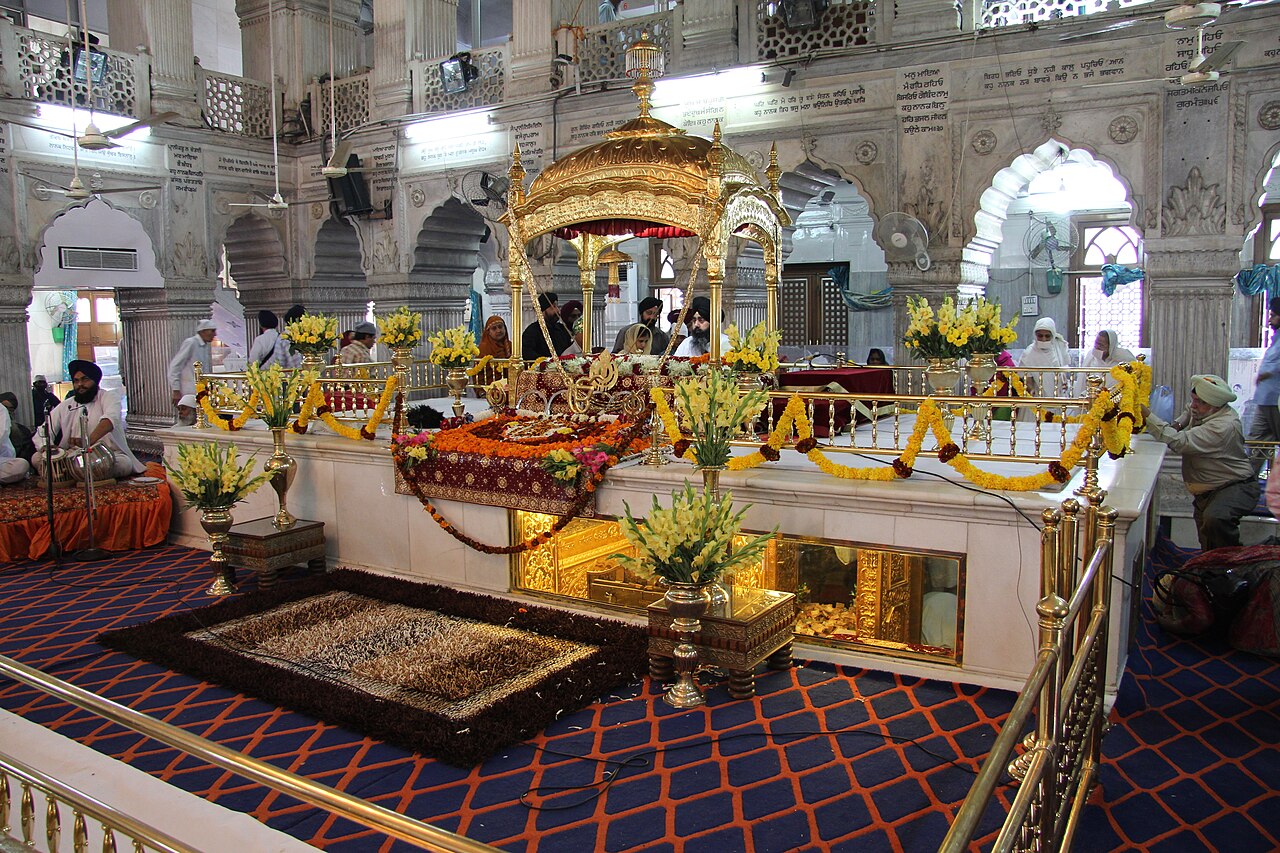
The Guru Granth Sahib is not an image of the Guru; it is the Guru, the eternal living word. In the darbar sahib it is enthroned under a canopy, covered in fine cloth, fanned with the chaur, attended, put to rest at night and carried in procession at dawn. The reverence that other traditions give to a consecrated image is given here to a text, and the whole visual culture of the gurdwara — the dome, the nishan sahib flag, the sarovar pool, the langar hall — is arranged around it.
The Guru-Image Controversy
Against that theology stands a popular practice. Devotional portraits of Guru Nanak, popularized in the bazaar prints of the late nineteenth and twentieth centuries, hang in homes and gurdwaras across the Punjab and the diaspora. The Shiromani Gurdwara Parbandhak Committee has issued strict prohibitions on visual, animated, AI-generated, and digitally manipulated representations of the Gurus and of the Guru Granth Sahib, and many Sikhs hold any image of a Guru to be impermissible. The prohibition is normative; the portraits are descriptive fact. This site records both, follows the SGPC's guidance in its own image choices, and makes the Sikh entries with architecture, manuscript, and the enthroned Granth — never with a portrait of a Guru.
Manuscript and Fresco
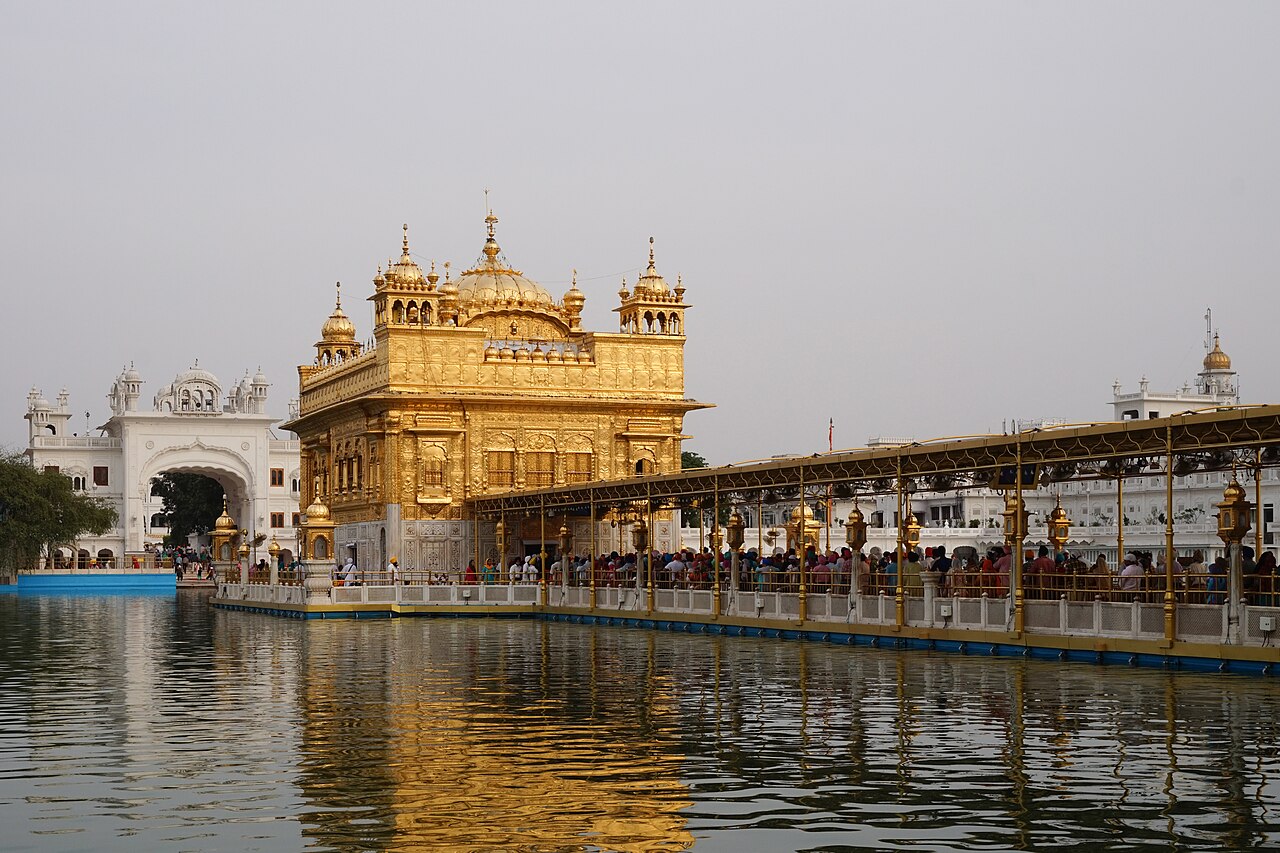
Early Sikh manuscripts were illuminated under Islamicate influence, in geometric and floral designs; later janamsakhi manuscripts illustrated the life of Guru Nanak in the Pahari manner. Gurdwara walls carried frescoes — mohrakashi plasterwork, jaratkari inlay, floral and geometric panels — and the Golden Temple at Amritsar gathers the whole repertoire around the pool: gilding, inlay, and fresco in the service of a faith whose center is a book.
Entries in This Tradition
 Entry
The Guru Granth Sahib, Enthroned
The Sikh scripture is not shelved but enthroned — installed under a canopy on a raised seat, fanned with the chaur, woken each morning and put to rest each night, because it is the Guru.
 Entry
The Golden Temple
A gilded sanctum standing in the middle of a sacred pool, reached by one causeway and entered by doors on all four sides — open to every direction and every caste.
References
Related Across the Site
- bhakti Glossary Term — Devotion; participation; sharing.
- karma Glossary Term — Action; deed.
- samsara Glossary Term — Wandering; the flowing-on.
- Punjabi Language — The living vernacular of Sikhism, written in Gurmukhi, the script of the Guru Granth Sahib.
- Sant Bhasha Language — The sacred composite language of the Guru Granth Sahib, the scripture and eternal Guru of Sikhism.
- Ardas Prayer or Creed — The formal standing prayer of supplication and remembrance that frames Sikh worship and undertakings.
- Nitnem Prayer or Creed — The daily banis (hymns) prescribed for Sikh devotion: morning, evening, and night prayers from the Sikh scriptures.
- Sikhism World View — Sikhism confesses one God, revealed through Guru Nanak and the ten Gurus; honest work, shared wealth, and remembrance of God lead to liberation.
All of Religious Art & Worldviews · The comparison: May the divine be depicted?