

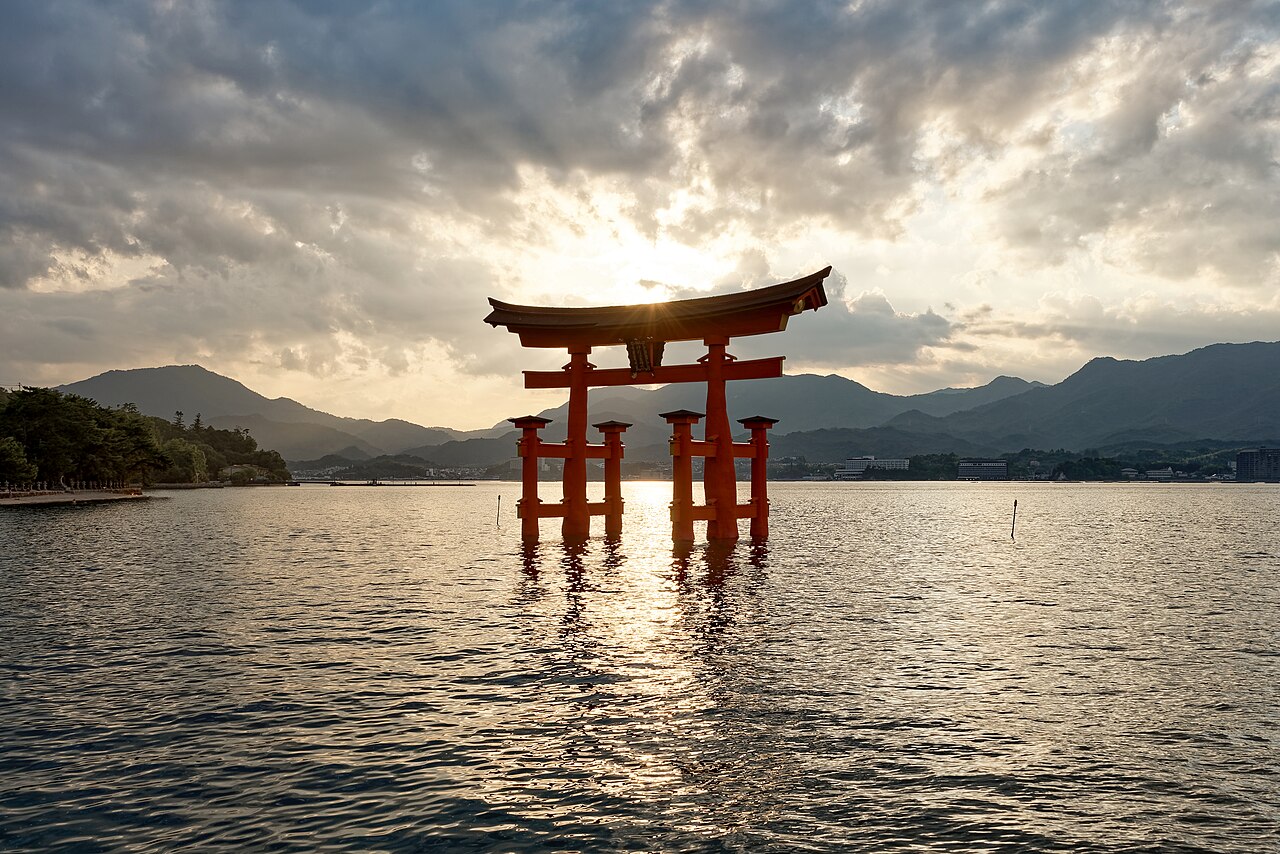
The torii, the shintai, and sacred landscape: aniconic in emphasis rather than in principle.
Tagged: Shintai Shrine Architecture Torii Shinto
May the divine be depicted?
Not aniconic in principle but in emphasis: the kami are present in objects and landscapes, not figures, and the shrine, the gate, and the marked tree carry the art.
Presence Without a Face
Shinto is not aniconic in principle, but it is aniconic in emphasis. The kami are not pictured presiding over their shrines. They are present — in a sacred object kept hidden in the inner sanctuary, in a waterfall, a mountain, an ancient tree bound with a shimenawa rope. The art of Shinto is therefore the art of marking and housing presence rather than depicting it: architectural, spatial, and ritual rather than figural.
Torii and Shimenawa
The torii is the tradition's universal sign: a gate that does not enclose anything, marking the boundary where ordinary ground becomes sacred ground. The shimenawa, the braided straw rope with its paper streamers, performs the same marking on a tree, a rock, a threshold. Both are art of the simplest materials at the highest level of recognition — everyone in Japan can read them, and they say: here, attend.
The Shintai
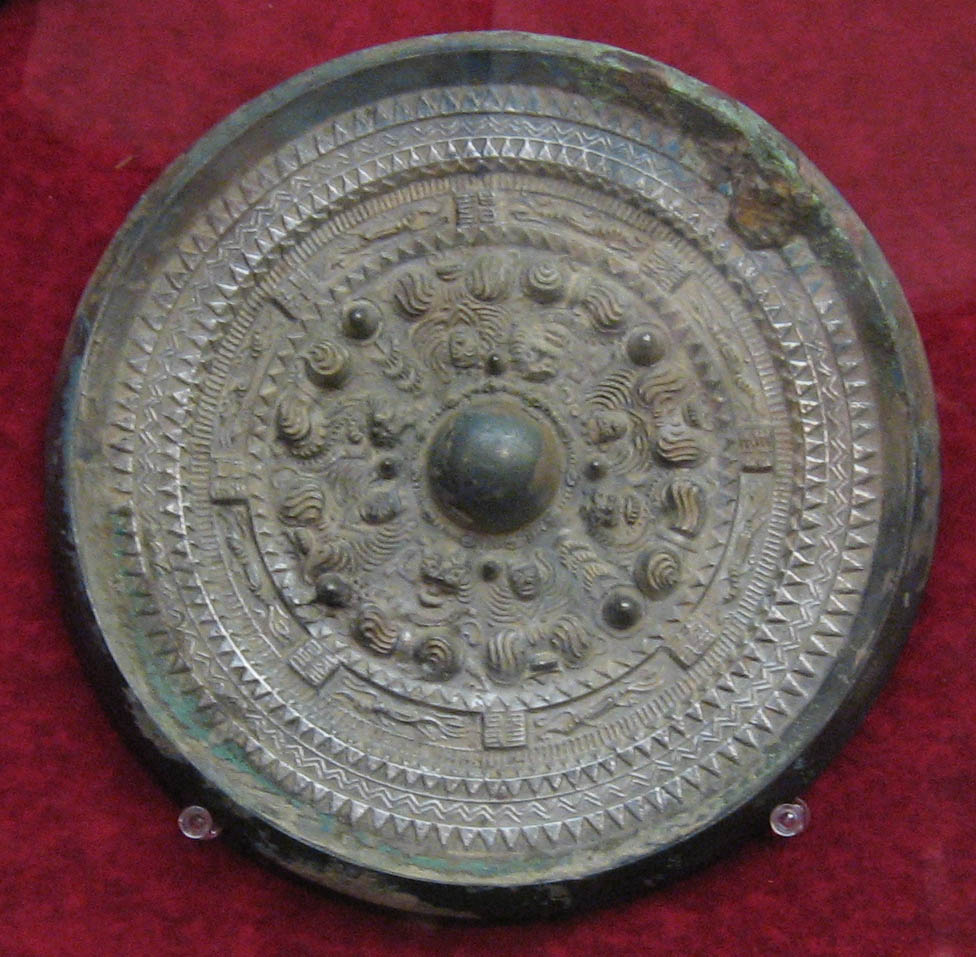
At the center of the shrine, unseen, sits the shintai, the body of the kami: most often a mirror, sometimes a sword, a jewel, a stone. It is not displayed, not photographed, and not described as an artwork, because within the tradition it is not a representation of the kami but the kami's seat. Shrine inventories preserve the paradox this site must respect: the most sacred object of the tradition is one the visitor never sees.
Architecture and the Figure
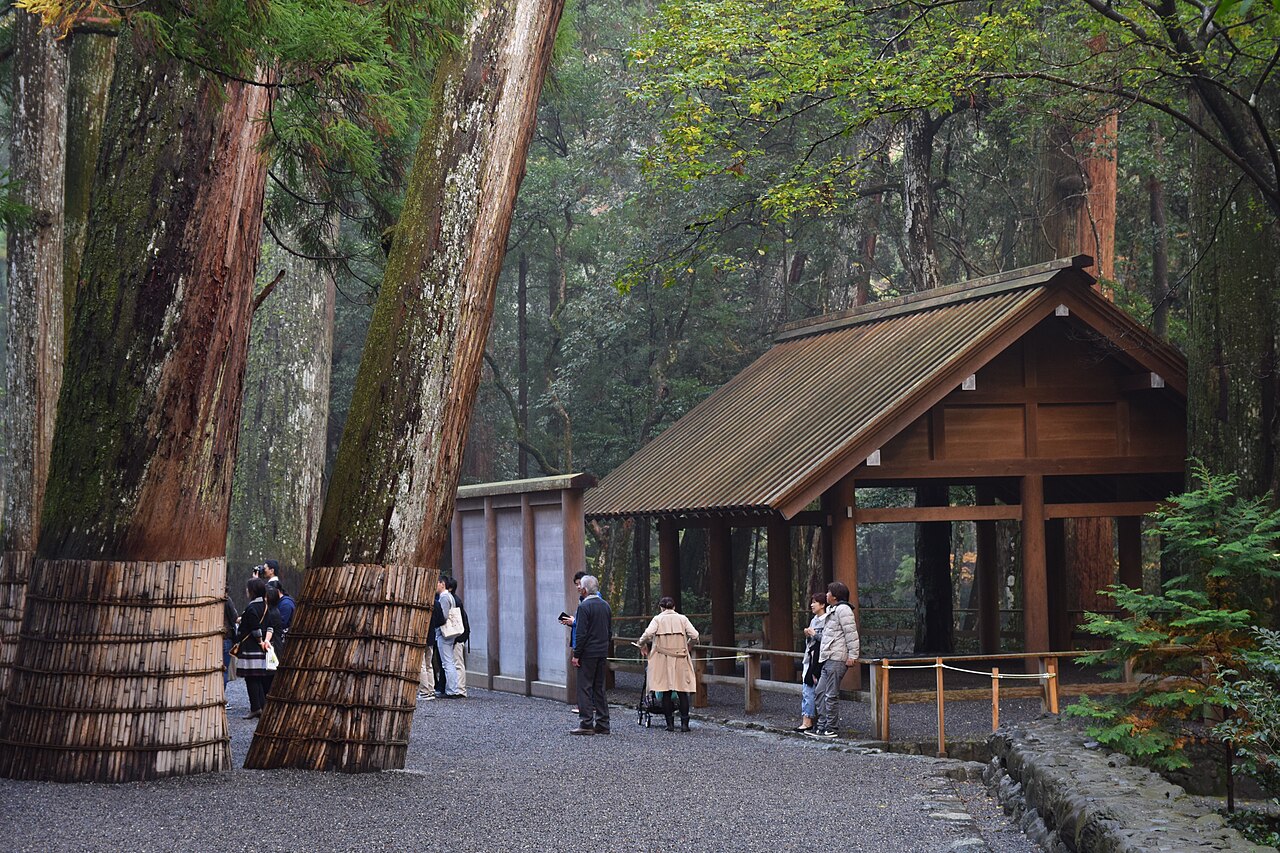
Shrine architecture — the raised floor, the bark or thatch roof, the unpainted wood renewed at Ise in an unbroken cycle of rebuilding — is the tradition's monumental art, and its material is freshness itself. Figural images of kami, the shinzo, appeared only after Buddhism arrived in the sixth century and taught Japan what a god's statue looks like; they were absorbed, but they never became abundant or central. Beside Buddhist statuary, Shinto's own figure remains the exception that proves the emphasis.
Entries in This Tradition
 Entry
The Ise Grand Shrine
The most sacred shrine in Shinto is a plain cypress building that is torn down and rebuilt, identically, every twenty years — and has been for some thirteen centuries.
 Entry
The Shintai Mirror
Behind the doors of a Shinto shrine sits an object no one looks at — a mirror, sword, or stone that is the seat of the kami. The pictured mirror is of the kind enshrined; the enshrined mirror itself has never been photographed.
References
Related Across the Site
- The Shintai Mirror Art Entry — Behind the doors of a Shinto shrine sits an object no one looks at — a mirror, sword, or stone that is the seat of the kami. The pictured mirror is of the kind enshrined; the enshrined mirror itself has never been photographed.
- Jinja Mairi — Visiting the Shrine Devotion — To visit a shrine is to call on the kami of the place: through the torii, up the gravel path, to the offering box, the bell, two bows, two claps, one bow.
- Misogi — Purification by Water Devotion — Standing under a waterfall, or in the sea or a river at dawn, the practitioner lets cold water carry away pollution: Shinto's most austere devotion.
- The Kamidana — Household Altar Devotion — High on a wall of the home sits a miniature shrine: each morning it receives fresh water, rice, salt, and a bowed head with two claps.
- Classical Japanese Language — The classical written language of Japan, in which the norito prayers and the early chronicles are composed.
- Norito Prayer or Creed — Formal ritual prayers in classical Japanese, recited by priests to the kami at shrine festivals and rites.
- Nuclear power Technology — The reactor judged apart from the bomb: prudence, waste, and descendants on one side of the ledger, decarbonization arithmetic on the other — and no magisterium with a binding word.
- Shinto Tradition & Science — A tradition without a creed for science to contradict: kami in the landscape, a shrine rebuilt on schedule for thirteen centuries as a living school of craft, and modern flashpoints in nuclear pollution and the definition of death.
All of Religious Art & Worldviews · The comparison: May the divine be depicted?