

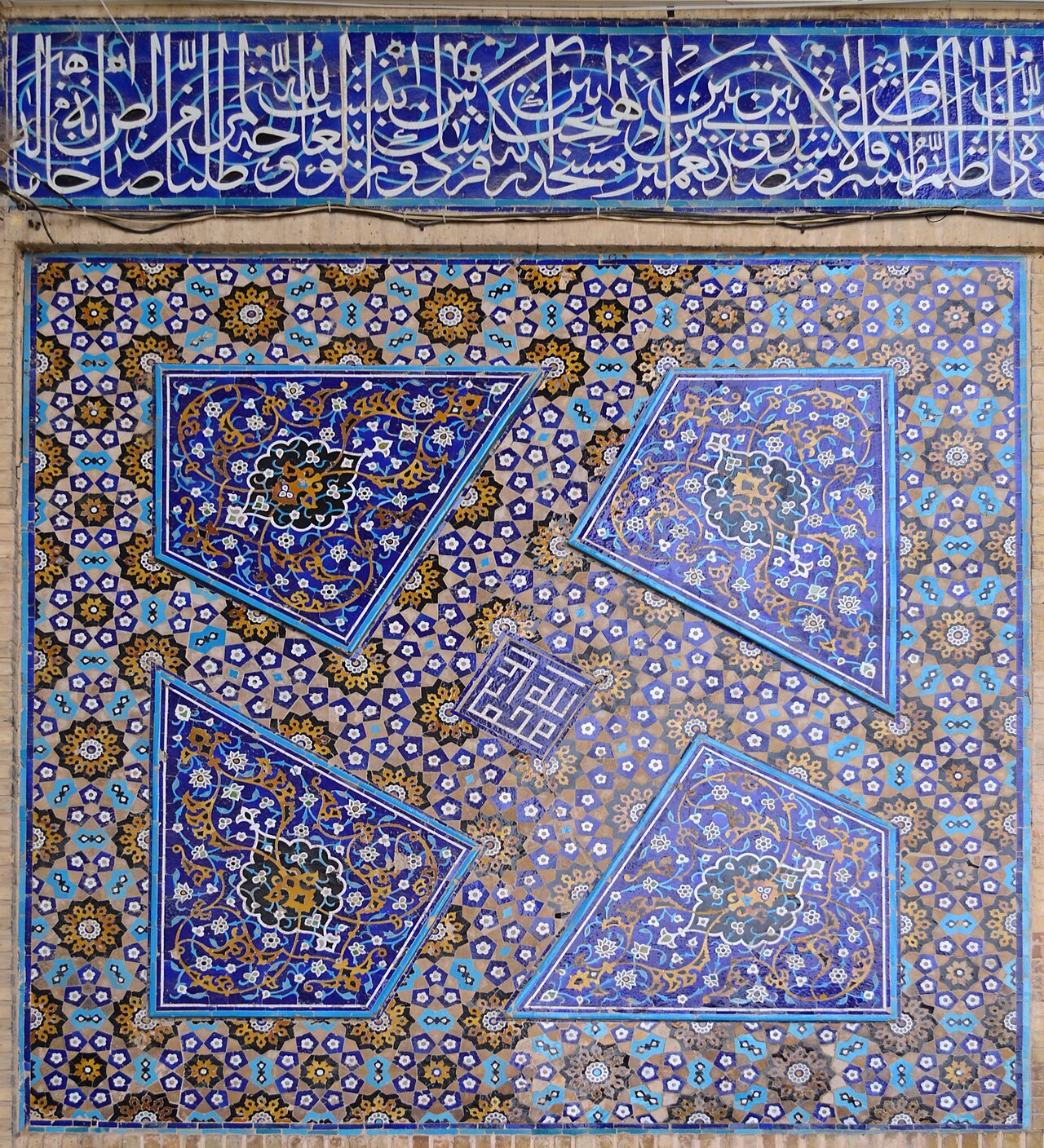
Calligraphy, geometry, and architecture under the norm of aniconism, with a figural courtly tradition beside it.
Tagged: Calligraphy Aniconism Tawhid Muslim
May the divine be depicted?
Figural depiction, above all of prophets, is avoided in religious contexts; the written word, geometry, and architecture carry the art, while figural painting flourishes in courtly and secular settings.
The Norm and Its Ground
Islamic religious art is shaped by a strong aniconic norm: the depiction of human and animal forms, and above all of Muhammad and the other prophets, is avoided in religious contexts so that worship never slides into idolatry, the sin of shirk. The norm is not a single Qur'anic prohibition. It is a juridical and theological tradition, built from the hadith and the reasoning of the schools, and it varies in strictness across them. It must always be distinguished from descriptive practice: what the jurists prescribed and what Muslim societies actually made are related, but they are not the same thing.
Calligraphy: The Word as Image
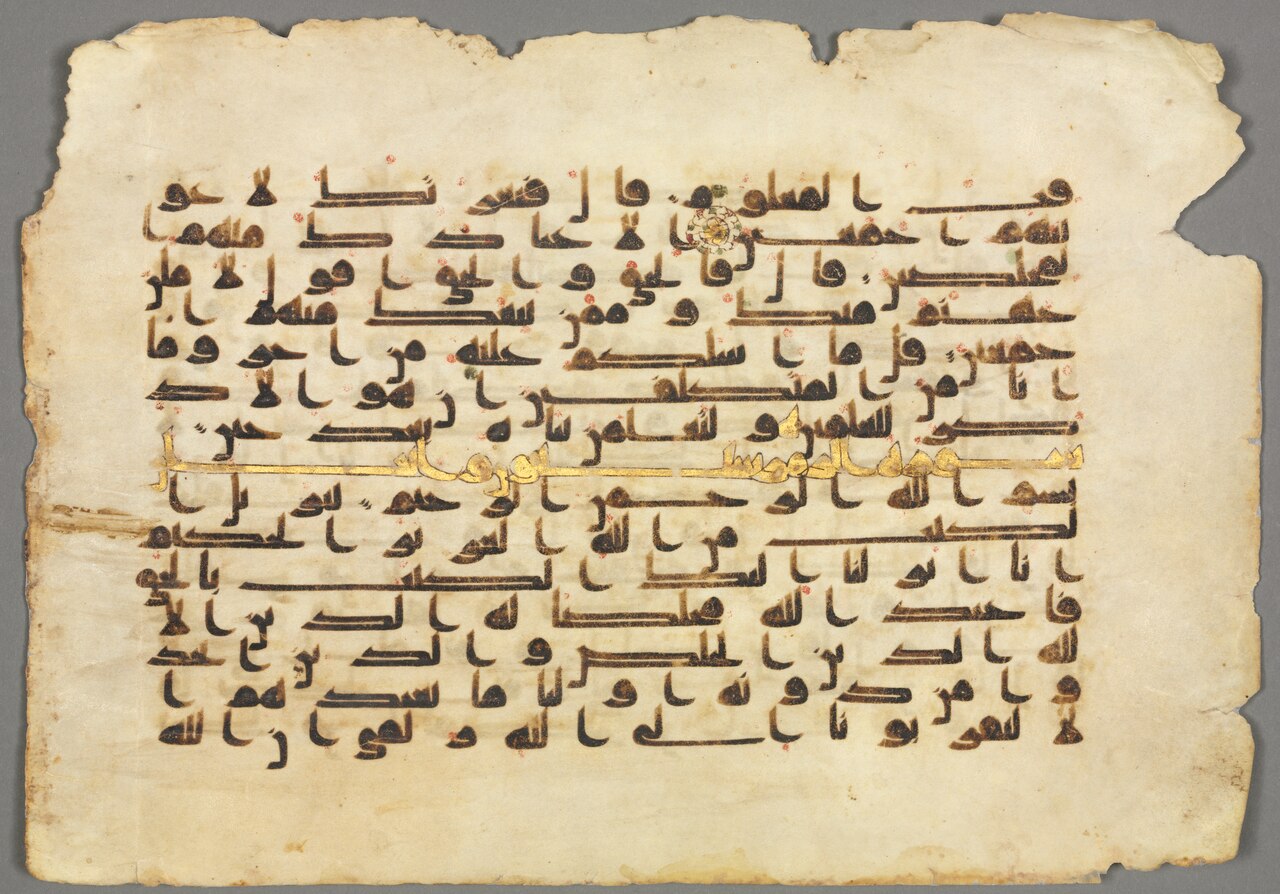
The positive consequence of aniconism is one of the richest non-figural visual cultures in the world. Because the Qur'an is God's speech, the written word itself becomes the supreme religious image. Arabic calligraphy — Kufic, naskh, thuluth, and the later cursive hands — covers Qur'an folios, mosque walls, coins, and ceramics. To write the revelation beautifully is itself an act of devotion, and the calligrapher holds a place in Islamic culture that the icon painter holds in Orthodoxy.
Geometry and the Arabesque
The second idiom is geometry. The tessellated pattern, capable of infinite extension, gives visible form to tawhid, the unity of God, and to the order of creation. The third is the arabesque, the stylized vegetal ornament that suggests the abundance of paradise. Together with calligraphy these three idioms — word, number, and plant — furnish mosques and manuscripts with an art that is dense, intellectual, and unmistakably theological.
Architecture as Theology
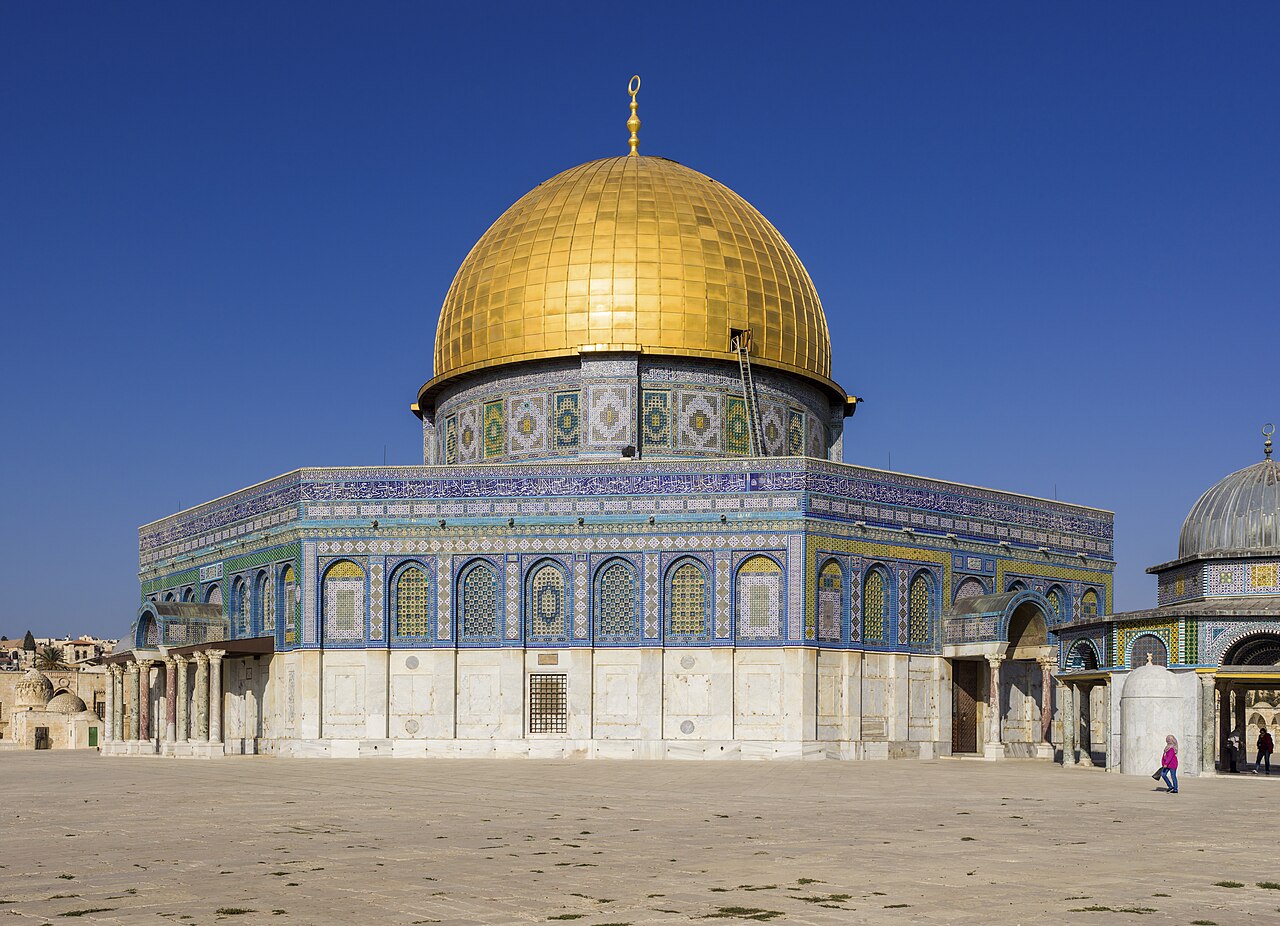
The dome, the mihrab, the minaret, and the muqarnas are not neutral engineering. They orient the worshipper toward Mecca, gather the community under a single vault of light, and proclaim the faith across a city's skyline. The Dome of the Rock in Jerusalem, the oldest surviving monument of Islamic architecture, carries its argument in mosaic and inscription rather than in any figure.
The Figural Exception
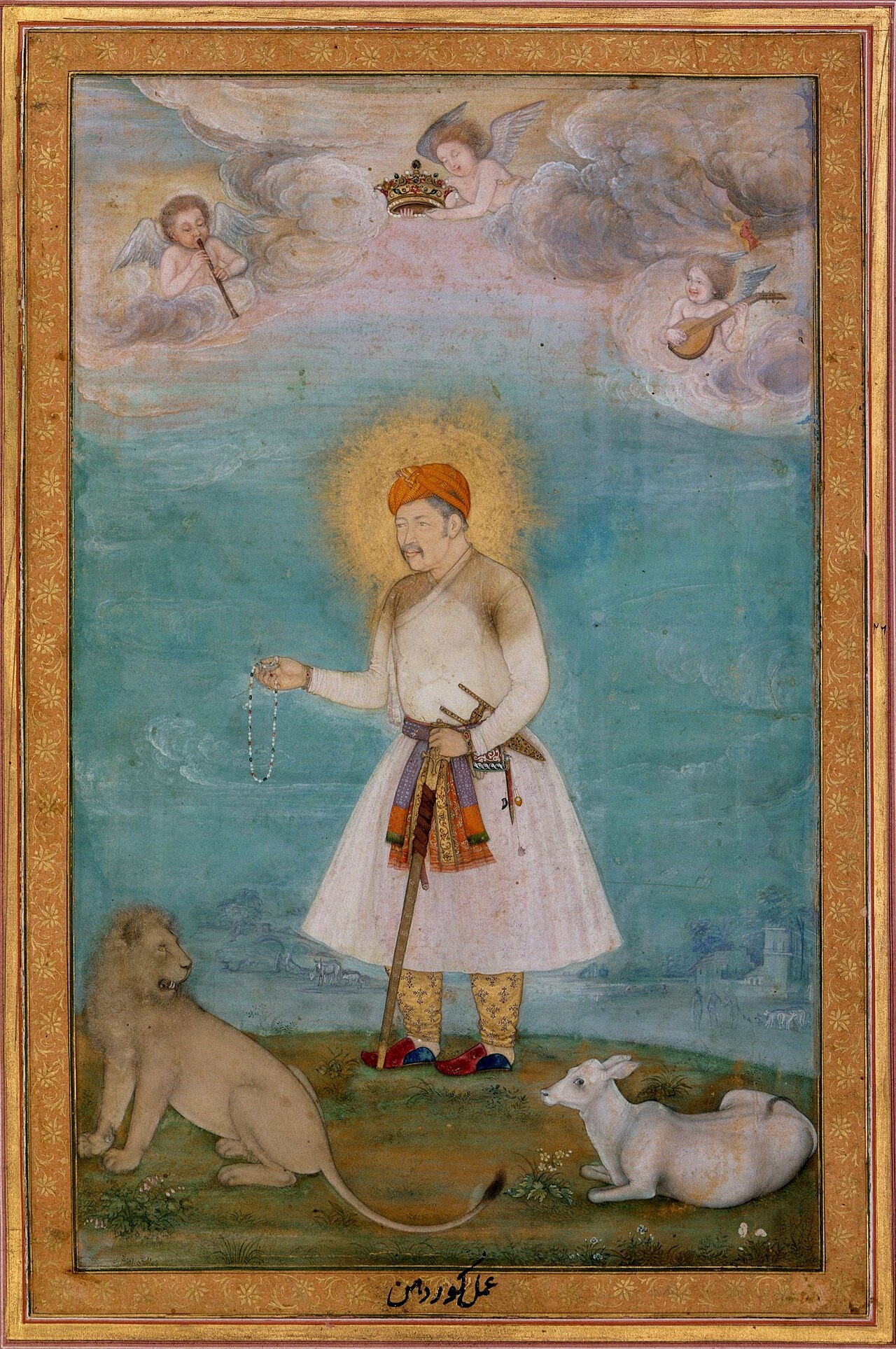
Figural imagery was never absent from Islamic societies. Persian, Mughal, and Ottoman courts commissioned miniatures of hunts, battles, lovers, and prophets' stories; ceramics and metalwork carry animals and courtiers. The honest record is therefore double: a normative aniconism in sacred space, and a descriptive figural practice at court and in private books. This site records both, and never collapses them into the claim that "Islam forbids all images."
Entries in This Tradition
 Entry
A Kufic Qur'an Folio
A parchment leaf of an Abbasid Qur'an in angular Kufic script, its verse endings touched with gold: the page as the supreme religious image of an aniconic faith.
 Entry
The Dome of the Rock
The oldest surviving monument of Islamic architecture (Jerusalem, 691–692): a shrine of mosaic, marble, and inscription, whose entire decorative program argues aniconism's positive case.
 Entry
The Mughal Court Miniature
The figural painting of the Mughal emperors' atelier — hunts, audiences, lovers, and saints in jewel-like detail — standing as the descriptive practice beside Islam's normative aniconism.
References
- The Metropolitan Museum of Art, Heilbrunn Timeline: The Nature of Islamic Art
- Smarthistory: Calligraphy in Islamic art
Related Across the Site
- A Kufic Qur'an Folio Art Entry — A parchment leaf of an Abbasid Qur'an in angular Kufic script, its verse endings touched with gold: the page as the supreme religious image of an aniconic faith.
- The Dome of the Rock Art Entry — The oldest surviving monument of Islamic architecture (Jerusalem, 691–692): a shrine of mosaic, marble, and inscription, whose entire decorative program argues aniconism's positive case.
- The Image and Tawhid Art Theme — The Islamic argument from divine unity: because God is one and incomparable, representation risks shirk — and the word, not the figure, becomes the image.
- Buddhism Art Tradition — Symbols before images, the Buddha image after Gandhara and Mathura, and a scholarly debate that is not settled.
- Sikhism Art Tradition — An aniconic theology centered on the Guru Granth Sahib, with a contested tradition of Guru portraits.
- Ibn Muqla Artist — The Abbasid vizier who gave Arabic writing its proportional system — the calligrapher's geometry on which a thousand years of Qur'an copying rests.
- St Andrews Encyclopaedia of Theology Library — An open-access, multi-author theological reference with advanced articles on Christianity, Judaism, Islam, Hinduism, and Buddhism.
- Islam World View — Islam is submission to the one God, Allah, who spoke finally through his prophet Muhammad; the Qur'an guides believers toward judgment, mercy, and paradise.
All of Religious Art & Worldviews · The comparison: May the divine be depicted?