

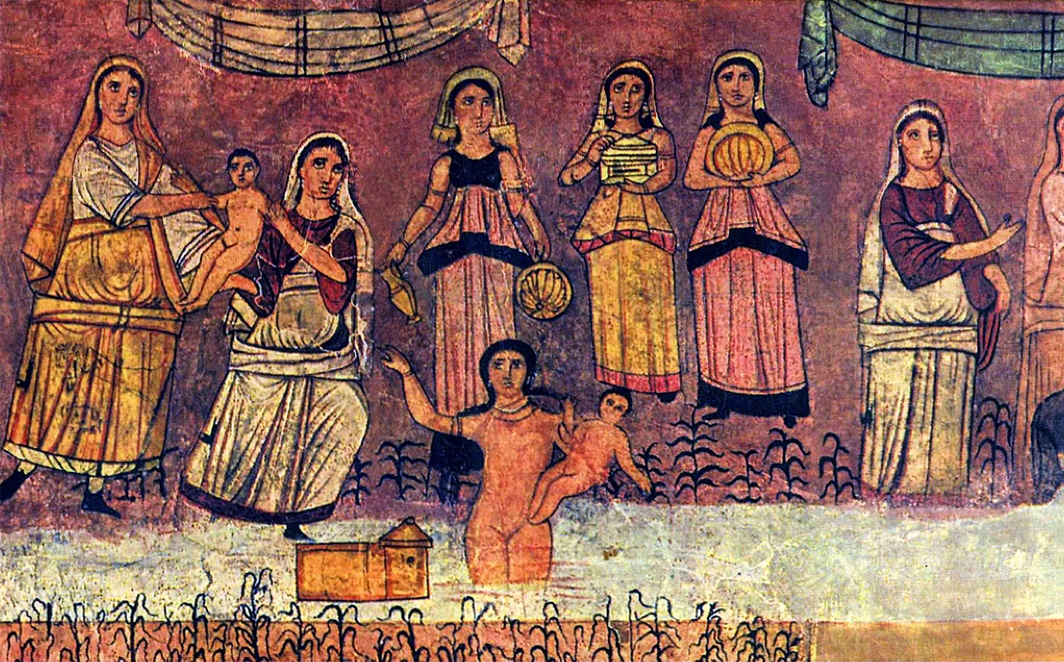
The Biblia pauperum, the thangka, the mandala, the Kalpasutra page: images as the teaching instrument of traditions whose books many could not read.
Tagged: Pedagogical Pedagogy
Pope Gregory the Great gave the West its charter for religious images in a sentence: painting is used in churches so that the illiterate may read on the walls what they cannot read in books. The Biblia pauperum, the blockbook Bible of the poor, arranged the life of Christ in pictures keyed to their Old Testament types, and for centuries the church wall was the schoolroom of the faith.
The pattern is worldwide. The Tibetan thangka is a teaching diagram as much as a devotional image, its deity's ornaments and retinue encoding a meditation curriculum. The mandala teaches cosmology by construction. The Jain Kalpasutra's illustrations carry the Tirthankaras' lives to hearers of the recited text. The Dura-Europos frescoes, the Sarajevo Haggadah's miniatures, and the narrative railings of Bharhut all perform the same office in their own idioms: the story made visible to a community gathered around it.
Pedagogy also explains the flashpoints. An image that teaches can teach wrongly, which is one reason reform movements reach for the whitewash brush; and an image that teaches keeps teaching after the doctrine changes, which is why old altarpieces embarrass new orthodoxies. The teaching function is the most innocent of the image's offices and the one that implicates it in every controversy the others raise.
References
Related Across the Site
- The Bharhut Railing Art Entry — The carved sandstone railing of the Bharhut stupa (c. 150–100 BCE), its medallions crowded with jataka tales and labeled in Brahmi — and the Buddha, in scene after scene, present only by symbol.
- The Dura-Europos Synagogue Frescoes Art Entry — The walls of a synagogue on Rome's Euphrates frontier, painted around 244 CE with the whole biblical story in human figures — the standing disproof that ancient Judaism made no religious pictures.
- The Sarajevo Haggadah Art Entry — A Passover Haggadah illuminated in Barcelona around 1350 — thirty-four miniatures of the biblical story in a Jewish book — treasured, hidden from Nazis and from war, and kept in Sarajevo as the city's emblem of itself.
- Hakuin Ekaku Artist — The Rinzai Zen reviver who painted Daruma with a sumo wrestler's glare and wrote the koan of the sound of one hand.
- Lucas Cranach the Elder Artist — Luther's friend and the Reformation's image-maker, whose workshop put the evangelical message into altarpieces, portraits, and prints.
- The Gandhara Workshops Artist — The stucco and schist ateliers of the Peshawar valley that gave the Buddha his first human face — Apollo's features, a monk's robe, a teacher's calm.