

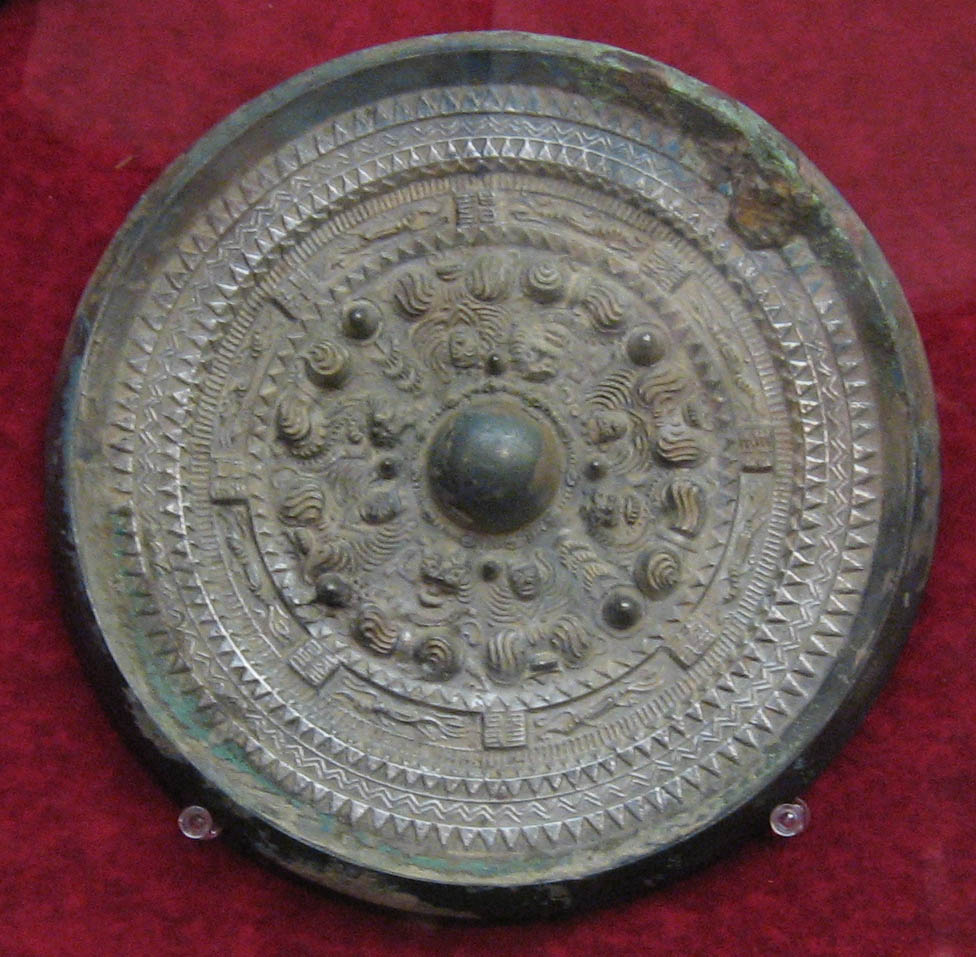
Behind the doors of a Shinto shrine sits an object no one looks at — a mirror, sword, or stone that is the seat of the kami. The pictured mirror is of the kind enshrined; the enshrined mirror itself has never been photographed.
Tagged: Ceremonial Object Temple/Shrine Ancient Devotional Aniconic (Symbolic) Extant Shintai Three Sacred Treasures Shinto
Why It Stands Here
This entry is the aniconic end of the Shinto spectrum: the most sacred object is the least visible. Its honesty requires the caption to say plainly that the image shows a bronze mirror of the Kofun period — the kind of object a shintai is — and not any shrine's enshrined body, which is wrapped, boxed, and unseen even by its priests.
A shintai, or goshintai, is the physical seat a kami is invited to occupy: most often a mirror, by long association with the Yata no Kagami, the mirror of the Three Sacred Treasures, which legend says drew the sun goddess Amaterasu from her cave. The Ise shintai has been transferred from shrine to shrine at every rebuilding without public view for as far back as records run.
Bronze mirrors of the Kofun period (c. 300–538), cast with deities, animals, and geometric designs on their backs, survive in quantity and show the craft from which the sacred type comes. The distinction matters and this page keeps it: the tradition's holiest art object is one the tradition itself declines to display.
References
Related Across the Site
- The Bharhut Railing Art Entry — The carved sandstone railing of the Bharhut stupa (c. 150–100 BCE), its medallions crowded with jataka tales and labeled in Brahmi — and the Buddha, in scene after scene, present only by symbol.
- The Fravahar Art Entry — A bearded figure in a winged disc, carved over temple doors and printed on calendars from Mumbai to Toronto — the Zoroastrian emblem whose original meaning scholars still argue about.
- The Ganesh Chaturthi Murti Art Entry — A clay Ganesh, modeled and painted by neighborhood artisans, worshipped in streets and homes for up to eleven days, then carried in procession and immersed: the murti as a guest who is honored and bid farewell.
- The Good Shepherd of the Catacombs Art Entry — A young shepherd carrying a lamb across his shoulders, painted and carved across the Roman catacombs: the earliest Christian image of Christ, chosen as a symbol before it was a portrait.
- The Great Stupa at Sanchi Art Entry — The oldest stone stupa in India, begun under Ashoka and crowned with four carved gateways: the reliquary mound as Buddhism's first monumental art, and its first aniconic center.
- The Ise Grand Shrine Art Entry — The most sacred shrine in Shinto is a plain cypress building that is torn down and rebuilt, identically, every twenty years — and has been for some thirteen centuries.
- The Shiva Linga Art Entry — A polished stone shaft rising from its base, bathed daily in water, milk, and flowers: the aniconic murti of Shiva, worshipped not as a symbol of an absent god but as the god's own form.
- The Torah Ark and Its Ornaments Art Entry — The ark that houses the scroll, and the silver that dresses it — crown, shield, pointer, and finials: ceremonial art at the center of synagogue worship, governed by the principle of beautifying the commandment.