

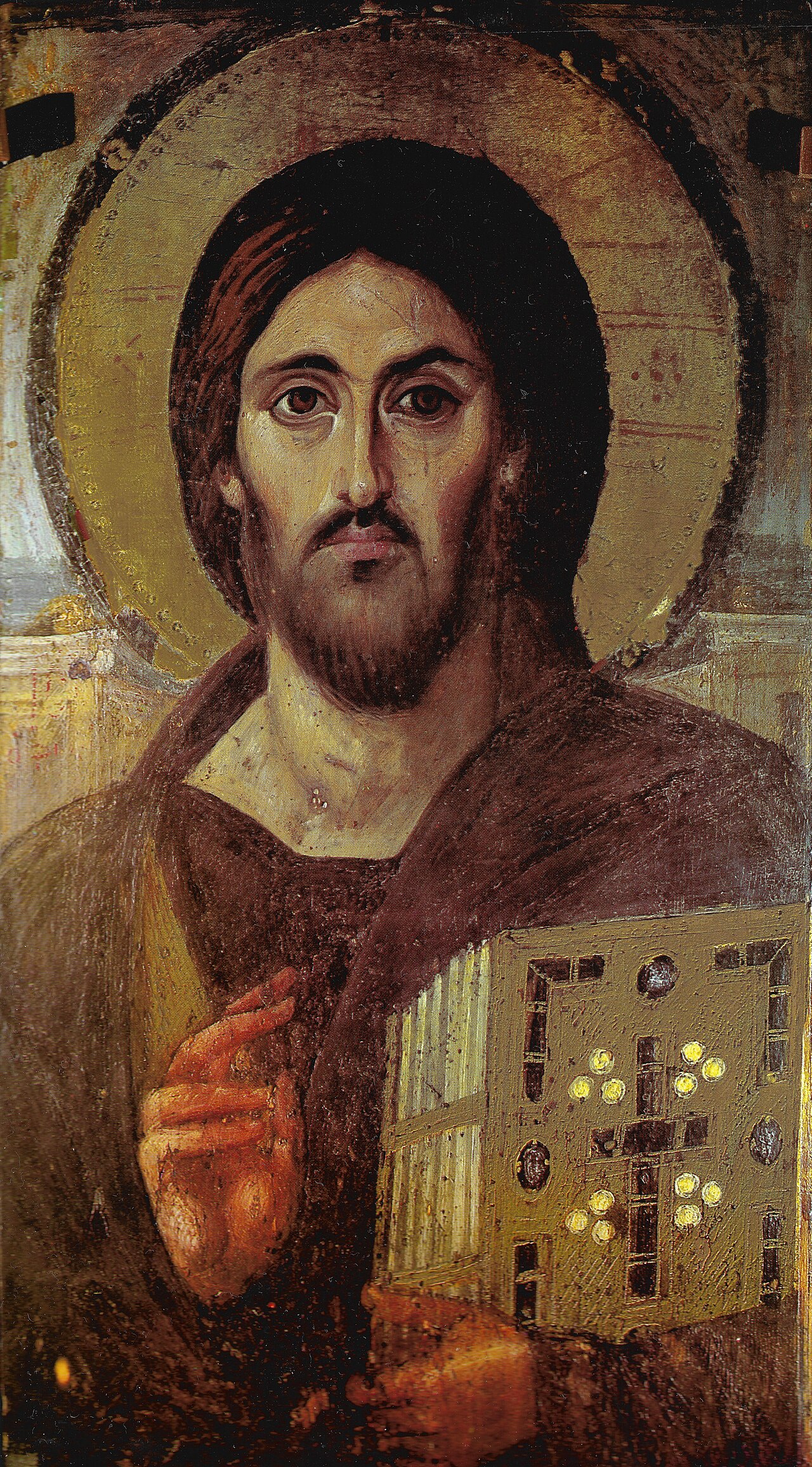
Icons, altarpieces, cathedrals, and the argument over whether the visible Christ justifies visible art.
Tagged: Iconoclasm Icons Second Commandment Christian
May the divine be depicted?
No single stance: the tradition runs from Orthodox icon veneration to Reformed image removal, and every position between them argues from the incarnation or from the Second Commandment.
The Question the Tradition Argues About
Christian art begins with a tension that has never been resolved once for all. The Second Commandment forbids the making of a graven image, and the earliest Christian writers cite it against images. The incarnation presses from the other side: if the invisible God became visible flesh in Christ, then depicting Christ can be read not as a denial of the commandment but as a confession of the incarnation itself. Every Christian position on images is an answer to that tension, and the answers differ.
The Early Church
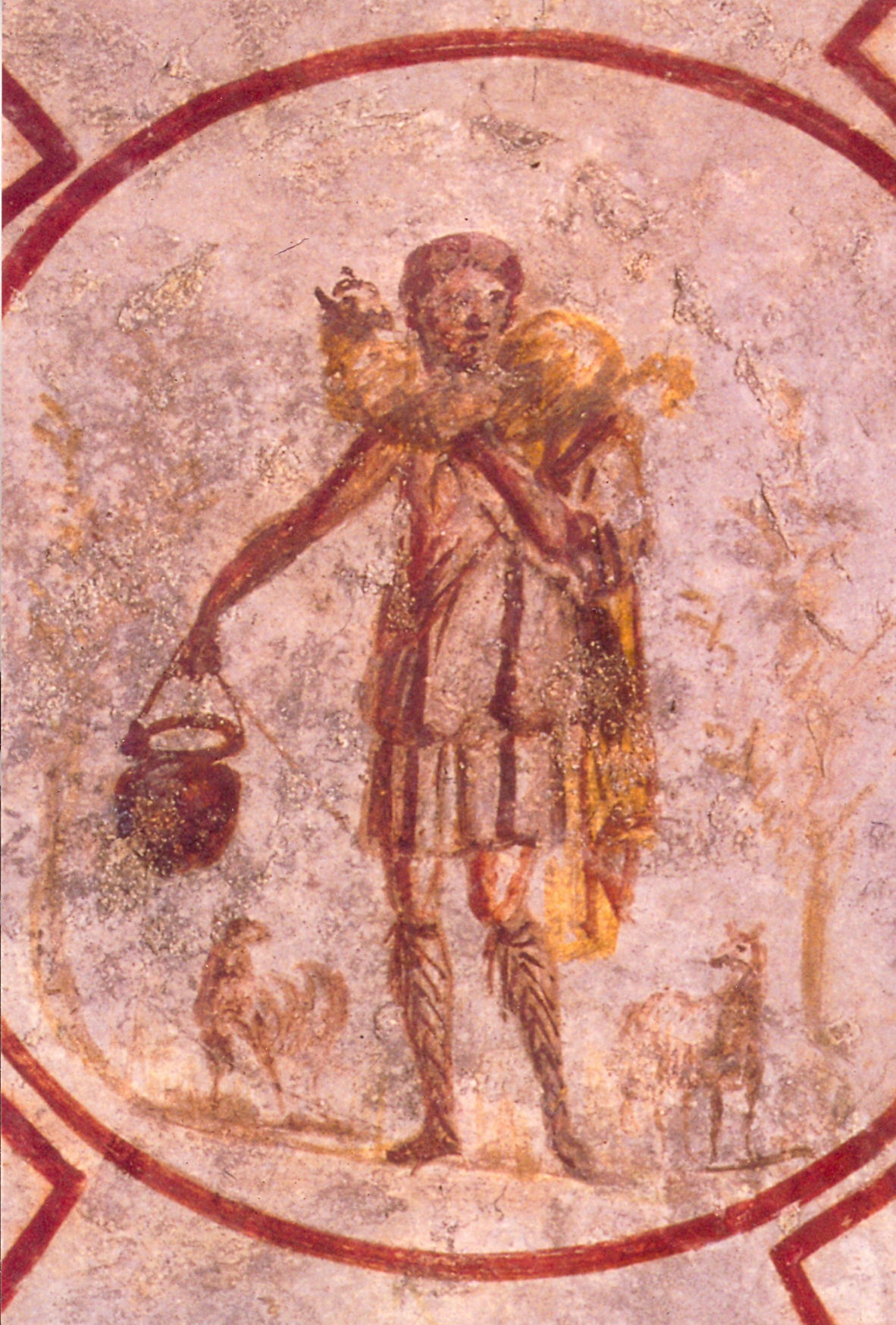
First- and second-century Christians generally observed the Jewish restraint on figurative images for religious purposes, and Tertullian cites the Second Commandment explicitly against the making or consecration of images. The restraint was never a blanket aniconism. The frescoes of the Roman catacombs and the biblical cycles painted in the same decades show a young church whose art was symbolic and narrative — the Good Shepherd, the fish, the anchor, scenes from Scripture — rather than cultic. Images taught and commemorated before they were ever venerated.
The Catholic Settlement
Catholic theology resolved the question by distinguishing the image from its prototype and the kinds of honor each receives. The Catechism teaches that the veneration of images is not contrary to the first commandment, because the honor paid to the image passes to the prototype. Thomas Aquinas gave the distinction its classic form: latria, adoration, is due to God alone; dulia, veneration, to the saints; hyperdulia to Mary. The image of Christ is adored with latria because image and prototype are one subject. On that foundation rests the whole sacramental imagination — crucifixes, statues, relics, and the conviction that material things can bear grace.
The Orthodox Icon
Eastern Orthodoxy forged its theology of the icon in the Iconoclastic Controversy of the eighth and ninth centuries. The iconoclasts argued that an image of Christ either confuses his two natures or circumscribes the uncircumscribable divinity. John of Damascus answered that God is the first image-maker, that the Son is the living image of the Father, and that the incarnation justifies depicting Christ because the invisible Word became visible flesh. The Seventh Ecumenical Council at Nicaea in 787 defined the distinction between veneration and true worship, which is reserved for God alone. In Orthodox practice the icon is therefore not decoration but a site of presence and a confession of faith, and the restoration of the icons is kept each year on the Sunday of Orthodoxy.
The Reformation Spectrum
The Reformation produced the most sustained Christian iconoclasm since the eighth century, but not a single Protestant position. Zwingli and Calvin rejected images as idolatry and Reformed territories removed paintings, sculpture, and stained glass from their churches. Luther rejected the cultic abuse of images but not images themselves, and Lutheran churches kept altarpieces and illustrated Bibles; Cranach's Wittenberg altarpiece created a distinctively Lutheran visual language. Anglican and evangelical positions have since distributed themselves across the same spectrum. Any account that gives "the Christian view of images" in the singular has already gone wrong.
Today
Contemporary Christian art runs from liturgical revival — icon writing, stained glass, sacred architecture — through popular devotional imagery to prophetic art that interrogates the church's own failures. The old argument continues inside it: what an image is for, and what honor it may receive, are still live questions in every branch of the tradition.
Entries in This Tradition
 Entry
The Good Shepherd of the Catacombs
A young shepherd carrying a lamb across his shoulders, painted and carved across the Roman catacombs: the earliest Christian image of Christ, chosen as a symbol before it was a portrait.
References
- Catechism of the Catholic Church, 2129–2132 (on sacred images)
- Second Council of Nicaea (787), Definition on the holy images
- John of Damascus, Three Treatises on the Divine Images
Related Across the Site
- AI-Generated Religious Art Art Entry — Image generators now produce Christs, Buddhas, and temple scenes on demand. The traditions are answering — some with welcome, some with prohibitions that reach the new medium directly. This page shows no generated image, because any single example would misrepresent the argument.
- Hagia Sophia Art Entry — Justinian's great church in Constantinople (532–537), whose dome seemed to contemporaries to hang from heaven — and whose mosaics record, in one building, icon, iconoclasm, conquest, museum, and mosque.
- Rublev's Trinity Art Entry — Andrei Rublev's icon of the three angels at Abraham's table (c. 1411), painted for the Trinity Lavra of St. Sergius — the supreme achievement of Orthodox icon painting and its theology made visible.
- The Beeldenstorm and Reformed Iconoclasm Art Entry — In the summer of 1566 a wave of image-breaking swept the churches of the Low Countries, and the Reformed territories of Europe methodically emptied their churches: the most sustained Christian iconoclasm since Byzantium.
- The Dura-Europos Synagogue Frescoes Art Entry — The walls of a synagogue on Rome's Euphrates frontier, painted around 244 CE with the whole biblical story in human figures — the standing disproof that ancient Judaism made no religious pictures.
- The Good Shepherd of the Catacombs Art Entry — A young shepherd carrying a lamb across his shoulders, painted and carved across the Roman catacombs: the earliest Christian image of Christ, chosen as a symbol before it was a portrait.
- Iconoclasm: The Theology of Breaking Images Art Theme — Image destruction recurs across traditions — Byzantine, Reformed, Islamic, Sikh, and secular-revolutionary — and it is never mere vandalism. It is a theology acted out.
- Judaism Art Tradition — Principled restraint on cult images, with synagogue art, ceremonial objects, and illuminated manuscripts flourishing inside it.
All of Religious Art & Worldviews · The comparison: May the divine be depicted?