Birth of Muhammad
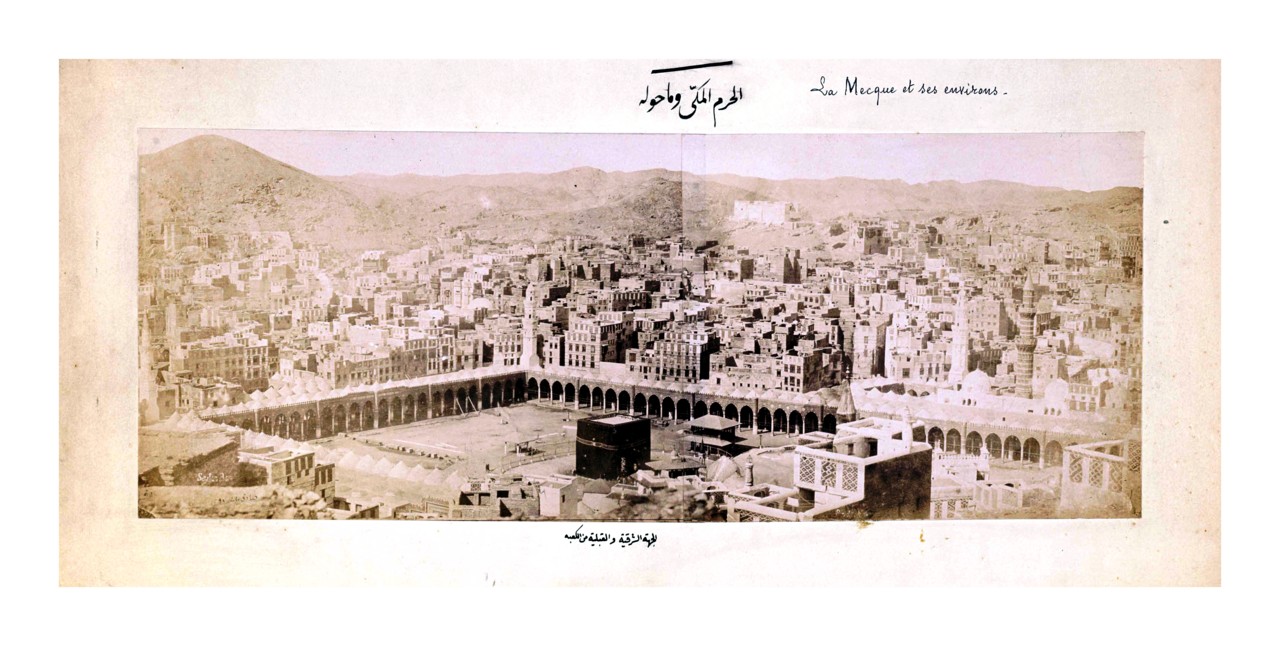
Muhammad is born in Mecca in the Year of the Elephant, as tradition names it; the sira literature preserves the account of his birth and childhood, and the date rests on that tradition rather than on contemporary records.
Search pages, essays, world views, libraries, and topics. Type at least two characters.
Eighteen accounts of what is real, each set out in its own terms and each with its own page.
All World Views Does God Exist?The Sunni Islam stream of the Islam timeline.
Streams: All of Islam Sunni Islam Twelver Shia Islam Ibadi Islam Mu'tazila Hanbali Sufi Orders Ash'ari Modern Reformist Islam
Muhammad is born in Mecca in the Year of the Elephant, as tradition names it; the sira literature preserves the account of his birth and childhood, and the date rests on that tradition rather than on contemporary records.
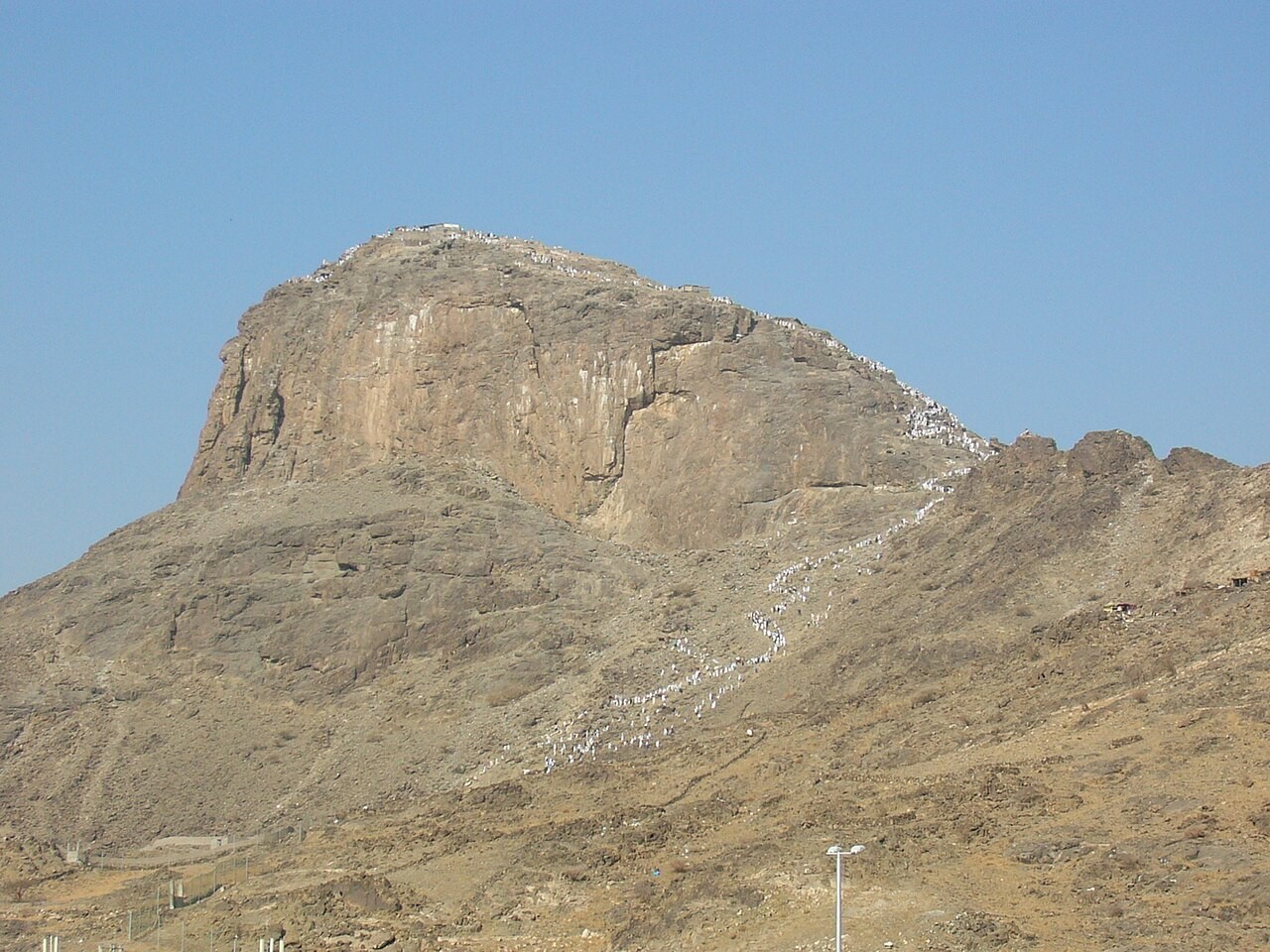
In retreat on Mount Hira outside Mecca, Muhammad receives the first revelation, the opening verses of what becomes Surah al-Alaq; Khadija and her cousin Waraqa confirm the experience, and the preaching that follows begins Islam.
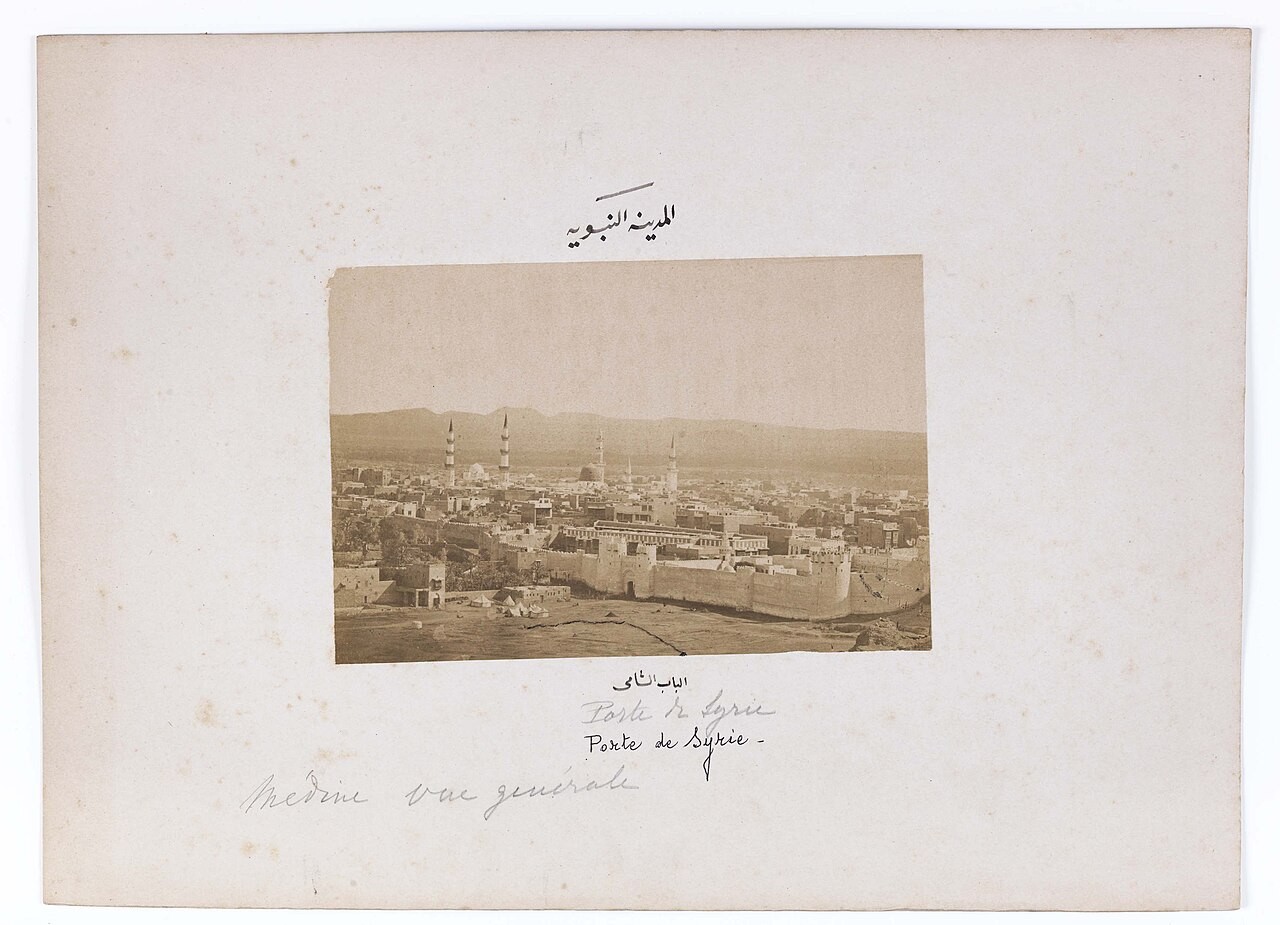
Muhammad and his followers emigrate from Mecca to Yathrib, renamed Medina, where he becomes the head of a community bound by the Constitution of Medina; the migration opens year one of the Islamic calendar.
A small Medinan force defeats a larger Meccan one at the wells of Badr during Ramadan; the victory, read in the Qur'an as divine aid, secures the young community and Muhammad's authority in Medina.
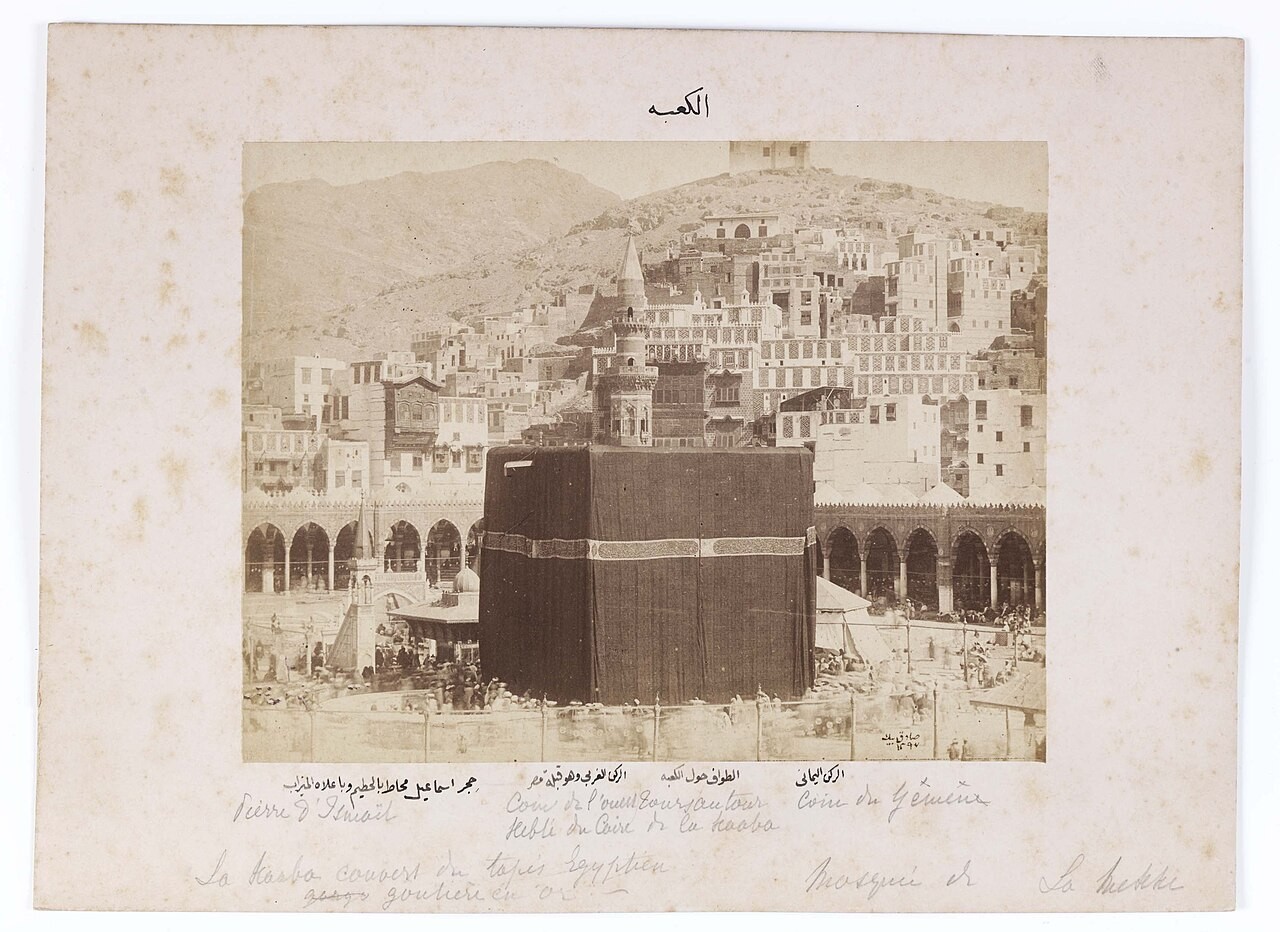
Muhammad returns to Mecca with a large army and takes the city nearly without bloodshed, declares a general amnesty, and clears the Kaaba of its idols; Mecca becomes the sanctuary center of Islam.
Muhammad dies in Medina after a short illness, months after the Farewell Sermon; he leaves no agreed successor named in a form all accept, and the question of who leads the community divides it from this day forward.
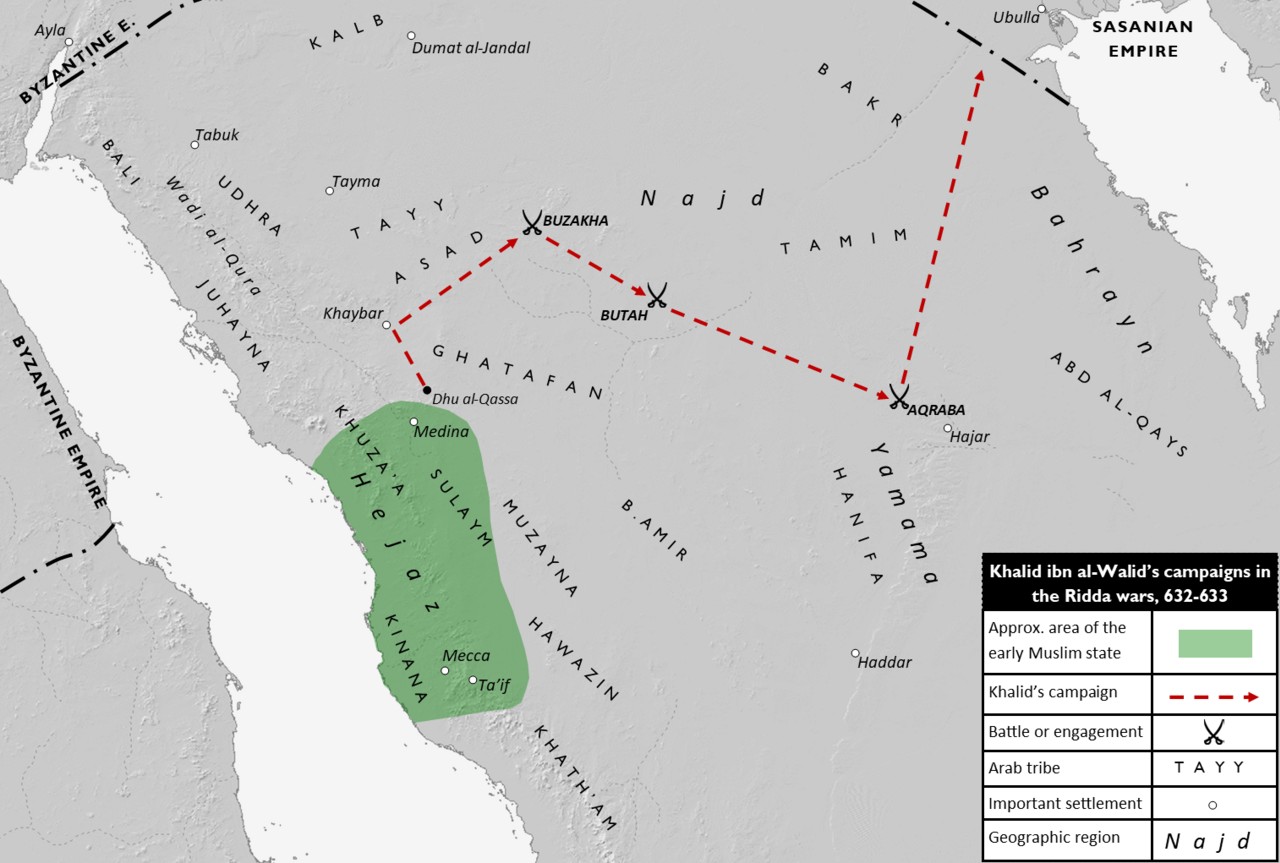
The community gathers at the Saqifa and chooses Abu Bakr, the Prophet's closest companion, as caliph; his short reign fights the Ridda wars against Arabian tribes that withhold allegiance, and begins the compilation of the Qur'an after the losses at Yamama.
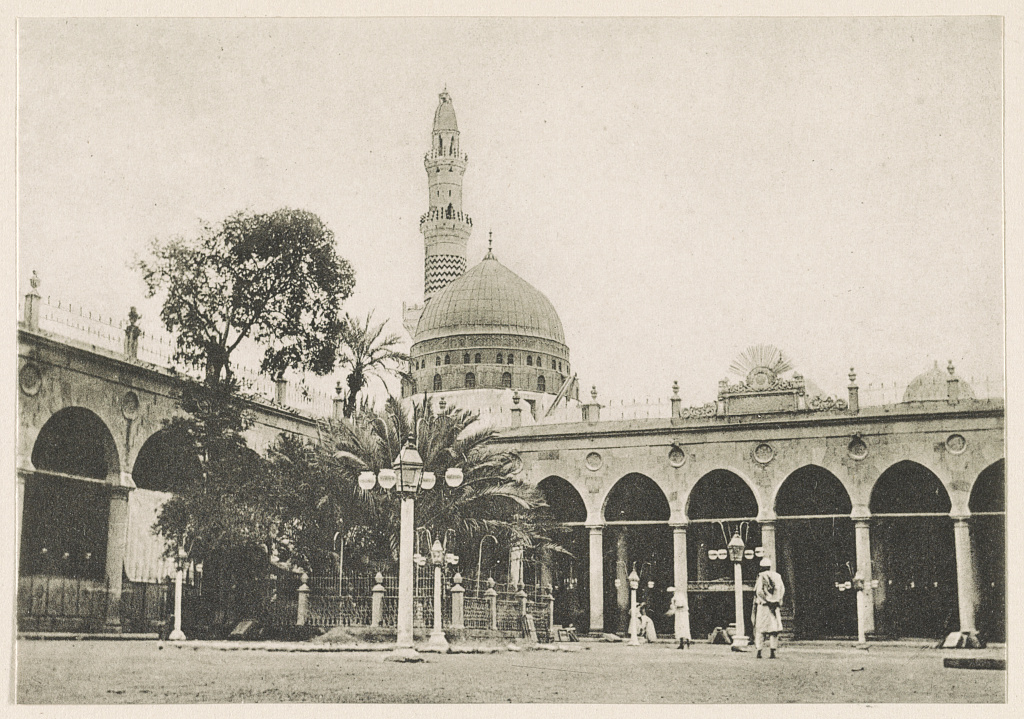
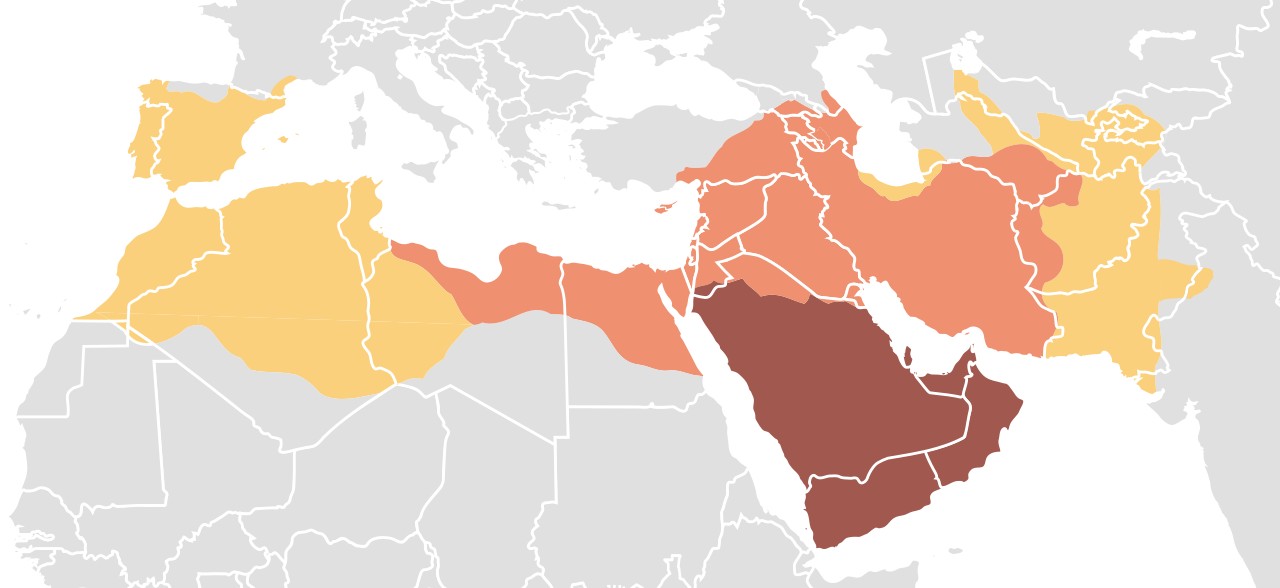
Under Umar the armies of Islam take Syria, Egypt, and Persia from the Byzantine and Sasanian empires; Umar organizes the conquered lands with garrison cities, a register of stipends, and the Hijri calendar, and is assassinated in the Medina mosque.
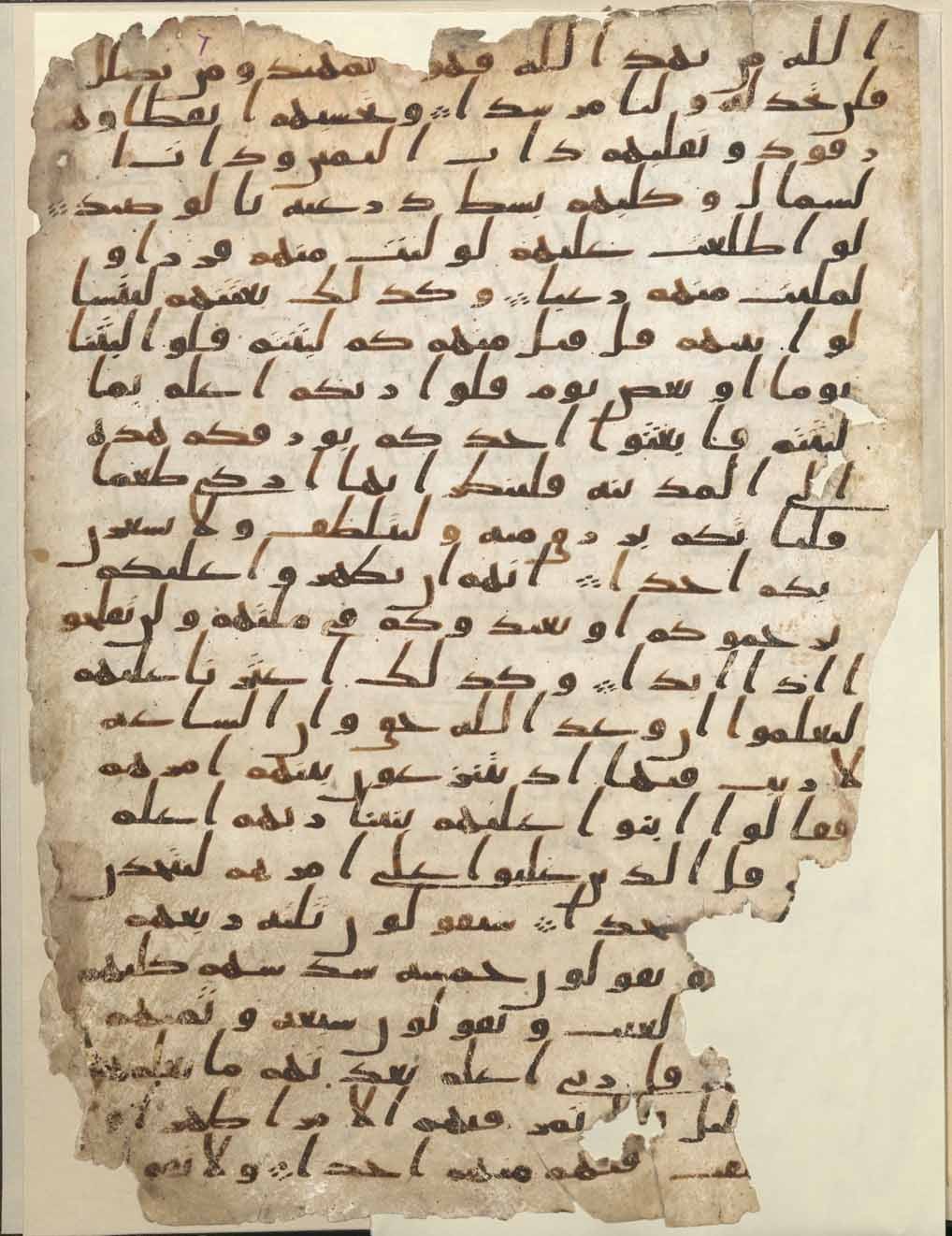
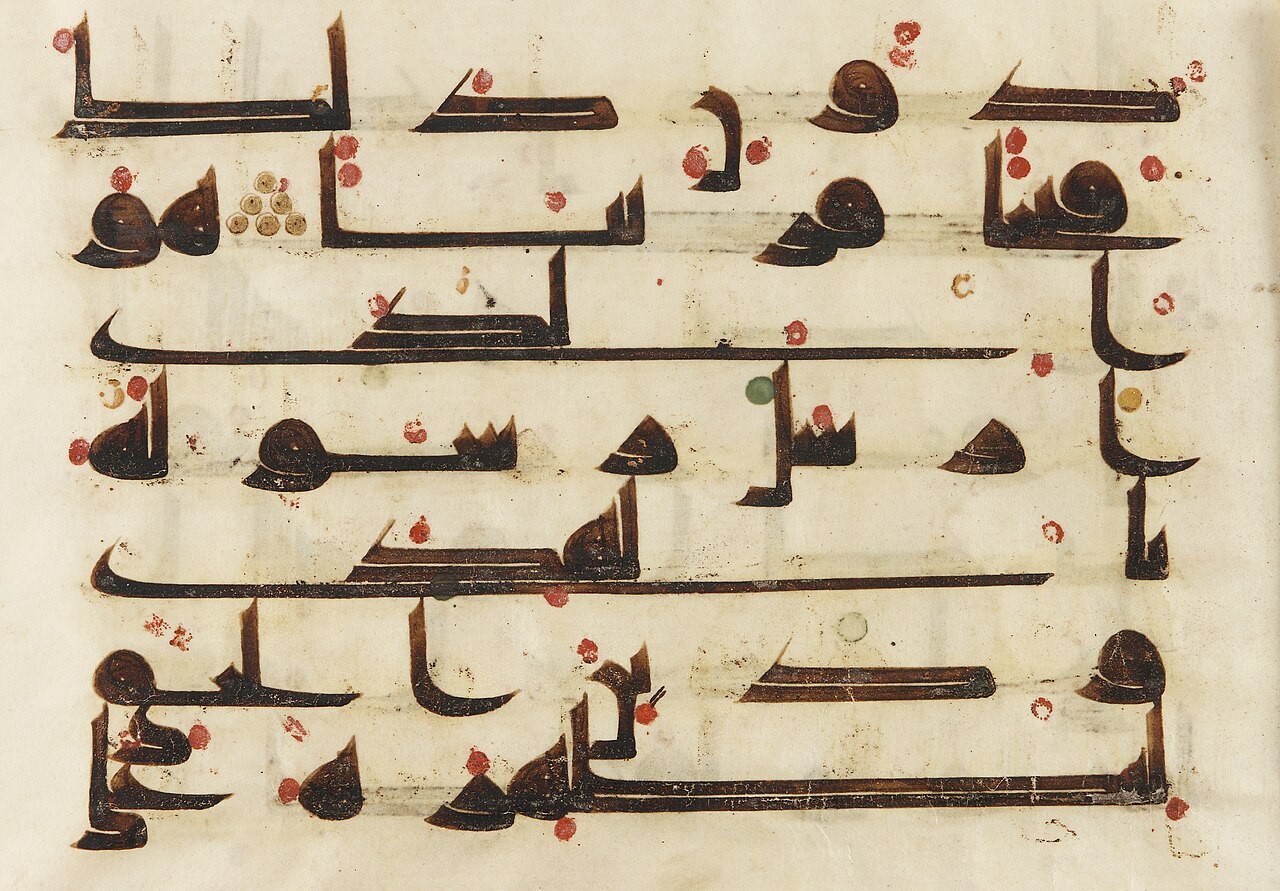
The caliph Uthman commissions Zayd ibn Thabit and a committee to fix one written text of the Qur'an and orders variant codices burned; the recension becomes the standard text of the Qur'an in use to this day.
After Uthman's murder the community chooses Ali, the Prophet's cousin and son-in-law; his caliphate is consumed by civil war against Aisha's party and then Mu'awiya's, and Shia Islam holds him the first rightful Imam, wrongly kept from rule for twenty-five years.
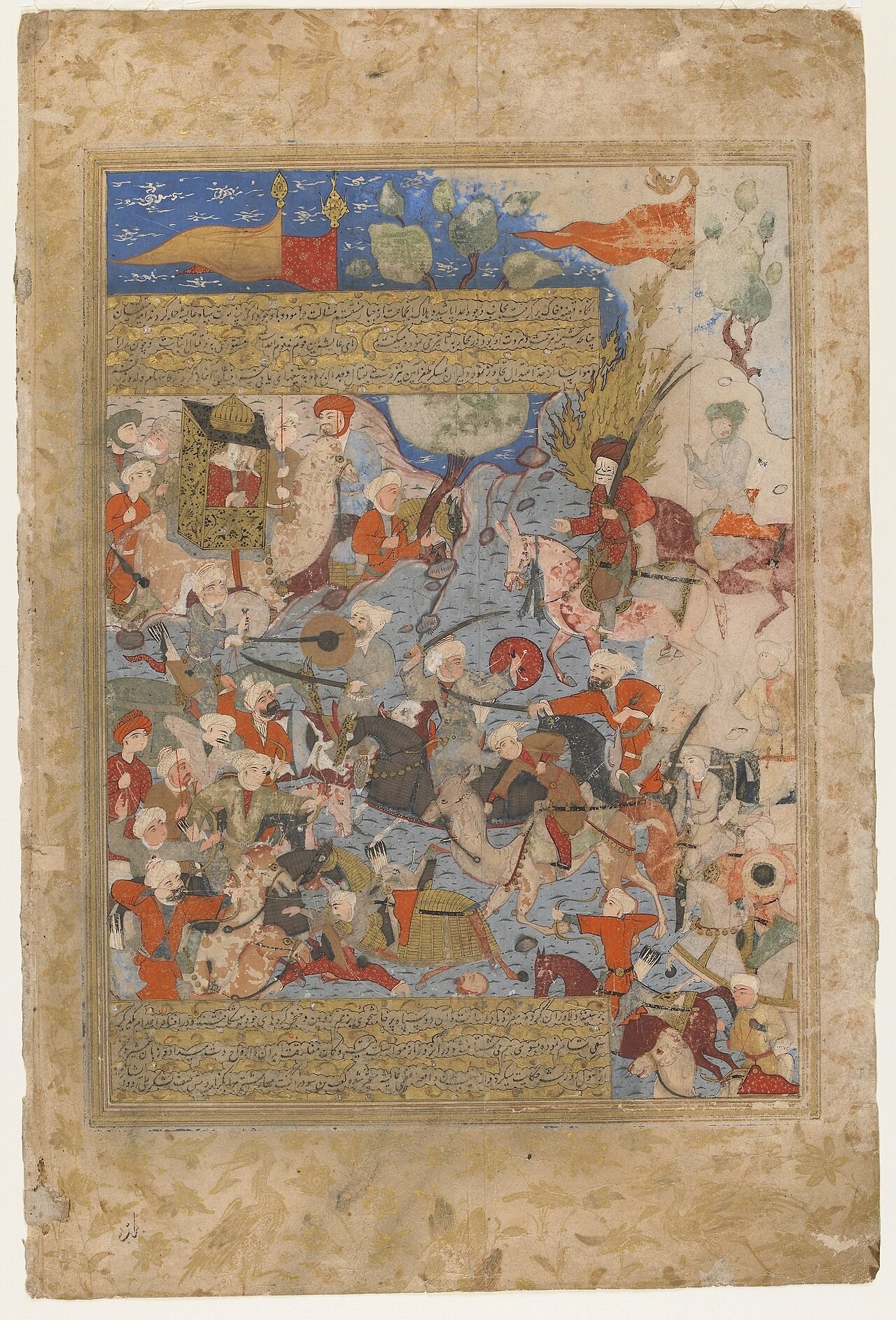
Aisha, Talha, and Zubayr march on Basra against Ali and are defeated at the Battle of the Camel, named for Aisha's camel at the fight's center; the battle opens the first fitna, the community's first civil war.
Ali's battle with Mu'awiya at Siffin ends in arbitration; a party of Ali's own supporters secedes over the judgment, holding that judgment belongs to God alone, and from that secession the Khawarij emerge, among whose moderate heirs the Ibadi community traces its descent.
After Ali's assassination by a Kharijite, Mu'awiya takes the caliphate and moves its capital to Damascus; rule passes into a hereditary dynasty, the Umayyads, who govern the empire for ninety years.
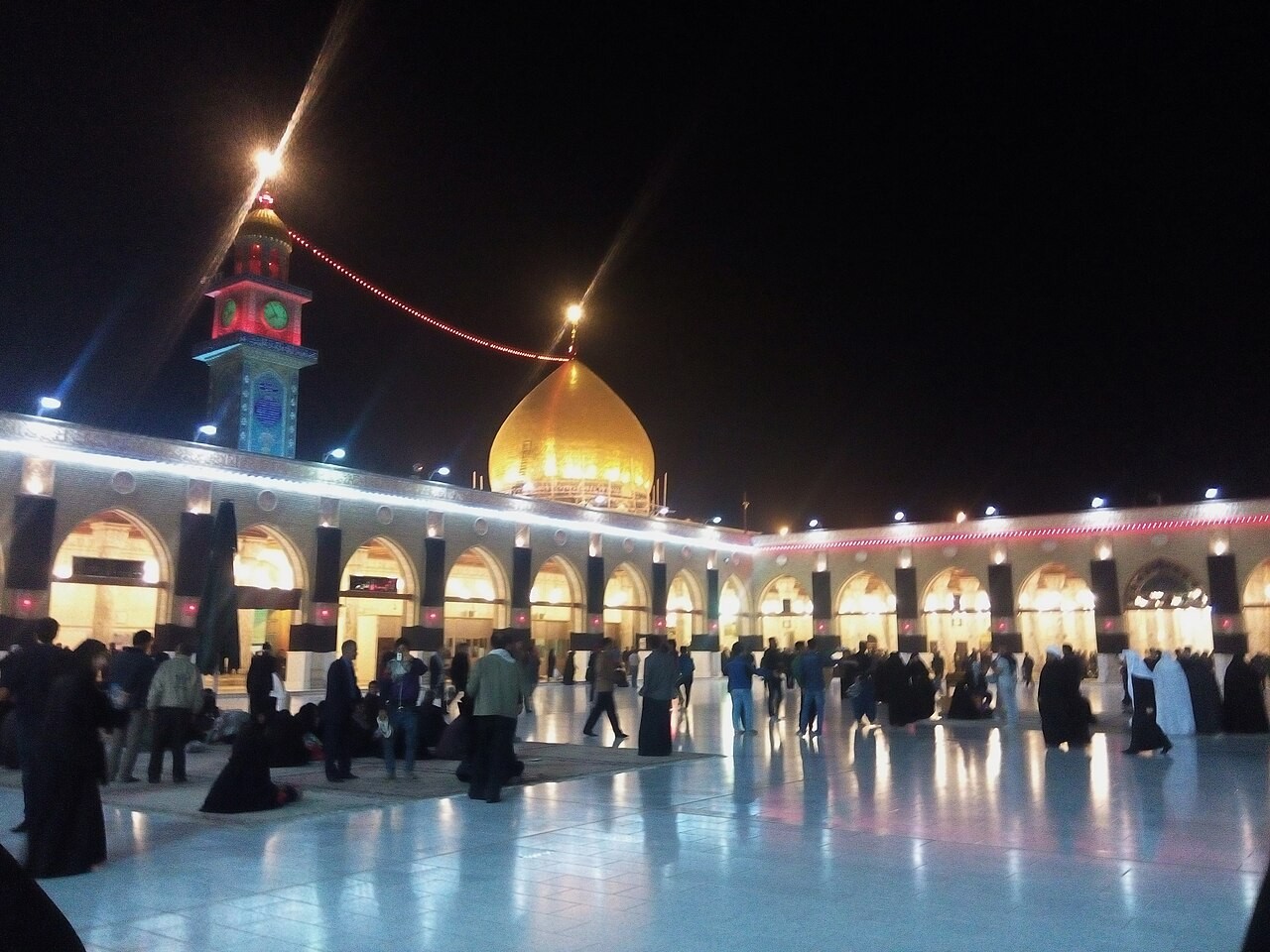
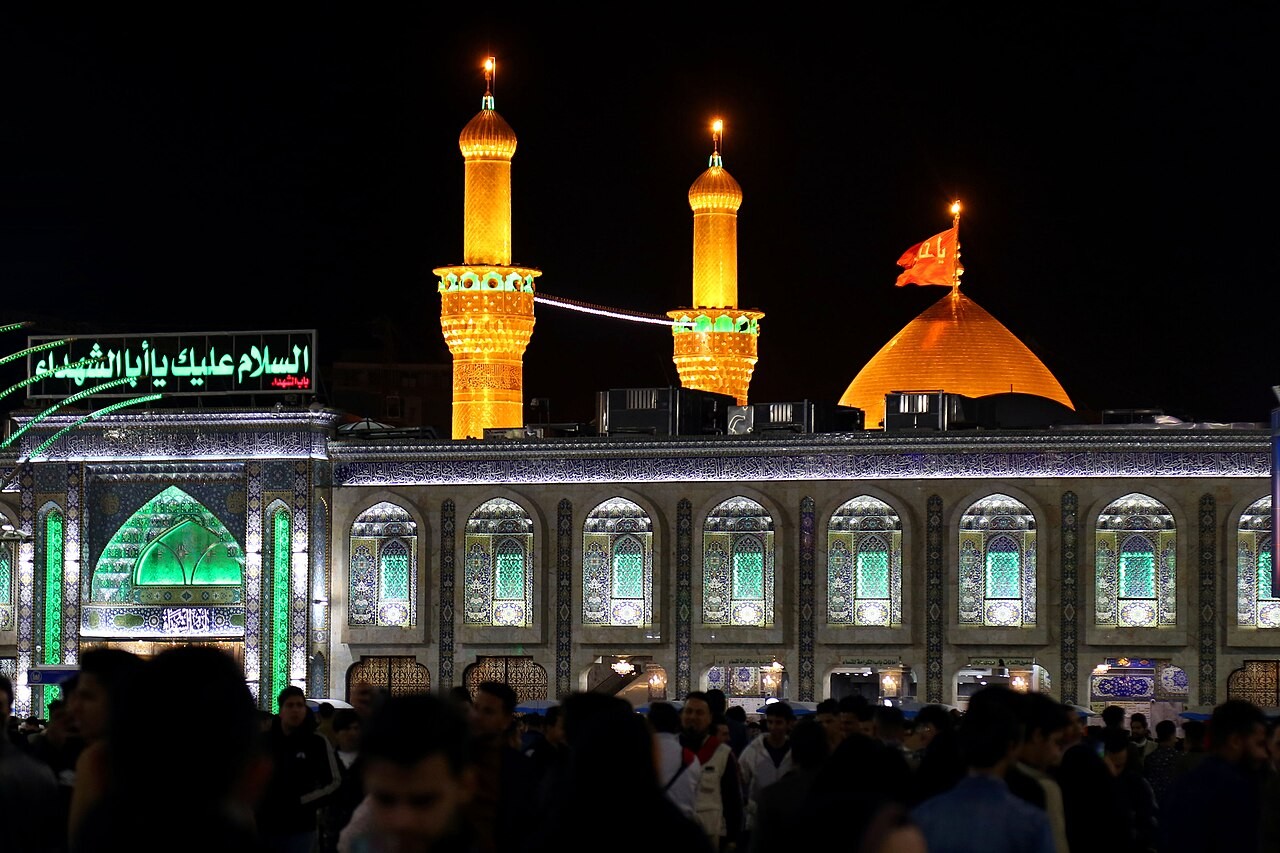
Husayn, the Prophet's grandson, refuses allegiance to Yazid and is killed with his small company at Karbala on the tenth of Muharram; his martyrdom becomes the defining memory of Shia Islam, commemorated every Ashura.
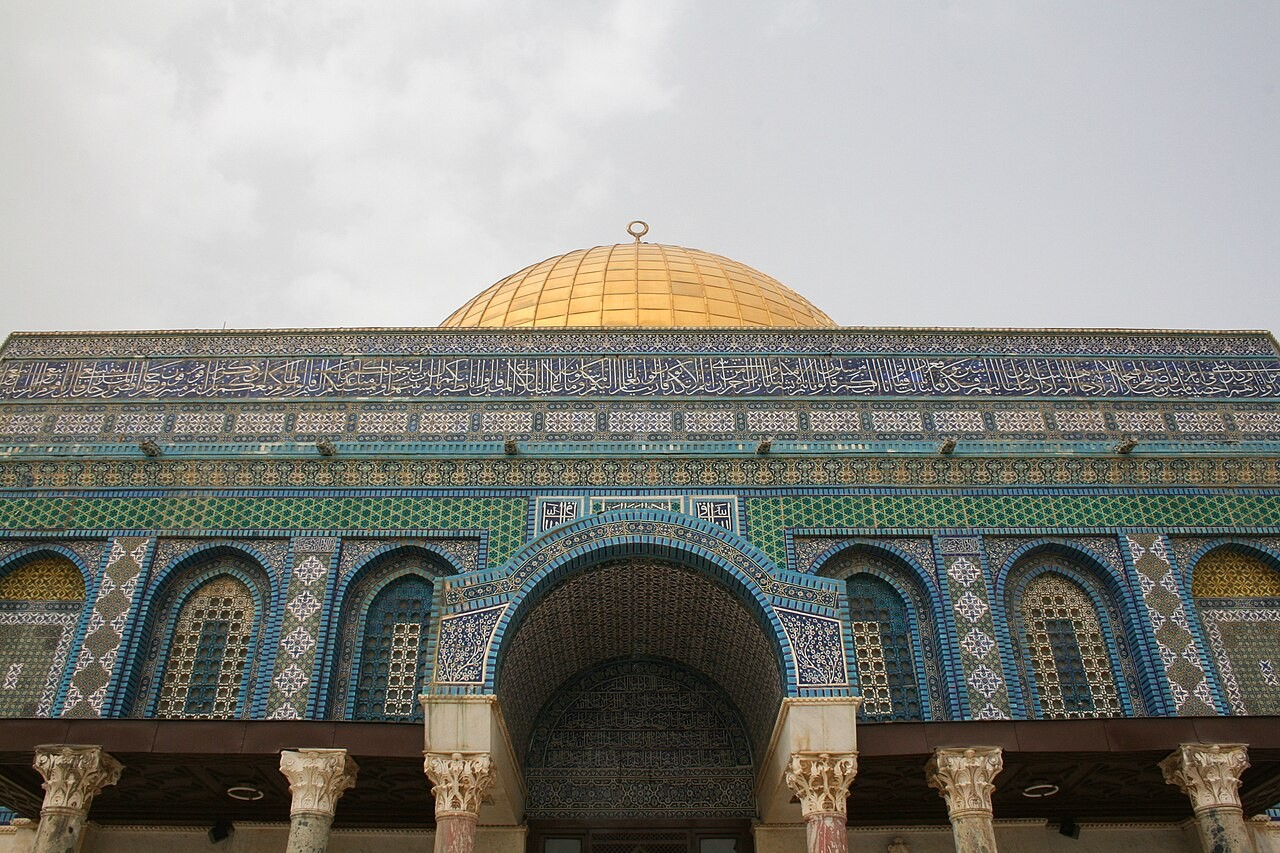
The Umayyad caliph Abd al-Malik completes the Dome of the Rock in Jerusalem, the oldest surviving monument of Islamic architecture; its mosaics carry Qur'anic inscriptions, including texts addressed to the People of the Book.
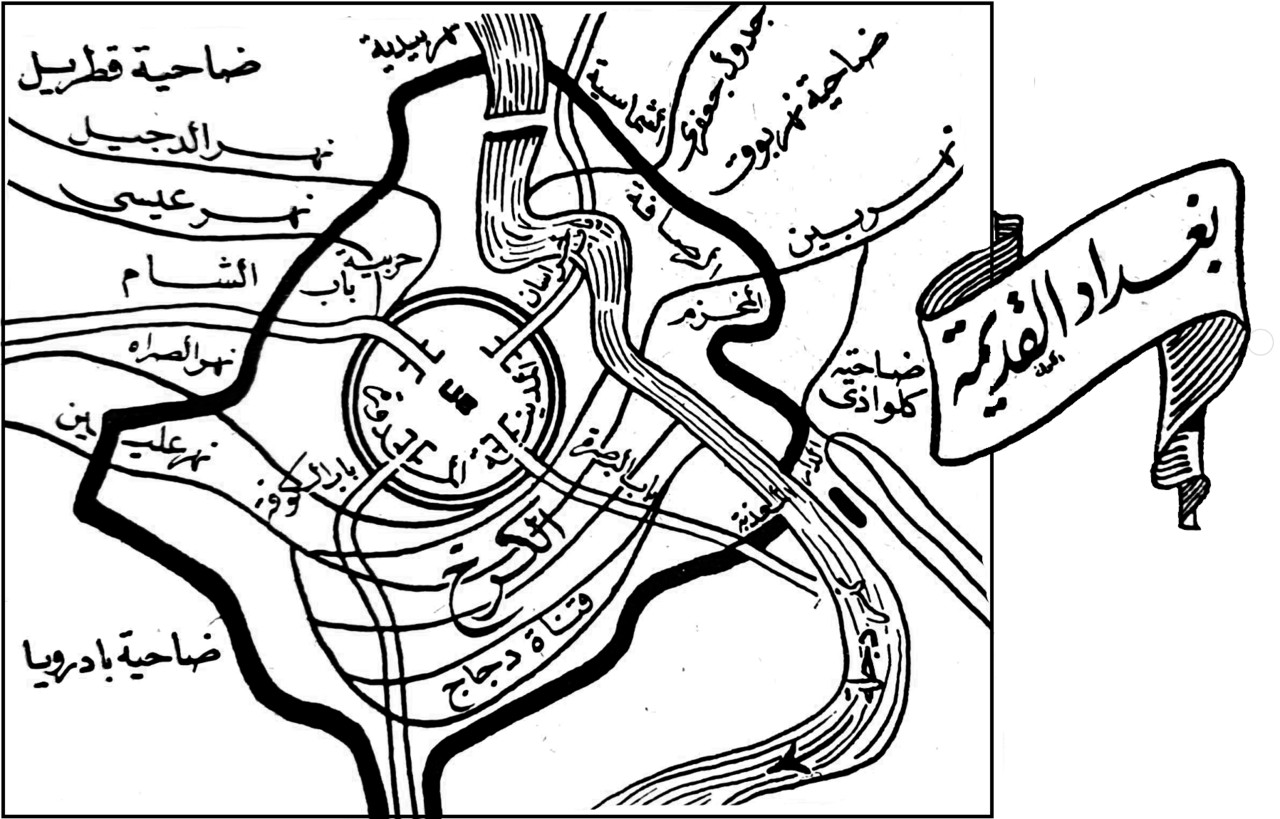
The Abbasids, claiming rule for the Prophet's family, overthrow the Umayyads from Khorasan and found a caliphate that lasts five centuries; Baghdad rises as its capital, and the revolution's promise to the Prophet's kin curdles for the Alids, whose claims it had used.
Abu Hanifa dies in Baghdad; the legal school formed by his disciples, the Hanafi school, becomes the most widely followed school of Sunni law, carried later by the Abbasid, Ottoman, and Mughal states.
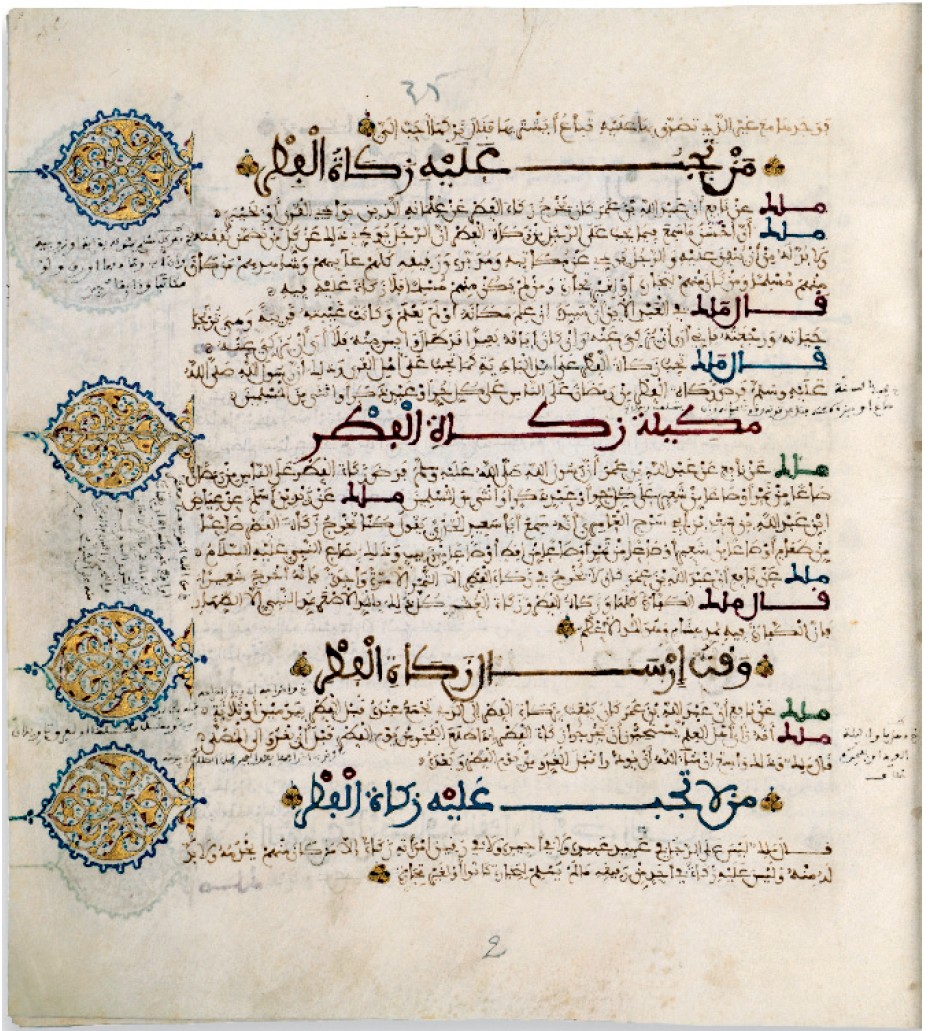
Malik ibn Anas dies in Medina; his al-Muwatta, among the earliest surviving books of Islamic law, grounds the Maliki school, which follows the practice of Medina and spreads across North and West Africa.
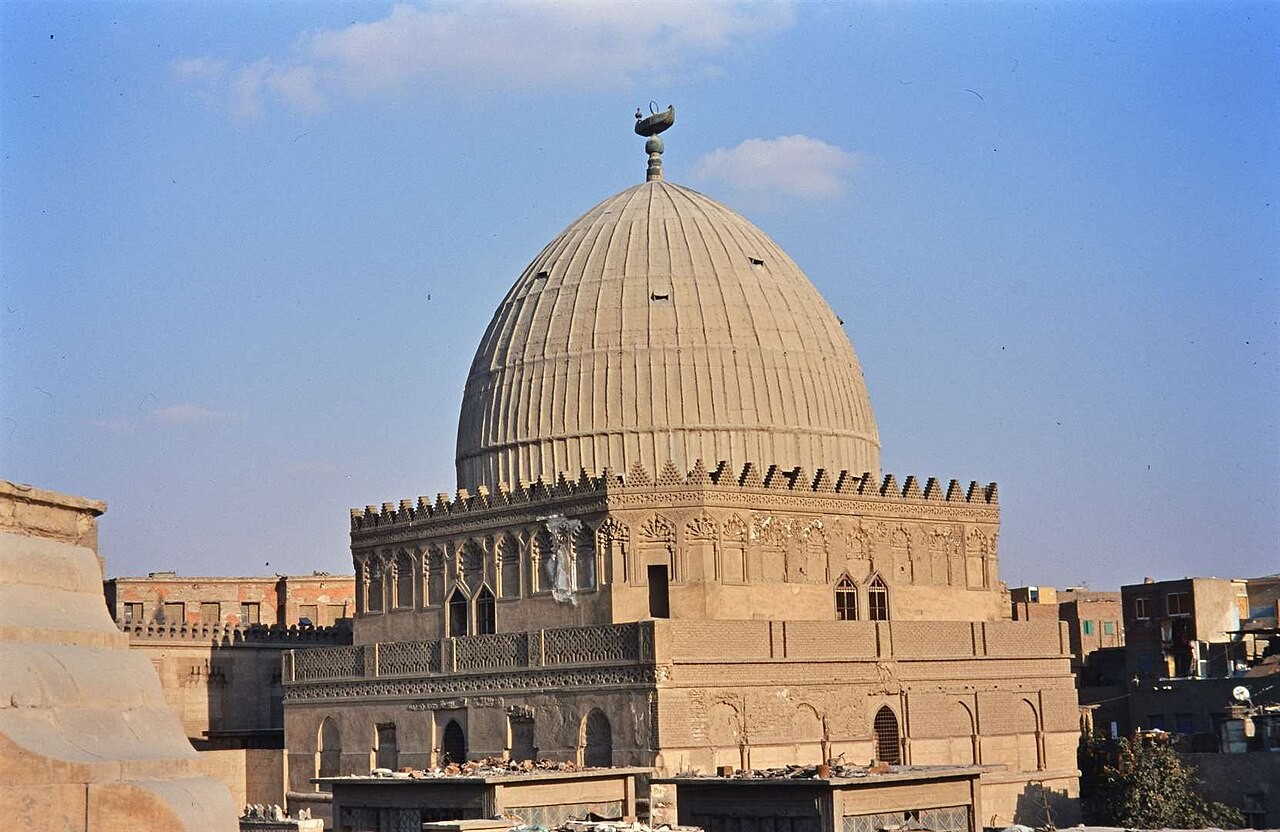
Al-Shafi'i dies in Fustat; his Risala founds the theory of Islamic law by ordering its sources (Qur'an, Sunna, consensus, analogy), and the Shafi'i school spreads through Egypt, East Africa, and Southeast Asia.
The caliphs al-Ma'mun and his two successors impose the mihna, an inquisition requiring officials and scholars to affirm the createdness of the Qur'an, the Mu'tazila doctrine; Ahmad ibn Hanbal's refusal and flogging make him Sunni Islam's emblem of resistance, and al-Mutawakkil abandons the test.
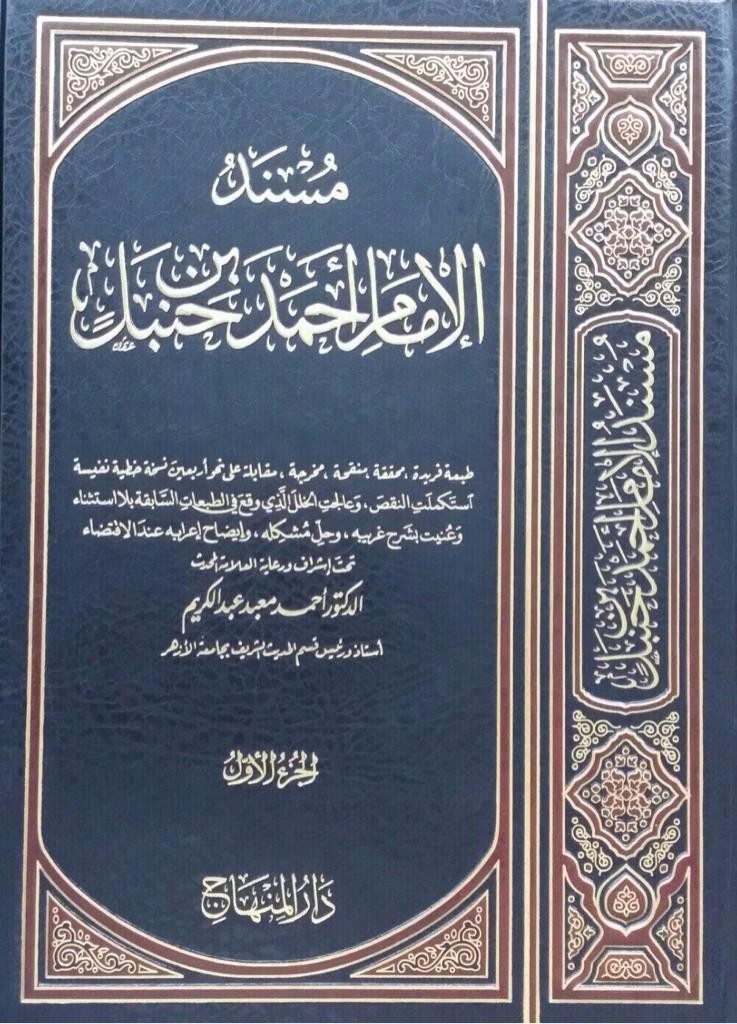
Ahmad ibn Hanbal dies in Baghdad, and crowds fill the streets for his funeral; the Hanbali school formed from his teaching prizes the Qur'an and the hadith over speculative theology, and his Musnad gathers some twenty-seven thousand traditions.
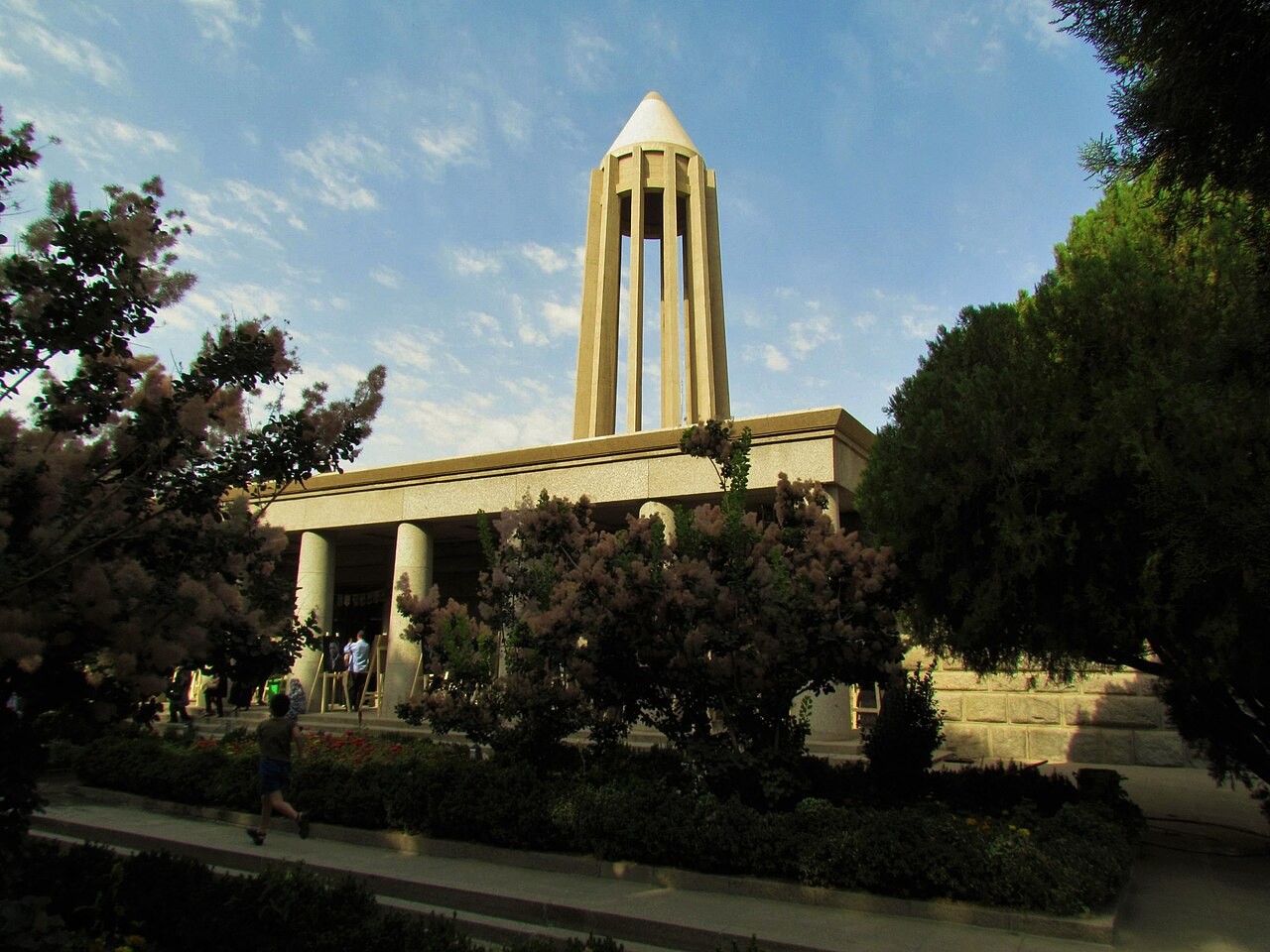
Ibn Sina dies at Hamadan; the Persian physician-philosopher's Canon of Medicine teaches medicine in Europe for centuries, and his Book of Healing sets the agenda of philosophy in Islam, framing the questions al-Ghazali answers and Ibn Rushd takes up again.
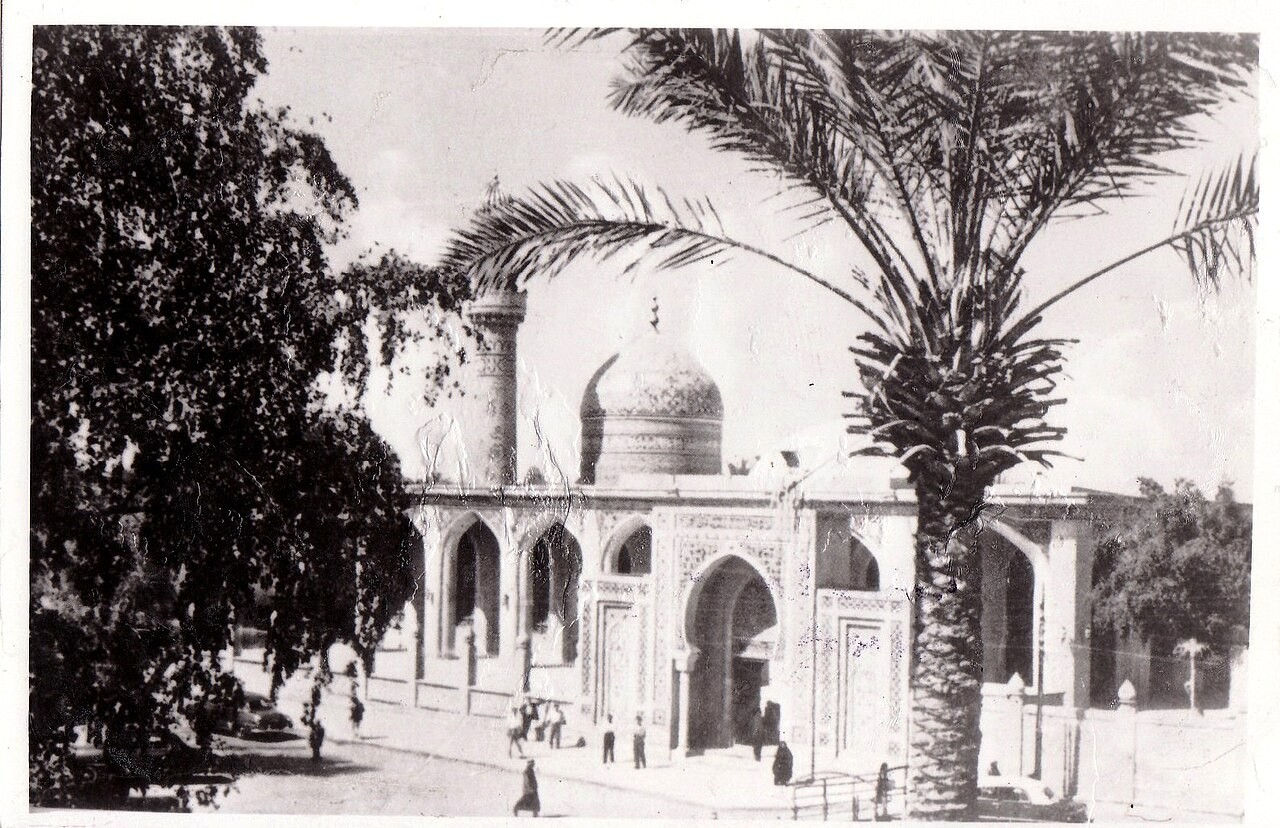
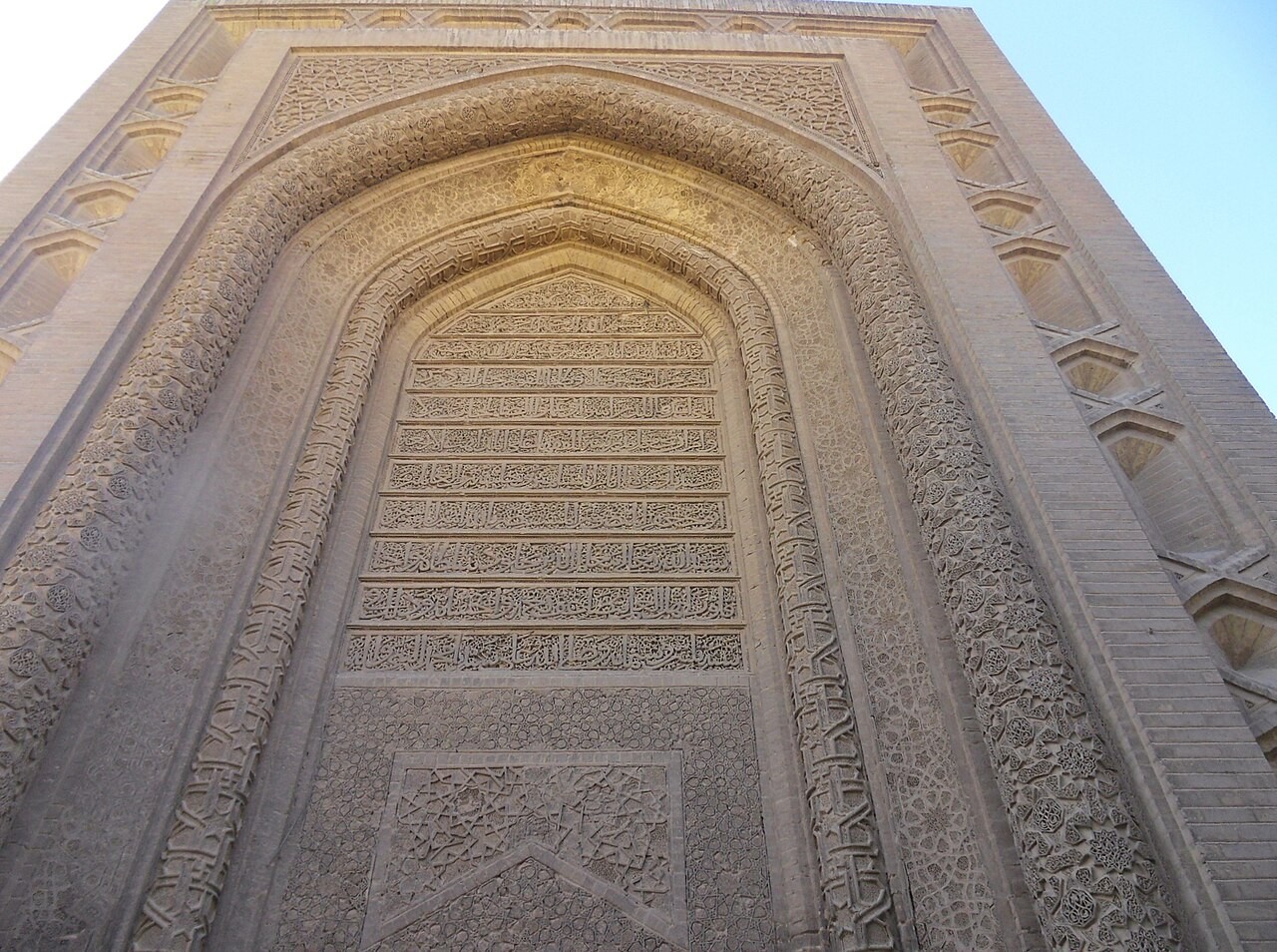
The Seljuk vizier Nizam al-Mulk founds the Nizamiyya in Baghdad, the head of a network of madrasas endowed to teach Shafi'i law and Ash'ari theology; the madrasa becomes the institutional form of Sunni learning, and al-Ghazali holds its chair a generation later.
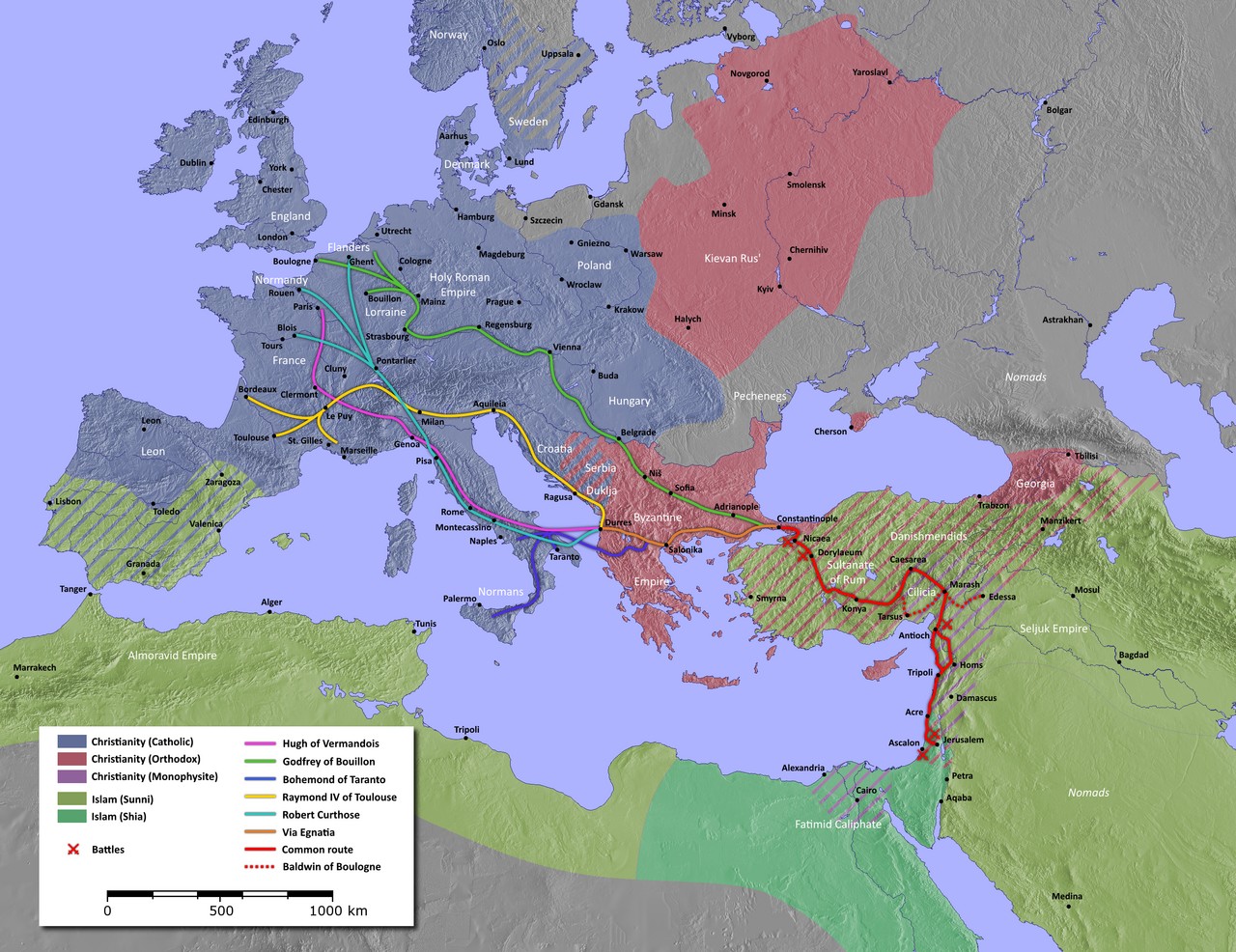
Pope Urban II's call at Clermont brings Latin Christian armies into Syria and Palestine; Jerusalem falls in 1099, and two centuries of crusader states follow, answered from the Muslim side by Nur al-Din and Saladin's recovery of Jerusalem in 1187.
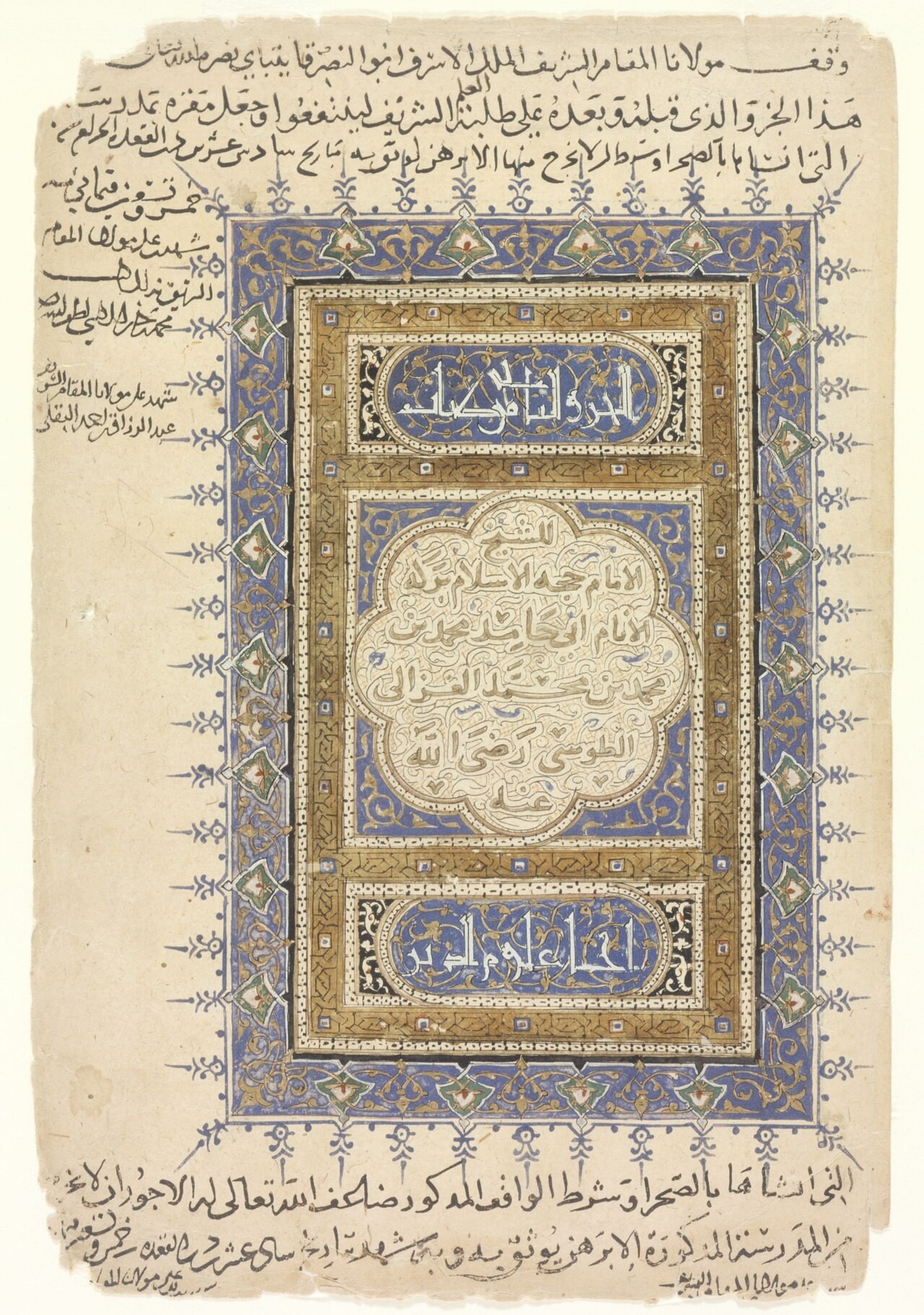
Al-Ghazali dies at Tus, having left the Nizamiyya chair in spiritual crisis and returned to teaching through Sufism; his Revival of the Religious Sciences joins law, theology, and the Sufi path into the synthesis that shapes Sunni piety for a millennium.
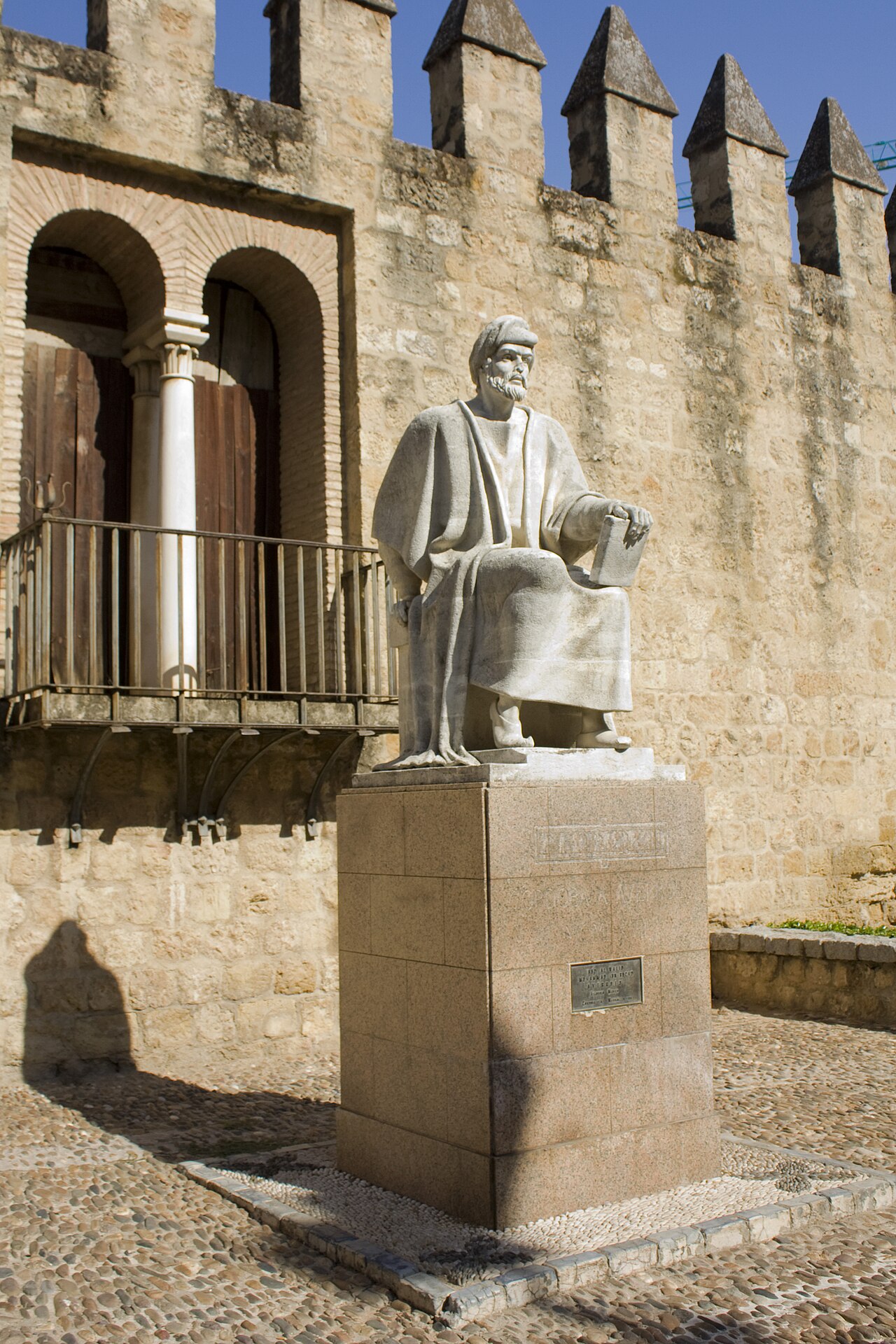
Ibn Rushd dies in Marrakesh; the Cordoban judge and philosopher's commentaries on Aristotle, written to defend philosophy within Islam, find their largest audience in Latin translation, where 'the Commentator' shapes European thought for centuries.
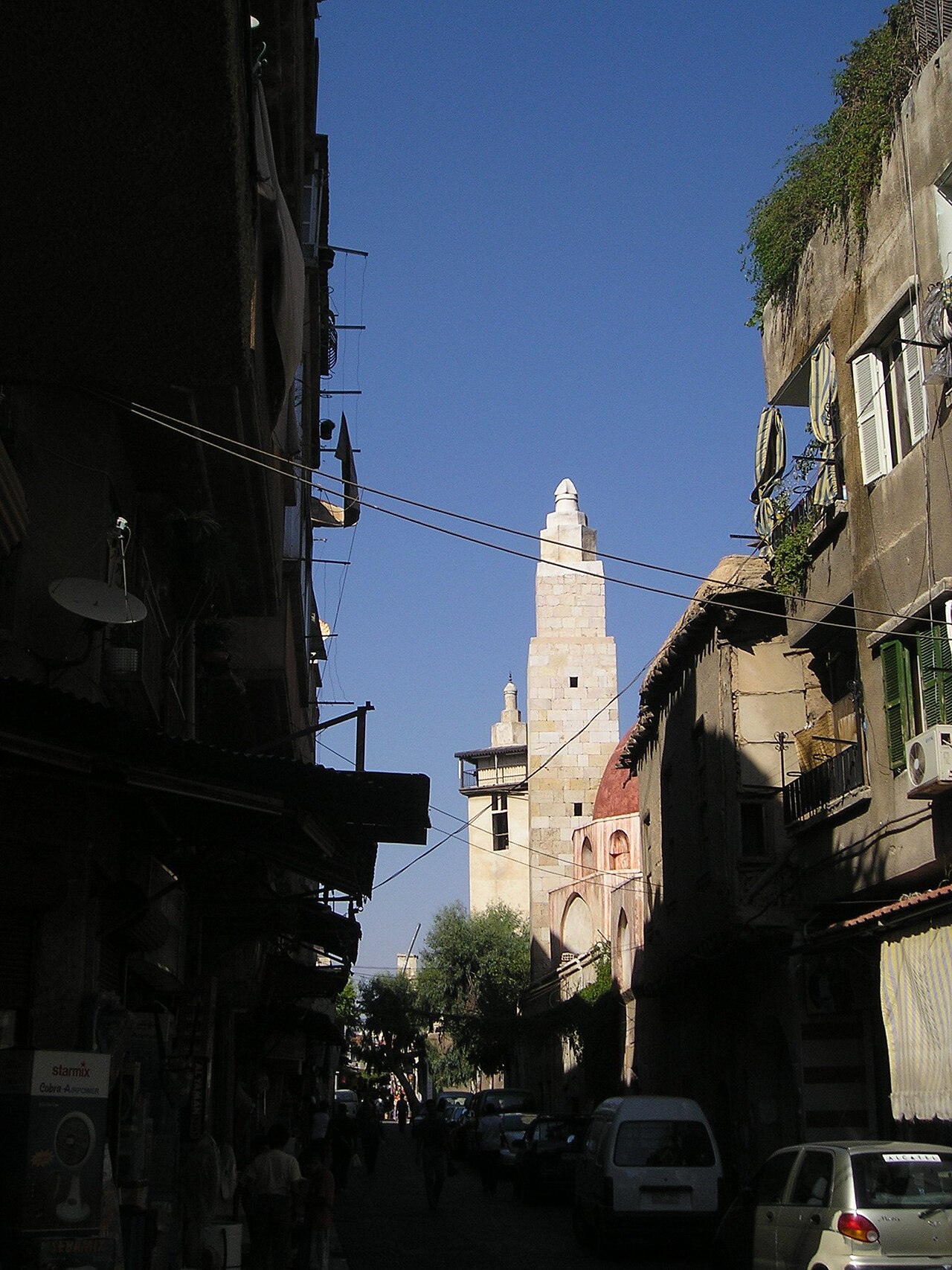
Ibn Qudama dies in Damascus; the Hanbali jurist's al-Mughni, a comparative compendium of law across the schools, becomes the Hanbali school's standard work and a monument of Sunni legal scholarship.
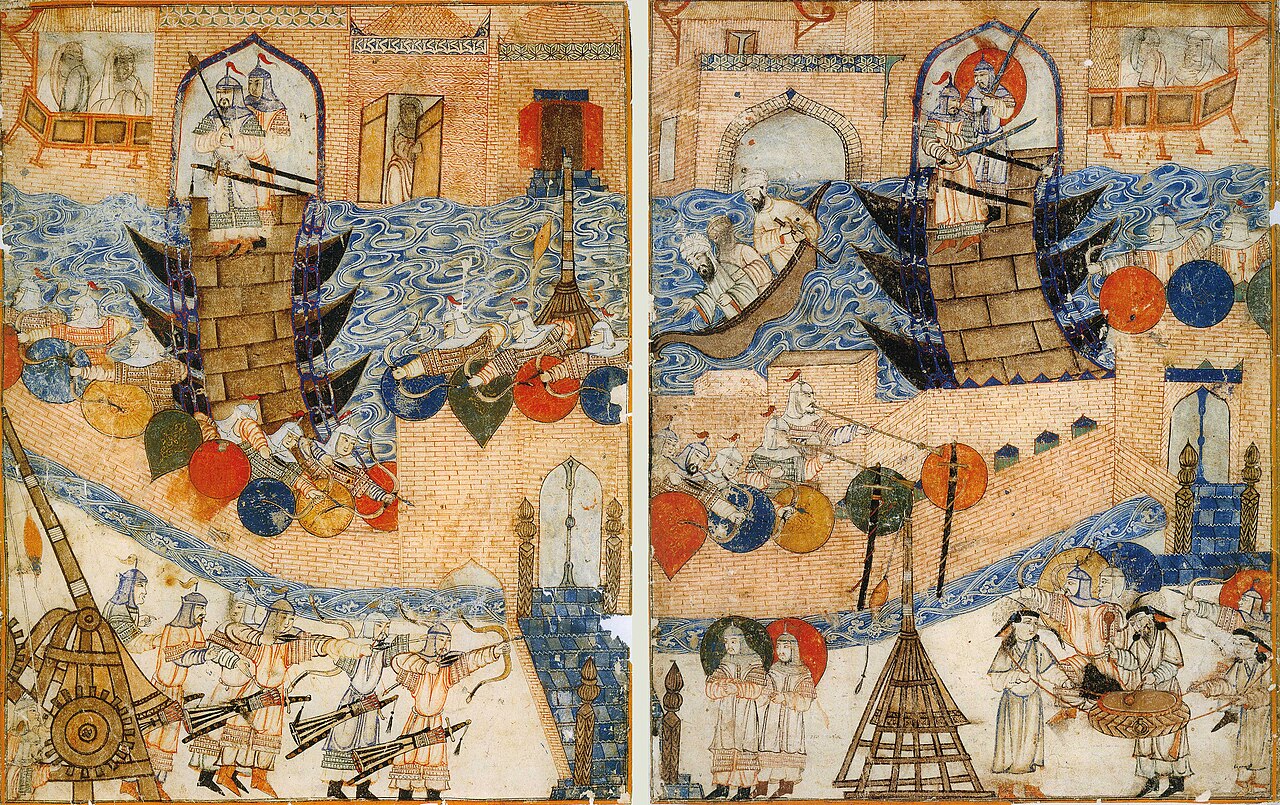
Hulagu's Mongols sack Baghdad and kill the last Abbasid caliph of the city; the catastrophe ends the five-hundred-year caliphate in Iraq, though a shadow Abbasid line continues in Mamluk Cairo.
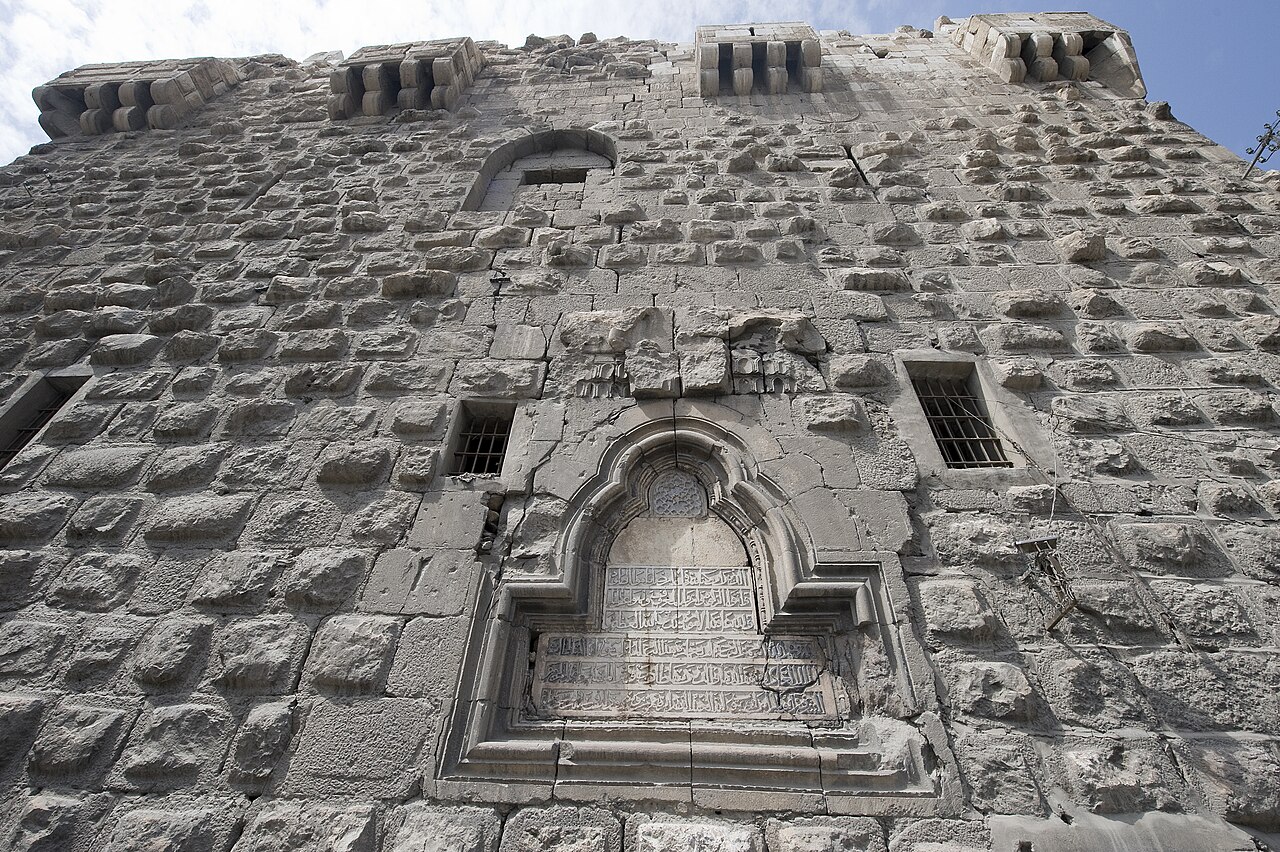
Ibn Taymiyya dies a prisoner in the Damascus citadel; the Hanbali scholar's fatwas against saint veneration and speculative theology, marginal in his own century, are taken up by reform movements centuries later and stand behind the Wahhabi alliance of 1744.
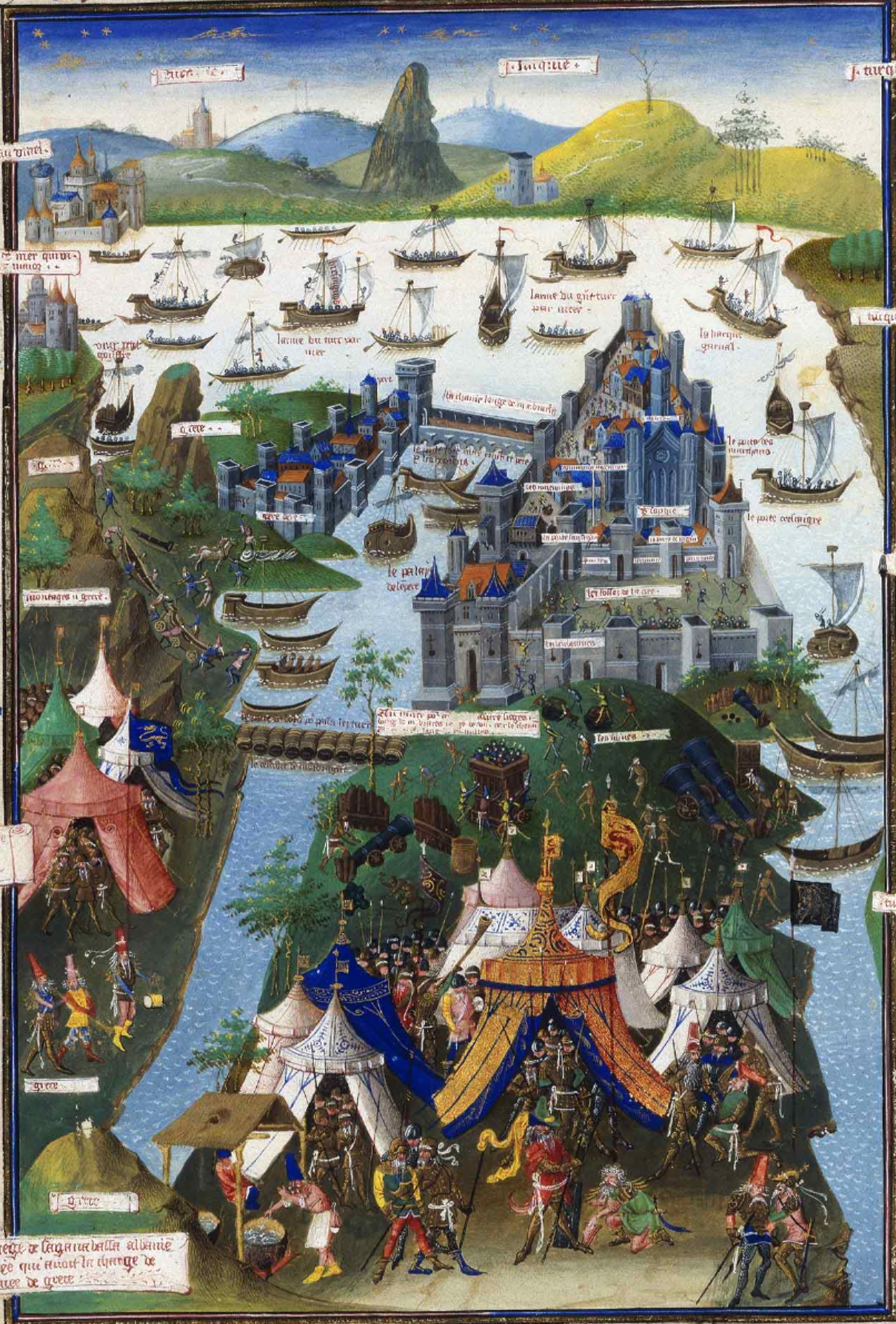
Mehmed II takes Constantinople, ending the Byzantine Empire; the city becomes the Ottoman capital, and the sultan takes up the caliph's mantle over a Sunni empire that will hold the holy cities and the Balkans for four centuries.
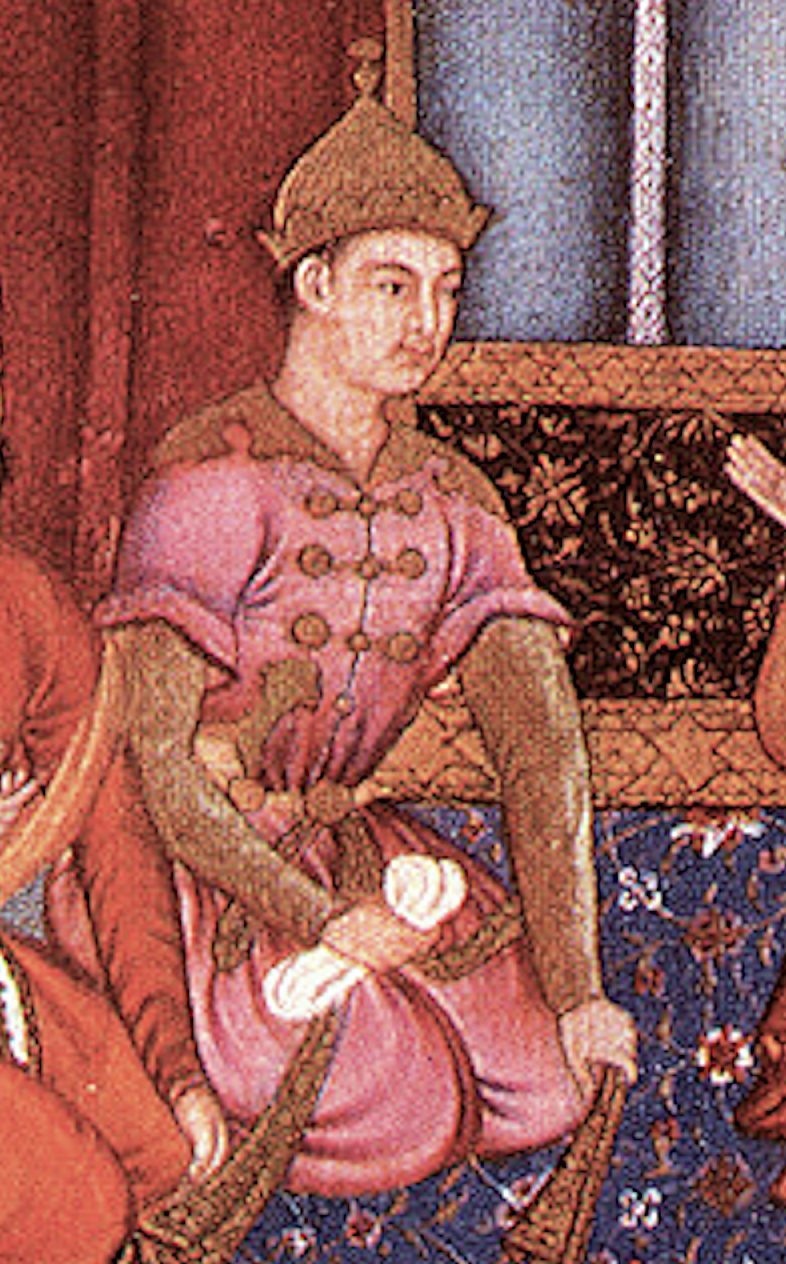
Babur, a Chagatai prince descended from Timur and Genghis Khan, defeats the Delhi Sultanate at Panipat and founds the Mughal Empire; under Akbar and his successors it rules most of India and joins Persian culture, Sunni law, and a Hindu majority in one state.
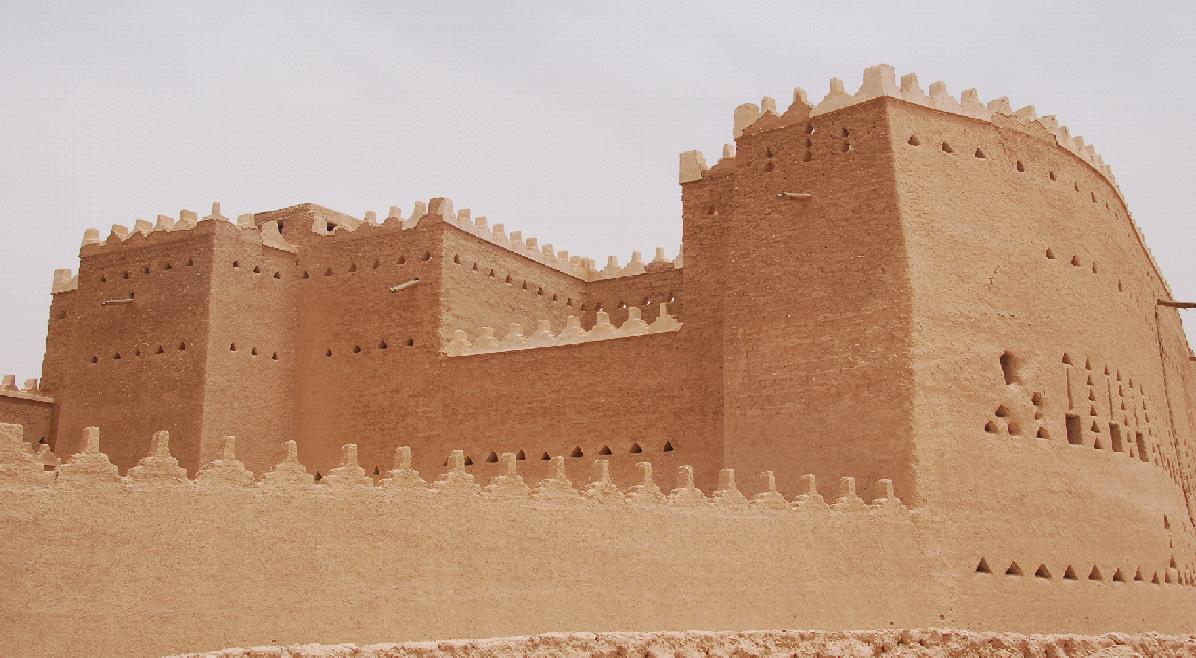
Muhammad ibn Abd al-Wahhab and Muhammad ibn Saud join preacher and sword at Diriyah; the alliance's call to strip Islam of saint veneration and innovation, rooted in Hanbali teaching, founds the Saudi state and spreads its doctrine with Saudi power.
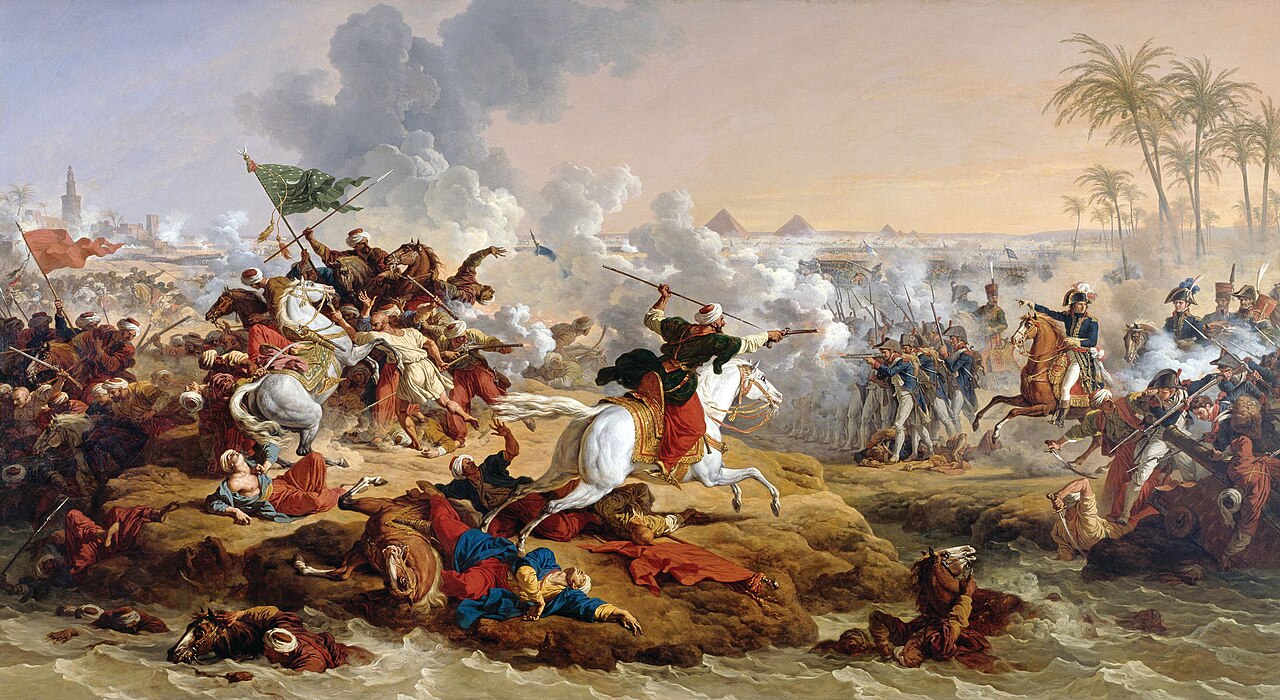
Napoleon's expedition lands in Egypt with soldiers, scholars, and a printing press; the ease of the conquest shocks the Muslim world, opens the modern encounter with Europe, and begins the age of reform, reaction, and revival that runs to the present.
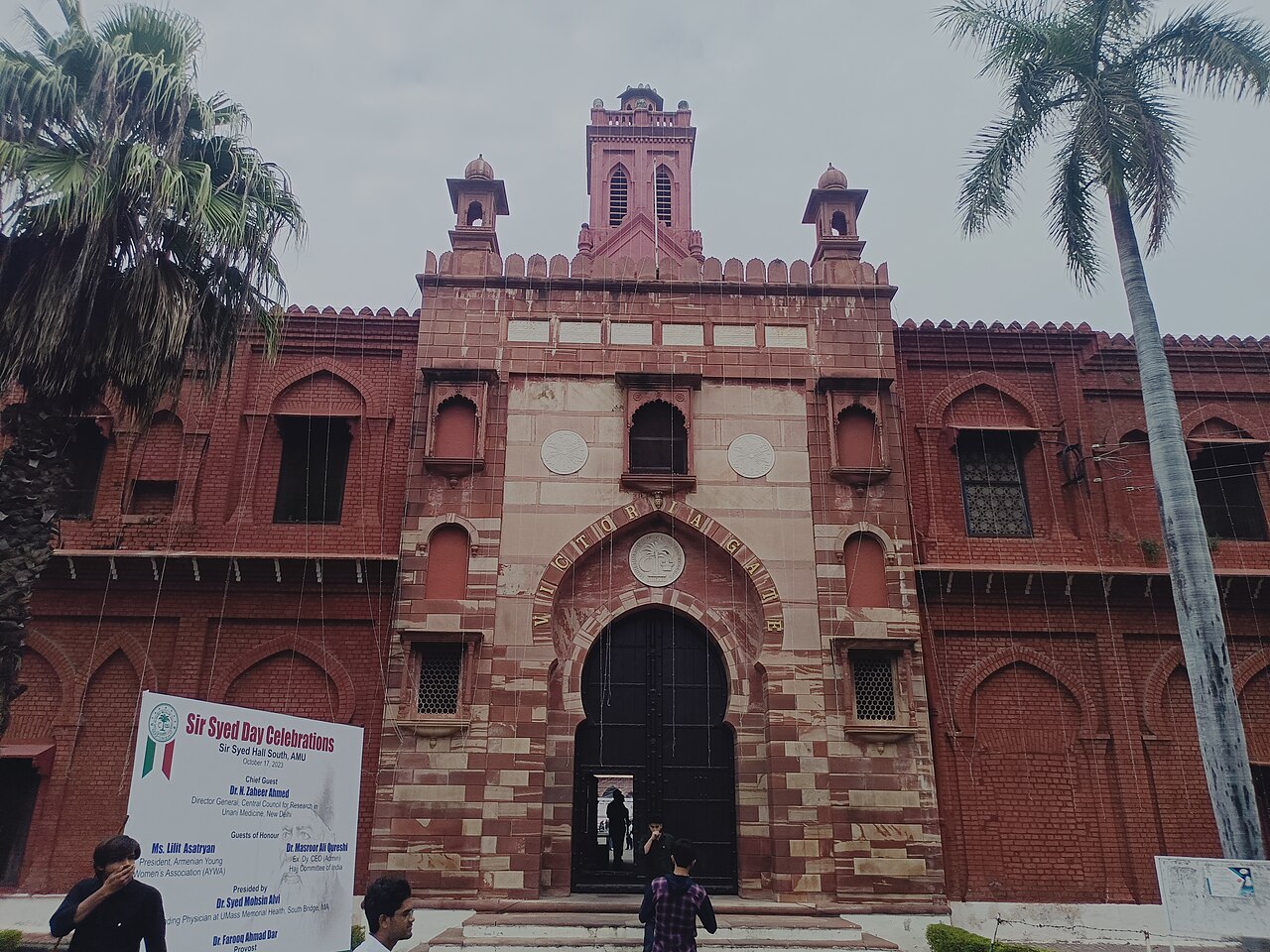
Sir Sayyid Ahmad Khan founds the college at Aligarh to give India's Muslims modern education alongside their faith; the Aligarh movement becomes the seedbed of Muslim modernism in South Asia and, in time, of the Pakistan movement.
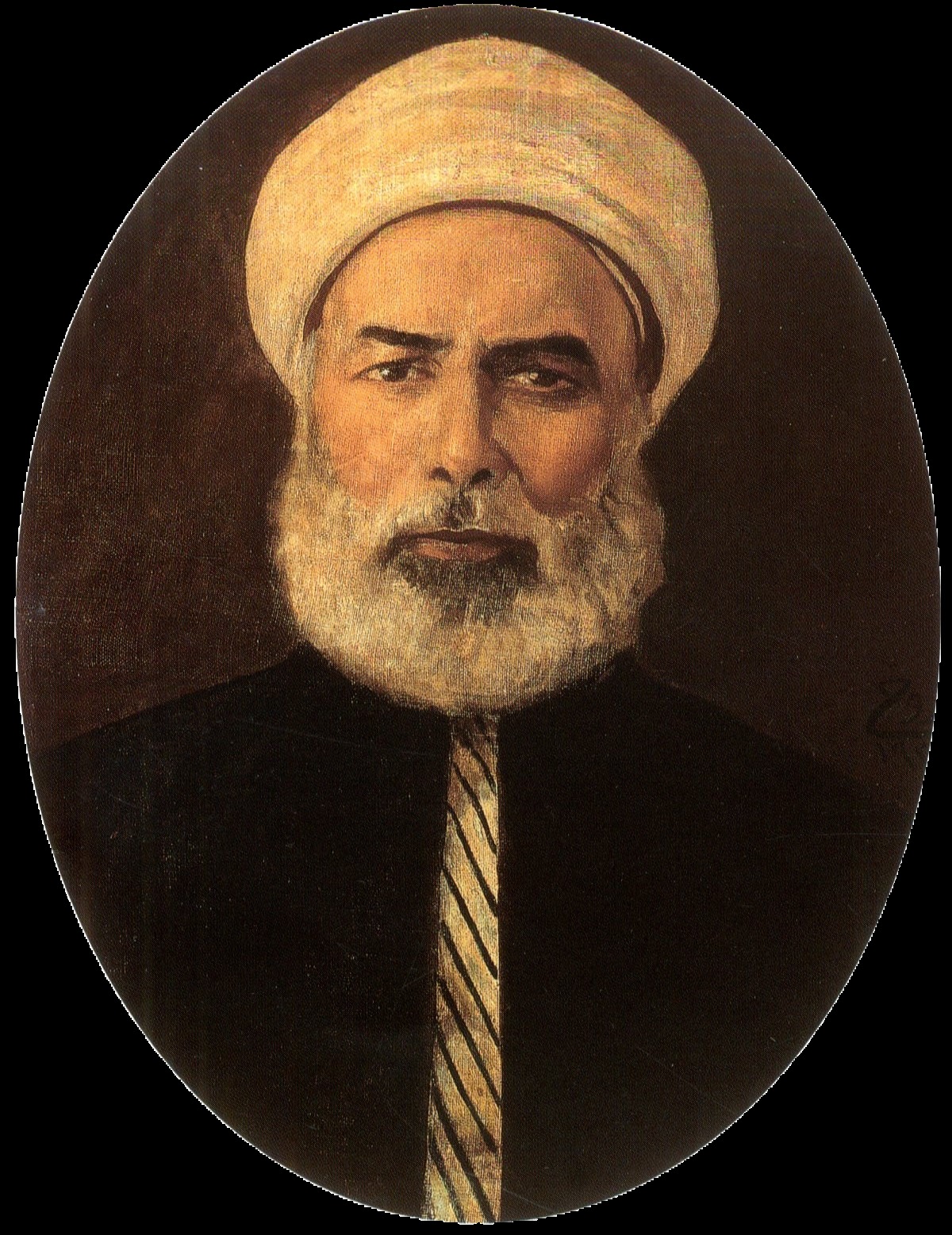
Muhammad Abduh, Grand Mufti of Egypt and the leading voice of Islamic modernism, dies in Alexandria; his call to reopen interpretation, reconcile Islam with reason and science, and reform education shapes reformist Islam for a century.
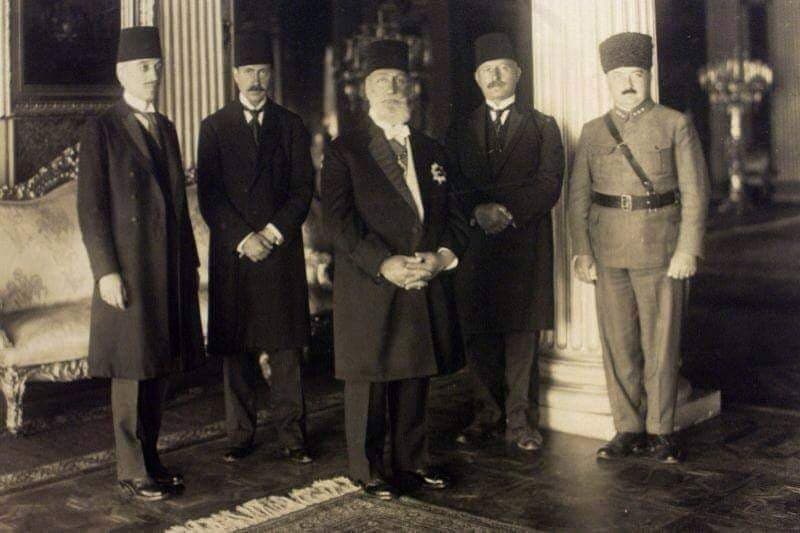
The Turkish Grand National Assembly abolishes the Ottoman caliphate and exiles Abdulmecid II, ending thirteen centuries of the caliphal institution; the question of leadership of the Muslim community, open since 632, stands open in a new form.
Hasan al-Banna founds the Society of the Muslim Brothers in Ismailia, Egypt; its call for an Islamic order built from society upward becomes the template of modern Islamist movements across the Sunni world.