

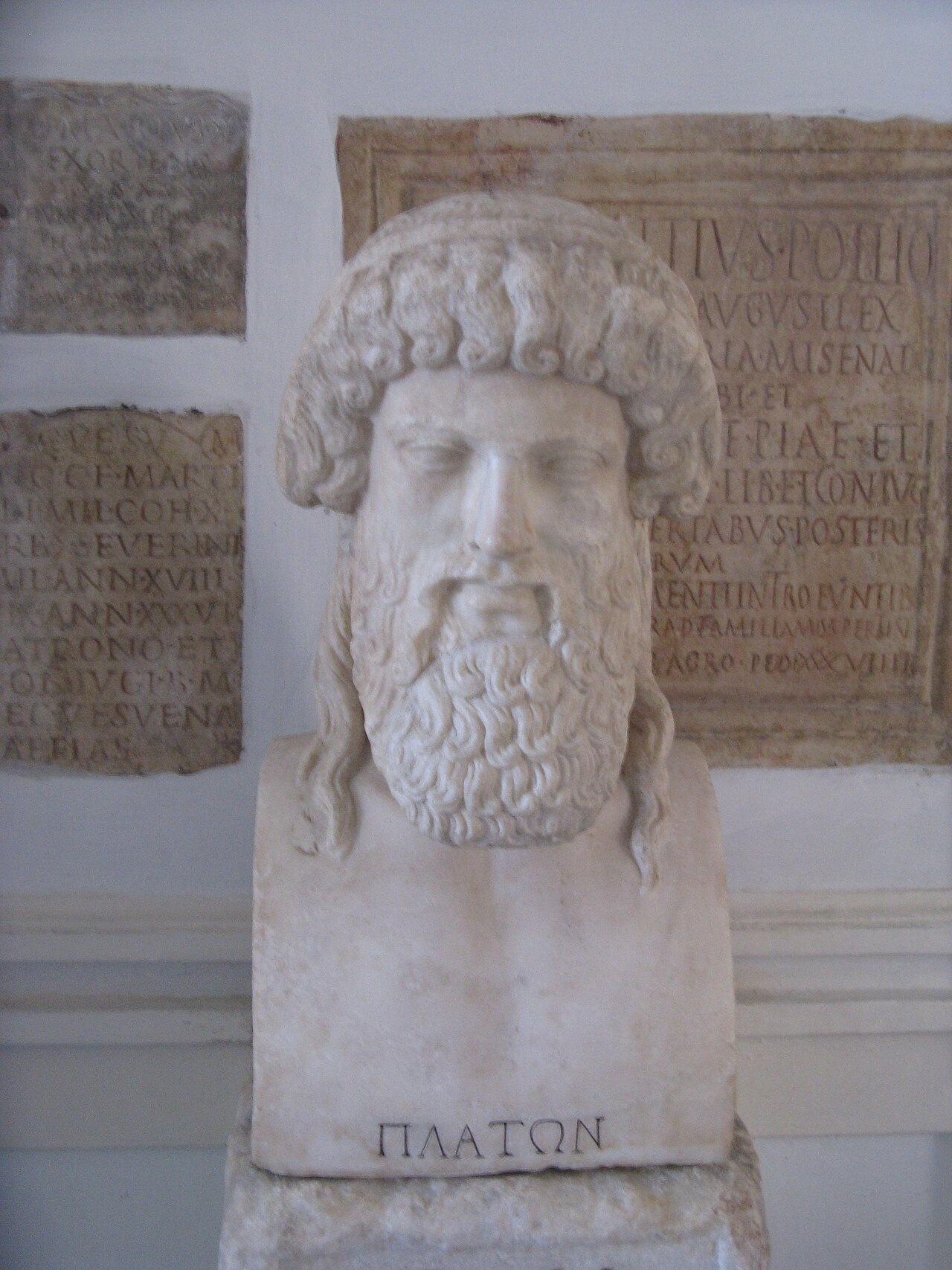
Platonism is the philosophy of Plato: beyond the changing world of sense stand the eternal Forms, the soul is immortal and akin to them, and philosophy is the soul's practiced turn from shadows toward the Good.
Plato founded the Academy in Athens around 387 BCE, and everything since has been, in Whitehead's famous exaggeration, a series of footnotes. Through Middle Platonism, Plotinus and the Neoplatonists, Augustine's Christian Platonism, the Florentine Academy, and Cambridge Platonism, the school's central intuition recurs whenever thought is trusted over sight: the real is intelligible, eternal, and good, and the visible world is its image.
Ultimate Reality
Beyond becoming stands being: the Forms — the Beautiful itself, the Just itself, the Equal itself — perfect, unchanging objects of knowledge, ordered under the Form of the Good, which Plato likens to the sun. In the Timaeus a divine craftsman, the Demiurge, fashions the cosmos from pre-existing matter by looking to the Forms; in Plotinus the architecture becomes emanation from the One, beyond being and speech.
The Human Condition
The soul is immortal, fallen into embodiment and forgetfulness, and its condition is a cave: prisoners watching shadows take them for the whole of reality. Yet the soul has seen the Forms before birth, so learning is recollection (anamnesis), and eros — the desire aroused by beautiful things here — is the ladder by which it climbs back toward Beauty itself.
Knowledge and Truth
True knowledge (episteme) is of the Forms; the senses yield only opinion (doxa). The divided line and the cave image grade cognition from conjecture to understanding, and dialectic — the patient, communal testing of definitions — is the method of ascent. Mathematics is the propaedeutic, training the mind to know things it cannot see.
Right and Wrong
Justice in the soul is each part doing its own work under reason's rule, the same harmony the Republic builds into the city. The virtues are one knowledge seen from four sides, and the philosophical life — contemplation ordering action — is the happiest available to mortals, however unfashionable the claim in any given century.
Human Destiny
The soul's destiny is assimilation to God as far as possible: it survives death, faces judgment in Plato's myths, and in several dialogues chooses its next life and drinks forgetfulness before return. The myths are offered as likely stories over a doctrine the dialogues argue outright — the immortality proofs of the Phaedo and the Republic's closing vision agree that the soul's home is not the tomb.
The Conversation
Platonism asks materialism what its own mathematics is about, if only matter is real, and it asks the religions of revelation why they are so often Platonists in their doctrine of God — eternal, impassible, beyond being — while denying the debt. Aristotle's critique, filed from inside the Academy, still stands as the school's hardest question: what work does a second, separate world do that the forms in things cannot?