

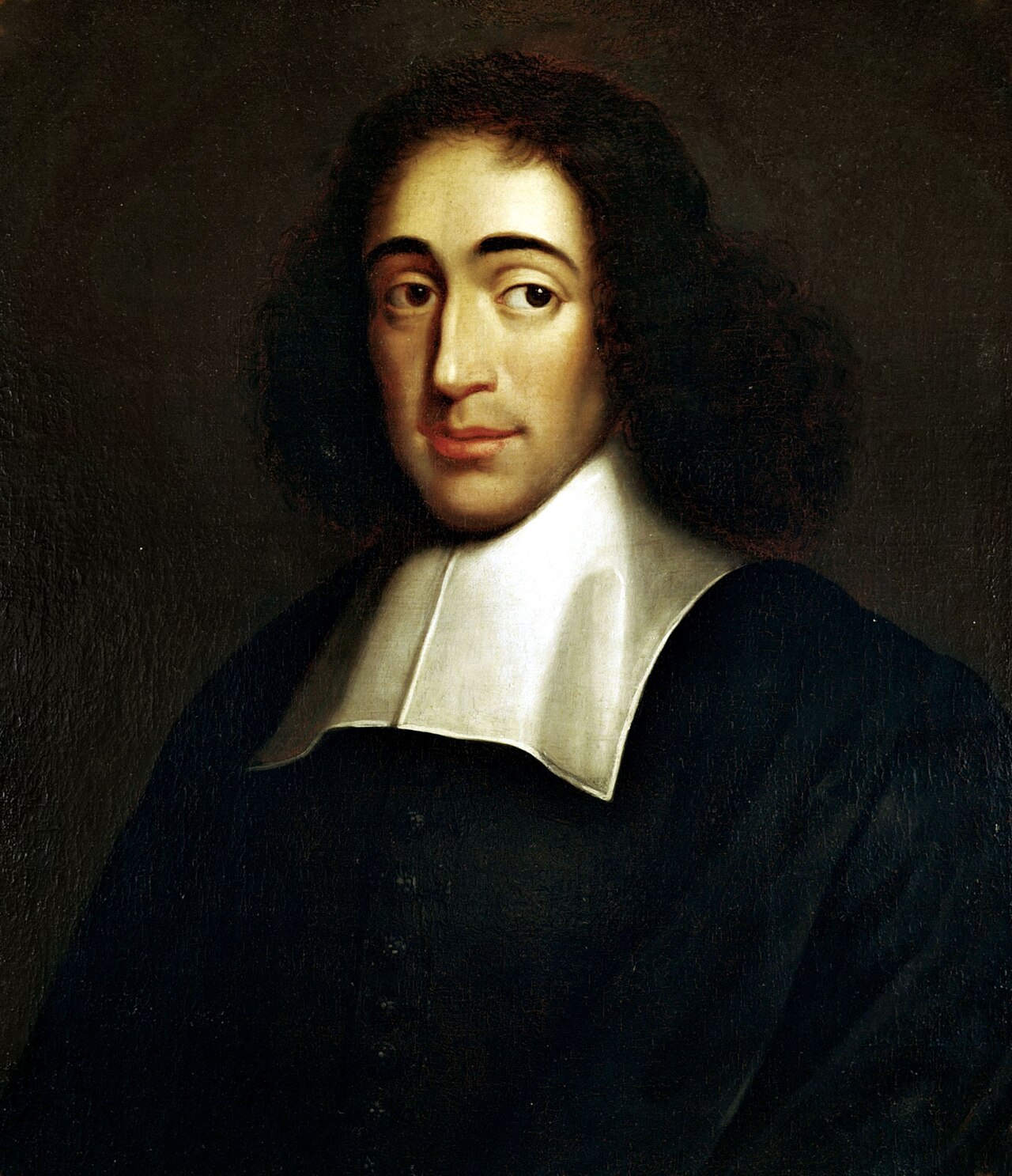
Pantheism identifies God with the universe itself: Deus sive Natura, God or Nature, in Spinoza's equation — one infinite substance, of which everything that exists is a mode, and nothing stands outside it.
The intuition is ancient — the Upanishads' tat tvam asi, the Stoics' fiery Logos, Eriugena and Bruno, who was burned for it among his other enormities — but pantheism got its philosophy from Baruch Spinoza, whose Ethics argued with geometrical rigor that there is exactly one substance, God, and that everything else is in God and conceived through God. Einstein, asked whether he believed in God, answered with Spinoza's name; the modern environmental movement found in the position a metaphysics for reverence without a throne.
Ultimate Reality
There is one substance, infinite in attributes, of which thought and extension are the two we know. God does not create the world as a craftsman makes a table; the world follows from the divine nature as properties follow from a definition — necessarily, eternally, and without purpose, since purposes are human projections onto a nature that acts from the necessity of its own being alone.
The Human Condition
Human bondage is inadequate ideas: we imagine ourselves free because we are conscious of our desires and ignorant of their causes, and we invent a purposeful God in our image to bargain with. The affects — hope, fear, superstition — are this ignorance in emotional form, and the political theology built on them is, for Spinoza, the machinery of tyranny.
Knowledge and Truth
Knowledge ascends in three kinds: imagination, the hearsay and signs of ordinary life; reason, which grasps common notions and sees things under a species of necessity; and intuitive knowledge, which sees things under a species of eternity (sub specie aeternitatis). Truth is its own standard, and the ascent is not merely cognitive — each kind of knowing is a different quality of freedom.
Right and Wrong
Good and evil name no properties of things but relations to our striving (conatus): good is what we certainly know to be useful to preserving and increasing our power of acting. Virtue is that power itself, exercised under reason's guidance, and its social form is the rational commonwealth — Spinoza's political works defend democracy and free philosophizing as nature's polity, not man's rebellion against it.
Human Destiny
The mind's highest part is eternal — not immortal as a person with memories, a doctrine Spinoza explicitly refuses, but eternal insofar as it knows truly, since truth participates in the eternity of its object. Blessedness is the intellectual love of God (amor Dei intellectualis): joy accompanied by the idea of God as its cause, which is not the reward of virtue but virtue itself, available in this life or none.
The Conversation
Pantheism asks classical theism what its creator adds to the world that the world's own necessity lacks, and why a God who stands outside nature should be more worshipful than the nature that stands before us. The theist answers that a God identical with everything explains nothing in particular and can be loved only by a pun; the pantheist answers that the pun is the oldest prayer there is.