

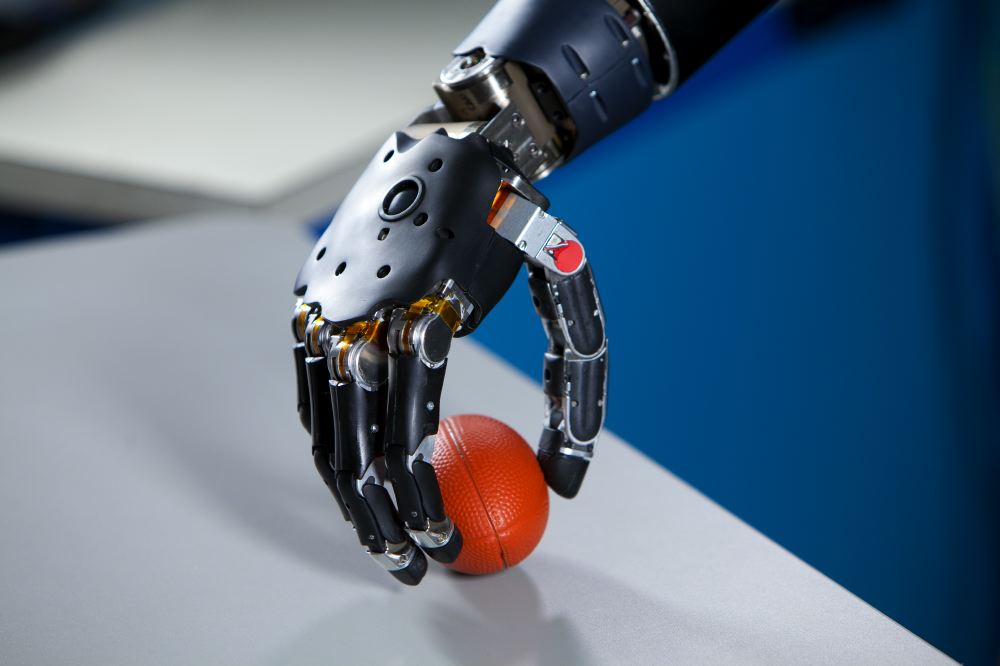
Transhumanism holds that human beings should use technology to overcome aging, disease, and the limits of the given body and mind, and it treats death not as a destiny to accept but as a problem to solve.
Transhumanism grows from Enlightenment confidence and twentieth-century technology: cryonics in the 1960s, the Extropians of the 1980s, the World Transhumanist Association (now Humanity+) founded in 1998, and today's longevity industry. Its adherents range from cautious bioethicists of enhancement to Singularitarians awaiting machine superintelligence, but they share the refusal that organizes the movement: the current human condition is a draft, not a final text.
Ultimate Reality
Reality is matter and information, and minds are patterns that substrates host rather than essences that flesh owns. From that premise the movement's signature claims follow: a person could in principle be preserved, repaired, enhanced, or uploaded, because what a person is, is organization — and organization can be maintained by art when nature stops maintaining it.
The Human Condition
The human problem is finitude experienced as outrage: aging dismantles the body cell by cell, disease and accident cut lives arbitrarily short, and intelligence is capped by a brain evolved for other purposes. Where most traditions teach acceptance of these limits, transhumanism names them the enemy — death above all, which it calls a curable condition on a long enough timeline.
Knowledge and Truth
Science and engineering are the movement's canon, extended by scenario methods: extrapolate the curves, model the risks, and treat the future as a design space. Knowledge is valued as leverage — the test of an idea is whether it lengthens life, expands capability, or reduces existential risk — and the movement's epistemic heroes are the researchers working on senescence, neural interfaces, and machine intelligence.
Right and Wrong
The central moral claim is morphological freedom: persons may modify their own bodies and minds, and no one may be forced to. With it come duties the movement debates internally — to safety, since enhanced powers magnify harms; to access, since a longevity divided by wealth would be a caste system; and to the future itself, whose astronomical value in longtermist versions of the view dwarfs present goods.
Human Destiny
Destiny is the posthuman horizon: lifespans measured in centuries, minds augmented or merged with machines, cryonic suspension as an ambulance to a future competent to revive, and intelligence spreading outward from the Earth. The movement's critics hear eschatology in this — a heaven, a judgment on the flesh, a resurrection by other means — and its defenders answer that hoping in laboratories is at least a hope that can fail honestly.
The Conversation
Transhumanism asks the religions what their acceptance of death has cost, and it asks medicine why aging, the largest cause of suffering, is the one condition research treats as natural. The religions ask in return whether a self preserved forever is still a self, and who the enhanced will be to the unenhanced — the oldest question about heaven, asked now of engineers.