

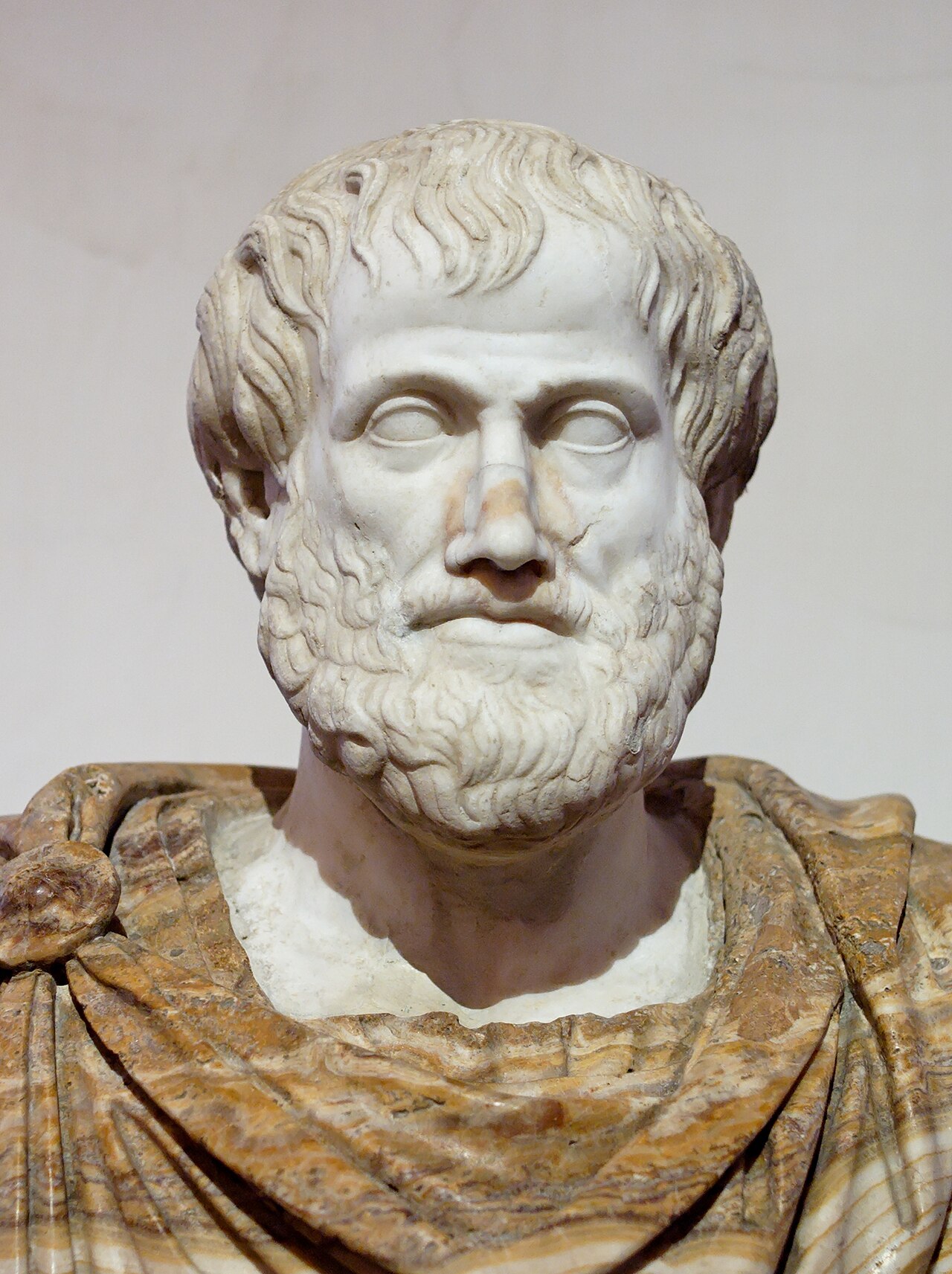
Aristotelianism is the philosophy of Aristotle: form in matter, causes fourfold, virtue as habit, and the flourishing life as reason's activity — the school that taught the Islamic, Jewish, and Christian worlds how to think.
Aristotle studied under Plato for twenty years, tutored Alexander, and founded the Lyceum, where his lecture notes became the curriculum of three civilizations. Preserved and commented in Baghdad, Cordoba, and Paris, his works gave Islamic falsafa, Jewish philosophy, and Latin scholasticism their shared grammar — Aquinas calls him simply the Philosopher — and his logic ruled the schools for two thousand years.
Ultimate Reality
Reality is substances: form realized in matter, actuality unfolding from potentiality. Everything is explained by four causes — material, formal, efficient, and final — and nature is purposive through and through. At the head of the causal order stands the Unmoved Mover, pure actuality, thought thinking itself, which moves the cosmos as a beloved moves a lover, without being moved.
The Human Condition
The human being is the rational animal and by nature a political one: the city exists by nature, and the one who can live without it is either a beast or a god. Human good is therefore social and embodied; we become what we repeatedly do, and the raw material of character is given by nature, family, and fortune before reason takes it up.
Knowledge and Truth
Knowledge rises from sense perception through memory and experience to the grasp of first principles, and demonstration descends from them by syllogism. Aristotle founded logic as an instrument (the Organon) and practiced inquiry as a collective, cumulative enterprise: begin from the reputable opinions, save the phenomena, and let the distinctions do the work.
Right and Wrong
Virtue is a habit of choosing the mean relative to us, determined by reason: courage between cowardice and rashness, temperance between insensibility and self-indulgence. The Nicomachean Ethics aims at eudaimonia, flourishing as the soul's activity in accordance with virtue over a complete life — an achievement requiring friends, a city, and some luck, none of which the theory pretends away.
Human Destiny
The active intellect is separable and immortal in a famous and contested passage of De Anima; personal survival after death Aristotle nowhere clearly promises. Destiny in the school is mostly this-worldly: contemplation (theoria), the activity most like God's, is the highest human end, and the life of the mind is the closest approach to the divine this side of the grave.
The Conversation
Aristotelianism asks Platonism to come down into things, and asks modern science what it lost when it dropped final causes — a question biology keeps half-answering. The revealed religions that built on it ask in return whether the Unmoved Mover can love, answer prayer, or know particulars; the school's long career inside Islam, Judaism, and Christianity is the record of that negotiation.