

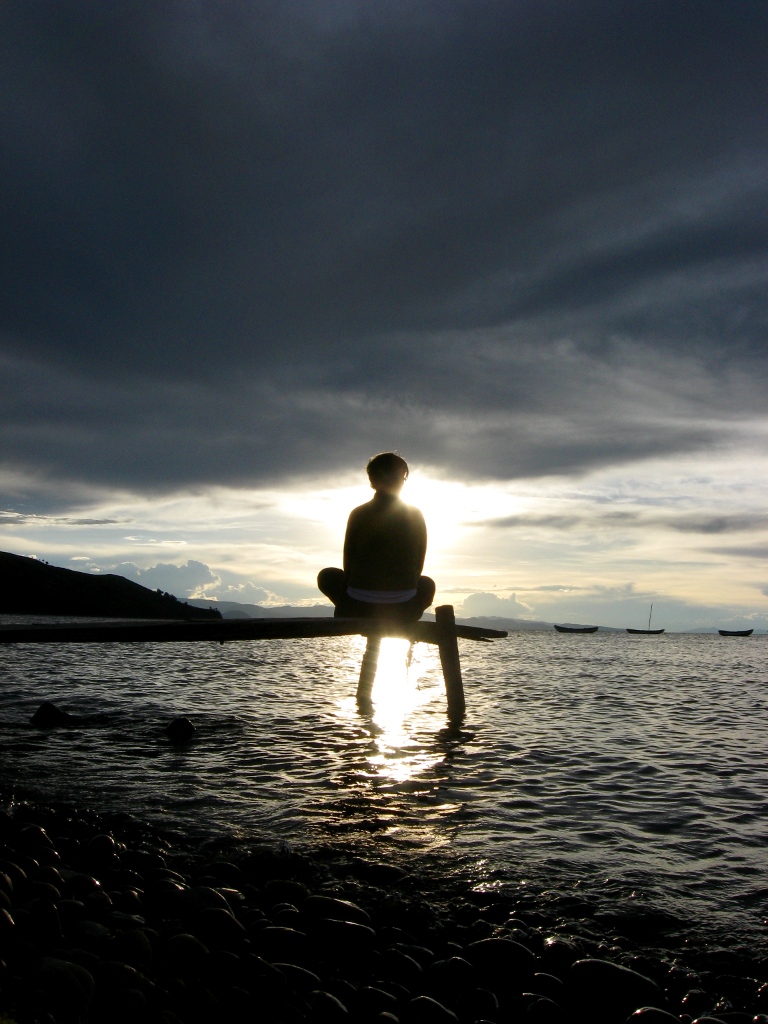
Spiritual But Not Religious is the self-description of those who keep the sacred and leave the institution: personal practice, borrowed wisdom, and experience over doctrine, without membership, creed, or clergy.
The phrase entered the language through recovery rooms and census forms, and it now describes a large share of the Western world: people who pray without a church, meditate without a sangha, read Rumi and the Tao together, and mark 'spiritual' where their grandparents marked a denomination. Sociologists call it the religion of the sovereign self; its adherents call it honesty about where they actually find the sacred.
Ultimate Reality
Reality, in this dispersed view, has a depth that material description misses: a presence, an energy, a connectedness — named variously and held loosely. The looseness is principled: the sacred is encountered, in nature, in love, in silence, in crisis, and any institution's claim to have fenced the encounter is itself the error the position exists to refuse.
The Human Condition
The human problem is disconnection: from the self, buried under performance; from others, behind the roles; from the living world, treated as stock. Institutions are seen as part of the disease when they mediate what should be direct, and the characteristic SBNR wound is a religious upbringing remembered as control, hypocrisy, or boredom, against which the spiritual life is the recovery.
Knowledge and Truth
Experience is the criterion: a teaching is true as it proves true in the life — in peace, in healing, in the felt sense of alignment. Texts from every tradition are a library, not a law; teachers are guides, not authorities; and the self's discernment, tested in practice, is the final court. William James's Varieties of Religious Experience is the position's unwitting charter: religion as what people do with their solitudes.
Right and Wrong
The ethic is authenticity and harmlessness: be true to the self's deepest register, do no violence to others' paths, and let compassion be the test of any practice. Karma, borrowed loosely, supplies the moral physics. What the position will not accept is an ethics of obedience — rules whose only warrant is that an institution, a book, or a tradition commands them.
Human Destiny
Destiny is growth without a fixed map: the soul's unfolding across this life, and in many versions across lives, toward wholeness, awakening, or union with the depth from which it came. Death is a transition more often than a terminus, and the funeral of choice — personal, eclectic, outdoors — preaches the position as faithfully as any creed.
The Conversation
The SBNR position asks the churches what they did with the people who left still believing, and it asks itself the question its critics press hardest: can a spirituality with no community, no discipline it did not choose, and no claim it must defend survive its own comforts — or is it, as theologians charge, the consumer form of the sacred, all experience and no obligation?