

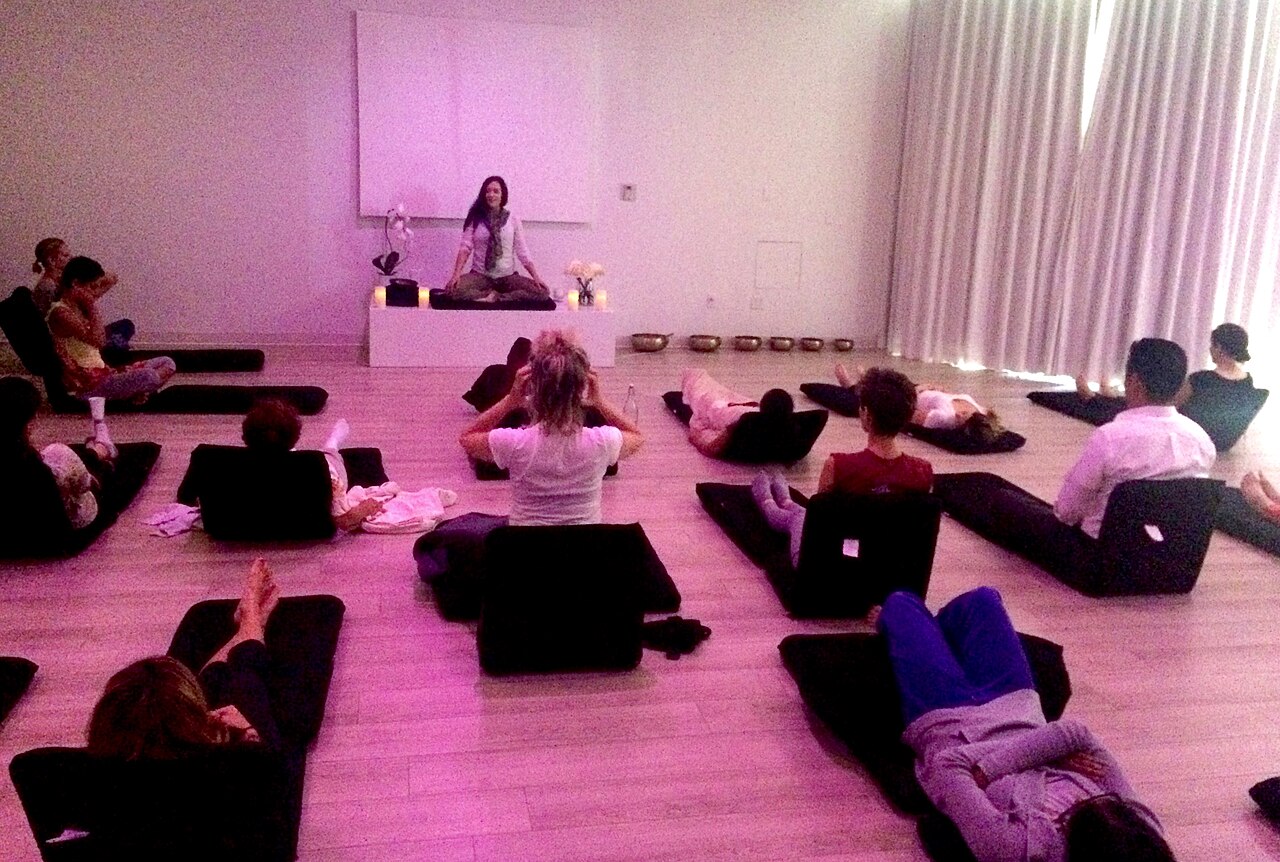
Secular Buddhism keeps the Buddha's practice and ethics while setting aside rebirth, karma as cosmic law, and supernatural beings: a dharma for this life, tested in experience, associated above all with Stephen Batchelor.
Secular Buddhism crystallized around Stephen Batchelor's Buddhism Without Beliefs (1997) and his later return to the earliest texts, and it rides the same current as the mindfulness movement that carried Buddhist meditation into clinics and schools. Its wager is that the dharma is stronger than its metaphysical packaging: that the Four Noble Truths describe a task for this life, and that agnosticism about the next is not a dilution but a recovery.
Ultimate Reality
The position is deliberately thin here: impermanence, interdependence, and the absence of a fixed self are affirmed as descriptions of experience, while rebirth, heavens, and hungry ghosts are held as cultural furnishings of the dharma's Asian centuries — respected as poetry and psychology, not required as cosmology. What is ultimate is left, where the Buddha left so much, undeanswered.
The Human Condition
Suffering (dukkha) and its engine, craving, need no cosmology to verify: they are this morning's data. The secular reading sharpens the diagnosis toward reactivity — the reflexive grasping and aversion that run a life on rails — and reads the Buddha's awakening as a human possibility demonstrated once, not a god's descent repeated never.
Knowledge and Truth
The Kalama Sutta is the charter text: do not accept a teaching by tradition, scripture, or teacher, but test it in experience and keep what reduces suffering. Secular Buddhism accordingly treats the Pali canon historically — the earliest strata weighted heaviest, later accretions named as such — and holds its own conclusions with the same provisional hand it asks of believers.
Right and Wrong
The Eightfold Path survives translation entire, because it was always a practice rather than a creed: right action, speech, and livelihood as the ethics of non-harming, with meditation as the gymnasium of attention. Karma is re-read as the plain causality of habit — what you do repeatedly becomes what you are — and ethics gains its urgency from having only this life in which consequences ripen visibly.
Human Destiny
There is no destiny beyond this life on the secular account, and the position labors to make that a source of the same seriousness Buddhism always claimed: awakening is not postponed to a better rebirth but is this life's own unclaimed possibility. Death ends the practitioner; the practice, embodied in others and in the culture's new habits of attention, continues.
The Conversation
Secular Buddhism asks traditional Buddhism whether rebirth is load-bearing — whether the dharma falls if a doctrine the Buddha himself refused to dramatize is set down gently. Traditional teachers answer that a dharma without rebirth has quietly changed the subject from liberation to wellness, and the argument is, at bottom, about what the four truths are a diagnosis of.