

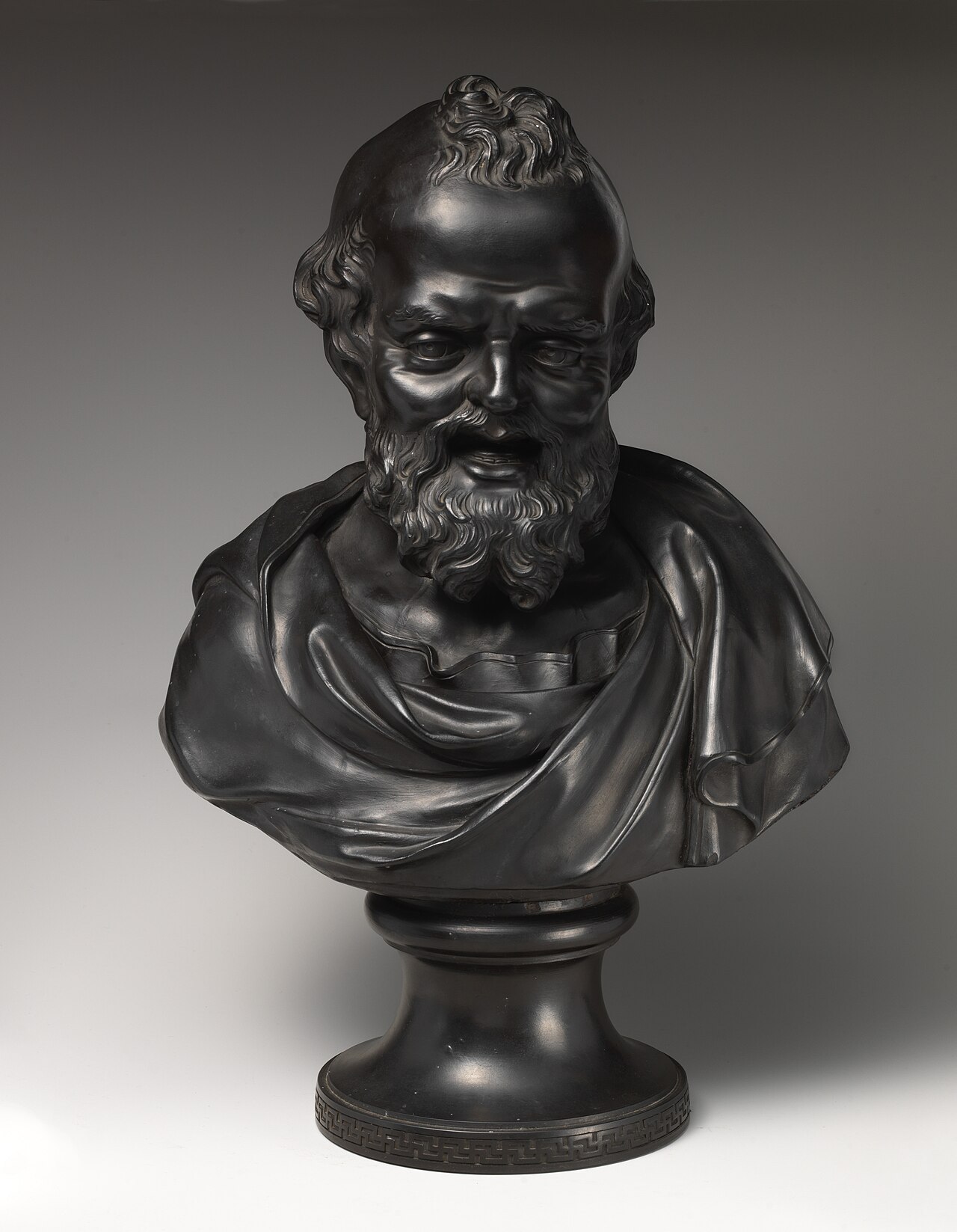
Scientific materialism holds that matter in motion is all there is: mind is what brains do, the supernatural is a gap that keeps closing, and every phenomenon awaits, in principle, its physical explanation.
Materialism is philosophy's oldest continuous bet — Democritus's atoms and void, Epicurus's swerve, Lucretius's poem — reborn in the nineteenth century as a program: Büchner's Force and Matter, the medical materialists, and Marx's dialectical variant, which claimed the title scientific for history itself. Its contemporary form, physicalism, is the default metaphysics of the working sciences, defended by eliminativists who expect folk psychology to go the way of folk astronomy.
Ultimate Reality
Everything that exists is physical, or depends entirely on the physical: this supervenience claim is the position's whole creed. Souls, gods, and irreducible purposes are not so much disproven as unemployed — each generation's completed science explains, without residue, one more province the non-physical used to govern, and the induction writes itself.
The Human Condition
The human problem is a cognitive inheritance: brains evolved for social prediction see agents in rustling grass and intentions in weather, and religion is that hyperactive detection written large. Dualism itself, on this account, is a user-illusion of the brain's interface — compelling, universal, and false, like the flatness of the Earth underfoot.
Knowledge and Truth
Knowledge is the sciences' growing map, and philosophy's remaining task is to keep the map consistent — or, in the eliminative wing, to wait for neuroscience to replace its vocabulary entirely. Truth is what the finished science would say; in the meantime the position is comfortable with promissory notes, treating 'in principle explicable' as a finding rather than a hope, which its critics count as the one article of faith the system permits itself.
Right and Wrong
Ethics naturalizes into the study of what social, sentient systems require to flourish — preferences, harms, and the game theory of cooperation — with free will re-described, in the harder versions, as a useful fiction the law may keep for practical purposes. Responsibility becomes engineering: design environments, including prisons and schools, for the creatures brains actually are.
Human Destiny
Destiny is the heat death and, before it, whatever the species makes of its interval: no survival, no judgment, no cosmic ledger. The position's consolation is austere and sincerely offered — that a universe undesigned is not thereby meaningless to the beings in it, any more than an undesigned landscape is thereby ugly.
The Conversation
Scientific materialism asks its rivals to produce one phenomenon that requires the non-physical, and it hears, in reply, the question its own house debates most fiercely: consciousness itself — why any of the brain's motion is accompanied by experience at all. The hard problem is the materialist's standing appointment, and the record of that appointment — kept, so far, by both sides — is the conversation.