

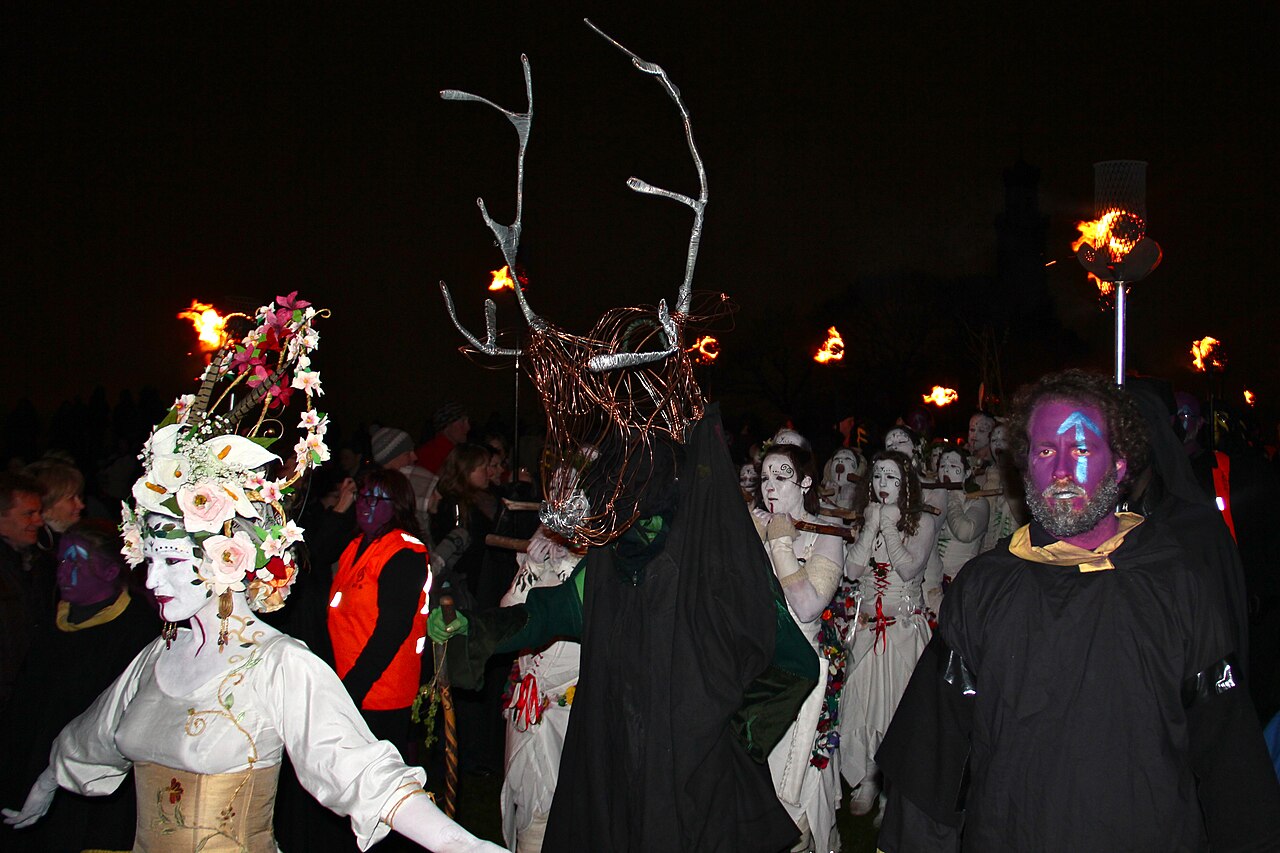
Wicca and modern Neopaganism are the revived religions of the old gods: witchcraft as a nature faith of Goddess and God, celebrated in seasonal festivals and magic, and rebuilt in the twentieth century from folklore, ritual, and longing.
Modern Paganism assembled itself in the mid-twentieth century: Gerald Gardner published Witchcraft Today in 1954, claiming initiation into a surviving coven; Doreen Valiente gave the young Craft its liturgy; and the Gardnerian and Alexandrian lines multiplied into today's spectrum; eclectic Wicca, Druidry, Heathenry, Hellenic and Egyptian revivals, and solitary practitioners who may outnumber the organized. The movement is the first major religion of the modern West to be consciously reconstructed, and it argues cheerfully about its own authenticity as part of its life.
Ultimate Reality
The divine is immanent and plural: the Goddess; in her triple aspect of Maiden, Mother, and Crone; and the God, horned lord of wild things and the dying-and-returning year, are the Craft's central figures, with the old pantheons honored in revival movements as real presences or honored archetypes, accounts differing by coven and by conscience. Nature is not God's handiwork but God's body, and the sacred is met outdoors because outdoors is where it lives.
The Human Condition
The diagnosis is alienation: from the body, from the seasons, from a desacralized landscape, and from a religious culture the movement reads as life-denying and earth-blind. There is no fall to reverse and no sin to absolve; there is a rhythm to rejoin. The Wheel of the Year; eight festivals from Samhain to Beltane; is the therapy's calendar.
Knowledge and Truth
Knowledge is initiatory and experiential: the Book of Shadows, the working tools, the grades of initiation, and above all the rite performed and felt. Myth is true the way poetry is true; Gardner's sources, from Margaret Murray's witch-cult thesis to the Golden Dawn's ritual inheritance, have been audited by historians and largely retired as history, and the movement's mature answer is that a myth's power does not wait on its footnotes.
Right and Wrong
The Wiccan Rede states the ethic in eight words: 'An it harm none, do what ye will'; a counsel of liberty bounded by harm, paired with the threefold law, that what one sends out returns three times. There is no devil in the Craft and no hell; evil is imbalance and harm, magic is its disciplined counterweight, and the moral law is enforced by the universe's bookkeeping rather than by any clergy.
Human Destiny
The dead rest in the Summerland and return in time, rebirth being the wheel's personal form; the world's destiny is bound to the earth's, and ecological care is therefore doctrine, not politics. Apocalypse has no place in the system; the wheel does not end, it turns; and the movement's hope is that a civilization might learn to turn with it consciously.
The Conversation
Neopaganism asks the churches what happened to the sacredness of the material world in their keeping, and it asks its own founders, across the audit of their claims, whether a religion may be built honestly on a foundation myth its builders half-knew. Historians and believers now meet on that question with unusual candor on both sides; the argument is the movement's distinctive contribution to religious self-knowledge.