

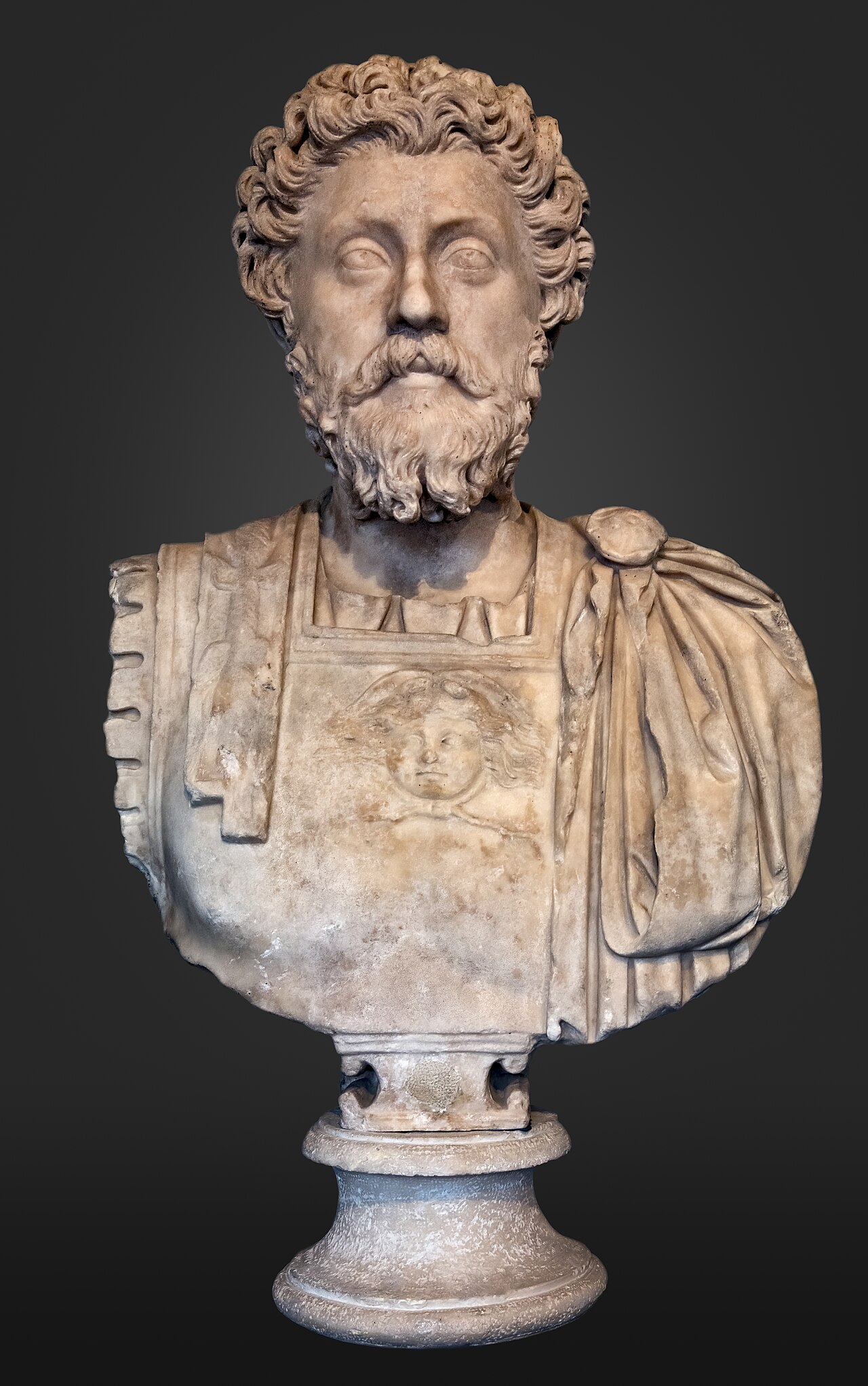
Stoicism is the school of Zeno, Seneca, Epictetus, and Marcus Aurelius: live according to nature and reason, hold externals as indifferent, and meet fortune with a mind trained to want what happens.
Stoicism began in Athens around 300 BCE, when Zeno of Citium taught in the Painted Stoa, and it became the working philosophy of Rome: Seneca advising an emperor, Epictetus teaching from slavery's far side of freedom, Marcus Aurelius writing his Meditations in camp on the Danube. Its modern revival, in therapy, sport, and the literature of resilience, returns to the same austere offer: a self that fortune cannot confiscate.
Ultimate Reality
The cosmos is one rational, providential whole, pervaded by the Logos — reason as fire and breath (pneuma) — which the Stoics identified with God and nature alike. Everything unfolds by fate, the chain of causes the Logos orders; the wise person does not fight the chain but understands it, and finds in that understanding the only real freedom available to a part of the whole.
The Human Condition
Human misery is a judgment error: we call externals — wealth, reputation, health, even death — good or evil, when only virtue is good and only vice evil. The passions are these false judgments in motion. The human being is a citizen of two cities, the local one and the cosmopolis, and the second citizenship, owed to all rational beings, is the one that cannot be revoked.
Knowledge and Truth
Knowledge begins in impressions, which reason tests before assent; the criterion is the kataleptic impression, one that grips the mind as true and could not be false. In practice the school's epistemology is a discipline of attention: withhold assent, examine the impression, and let only what survives examination move the will.
Right and Wrong
Virtue is the only good, exercised in four forms — wisdom, courage, justice, temperance — and everything else is an indifferent, preferred or dispreferred but never worth the soul. The exercises are famous: negative visualization, the view from above, the dichotomy of control, and the evening review, all aimed at a life that prefers virtue when the preferred indifferents are taken away.
Human Destiny
The cosmos itself burns and is reborn in the Stoic cycle (ekpyrosis), and all things recur. The soul, a fragment of the divine fire, survives death for a time in most accounts — how long, the sources dispute — but the school's real eschatology is present tense: eudaimonia is available now, in agreement with nature, whatever the term allotted.
The Conversation
Stoicism asks the religions what their consolation costs, and whether a providence that must be worshipped is better than one that must simply be understood. Christianity borrowed its vocabulary of conscience and natural law while rejecting its fate; the Stoic answers that acceptance is not passivity but the only honest starting point for action — and the modern world's appetite for the Meditations suggests the question is still open.