

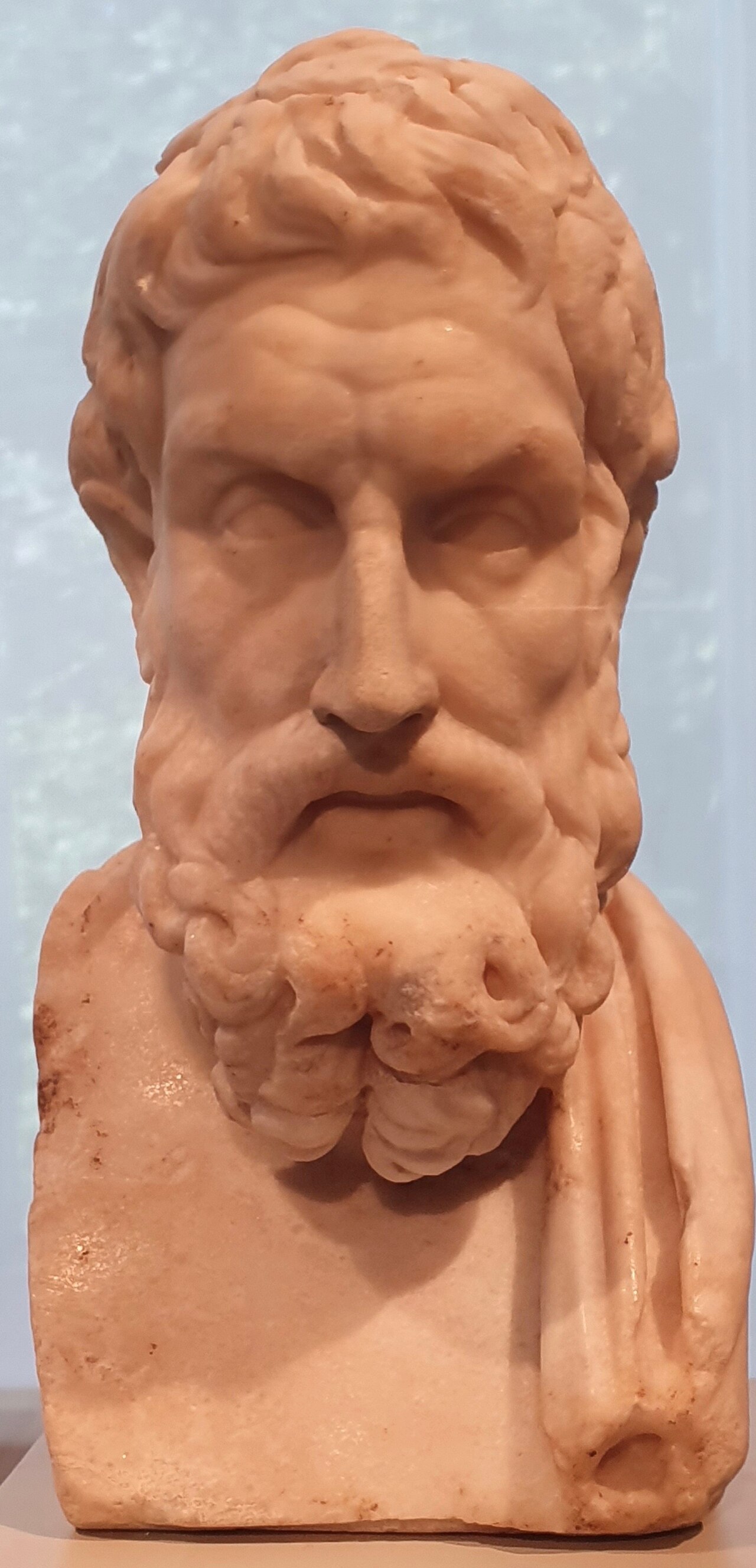
Epicureanism is the philosophy of the Garden: the gods do not trouble us, death is nothing to us, pleasure rightly understood is the absence of pain and disturbance, and friendship is the surest security.
Epicurus bought a house and garden in Athens in 306 BCE and taught there, admitting women and slaves to a community organized around friendship and plain living. Vilified for centuries as a philosophy of indulgence — a charge its founder's frugal table refutes — Epicureanism survived in Lucretius's great poem On the Nature of Things and returned to shape modern science's picture of atoms and void.
Ultimate Reality
All that exists is atoms and void, uncreated and indestructible; the soul is a fine atomic compound that disperses at death. The gods exist, blessed and immortal in the spaces between worlds, but they neither made the world nor govern it, and their perfection consists precisely in their untroubled indifference — a standard for humans, not a threat over them.
The Human Condition
The human diseases are empty fears: fear of the gods, fear of death, fear of pain, and the unlimited desires that opinion manufactures beyond nature's easy limits. Natural and necessary desires are soon satisfied; the rest is the mind tormenting itself with images. The tetrapharmakos, the fourfold cure, states the whole therapy in a breath.
Knowledge and Truth
All sensations are true as reports of the world; error enters only in the opinions we add to them. The canon of Epicurean knowledge — sensations, preconceptions, and feelings — makes pleasure and pain the immediate criteria of choice and avoidance, and it asks of every doctrine the only question that finally matters: does believing it quiet the soul or trouble it?
Right and Wrong
Pleasure is the good — but pleasure calculated: the greatest pleasures are stable ones, the absence of pain in the body (aponia) and trouble in the soul (ataraxia), and many passing pleasures are declined because their bill arrives later. Justice is a compact of mutual advantage, and the virtues are chosen as instruments of the untroubled life; friendship, valued for its own sake in practice, is the compact that holds best.
Human Destiny
Death is nothing to us: when we exist, death is not present, and when death is present, we do not exist. There is no afterlife to fear and none to hope for, and this is preached as liberation — the span of life, however long, offers the same complete pleasure to the one who has understood its limits.
The Conversation
Epicureanism asks every fear-based religion what its threats add to the truth, and it asks hedonism's critics to dinner in the Garden, where the menu is bread, water, and conversation. Its rivals answer with the paradox at its center: a philosophy of pleasure that counsels withdrawal from ambition, politics, and much of love's risk — and the Epicurean replies that the world's prizes are exactly the disturbances under treatment.