

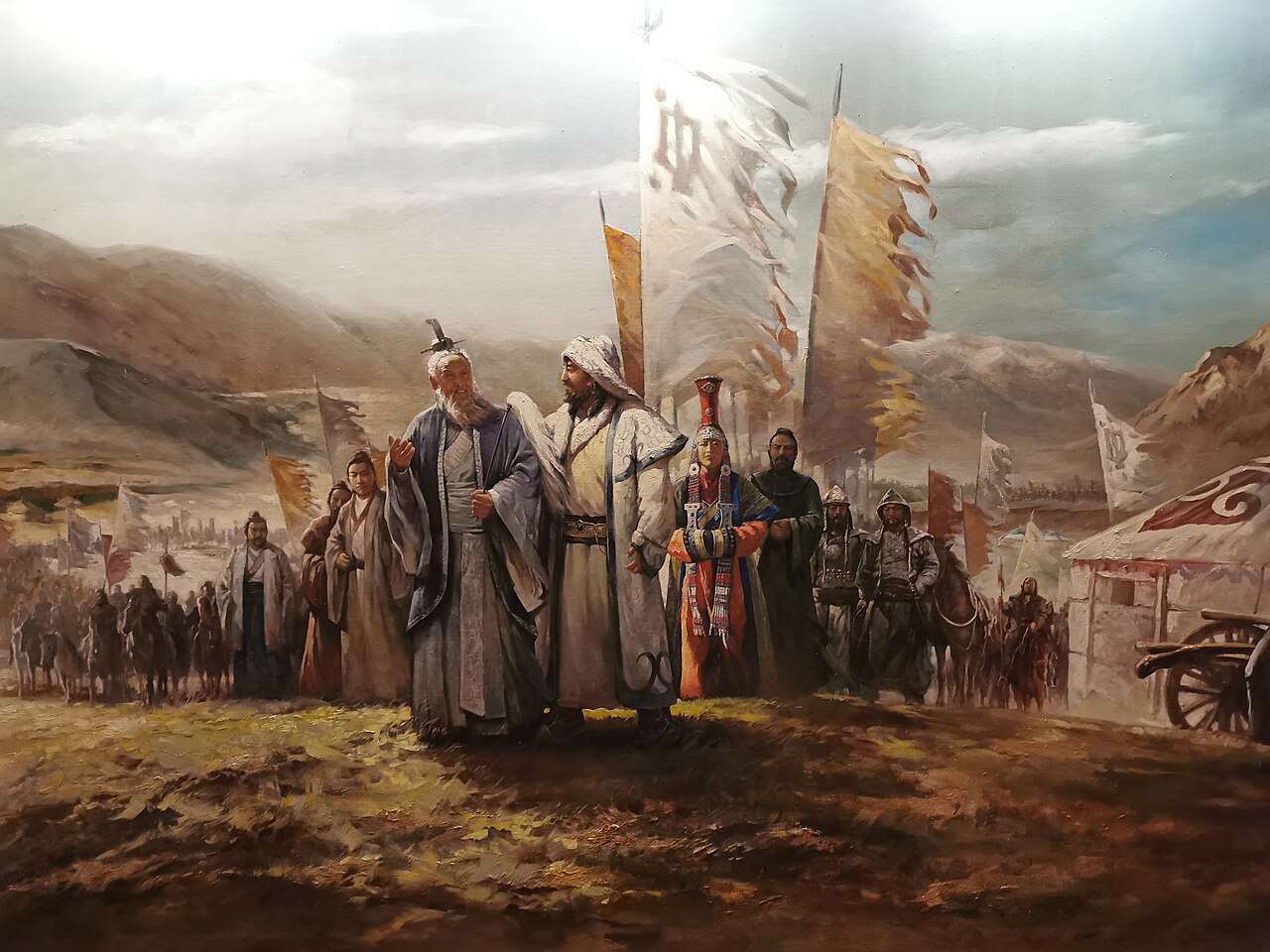
Summoned by Genghis Khan, the seventy-four-year-old Qiu Chuji, called Changchun, travelled three years from Shandong across Central Asia to the conqueror's camp in the Hindu Kush. The Khan asked for a medicine of immortality; Qiu answered that there is no such medicine, only a way of guarding life, and counselled him to curb killing and desire. His disciple's record of the journey is a classic of travel writing, and the Khan's grant of tax exemption to Quanzhen clergy made the order rich and saved many lives in the conquest's aftermath.
The Event
- Date
- 1222 (exact)
- Also called
- Changchun, the Journey to the West
- Era
- Song and Jin: Quanzhen; Standard periodization of Daoist history
- Location
- The Hindu Kush; today Afghanistan
- Traditions
- Daoism
- Streams
- Quanzhen
- Key figures
- Qiu Chuji, Genghis Khan
- Key texts
- Changchun's Journey to the West
Connections
Primary Sources
- Li Zhichang, Changchun's Journey to the West.
Secondary Sources
- Kirkland, Russell. Taoism: The Enduring Tradition. Routledge, 2004.
- Kohn, Livia, ed. Daoism Handbook. Brill, 2000.
Provenance: HIST-0812; confidence 0.95; accessed 2026-10-28.
Related on This Site
 Art Entry
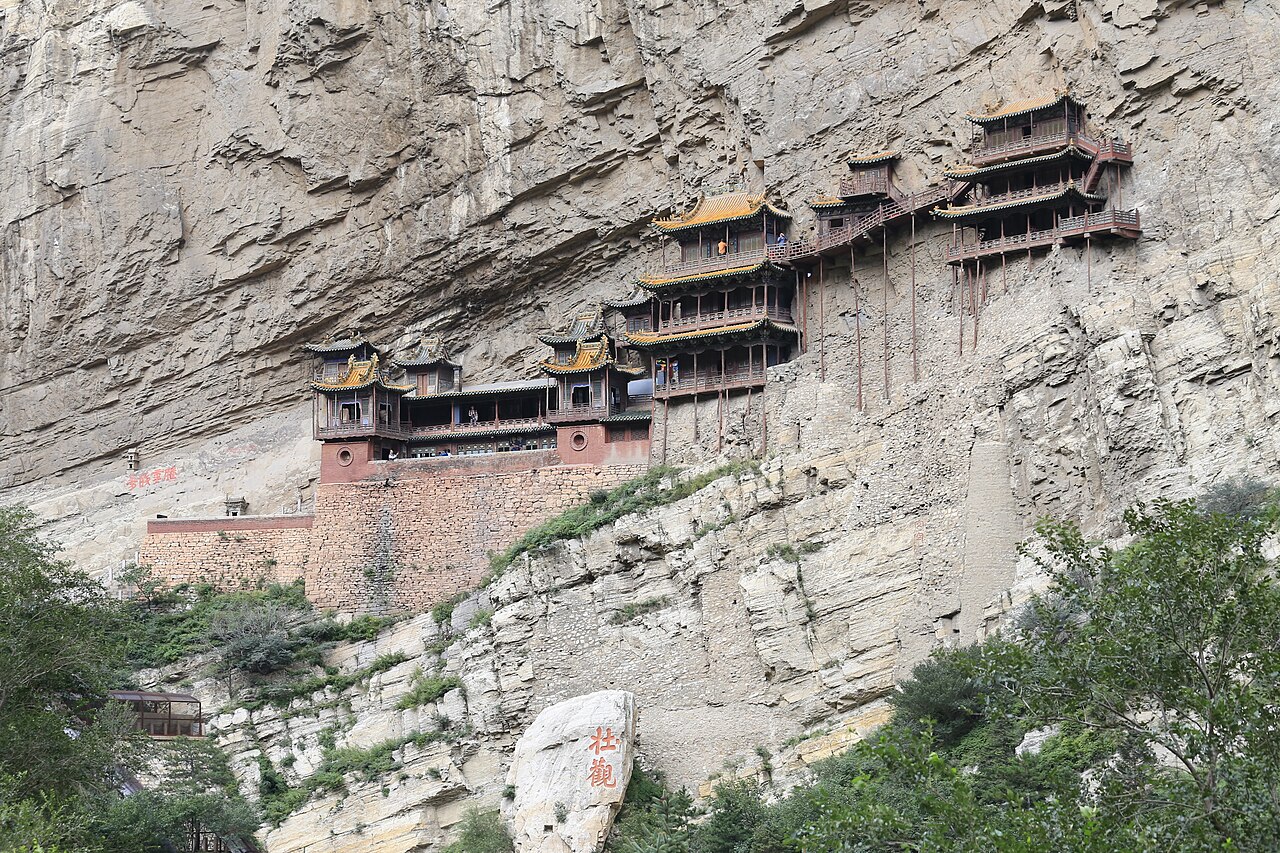
The Hanging Temple
A monastery of forty halls pinned to a cliff face on Mount Heng, holding altars to Confucius, Laozi, and the Buddha under one roof; the Three Teachings in a single building.
 Art Entry
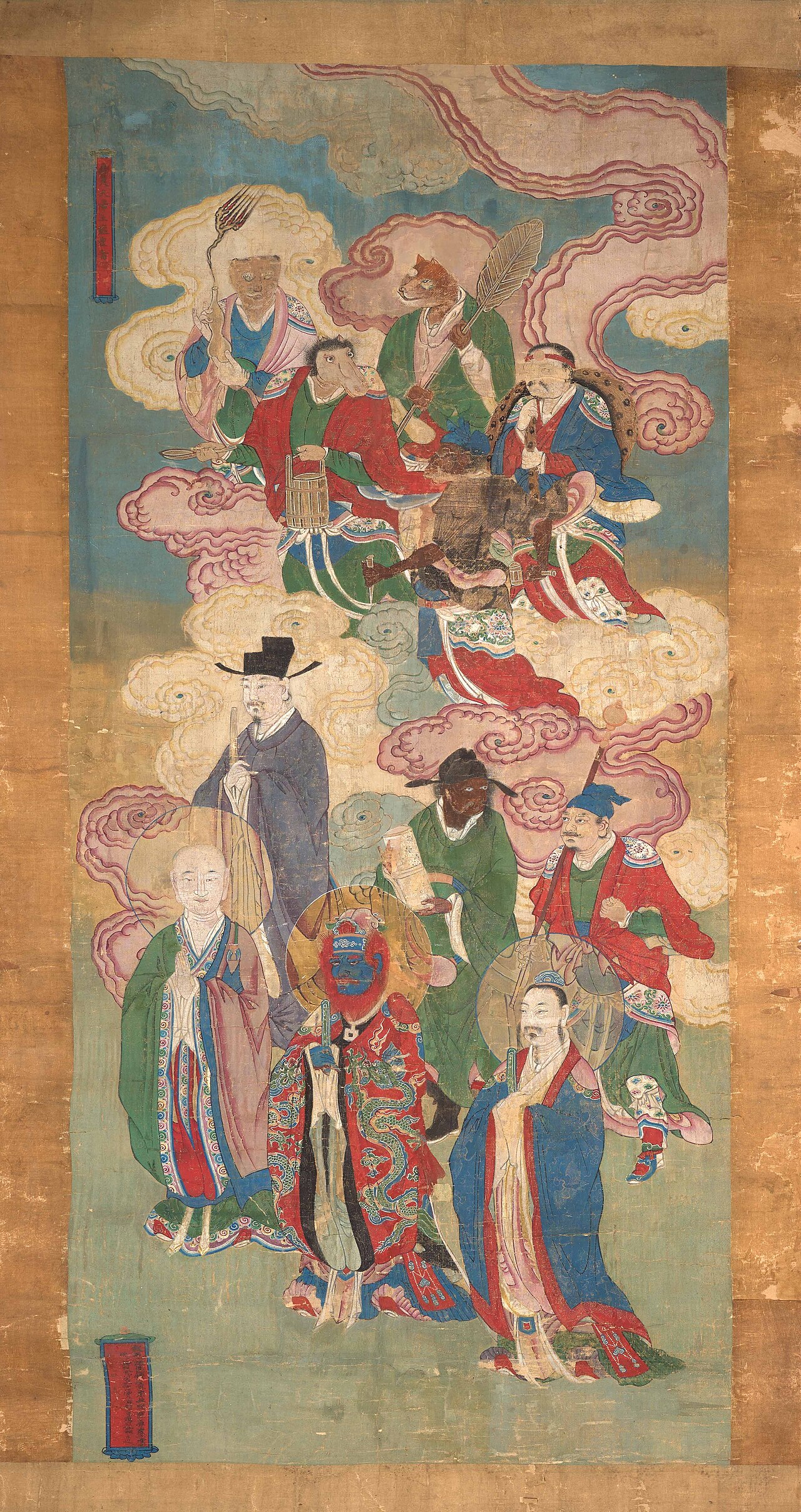
The Shuilu (Water-Land) Paintings
Sets of hanging scrolls that assemble the whole cosmos; Buddhas, Daoist gods, ancestors, and the hungry dead; for the Water-Land rite, Chinese religion's most inclusive ceremony of deliverance.
 Art Tradition
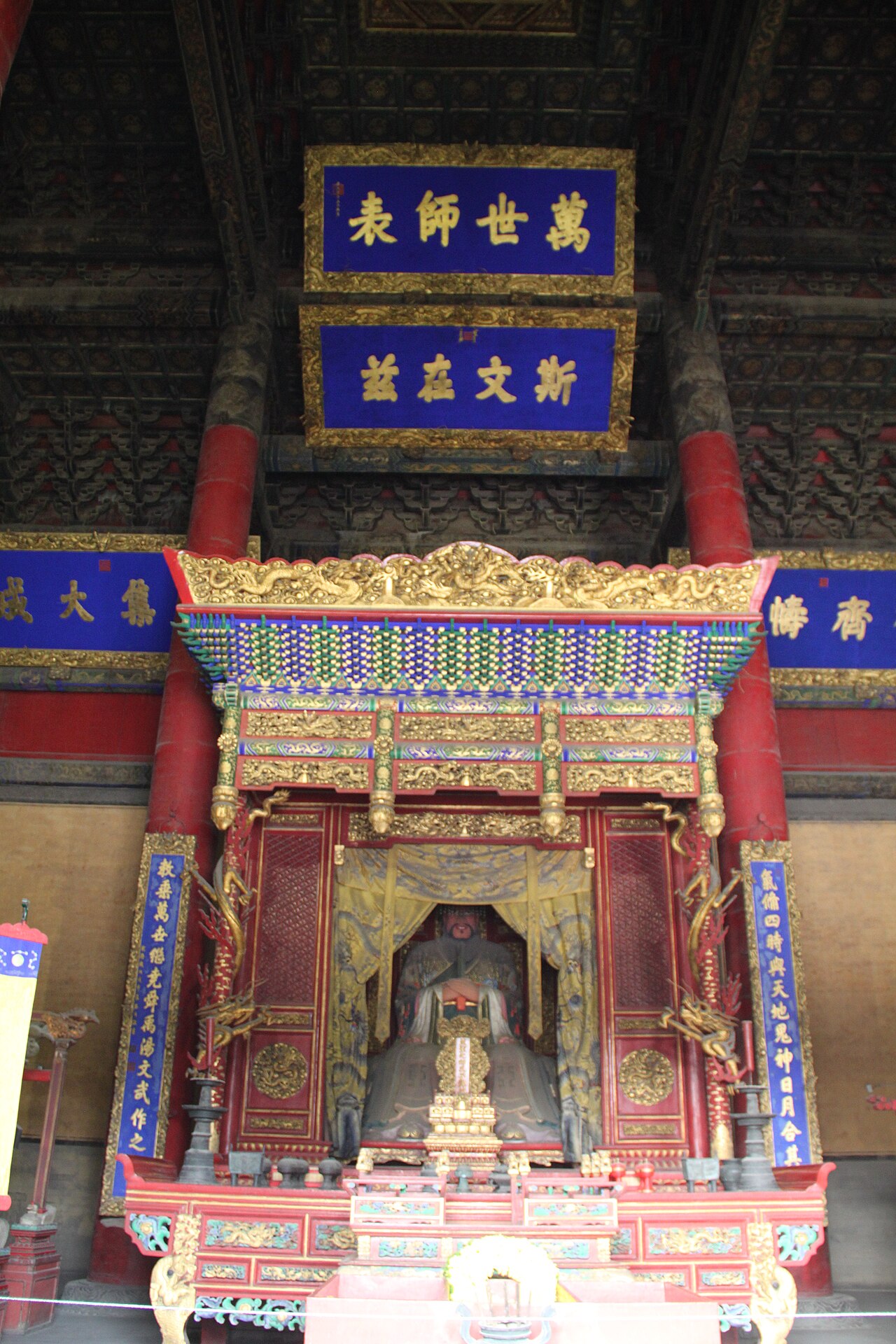
Daoism and Confucianism
Temple imagery, ritual painting, ancestor tablets, and the syncretism of the three teachings.
 Artist
Wu Daozi
The Tang muralist whose temple walls made crowds gasp; the sage of painting in Chinese tradition, whose work survives in copies and in legend.
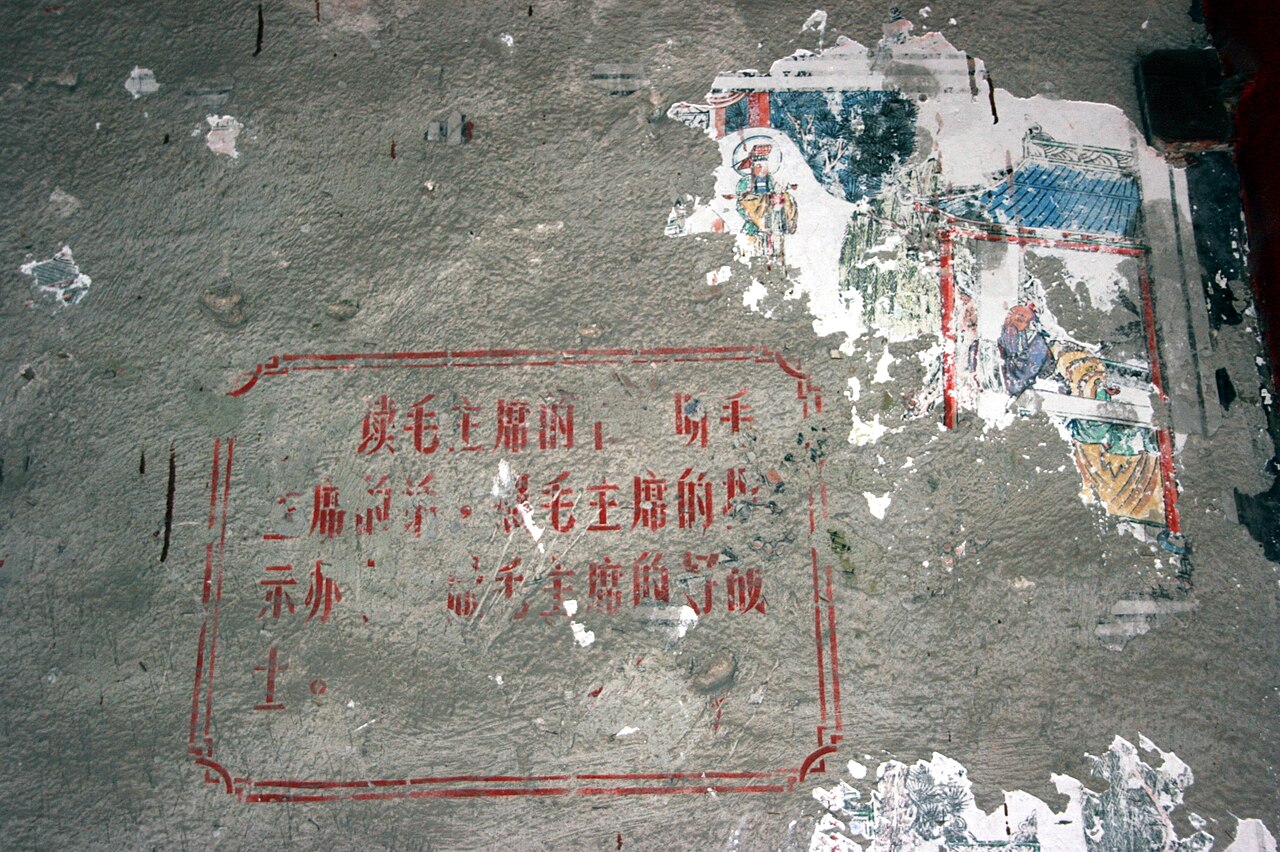 History Event
Cultural Revolution suppression
1966-1976
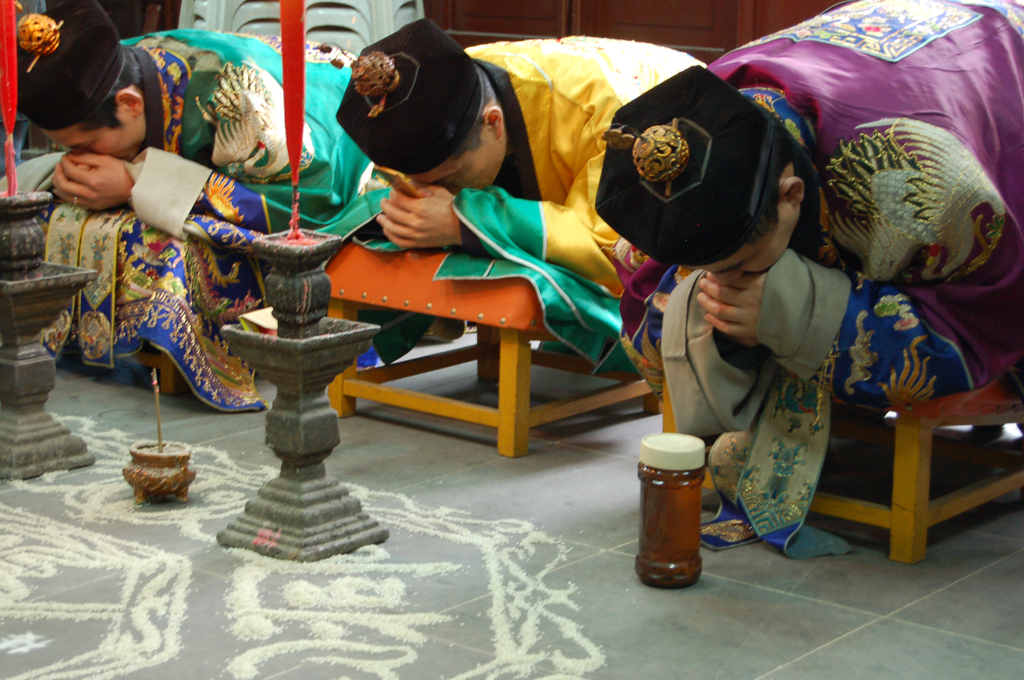 History Event
Post-Mao revival
1980s
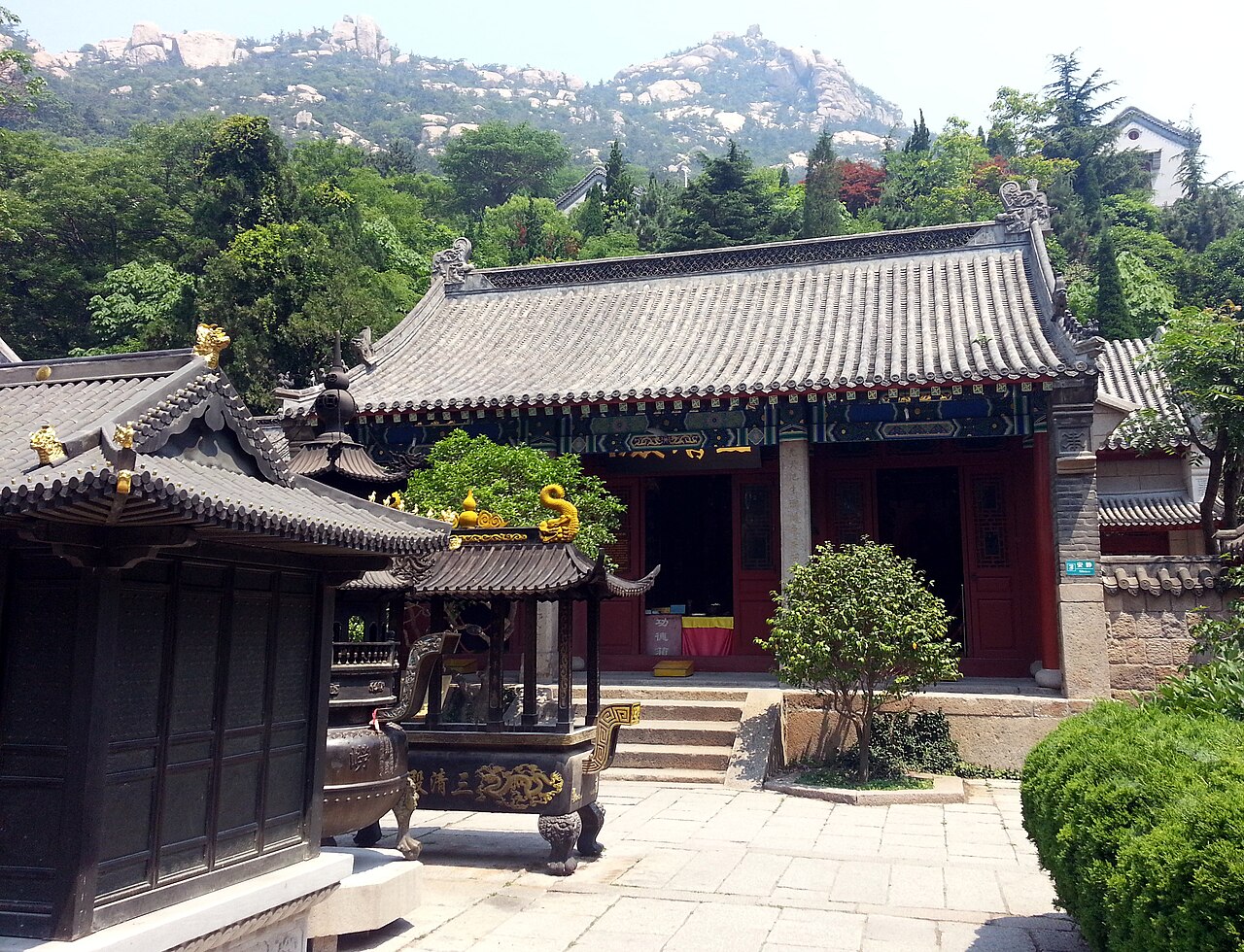 History Event
Quanzhen founded
12th century
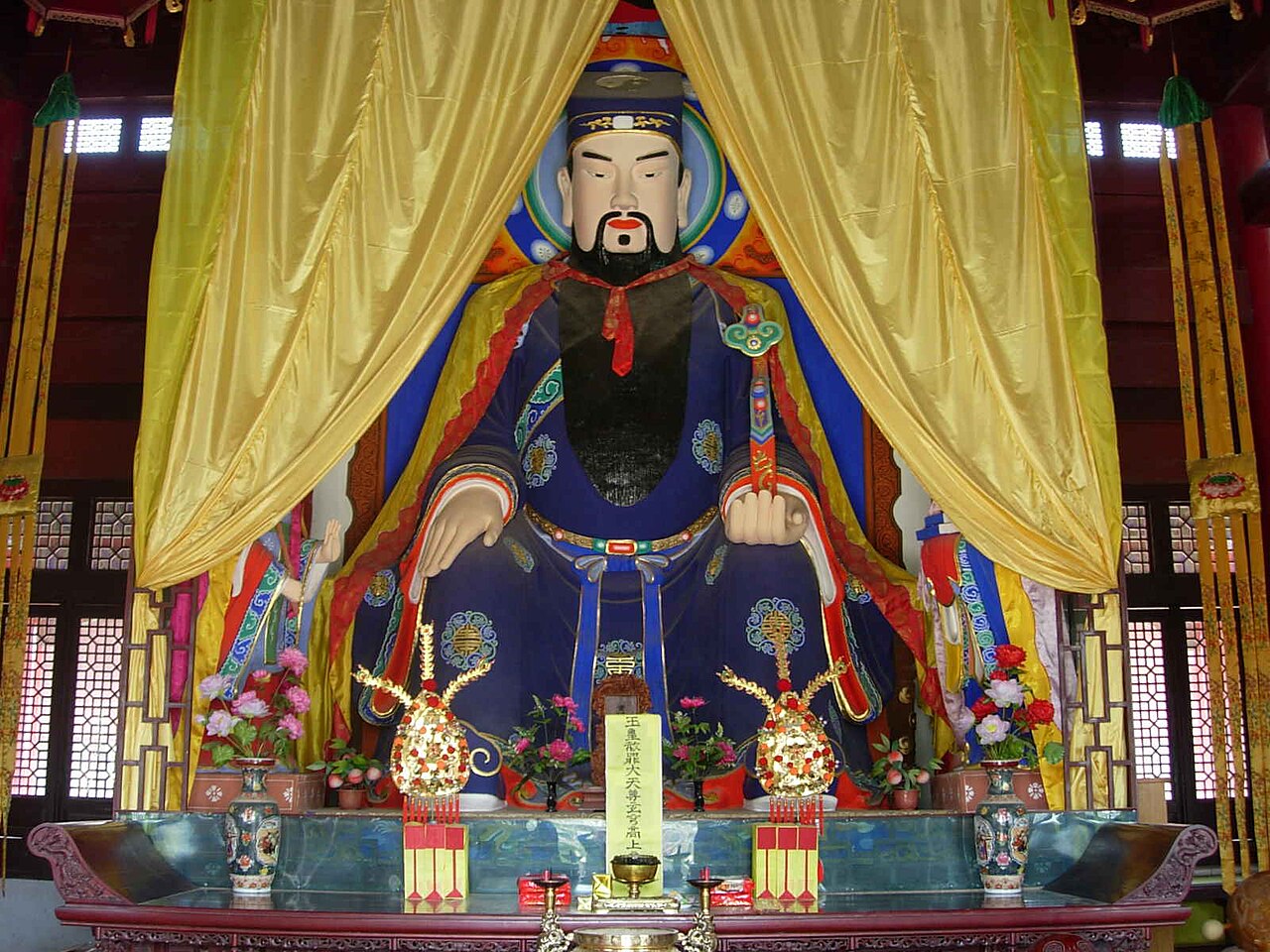 History Event
Wang Chongyang
1113-1170