

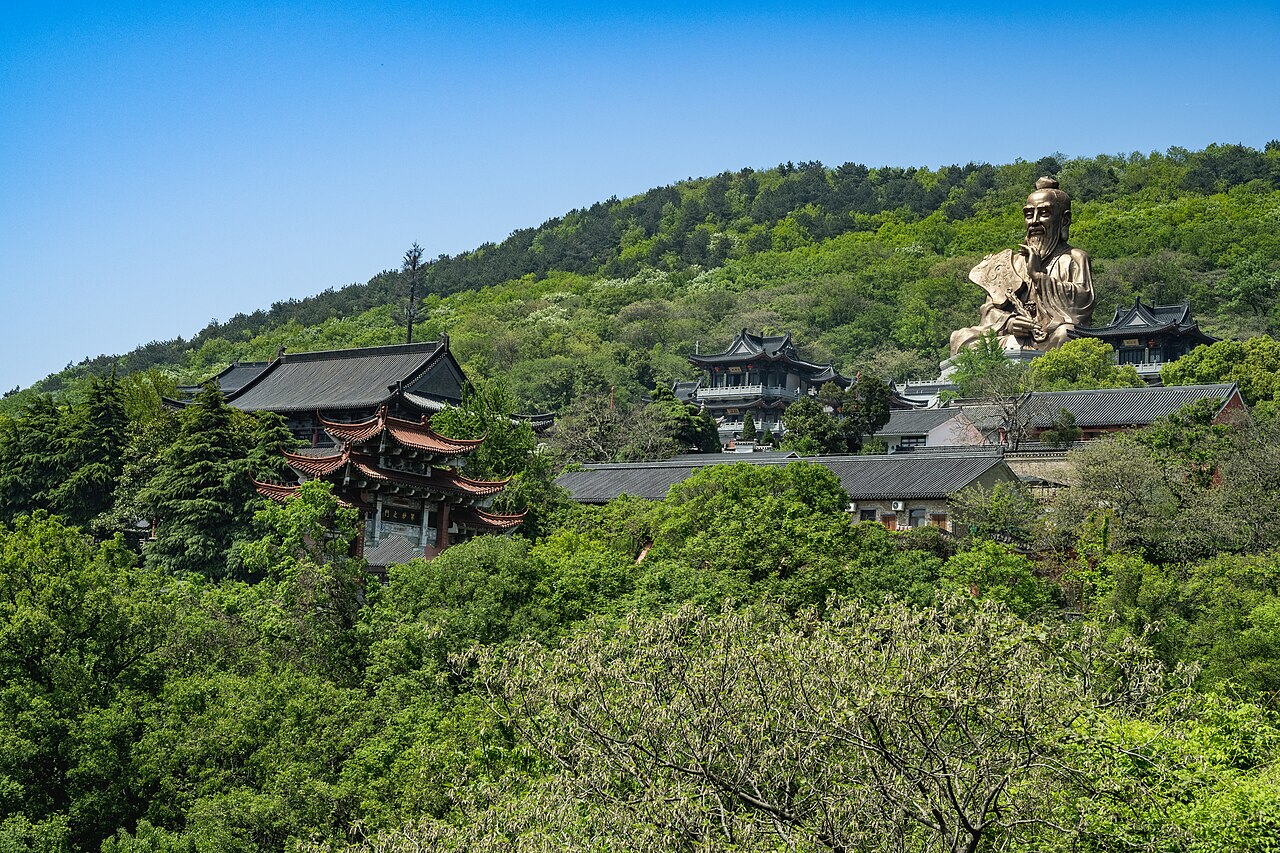
Between 364 and 370, on Mount Mao, the Perfected Ones of the heaven of Highest Clarity (Shangqing) descended in night visions to the medium Yang Xi and dictated scriptures for the brothers Xu Mi and Xu Hui. The revelations, which named the departed matriarch Wei Huacun among their sources, offered visualization of the gods within the body, journeys among the stars, and an aristocratic path of salvation that displaced the Celestial Masters at the southern court and made Maoshan the tradition's holy mountain.
The Event
- Date
- 4th century (approximate)
- Era
- The Medieval Schools; Standard periodization of Daoist history
- Location
- Mount Mao (Maoshan), Jiangsu; today Jurong, Jiangsu, China
- Traditions
- Daoism
- Streams
- Shangqing
- Key figures
- Yang Xi, Wei Huacun, Xu Mi
- Key texts
- Shangqing scriptures
How the Tradition Tells It
The Shangqing scriptures present themselves as dictated by the Perfected. The manuscripts that survive passed through the hands of Yang Xi and the Xu family, and the scribe Tao Hongjing, who edited the corpus a century later, worked openly to separate genuine revelation from forgery within it; the tradition has always known that its revelations arrive through fallible hands.
Primary Sources
- The Shangqing revelations recorded by Yang Xi.
Secondary Sources
- Robinet, Isabelle. Taoism: Growth of a Religion. Translated by Phyllis Brooks, Stanford University Press, 1997.
- Kohn, Livia, ed. Daoism Handbook. Brill, 2000.
Provenance: HIST-0805; confidence 0.85; accessed 2026-10-28.
Related on This Site
 Art Entry
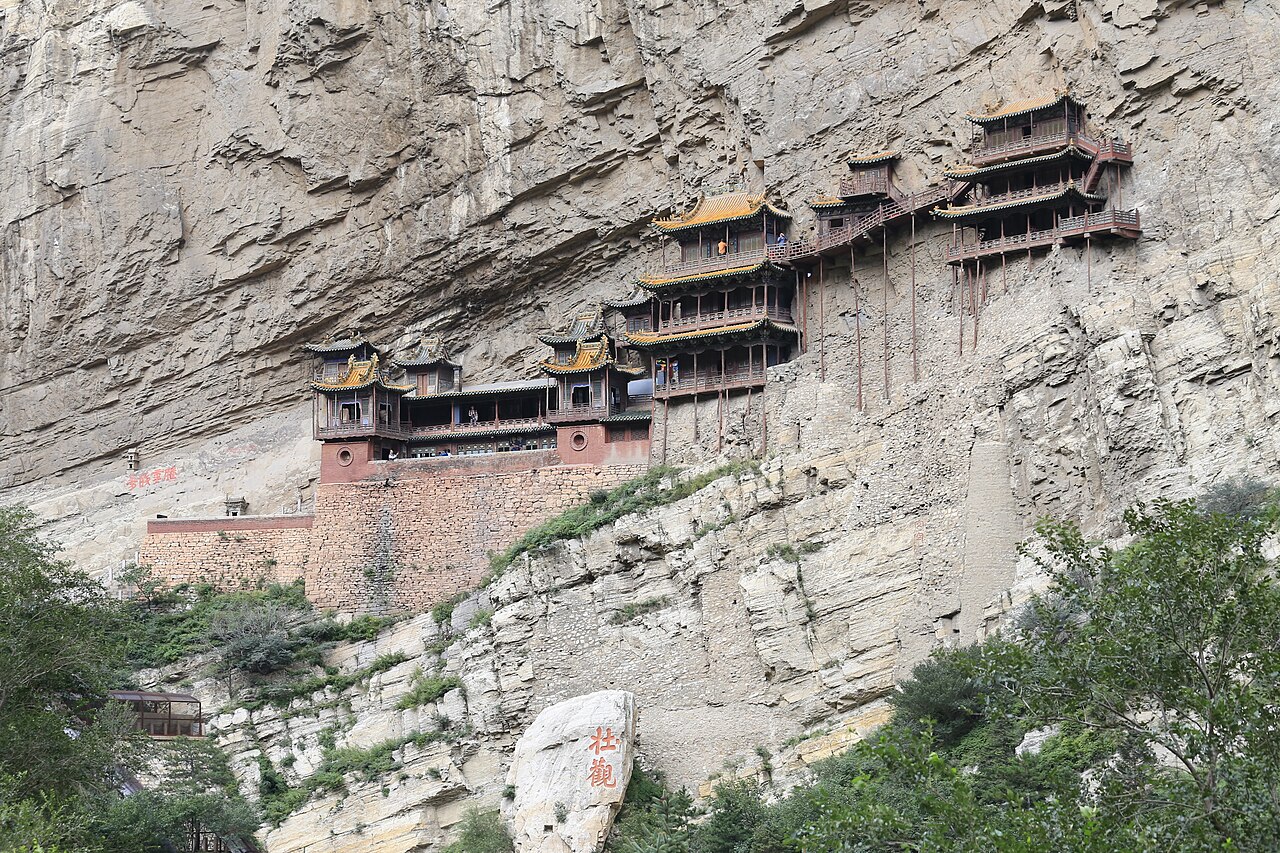
The Hanging Temple
A monastery of forty halls pinned to a cliff face on Mount Heng, holding altars to Confucius, Laozi, and the Buddha under one roof; the Three Teachings in a single building.
 Art Entry
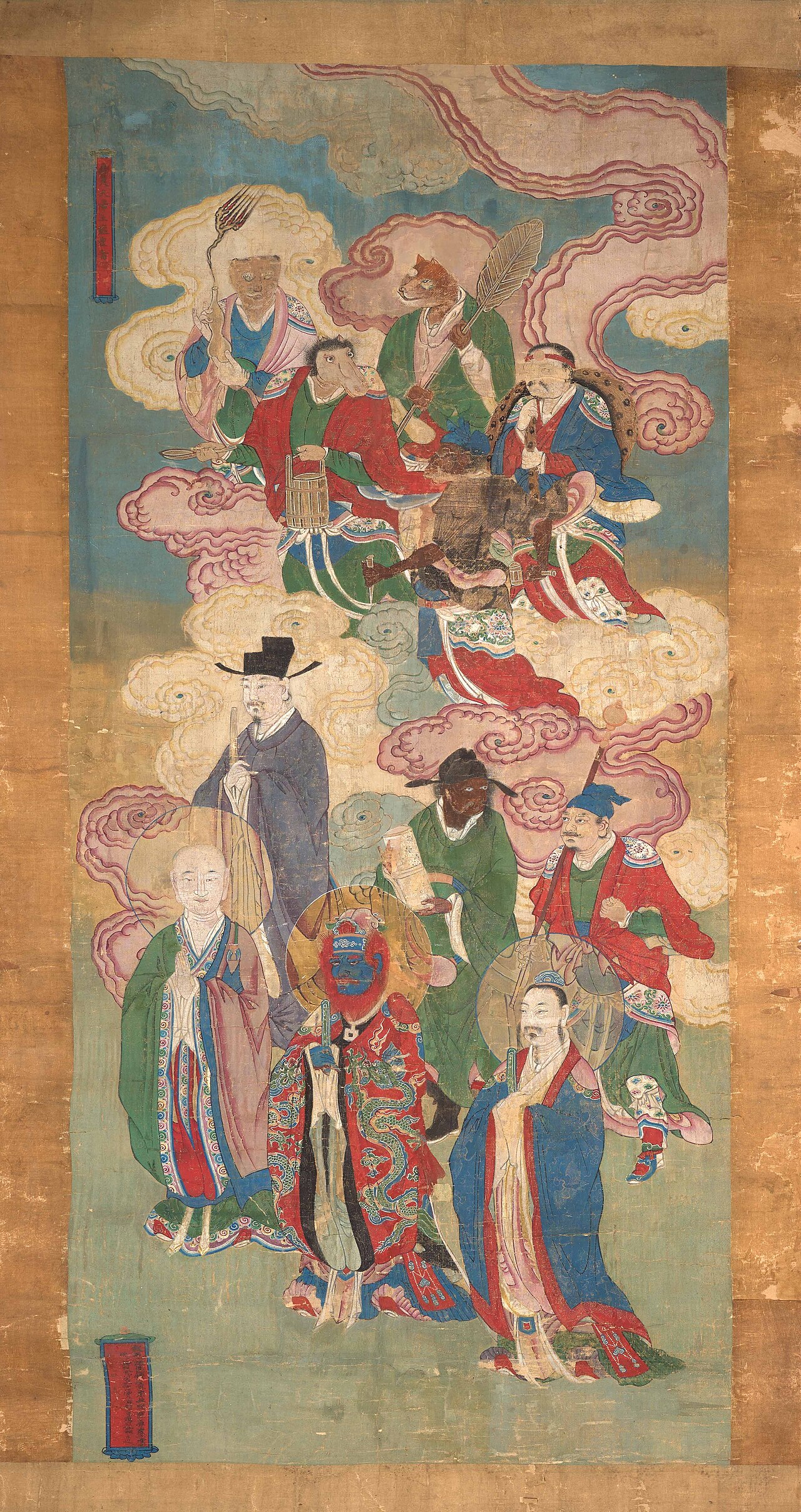
The Shuilu (Water-Land) Paintings
Sets of hanging scrolls that assemble the whole cosmos; Buddhas, Daoist gods, ancestors, and the hungry dead; for the Water-Land rite, Chinese religion's most inclusive ceremony of deliverance.
 Art Tradition
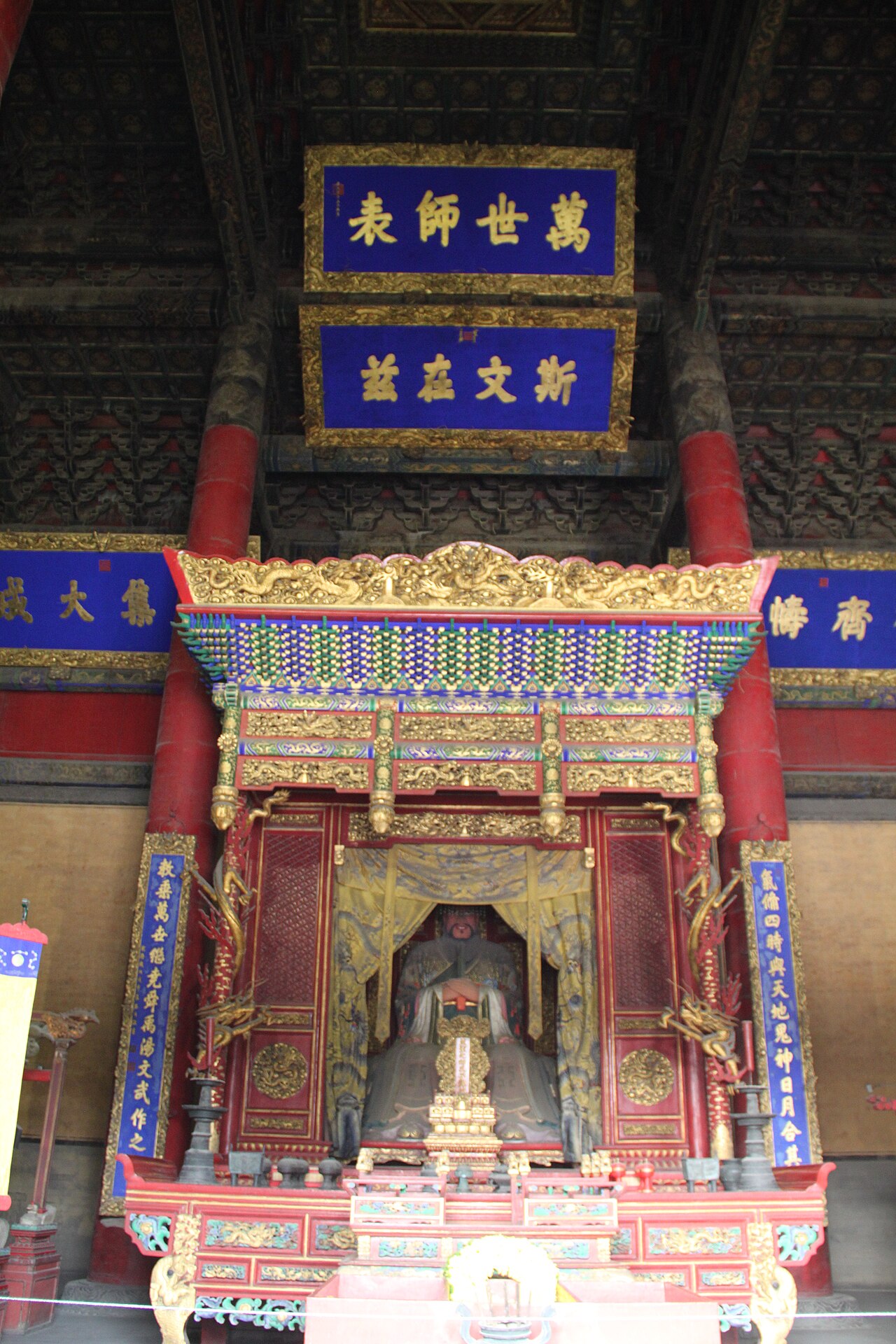
Daoism and Confucianism
Temple imagery, ritual painting, ancestor tablets, and the syncretism of the three teachings.
 Artist
Wu Daozi
The Tang muralist whose temple walls made crowds gasp; the sage of painting in Chinese tradition, whose work survives in copies and in legend.
 History Event
Laozi (traditional)
c. 4th-3rd century BCE
 History Event
Zhang Daoling; Celestial Masters
142 CE
 History Event
Zhuangzi
c. 369-286 BCE
 World View
Taoism
Taoism teaches that a nameless Way, the Tao, orders all things; wisdom is to stop forcing and live in harmony with its flow.