Postmodernism

The Postmodernism stream of the Postmodernism timeline.

The Postmodernism dataset follows the movement from Foucault's Order of Things and Derrida's Baltimore lecture through the French theory of the seventies, Lyotard's report on knowledge, the architectural and literary turns, and the science wars' reckoning.

Its fifteen events stand across four eras, ending with Latour's question about critique itself.

Periodization
Standard periodization of postmodern history Source: Bertens, Hans. The Idea of the Postmodern: A History. London: Routledge, 1995.
Contested periodization
The word's own history is contested: Hassan's literary period, Jencks's architecture, and Lyotard's condition do not coincide, and the dataset records all three.
Geographic scope
France first, then the American academy and the wider humanities.
Dating caveats
Dates are publication and lecture dates and are documentary.
Internal diversity
Deconstruction, genealogy, and the Anglo-American literary and architectural lines stand in the one dataset.
Origin narrative
In preparation. The dataset's founding story will stand here in the three-layer format when its narrative is published.

Sources: Bertens, Hans. The Idea of the Postmodern: A History. London: Routledge, 1995.; Hassan, Ihab. The Postmodern Turn. Columbus: Ohio State University Press, 1987.; Hutcheon, Linda. A Poetics of Postmodernism. New York: Routledge, 1988.

Streams: All of Postmodernism Postmodernism

The Structuralist Break

1966

Derrida's Structure, Sign and Play lecture

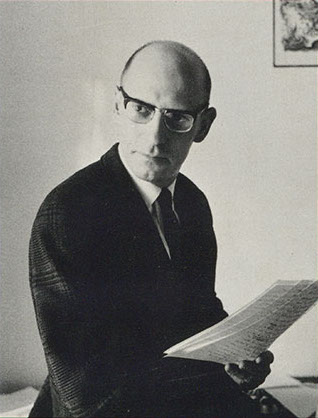
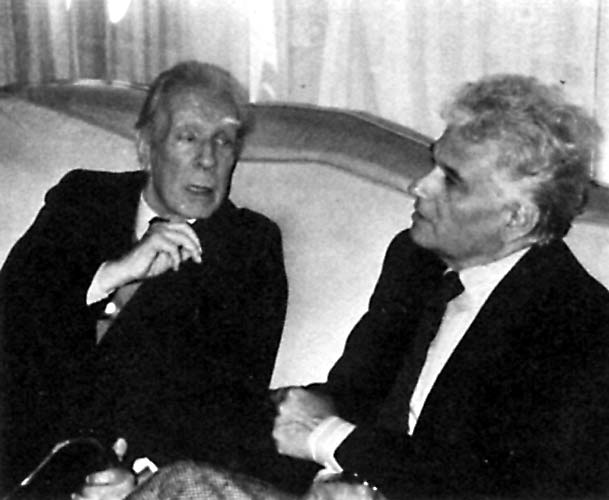
On 21 October 1966 Jacques Derrida delivers Structure, Sign and Play in the Discourse of the Human Sciences at the Johns Hopkins symposium on structuralism in Baltimore. The lecture announces the decentering of structure and the free play of signs, and carries the French critique into the American university, where it will have its loudest career.
Baltimore
1966

Foucault's The Order of Things

In 1966 Michel Foucault publishes Les mots et les choses, The Order of Things: an archaeology of the human sciences arguing that man, as an object of knowledge, is a recent invention and may be erased, like a face drawn in sand at the edge of the sea. The book makes Foucault famous in a season and sets the structuralist break in motion.

Paris
1967

Derrida's Of Grammatology

In 1967 Derrida publishes Of Grammatology, with Speech and Phenomena and Writing and Difference in the same year: the founding texts of deconstruction, arguing that Western thought's privilege of speech over writing conceals the play of difference that makes meaning possible. Three books in one year give the coming movement its method and its most contested name.

Paris
1971

Hassan's The Dismemberment of Orpheus

In 1971 the critic Ihab Hassan publishes The Dismemberment of Orpheus: Toward a Postmodern Literature, the first book to give postmodernism a literary genealogy and a canon. Hassan, an Egyptian-born American scholar, becomes the term's tireless taxonomist, and his tables of modernist and postmodernist traits are quoted for decades.

Madison
1972

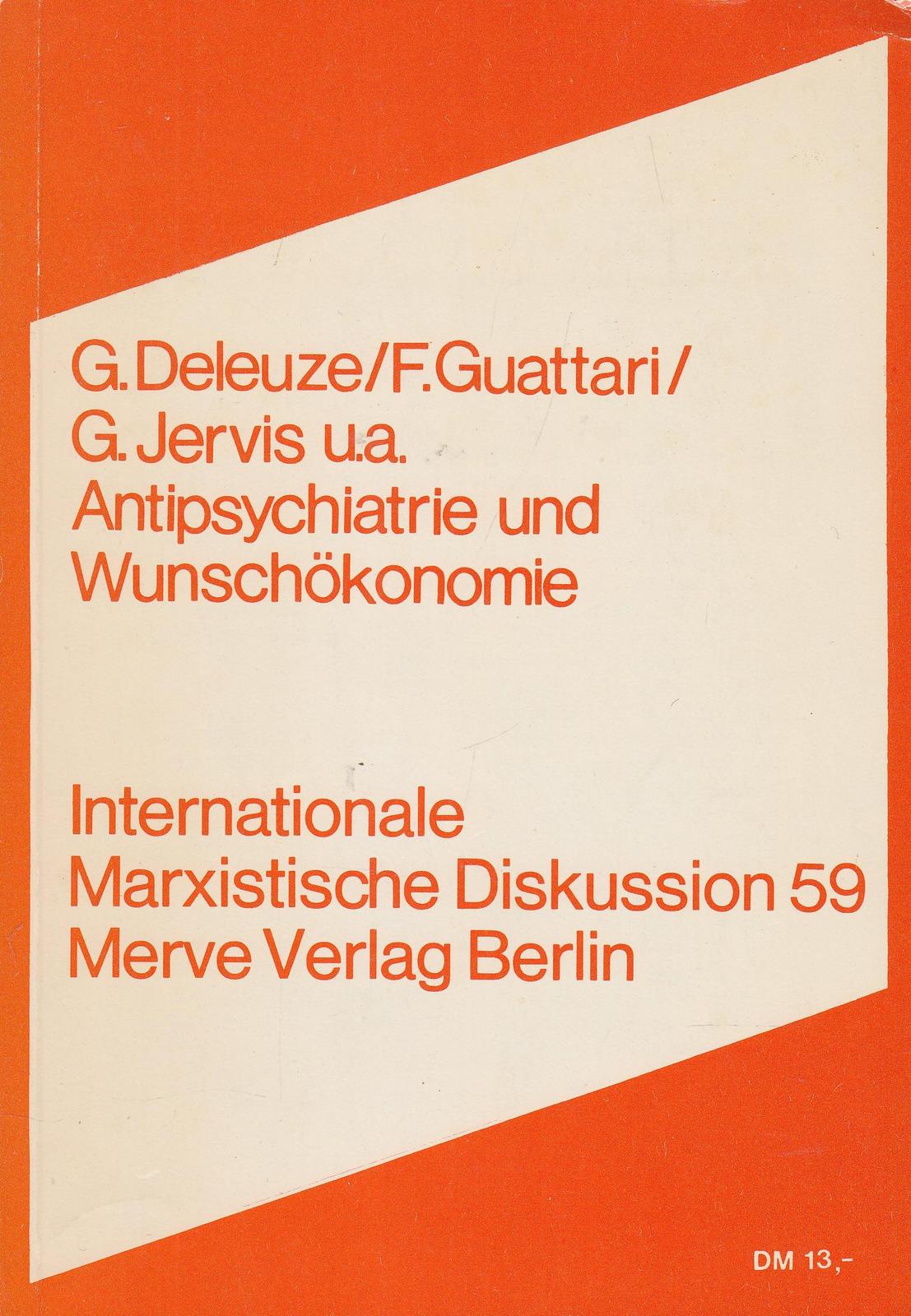
Deleuze and Guattari's Anti-Oedipus

In 1972 Gilles Deleuze and Félix Guattari publish Anti-Oedipus: Capitalism and Schizophrenia, an assault on psychoanalysis and a theory of desire as production. The book, written out of May 1968's energies, is the French movement's most exuberant text and its bridge to the radical politics of the decade.

Paris
1975

Foucault's Discipline and Punish

In 1975 Foucault publishes Discipline and Punish: the birth of the prison, tracing the passage from public torture to the timetable and the panopticon, and arguing that power produces the subjects it governs. The book becomes the most widely read of his works and the human sciences' standing challenge to their own institutions.

Paris

The Naming

1977

Jencks's The Language of Post-Modern Architecture

In 1977 the architectural historian Charles Jencks publishes The Language of Post-Modern Architecture, giving the word post-modern its first public career: modernist building is dead, he argues, killed, by his famous dating, with the demolition of Pruitt-Igoe in 1972. The term travels from architecture to every art within five years.

London
1979

Lyotard's The Postmodern Condition

In 1979 Jean-François Lyotard publishes The Postmodern Condition, a report on knowledge commissioned by the government of Quebec: postmodern, simplifying to the extreme, is incredulity toward metanarratives. The book gives the movement its defining formula and its philosophy of the end of grand stories: emancipation, progress, and the system alike.

Paris
1979

Rorty's Philosophy and the Mirror of Nature

In 1979 Richard Rorty publishes Philosophy and the Mirror of Nature, arguing that epistemology's founding image, the mind as a mirror of nature, should be abandoned and philosophy continue as conversation. Rorty, an American analytic philosopher turned apostate, becomes the movement's bridge to pragmatism and its most effective exporter.

Princeton
1980

Deleuze and Guattari's A Thousand Plateaus

In 1980 Deleuze and Guattari publish A Thousand Plateaus, the second volume of Capitalism and Schizophrenia: rhizomes against roots, plateaus against chapters, a book built to be entered anywhere. It becomes the movement's most inventive text and the source of a generation's vocabulary in the arts and humanities.

Paris
1981

Baudrillard's Simulacra and Simulation

In 1981 Jean Baudrillard publishes Simulacra and Simulation: the image no longer represents a reality but replaces it, and the map precedes the territory. Baudrillard's hyperreal, sharpened through the decade's media politics, becomes the movement's most quoted diagnosis of the image-saturated world.

Paris
1984

Jameson's Postmodernism essay

In 1984 Fredric Jameson publishes Postmodernism, or, The Cultural Logic of Late Capitalism in the New Left Review: postmodernism is not a style among others but the cultural dominant of the multinational economy, marked by depthlessness, waning of affect, and pastiche. The essay, expanded into his 1991 book, gives the movement its Marxist account and its most serious internal critic.

Durham

The Culture Wars

1989

Fukuyama's The End of History?

In 1989 Francis Fukuyama publishes The End of History? in The National Interest, arguing that liberal democracy may be the end point of mankind's ideological evolution. The essay is the postmodern moment's great counter-claim, a grand narrative proclaimed in the year of the Wall, and the argument of the next decade is fought on its ground.

Washington
1996

The Sokal hoax

In 1996 the physicist Alan Sokal publishes a deliberately nonsensical article, Transgressing the Boundaries, in the cultural studies journal Social Text, and reveals the hoax in Lingua Franca the day of publication. The affair, the science wars' central episode, puts postmodern scholarship's standards on trial in the world's press, where the argument continues.

New York

After Postmodernism

2004

Latour's Why Has Critique Run out of Steam?

In 2004 Bruno Latour, a founder of science studies, publishes Why Has Critique Run out of Steam? in Critical Inquiry, asking whether the tools of suspicion his generation forged have been turned to conspiracy and denial. The essay is the movement's self-reckoning from inside, and a marker of its passage into the century's different arguments.

Paris