

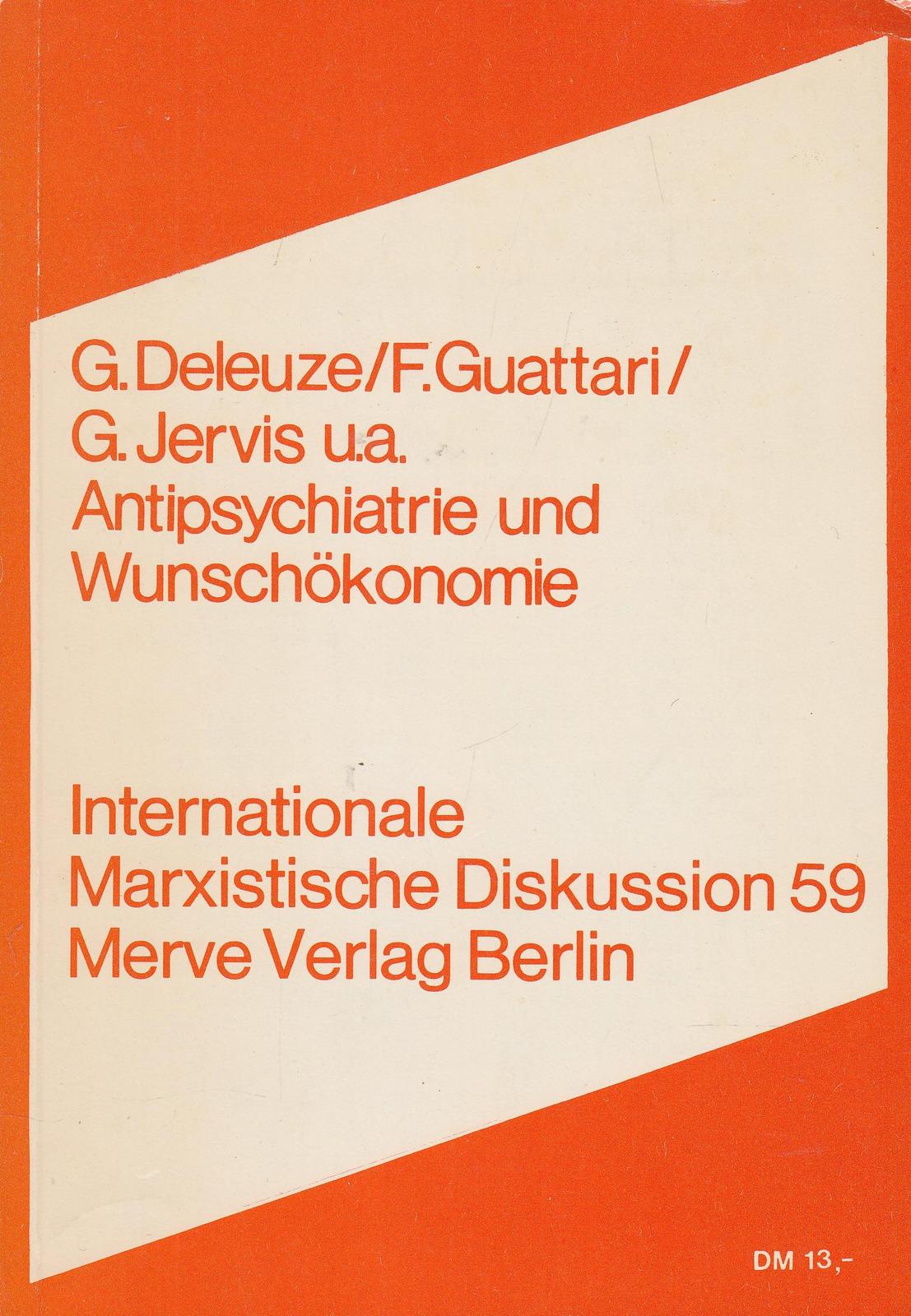
In 1972 Gilles Deleuze and Félix Guattari publish Anti-Oedipus: Capitalism and Schizophrenia, an assault on psychoanalysis and a theory of desire as production. The book, written out of May 1968's energies, is the French movement's most exuberant text and its bridge to the radical politics of the decade.
Tagged: Postmodernism
The Event
- Date
- 1972 (exact)
- Era
- The Structuralist Break; Standard periodization of postmodern history
- Location
- Paris; today Paris, France
- Traditions
- Postmodernism
- Streams
- Postmodernism
- Key figures
- Gilles Deleuze, Félix Guattari
- Key texts
- Anti-Oedipus
Primary Sources
- Deleuze, Gilles, and Félix Guattari. L'Anti-Œdipe. Paris: Minuit, 1972.
Secondary Sources
- Bertens, Hans. The Idea of the Postmodern: A History. London: Routledge, 1995.
- Hassan, Ihab. The Postmodern Turn. Columbus: Ohio State University Press, 1987.
- Hutcheon, Linda. A Poetics of Postmodernism. New York: Routledge, 1988.
Provenance: HIST-1439; confidence 0.95; accessed 2026-10-30.
Related on This Site
 History Event
Derrida's Of Grammatology
1967
 History Event
Derrida's Structure, Sign and Play lecture
1966
 History Event
Foucault's Discipline and Punish
1975
 History Event
Foucault's The Order of Things
1966
 History Event
Hassan's The Dismemberment of Orpheus
1971
 History Event
Jencks's The Language of Post-Modern Architecture
1977
 History Event
Lyotard's The Postmodern Condition
1979
 World View
Postmodernism
Postmodernism doubts every grand story that claims to explain everything; it treats truth as shaped by language, culture, and power rather than simply discovered.