

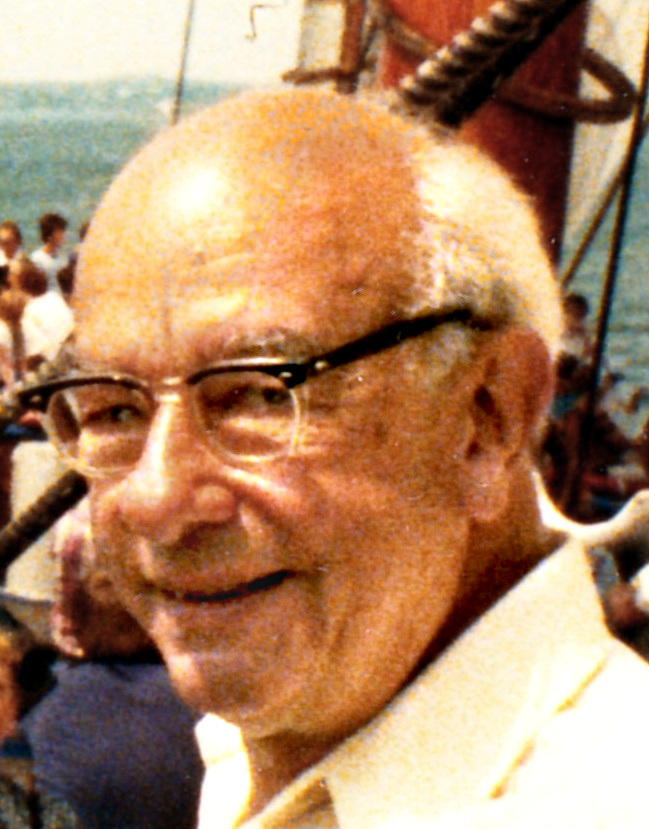
In 1951 W. V. O. Quine publishes Two Dogmas of Empiricism, philosophy's most influential paper of the century, rejecting the analytic and synthetic distinction and proposing that knowledge is a single web answering to experience at its edges. Quine's holism is the founding document of naturalized philosophy: no first philosophy stands above science.
Tagged: Naturalism
The Event
- Date
- 1951 (exact)
- Era
- Naturalized Philosophy; Standard periodization of naturalist history
- Location
- Cambridge; today Cambridge, Massachusetts
- Traditions
- Naturalism
- Streams
- Naturalism
- Key figures
- W. V. O. Quine
- Key texts
- Two Dogmas of Empiricism
Primary Sources
- Quine, W. V. O. Two Dogmas of Empiricism. The Philosophical Review, 1951.
Secondary Sources
- De Caro, Mario, and David Macarthur, eds. Naturalism in Question. Cambridge, MA: Harvard University Press, 2004.
- Gregory, Frederick. Scientific Materialism in Nineteenth Century Germany. Dordrecht: Reidel, 1977.
- Papineau, David. Philosophical Naturalism. Oxford: Blackwell, 1993.
Provenance: HIST-1414; confidence 0.95; accessed 2026-10-30.
Related on This Site
 History Event
Büchner's Force and Matter
1855
 History Event
D'Holbach's System of Nature
1770
 History Event
Huxley's Man's Place in Nature
1863
 History Event
La Mettrie's Man a Machine
1747
 History Event
Laplace's Exposition of the System of the World
1796
 History Event
Mill's A System of Logic
1843
 History Event
Newton's Principia Mathematica
1687
 World View
Naturalism
Naturalism holds that nature is all there is: the universe of matter, energy, and natural law needs no god, soul, or purpose beyond itself.