

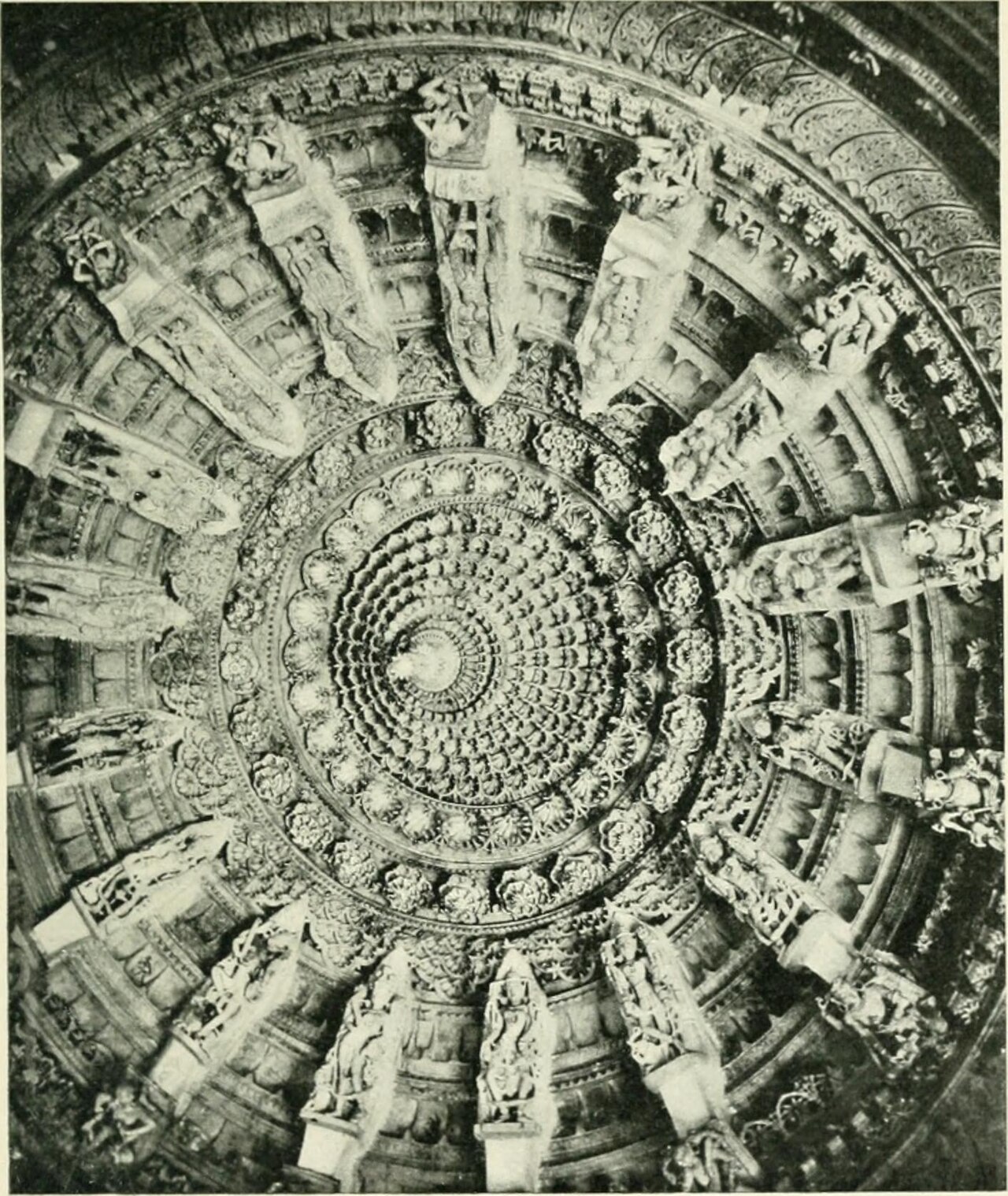
Above Mount Abu, Shvetambara merchants and ministers raised the Dilwara temples between the eleventh and thirteenth centuries, beginning with Vimal Shah's temple to Adinatha in 1031 and continuing with the Luna Vasahi of the brothers Vastupala and Tejapala in 1230. Their marble interiors are carved with a delicacy that made the temples the summit of medieval Jain art, and they still draw pilgrims and visitors to the hill.
Tagged: Jain Shvetambara
The Event
- Date
- 11th-13th century (approximate)
- Era
- Classical and Medieval; Standard periodization of Jain history
- Location
- Mount Abu, Rajasthan; today Mount Abu, India
- Traditions
- Jainism
- Streams
- Shvetambara
- Key figures
- Vimal Shah, Vastupala, Tejapala
Primary Sources
- The Jain inscriptional and temple record of the period.
Secondary Sources
- Shah, Natubhai. Jainism: The World of Conquerors. Sussex Academic Press, 1998.
- Wiley, Kristi L. Historical Dictionary of Jainism. Scarecrow Press, 2004.
Provenance: HIST-0609; confidence 0.85; accessed 2026-10-27.
Related on This Site
- A Kalpasutra Folio Art Entry
- The Dilwara Temples Art Entry
- The Gujarat Manuscript Ateliers Artist
- Digambara–Shvetambara split History Event
- First Council at Pataliputra History Event
- Mahavira (24th Tirthankara) History Event
- Parshvanatha (23rd Tirthankara) History Event
- Shvetambara canon committed to writing History Event