

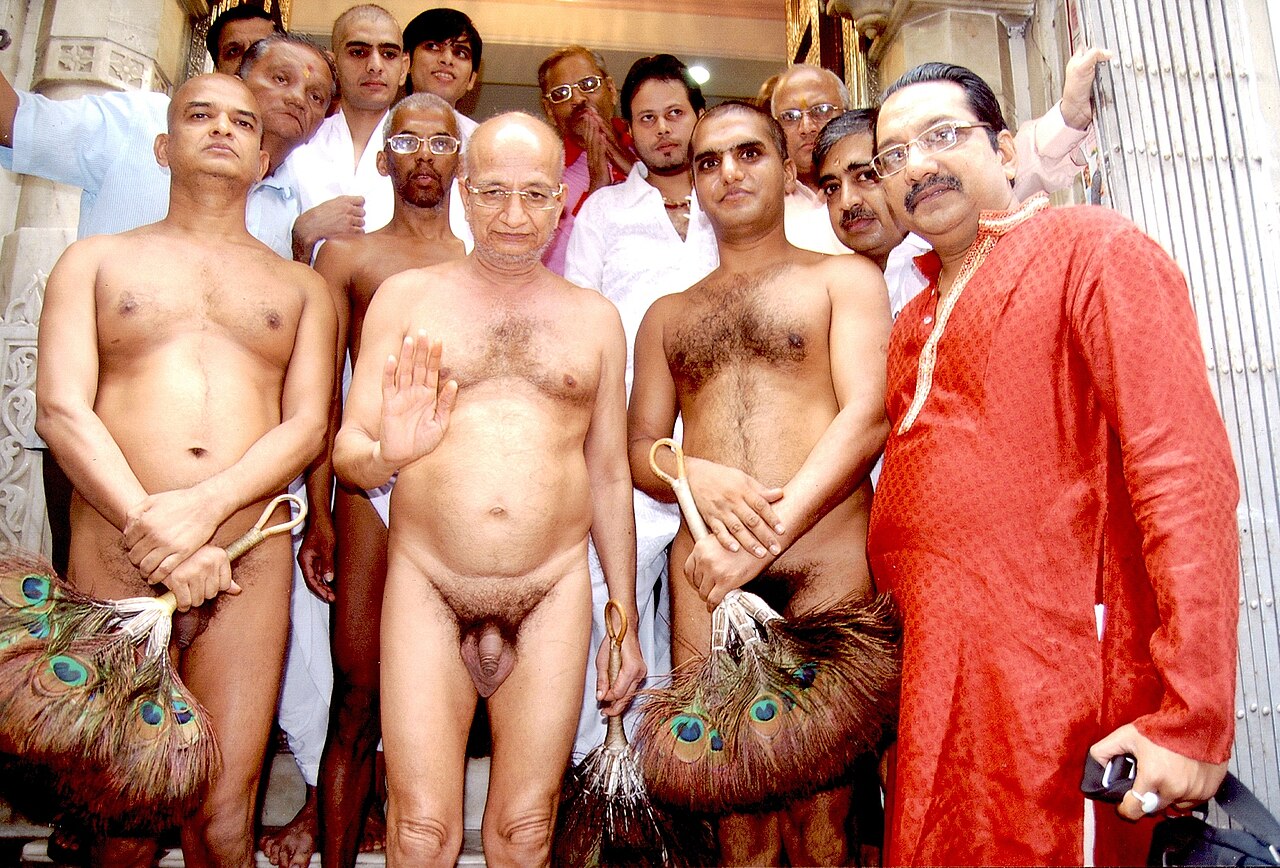
Across the early centuries of the common era the Jain community divided into its two enduring traditions. The Digambaras, the sky-clad, hold that a monk must renounce clothing itself and that the original canon is lost. The Shvetambaras, the white-clad, keep the canon assembled in their line and admit women to the possibility of liberation in a female birth, which Digambara teaching denies. The split took shape gradually rather than at a single rupture.
Tagged: Schism Digambara Jain Shvetambara
The Event
- Date
- c. 1st century CE (approximate)
- Era
- Councils and Schism; Standard periodization of Jain history
- Location
- Northern and western India; today India
- Traditions
- Jainism
- Streams
- Digambara, Shvetambara
How the Tradition Tells It
The traditions explain the split differently. Digambara accounts trace it to the famine migration and the nudity of the true monk, which the stay-at-home community abandoned. Shvetambara accounts trace distinct lineages and hold that the division hardened over centuries of separate councils and canons. Modern scholarship treats the split as a long process rather than a single schism.
Connections
- First Council at Pataliputra; follows_from
Primary Sources
- The Jain inscriptional and temple record of the period.
Secondary Sources
- Dundas, Paul. The Jains. 2nd ed., Routledge, 2002.
- Jaini, Padmanabh S. The Jaina Path of Purification. University of California Press, 1979.
Provenance: HIST-0604; confidence 0.85; accessed 2026-10-27.
Related on This Site
- A Kalpasutra Folio Art Entry
- The Dilwara Temples Art Entry
- The Gujarat Manuscript Ateliers Artist
- First Council at Pataliputra History Event
- Jain community recognized in US History Event
- Jain diaspora established History Event
- Mahavira (24th Tirthankara) History Event
- Parshvanatha (23rd Tirthankara) History Event