

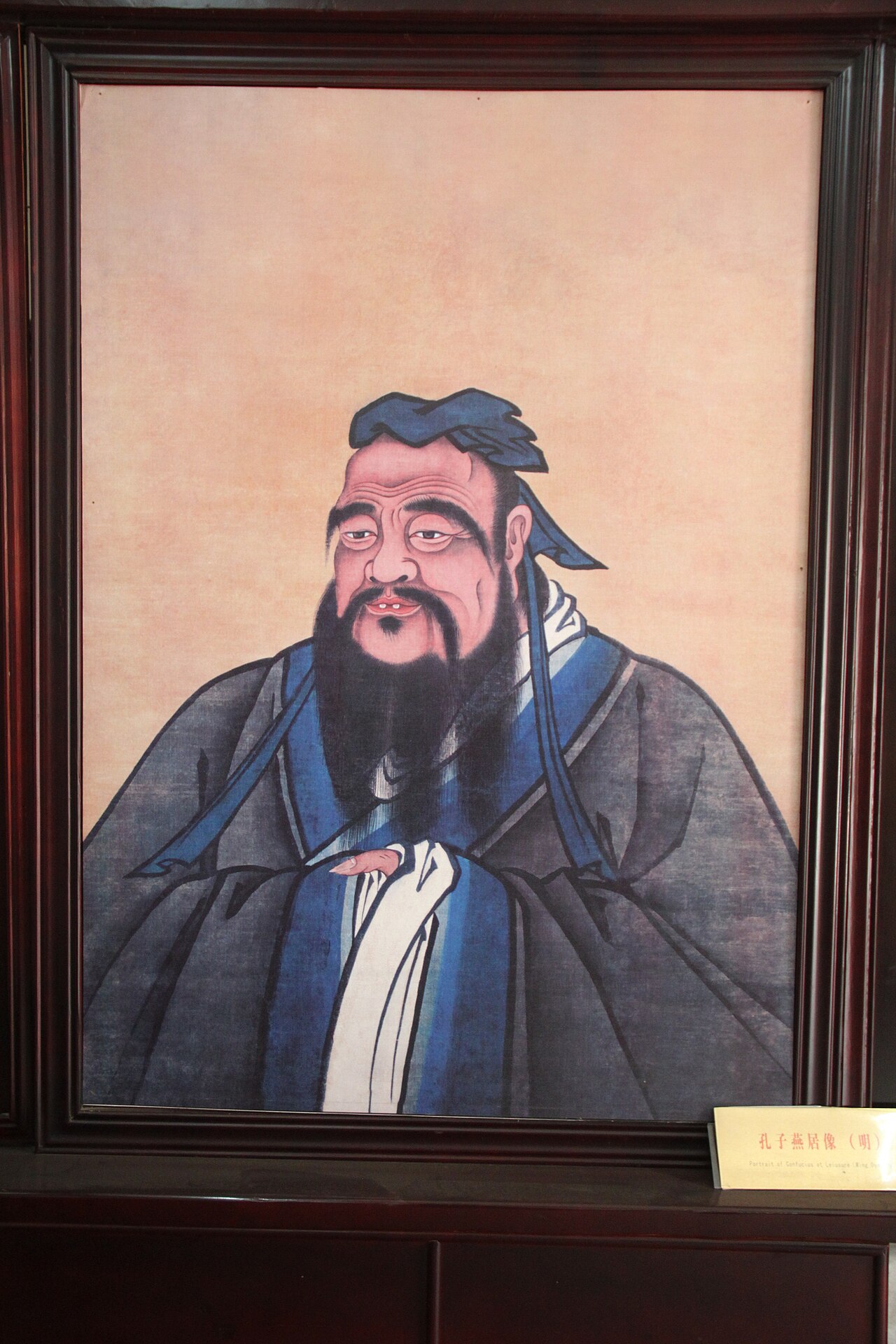
Confucius, Kong Qiu of Lu, taught that a disordered age is healed by ritual propriety, filial devotion, and rulers who govern by virtue rather than force. A minor official and then a wandering teacher, he gathered the disciples whose recorded conversations became the Analects. He died without office and without honor in his own state, and his school, the Ru, carried his teaching into every later century of Chinese life.
Tagged: Classical Confucianism Confucianism
The Event
- Date
- 551-479 BCE (exact)
- Also called
- Kong Qiu, Kongzi, Master Kong
- Era
- The Classical Age; Standard periodization of Confucian history
- Location
- Qufu, in the state of Lu; today Qufu, Shandong, China
- Traditions
- Confucianism
- Streams
- Classical Confucianism
- Key figures
- Confucius
- Key texts
- Analects
Primary Sources
- The Analects of Confucius.
Secondary Sources
- Yao, Xinzhong. An Introduction to Confucianism. Cambridge University Press, 2000.
- Fingarette, Herbert. Confucius: The Secular as Sacred. Harper and Row, 1972.
- Ivanhoe, Philip J., and Bryan W. Van Norden, eds. Readings in Classical Chinese Philosophy. 2nd ed., Hackett, 2005.
Provenance: HIST-0701; confidence 0.95; accessed 2026-10-27.
Related on This Site
- The Hanging Temple Art Entry
- Daoism and Confucianism Art Tradition
- Dong Zhongshu History Event
- Han imperial academy established History Event
- Mencius History Event
- Qin unification; book burning History Event
- Xunzi History Event
- Confucianism World View