

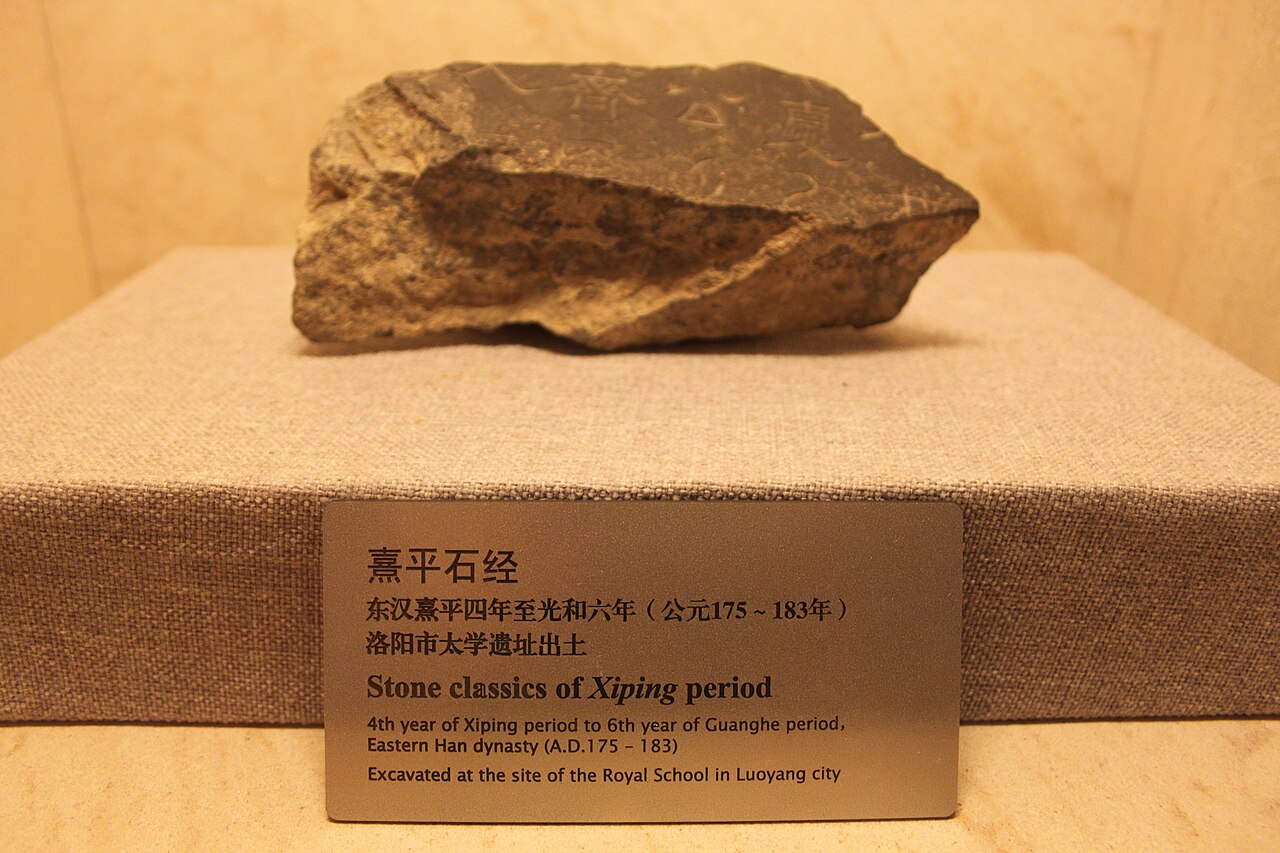
Emperor Wu of Han, acting on the counsel associated with Dong Zhongshu, set Confucian learning above the other schools at court and founded an imperial academy with erudites for each of the Five Classics and fifty disciples. The academy made classical study the road to office, and the road widened for two thousand years: the examinations abolished in 1905 descend from this foundation.
Tagged: Confucianism Imperial Confucianism
The Event
- Date
- 136 BCE (exact)
- Also called
- Taixue, the Imperial University
- Era
- Han Orthodoxy; Standard periodization of Confucian history
- Location
- Chang'an, the Han capital; today Xi'an, Shaanxi, China
- Traditions
- Confucianism
- Streams
- Imperial Confucianism
- Key figures
- Emperor Wu of Han, Dong Zhongshu
- Key texts
- Five Classics
Connections
- Dong Zhongshu; follows_from
Primary Sources
- The Book of Han (Hanshu).
Secondary Sources
- de Bary, Wm. Theodore, and Irene Bloom, eds. Sources of Chinese Tradition. 2nd ed., Columbia University Press, 1999.
- Yao, Xinzhong. An Introduction to Confucianism. Cambridge University Press, 2000.
Provenance: HIST-0705; confidence 0.95; accessed 2026-10-27.
Related on This Site
- The Hanging Temple Art Entry
- Daoism and Confucianism Art Tradition
- Dong Zhongshu History Event
- End of the imperial system History Event
- Imperial examinations abolished History Event
- Ming dynasty History Event
- Qing dynasty History Event
- Yuan examination system adopts Zhu Xi History Event