

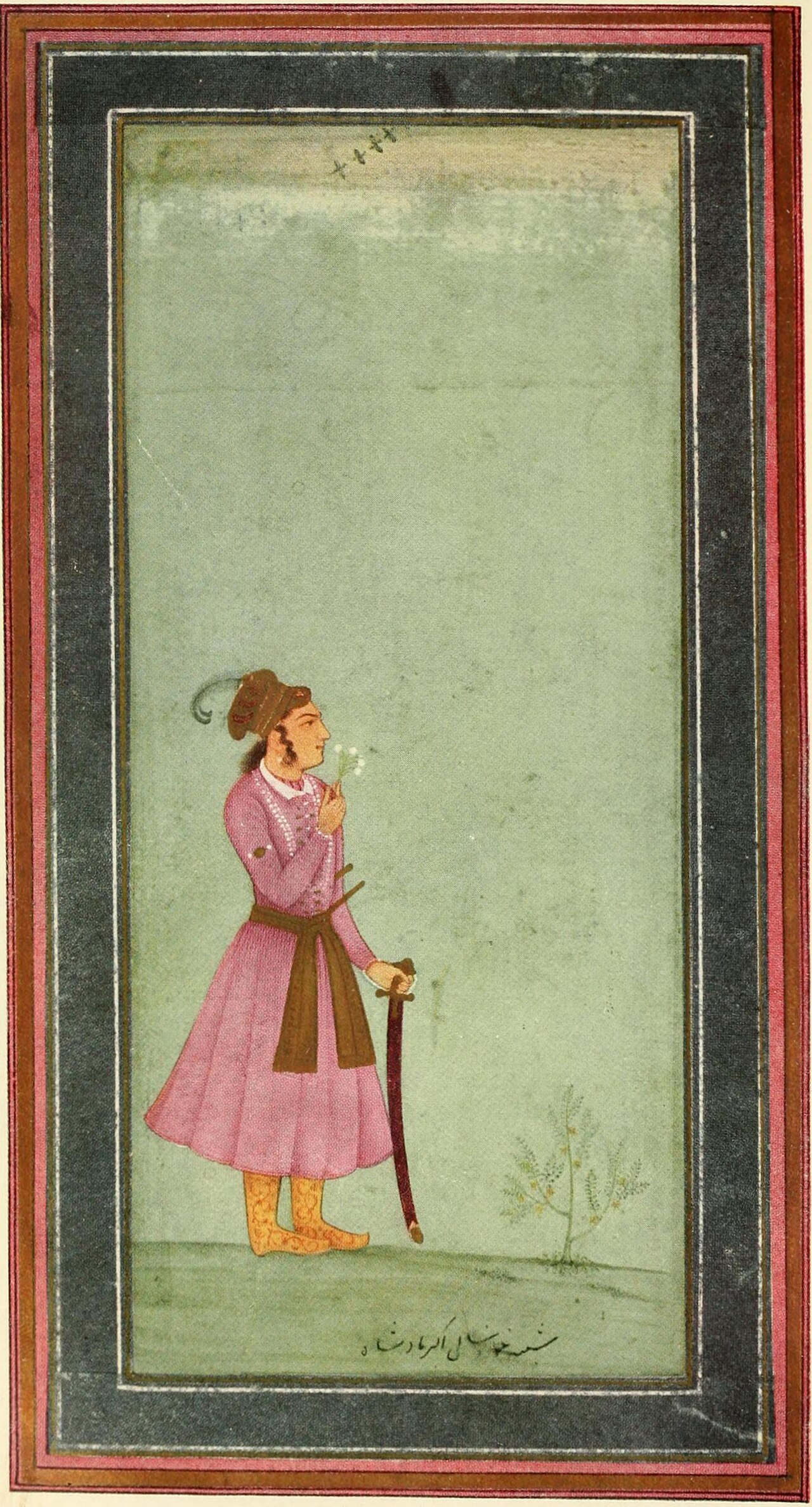
The Mughal emperor Akbar, who had abolished the tax on non-Muslims, issued edicts protecting Jain holy places and forbidding animal slaughter during the Jain holy days of Paryushana, measures the tradition dates to this period of his reign. His court received the Shvetambara leader Hiravijaya Suri, whom Akbar honored with the title Jagadguru, teacher of the world, and Jain monks remained a presence at the Mughal court for a generation.
Tagged: Jain Shvetambara
The Event
- Date
- 1568 (exact)
- Era
- Classical and Medieval; Standard periodization of Jain history
- Location
- The Mughal court; today Delhi, India
- Traditions
- Jainism
- Streams
- Shvetambara
- Key figures
- Akbar, Hiravijaya Suri
Primary Sources
- The Jain inscriptional and temple record of the period.
Secondary Sources
- Shah, Natubhai. Jainism: The World of Conquerors. Sussex Academic Press, 1998.
- Wiley, Kristi L. Historical Dictionary of Jainism. Scarecrow Press, 2004.
Provenance: HIST-0612; confidence 0.95; accessed 2026-10-27.
Related on This Site
- A Kalpasutra Folio Art Entry
- The Dilwara Temples Art Entry
- The Gujarat Manuscript Ateliers Artist
- Digambara–Shvetambara split History Event
- First Council at Pataliputra History Event
- Mahavira (24th Tirthankara) History Event
- Parshvanatha (23rd Tirthankara) History Event
- Shvetambara canon committed to writing History Event