

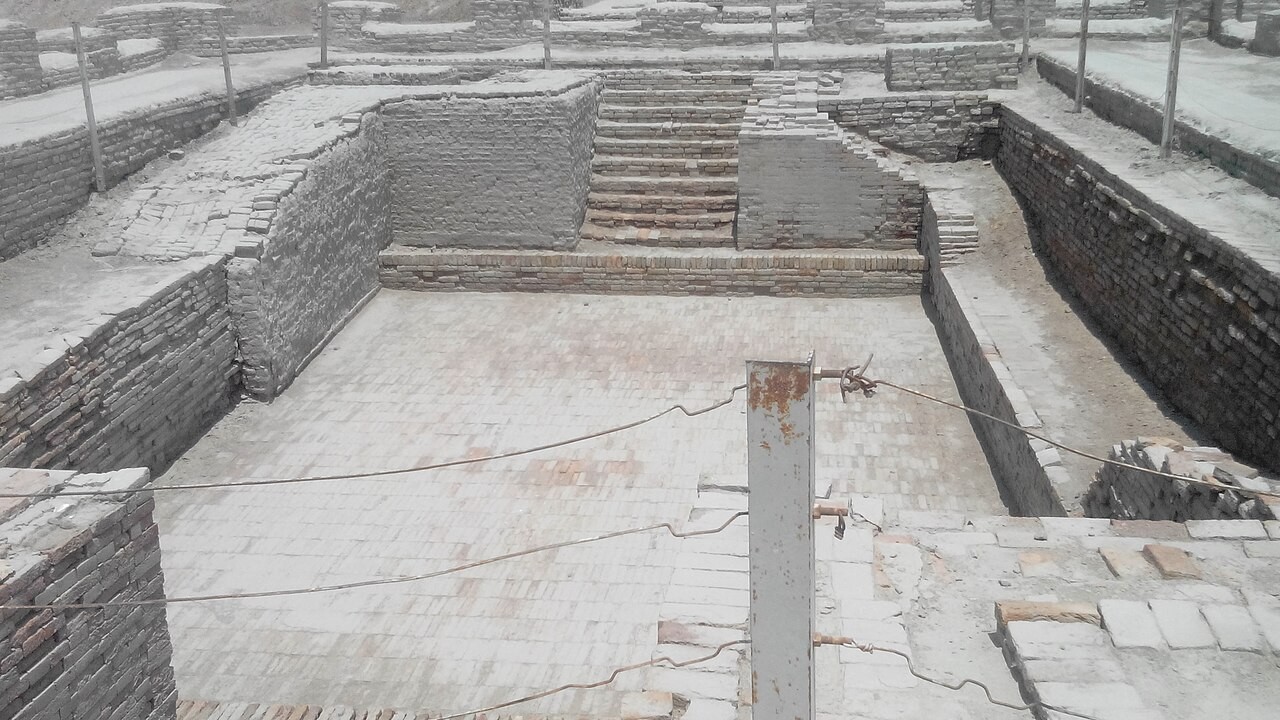
The cities of Harappa and Mohenjo-daro anchor one of the world's earliest urban civilizations in the Indus valley; its undeciphered script leaves its religion a matter of seals, figurines, and inference, and later Hindu tradition claims continuities that scholarship cannot confirm or rule out.
Tagged: Hindu Shaivism Shaktism
The Event
- Date
- c. 3300–1300 BCE (approximate)
- Era
- Indus and Vedic; Standard periodization of Hindu history
- Location
- Indus Valley; today Pakistan and northwest India
- Traditions
- Hinduism
- Streams
- Shaivism, Shaktism
How the Tradition Tells It
The continuities claimed from the Indus cities are contested. The seal read as a proto-Shiva and the mother-goddess figurines are inferences from objects whose makers left no readable text, and scholars dispute how much of later Hindu practice descends from the valley and how much arrived with the Vedic world that followed.
Primary Sources
- The Mohenjo-daro and Harappa excavations
Secondary Sources
- Flood, An Introduction to Hinduism (Cambridge, 1996)
- Michaels, Hinduism: Past and Present (Princeton, 2004)
Provenance: HIST-0301; confidence 0.85; accessed 2026-10-27.
Related on This Site
- Brihadeeswara Temple Art Entry
- The Shiva Linga Art Entry
- The Chola Bronze Workshops Artist
- Bhagavad Gita History Event
- Mahabharata composed History Event
- Principal Upanishads History Event
- Rig Veda composed History Event
- The Pashupata ascetics attested History Event